Model Release Form UK and Event Photography Notice Poster you can use
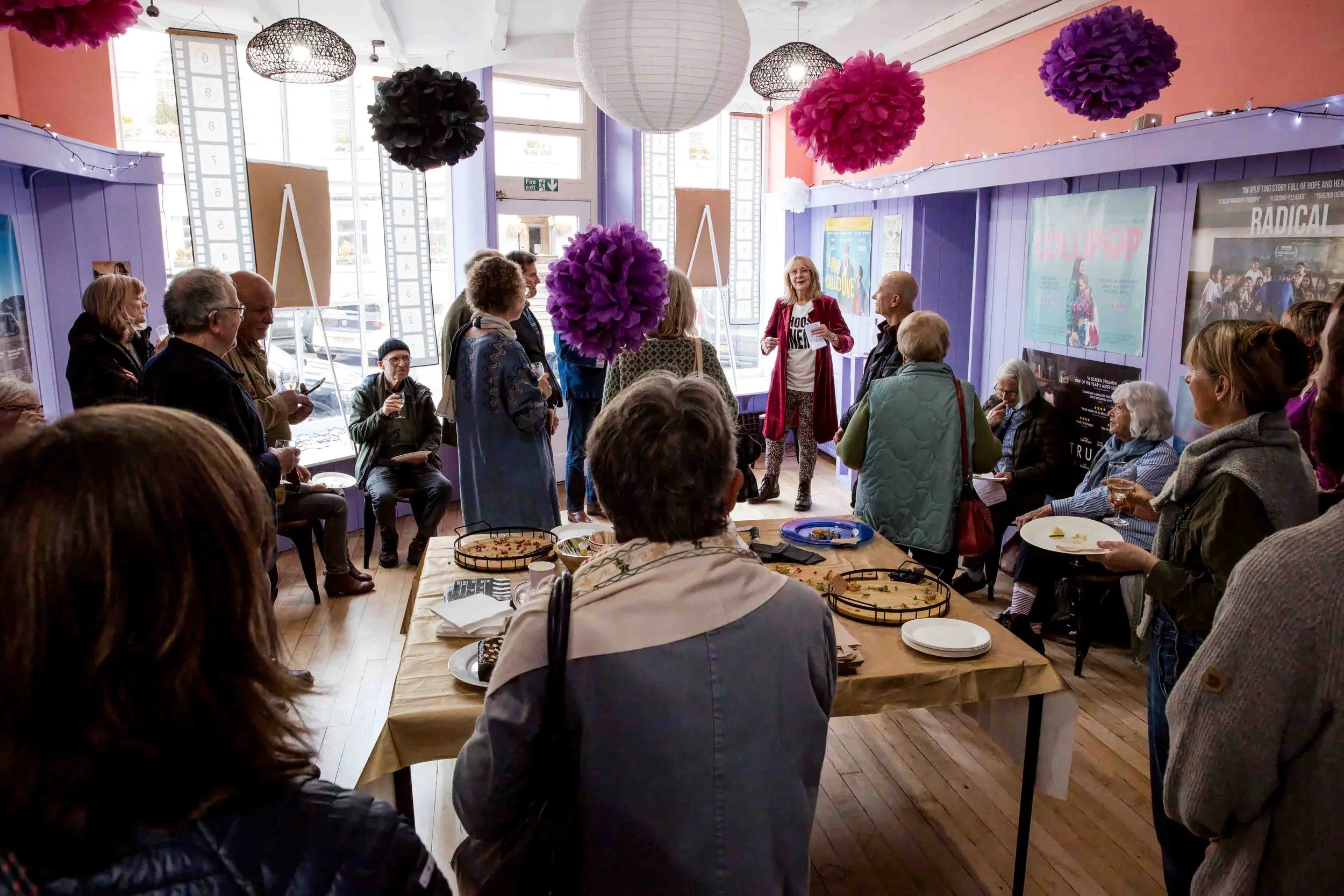
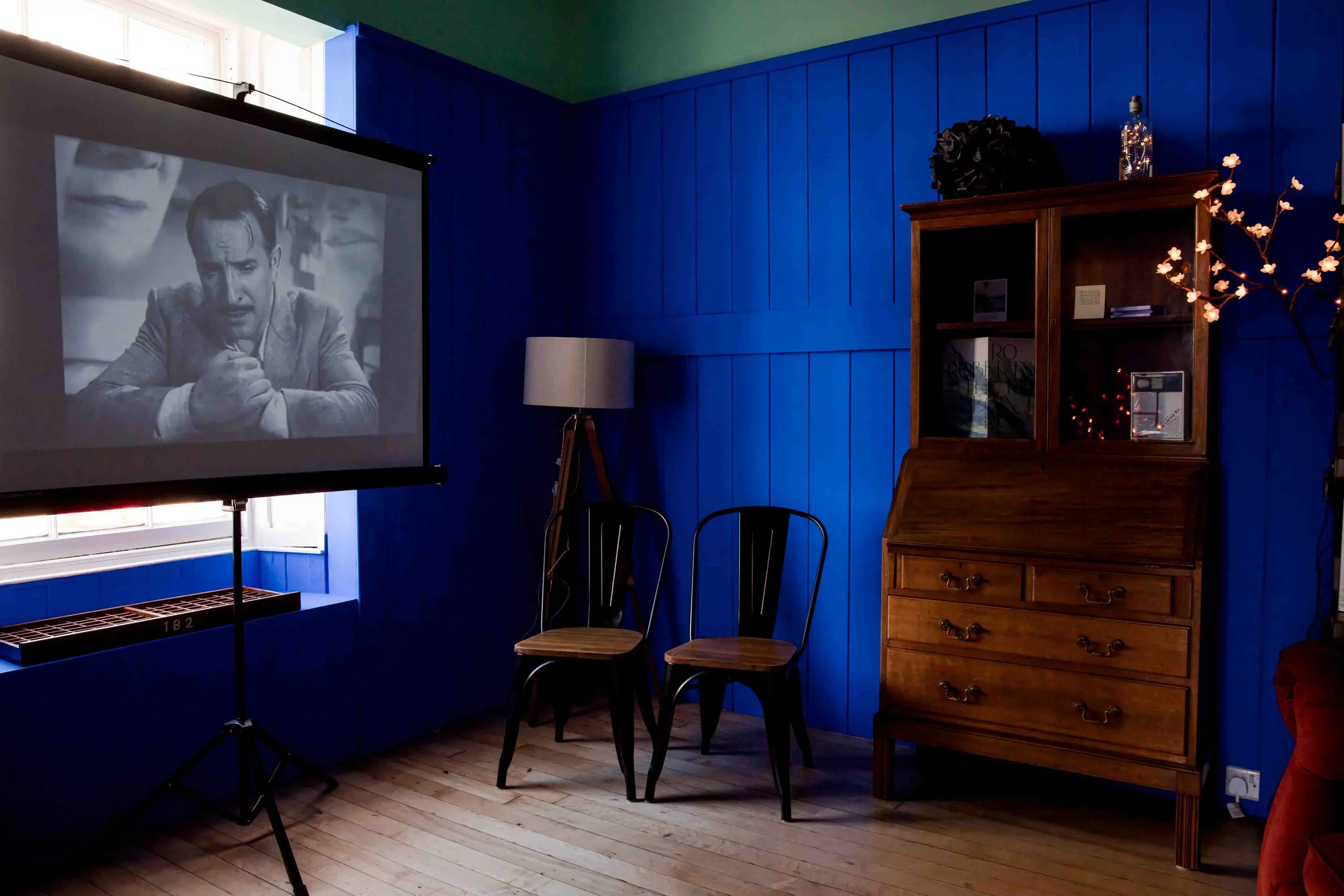
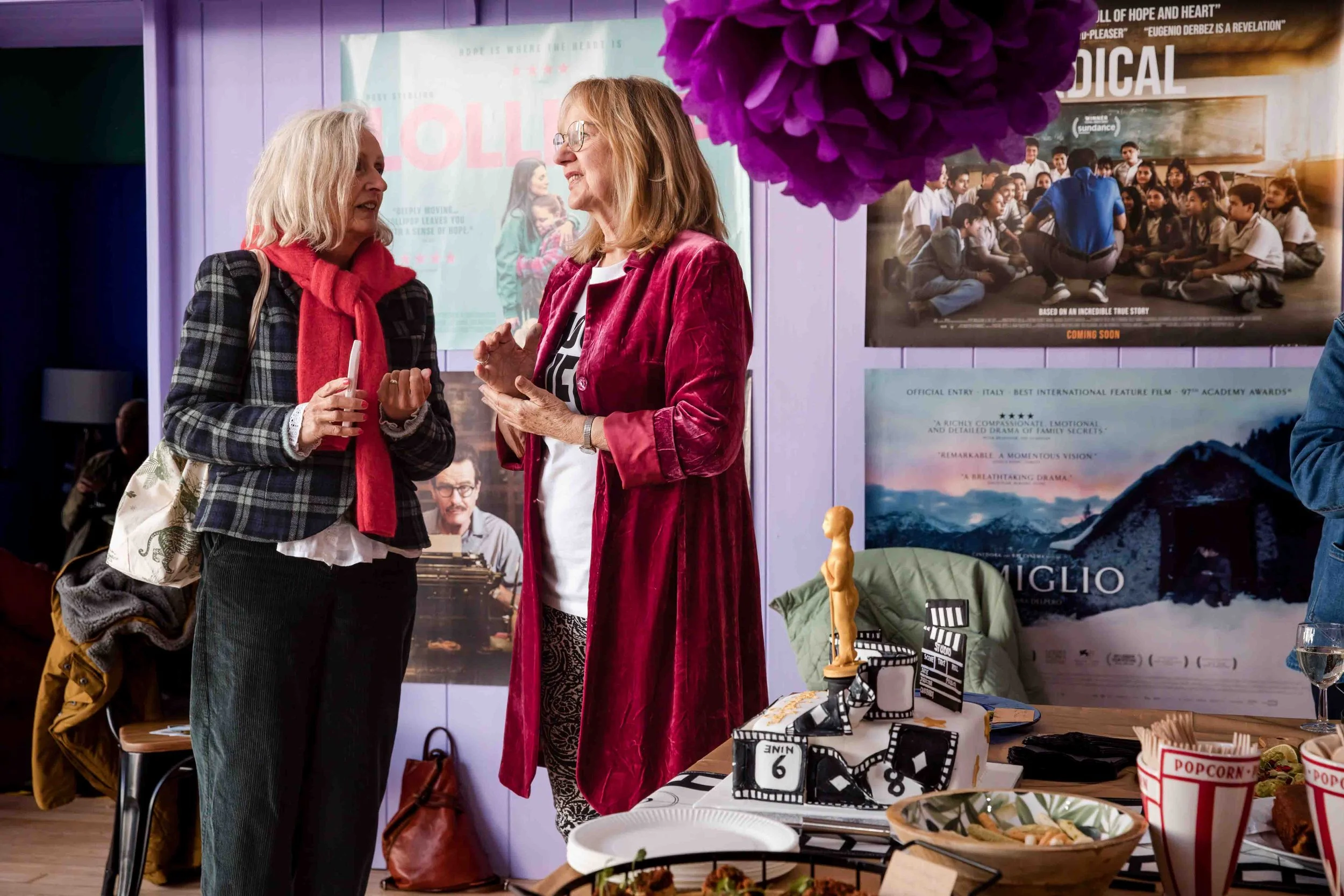
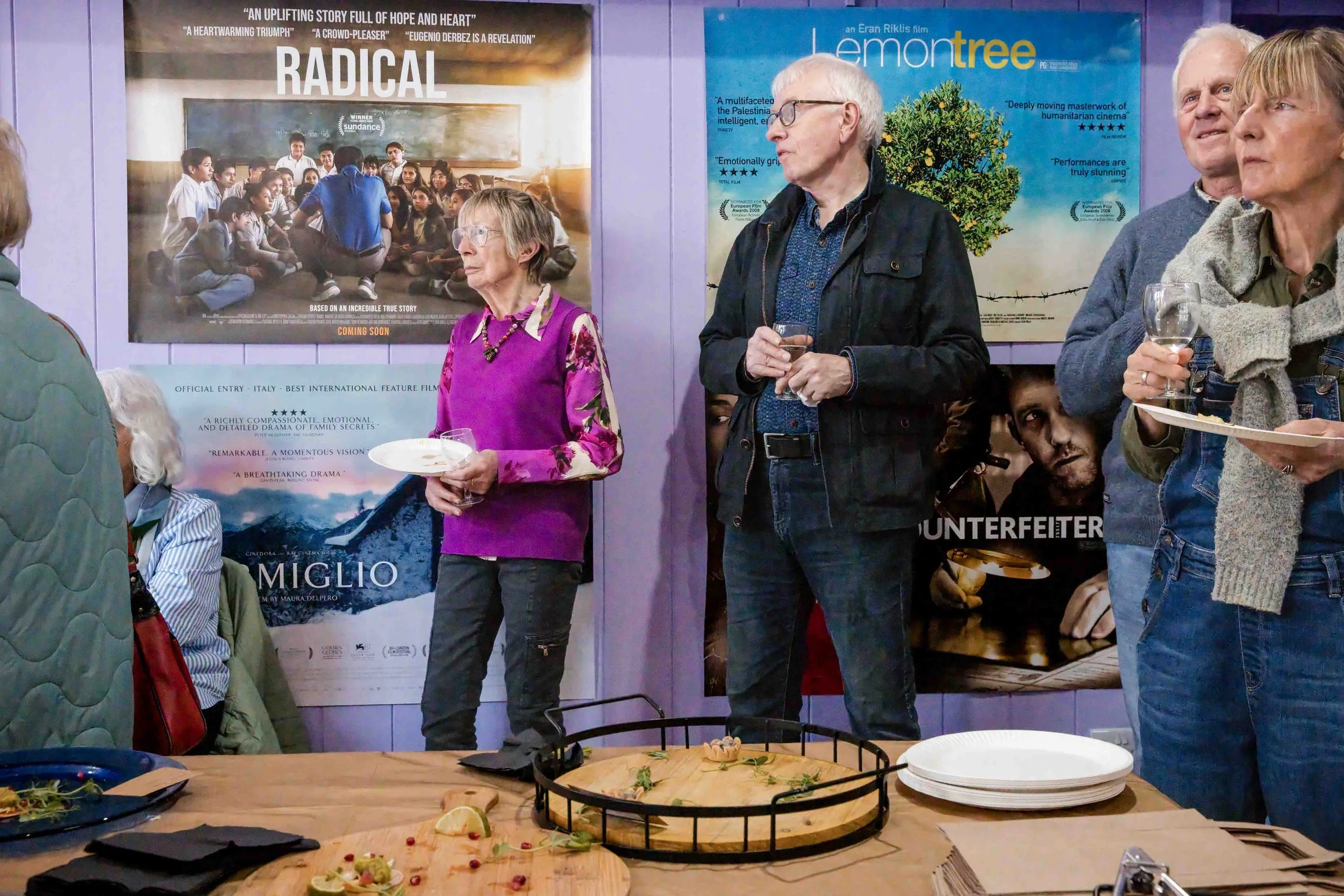
This blog includes examples from two different live events in Berwick-upon-Tweed, both photographed in busy, real-life settings. The first is the Berwick Film Society’s 21st birthday celebration, which took place at Jackal, a venue on Hide Hill in the town centre. The second is from Berwick Literary Festival, where photography notice signage was displayed at the Straw Yard in Berwick. Together, they give a useful glimpse into how photography works at live events, from capturing the atmosphere of a celebration to making sure clear signage is in place when photography or filming is taking place. You can also view the Straw Yard website and Berwick Film Society website to find out more about these local venues and organisations.
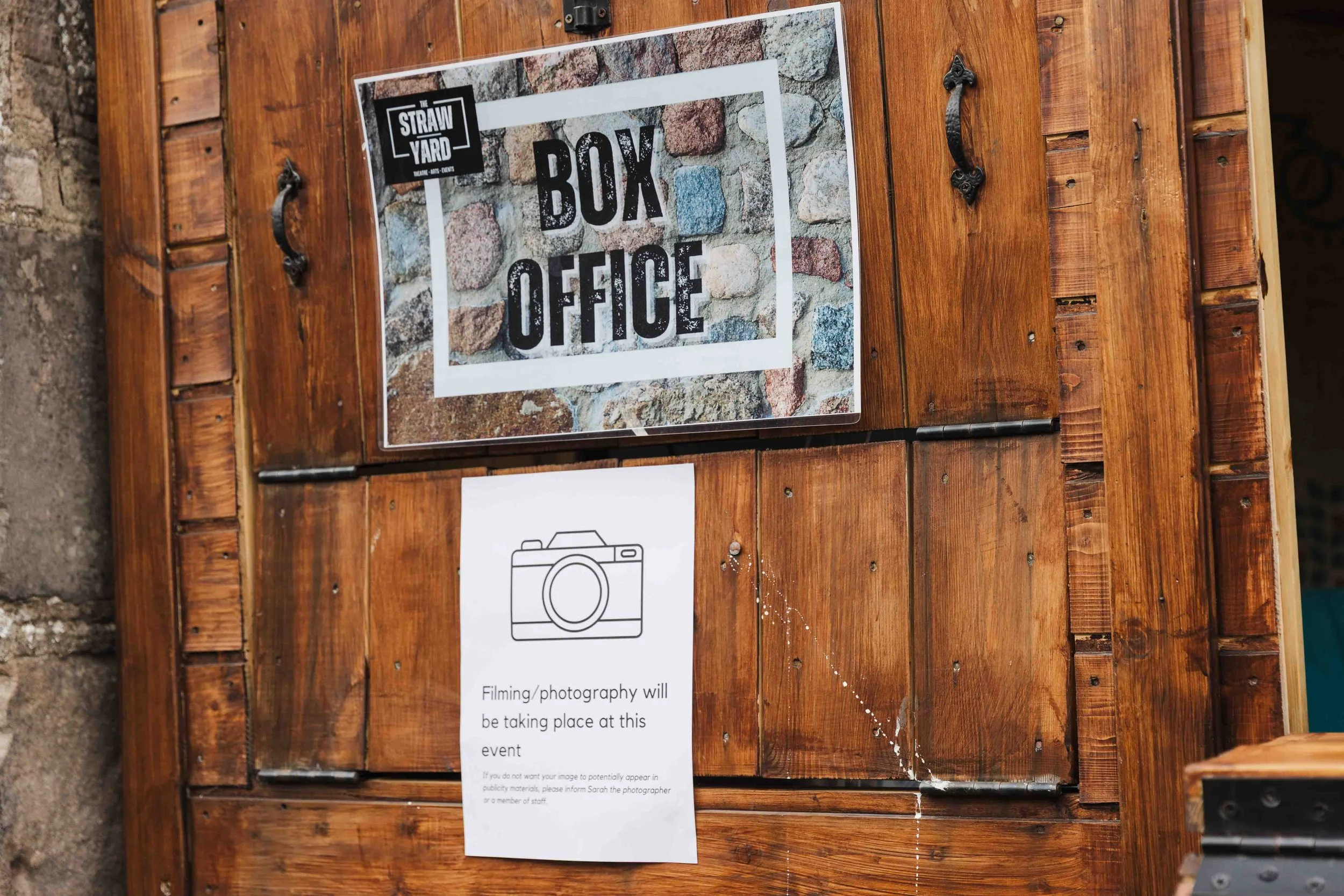
A film and photography notice displayed at the Straw Yard during Berwick Literary Festival.
If you are photographing or filming people for a website, social media, PR, printed marketing or business content, it is always a good idea to be clear about how those images may be used.
To help with this, I have created two free printable templates:
a free model release form / image release form
a free event photography notice poster
I use these templates regularly with my own business and event photography clients, and I often provide them as a practical starting point when a client needs to collect permissions from staff, customers, volunteers, speakers or event participants.
They are designed to help photographers, small businesses, charities, community groups and organisations collect clear permission, or make people aware when photography and filming is taking place.
They may be useful if you are planning a brand photography session, business event, workshop, open day, charity event, community project, team headshot session, PR shoot or behind-the-scenes content day.
You can find these further down in this blog, please adapt both templates to suit your own project, privacy policy and legal requirements.
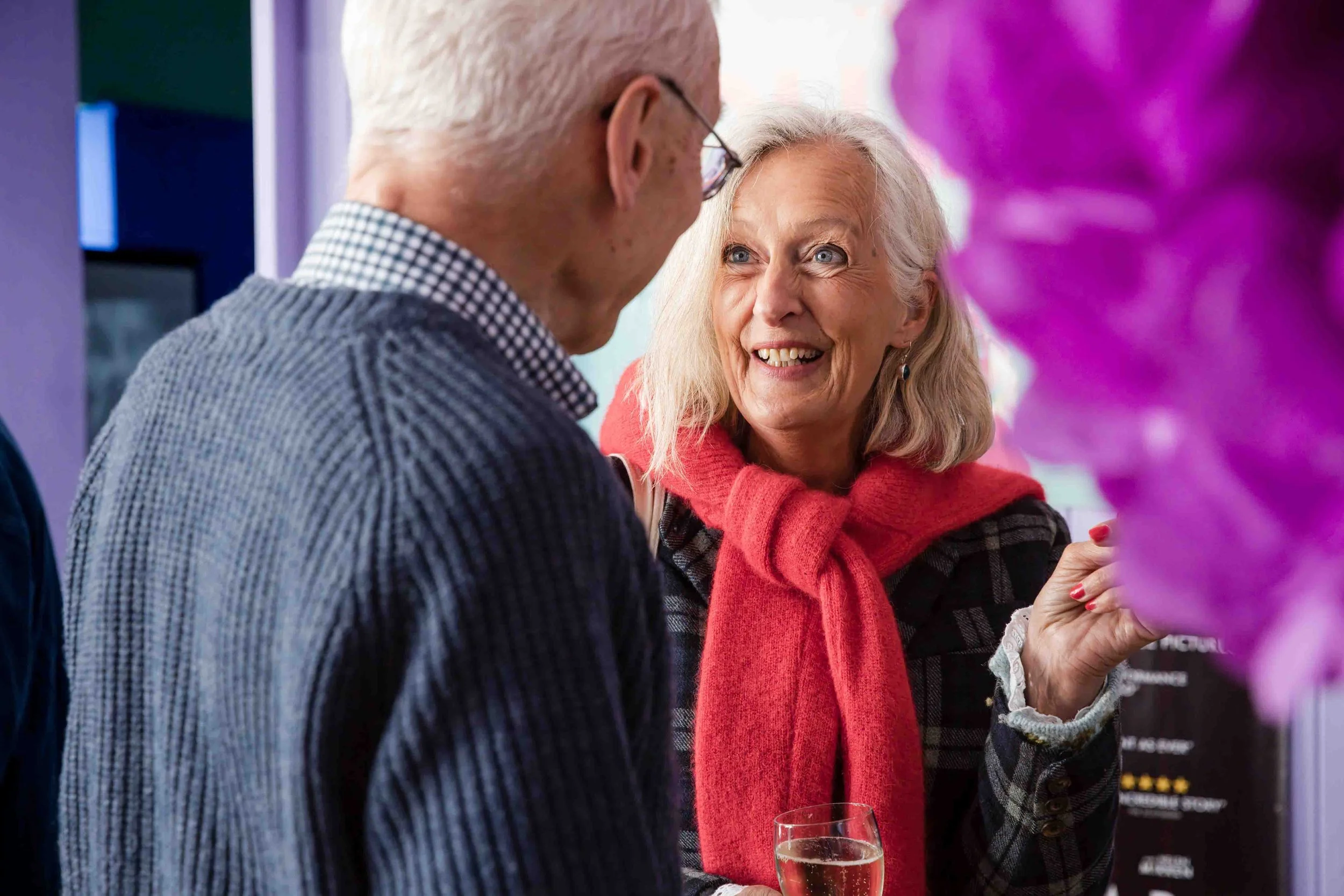
What is a model release form?
A model release form is a document that records permission from someone who is being photographed or filmed.
You may also hear it called an image release form, photo consent form, photography consent form, media release form or image permission form.
The wording varies, but the purpose is usually the same: to make sure everyone understands how the photographs or film may be used.
This might include use on:
websites
social media
printed marketing
brochures
blogs
email newsletters
press releases
PR stories
advertising
publicity materials
It is much easier to collect permission before a shoot than to try to sort it out afterwards.
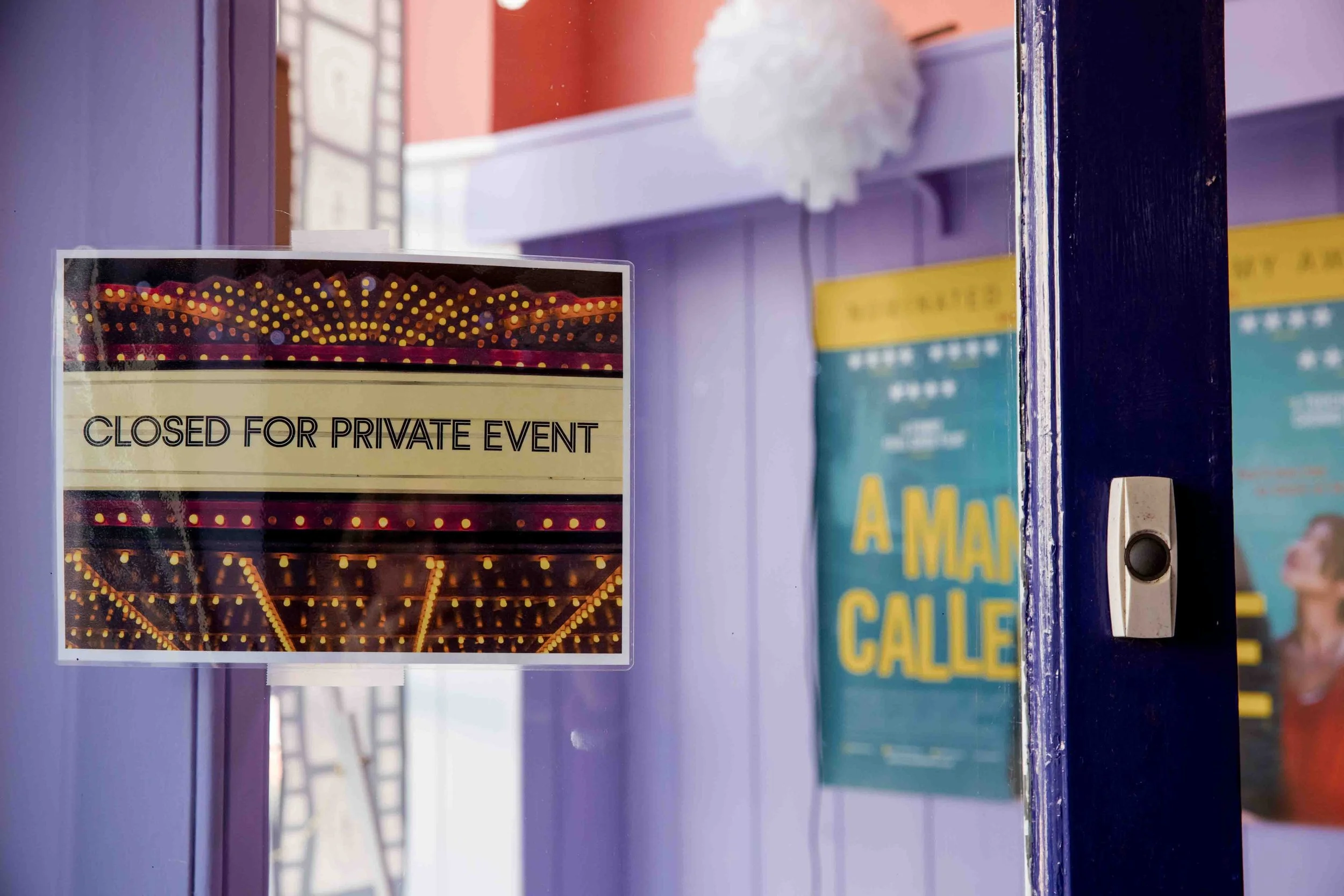
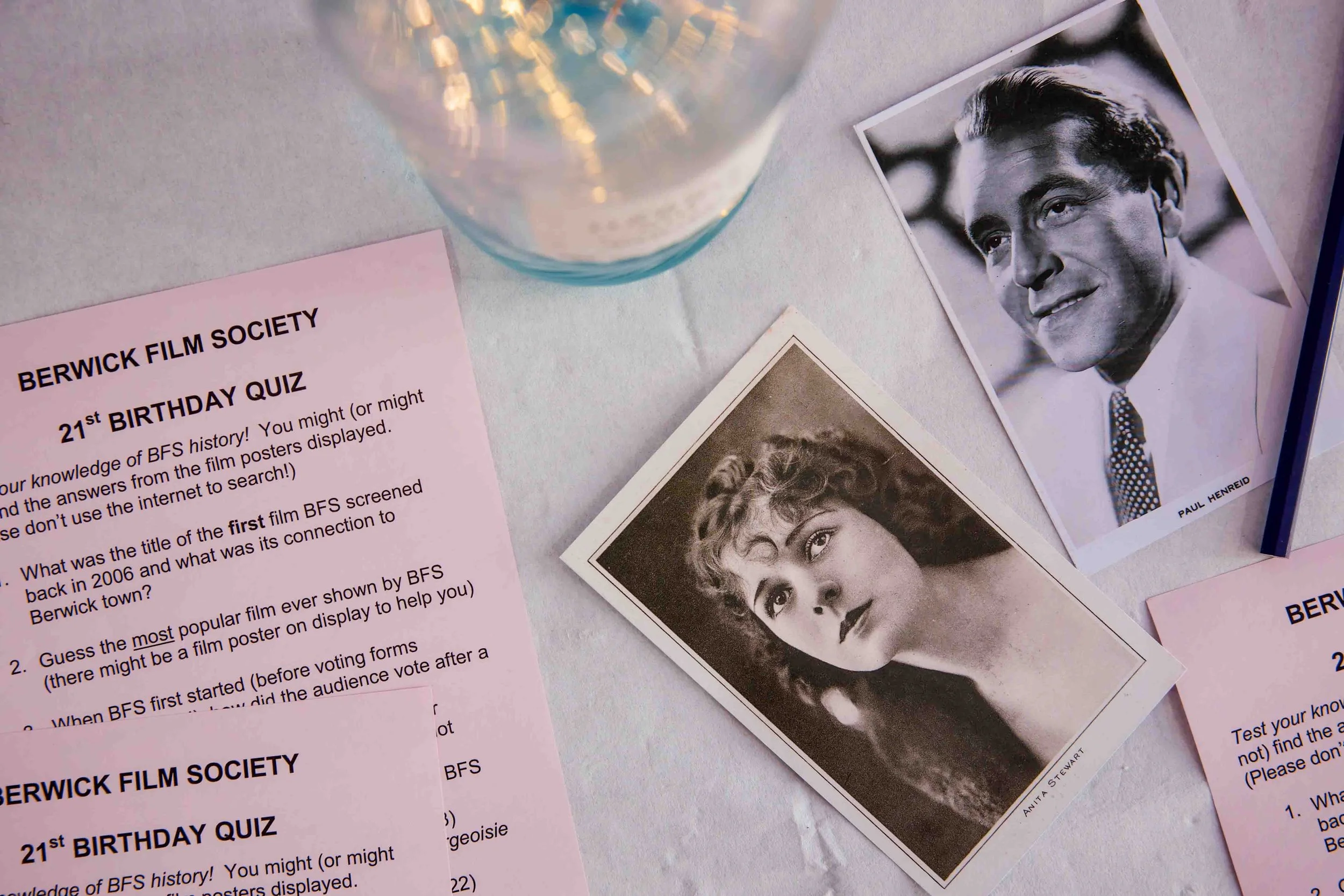
Independent Art Space hosting Berwick film society party.
Who is this free model release form for?
This free model release form template may be useful for:
photographers working with clients, models or families
small businesses arranging brand photography
organisations photographing staff, volunteers or participants
charities and community groups documenting projects or events
workshop leaders collecting permission from attendees
businesses collecting permission before a commercial photoshoot
agencies or marketing teams arranging photography or filming
parents or guardians giving permission for children to be photographed
It has been created as a simple starting point for UK photographers, small businesses and organisations.
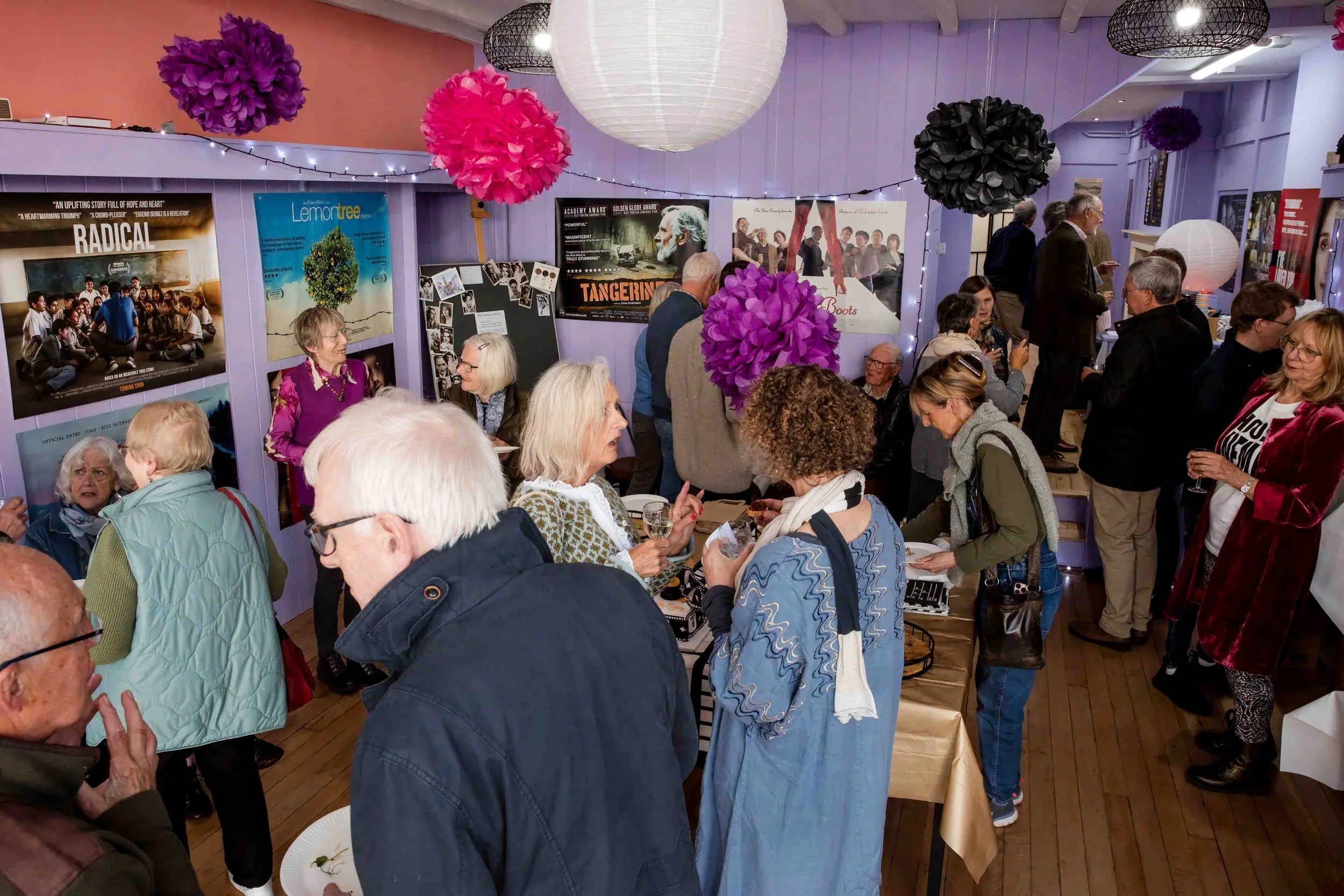
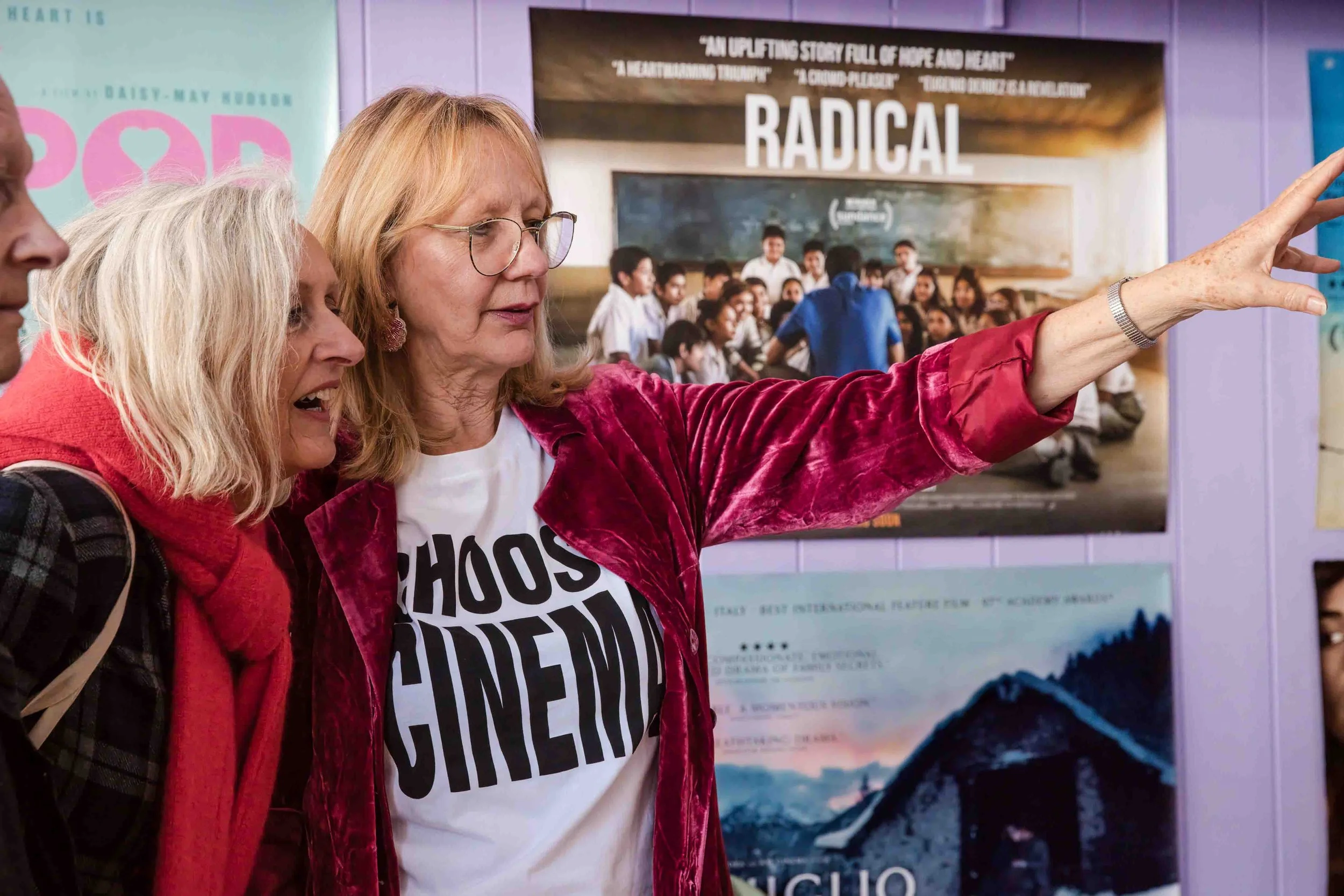
Event Photography from the Berwick Film Societies party at Jackal
When might you need a model release form?
A signed model release form can be useful when a person will be clearly recognisable in photographs or film, especially if the images are going to be used for business, marketing, PR or promotional purposes.
For example, you may want to use one when photographing:
staff members for a business website
clients or customers for a case study
makers, artists or business owners
models for a brand campaign
speakers at an event
people taking part in workshops
volunteers or community project participants
children or families
people appearing in behind-the-scenes content
people featured in promotional films
For commercial photography projects, it is worth talking about image permission before the shoot, so everyone knows who is collecting the forms and where they will be stored.
Using photographs of children
Extra care should always be taken when photographing or filming children.
If a child is under 18, permission should usually be collected from a parent or legal guardian.
It is also important to think carefully about what information is shared alongside a child’s image. As a general rule, avoid publishing a child’s full name, school, address or other identifying details unless there is a clear reason and separate permission has been given.
Schools, clubs, charities, community groups and organisations should also follow their own safeguarding, privacy and data protection policies.
What is an event photography notice poster?
An event photography notice poster is a simple sign that tells people photography and/or filming will be taking place at an event.
The free poster included here can be printed and displayed somewhere visible, such as near the entrance, registration desk, reception area, cloakroom, bar, meeting room door or information point.
It lets guests, staff, volunteers or attendees know that images or film may be used in publicity materials, and that they should speak to the photographer or a member of staff if they do not want to be photographed or filmed.
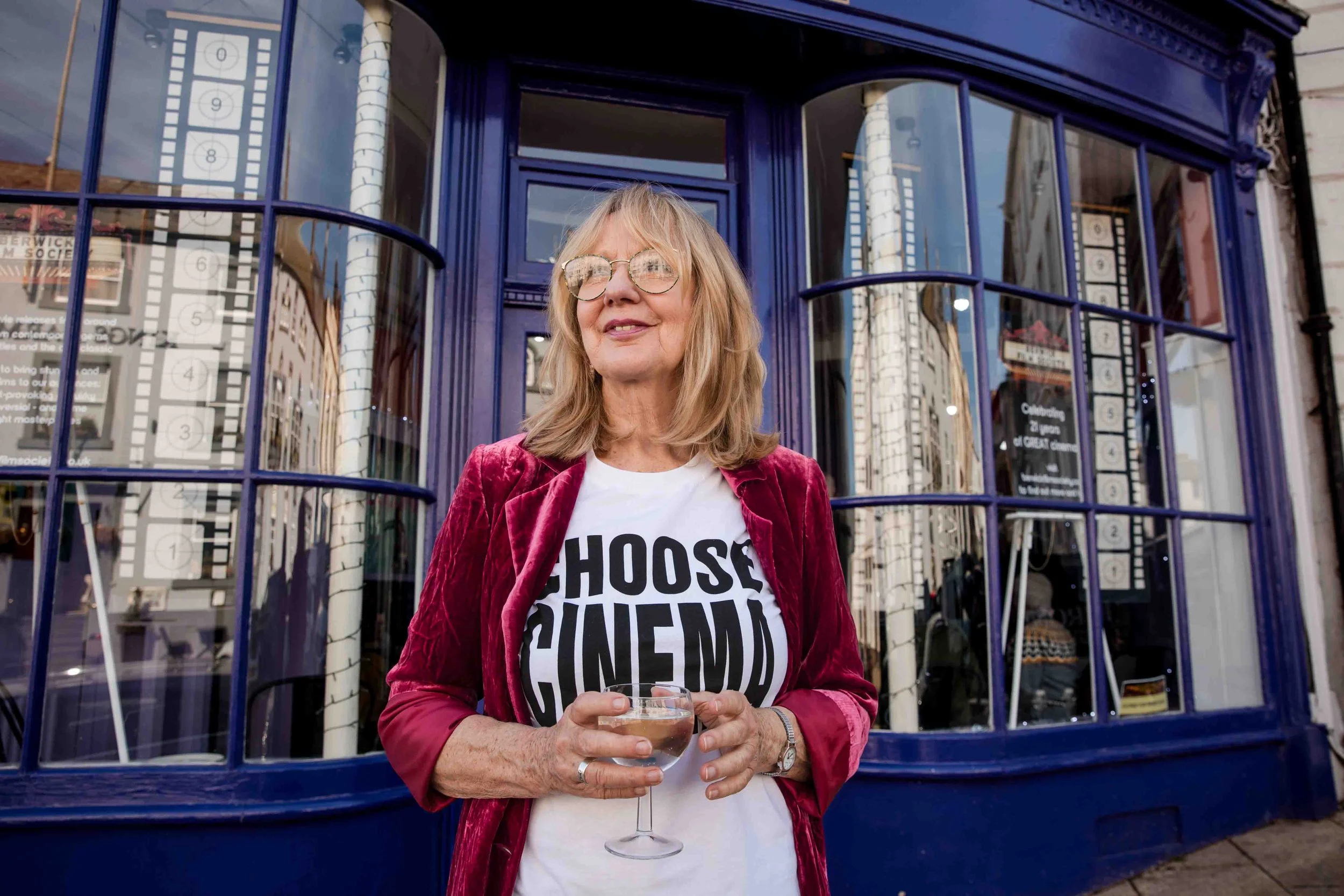
Genni Poole From Berwick Film society outside Jackal Berwick-Upon-Tweed.
When should you use an event photography poster?
An event photography notice poster can be helpful for:
business events
workshops
open days
launches
networking events
exhibitions
charity events
community events
creative projects
public-facing events
behind-the-scenes content days
It is a simple way to make people aware that photography or filming is happening.
A poster does not replace a signed model release form where individual permission is needed, but it can be a useful extra step.
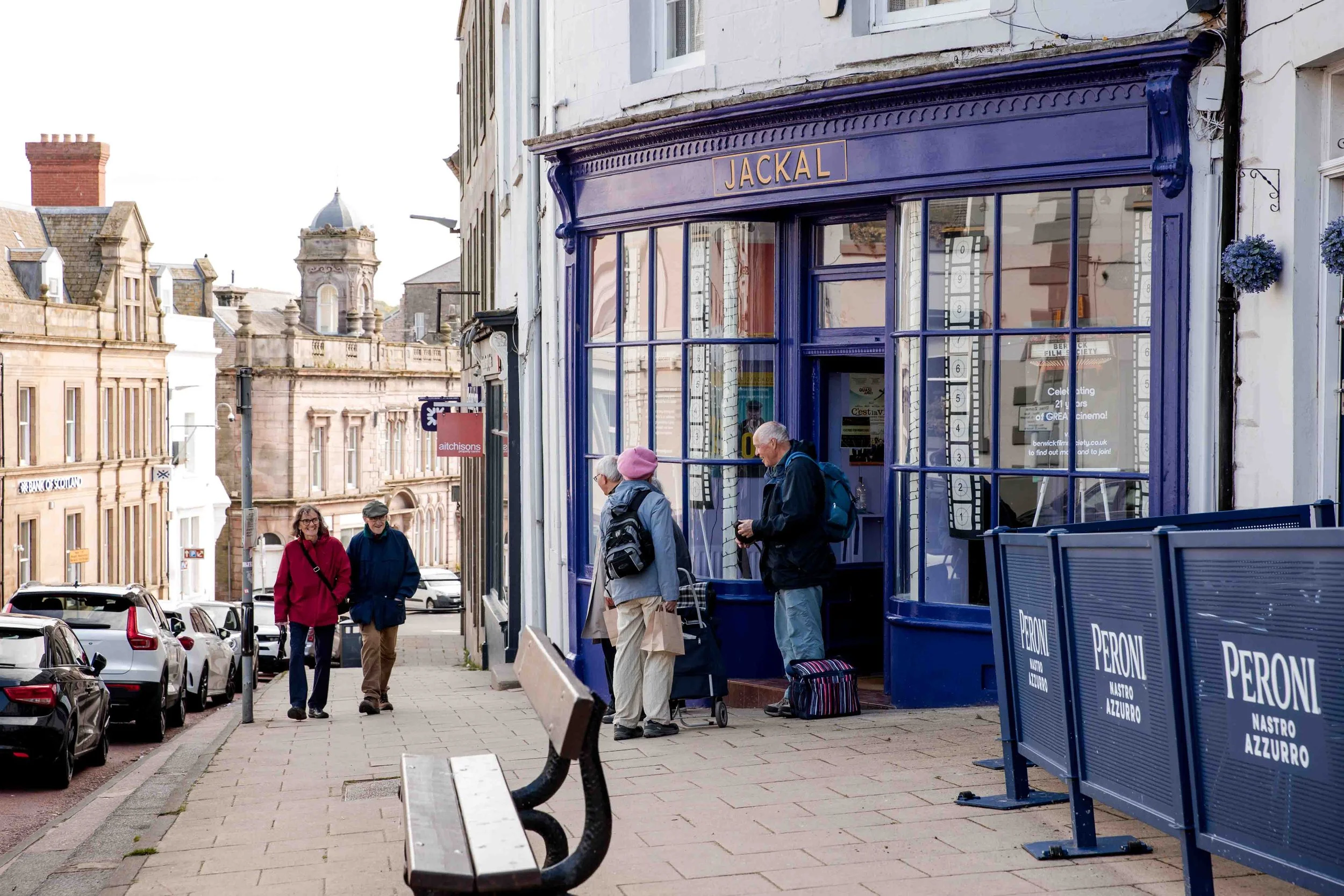
Exterior View of Independent Art Venue Jackal on Hide Hill Berwick Upon Tweed.
Model release form or event poster: which one do you need?
A signed model release form is usually better when you need clear permission from a named person, such as a model, staff member, client, parent, guardian, speaker or someone who will be featured prominently.
An event photography notice poster is more useful when photography or filming is taking place at a wider event and you want people attending to be aware of it.
In some situations, you may want to use both.
For example, at a business event you might display a photography notice poster at the venue, while also collecting signed model release forms from speakers, staff members, models, children or anyone who will be used more prominently in future marketing.
Who should collect the forms?
If I am photographing my own clients for Pictorial Photography, I may collect the relevant permissions myself.
If a business, charity, organisation or agency has hired me to photograph their staff, clients, workshop attendees, volunteers, customers or event participants, they would need to collect and store their own model release forms.
For many commercial photography and event photography projects, the organisation arranging the shoot is best placed to collect permission from its own people. They know who is attending, who is taking part, and how their own privacy, safeguarding or data protection processes work.
The same applies to displaying an event photography notice poster. I have provide a printable poster in this blog , but the organisation running the event is responsible for making sure it is displayed clearly where people are likely to see it.
How I use these templates with my own clients.
I use model release forms and event photography notice posters regularly in my own work with business and event photography clients.
Sometimes I provide printed copies for clients before a shoot, especially if they are photographing staff, customers, volunteers, workshop attendees, speakers or members of the public.
However, if a business, charity, organisation or agency has hired me to photograph their event, staff, clients or participants, the responsibility for collecting completed model release forms usually sits with them.
They know who their staff, clients, guests or participants are, and they are usually best placed to collect and store the completed forms properly.
The same applies to event photography notice posters. I can provide a printable poster, but the organisation running the event is responsible for displaying it clearly at the venue.
Where I see a photography notice poster displayed at an event, I will often photograph it in place as a simple record that it was visible on the day.
This does not replace proper consent where individual permission is needed, but it is a useful bit of housekeeping and helps everyone stay clear about what has been communicated.
Thinking ahead before your photoshoot
Whether you are booking brand photography, team headshots, event photography, product photography with people, or behind-the-scenes film, it is worth thinking about image permission before the shoot day.
A few useful questions to ask are:
Who will be photographed or filmed?
Will children be involved?
Will staff, clients, customers or members of the public appear?
Where will the images be used?
Will they be used on social media, websites, PR, print or advertising?
Who is responsible for collecting permission?
Where will the completed forms be stored?
It does not need to be complicated, but it is one of those jobs that is much easier to deal with before everyone is standing in front of the camera.
A note about legal advice
These templates are provided as general starting points only.
They are not legal advice, and they should not be treated as a substitute for advice from a qualified legal professional.
I am a photographer based in the UK, not a solicitor. Different countries have different legal systems, and even within the UK, the right approach may depend on the type of project, who is being photographed, how the images will be used, and what privacy, safeguarding or data protection requirements apply.
If you use these templates, you are responsible for checking that they are suitable for your own business, organisation, project, privacy policy and legal requirements.
Pictorial Photography accepts no responsibility for how these templates are adapted, used or relied upon by others. If you are unsure whether either template is suitable for your situation, please seek independent legal advice before using it.
Download the free event photography poster
Keep scrolling if you’d like the model release form…
Planning a photoshoot for your business?
If you need natural, professional photographs for your website, social media or marketing, I offer brand photography, headshots, product photography, event photography and website content creation for small businesses.
I can also help you think through the practical details before the shoot, including who needs to be photographed, where the images will be used, and whether your business needs to collect model release forms from staff, clients or participants beforehand.
You may also find these pages useful:
Brand photography for small businesses
FAQs about model release forms and event photography notices
-
This template has been written with UK photographers, small businesses and organisations in mind. However, it is not legal advice and should be adapted to suit your own project, privacy policy and legal requirements.
-
The terms are often used in similar ways. “Model release form” is the more traditional photography term, especially for commercial use. “Image release form” is a softer, more general phrase that can feel clearer for staff, clients, families, workshop attendees and members of the public.
-
If people are clearly recognisable and the images will be used for business marketing, websites, social media, PR, print or advertising, it is sensible to have clear written permission in place before the images are used.
-
For children under 18, permission should usually be collected from a parent or legal guardian. Extra care should also be taken with how children’s images are stored, shared and published.
-
Is an event photography notice enough?
An event photography notice can help make people aware that photography or filming is taking place, but it may not be enough in every situation.
For commercial use, children, private shoots, sensitive situations or people featured prominently, a signed model release form may also be needed.
-
Display the poster somewhere people are likely to see it, such as near the entrance, registration desk, reception area, cloakroom, bar, event room door or information point.
-
For commercial photography projects, the business or organisation arranging the shoot may need to collect permission from its own staff, clients, models, volunteers or participants. This should be agreed before the shoot so everyone knows who is responsible.
-
A person may ask for future use of their image to stop. However, it may not always be possible to remove images that have already been printed, published, shared by third parties or used in completed materials. This is one reason why clear written permission at the start is helpful.
Download the Model Release here:
We’d love to hear from you! Let us know what you think below, did you use one or both of the templates or adapt them for your own use?
Types of Brand Photography: Choosing The Right Style For Your Business.

Brand photography of a the barn at Beals staff tasting evening.
If you’ve ever looked into brand photography and felt overwhelmed by all the options, you’re not the only one.
Headshots. Lifestyle images. Product photography. Behind-the-scenes content. Working shots. Personal branding. Team photos. It can start to sound like a lot when what you really want to know is what kind of photographs your business actually needs.
The best place to start is not with what is popular or what other businesses appear to be doing. It is with a much more useful question:
What do I need these photographs to do for my business?
You might want to attract better-fit clients, make your website feel more professional, show what it is like to work with you, sell products more clearly or build trust online. You may simply need enough varied content to market your business without reaching for the same three photographs every month.
Good brand photography is not about ticking boxes. It is about creating images that support your business and work in the places where you need them.
Sarah’s experience can help guide that process and make sure the finished photographs are both successful and genuinely useful. However, it also helps if you have a rough idea of what you want the images to communicate before the shoot.
In this post, we’ll look at the main types of brand photography, how to choose the right approach and how different styles can work together. We’ll also use Barn at Beal as a real example of photography supporting a business across its website, social media and seasonal marketing.

Colourful vegetarian dish captured at Barn at Beal.
Brand Photography Types: Start With What You Need the Images to Do
Before your branding shoot, ask yourself:
Do I want to attract better-fit clients?
Do I want my website to look more professional?
Do I need to show what it feels like to work with me?
Do I need to sell products more clearly?
Do I want to build more trust online?
Do I need enough content for regular marketing?
Your answers will usually point you towards the right type of brand photography, or more often, the right mix of them.

Brand photography at Barn at Beal showing a shared dining and tasting experience.
Types of Brand Photography for Service-Based Businesses
If your business is built around you as a person, personal brand photography is often the best fit.
This works especially well for coaches, designers, photographers, consultants, creatives, and other service-based business owners where trust matters. In these businesses, people are not just buying a service. They’re buying into the person behind it too.
That does not mean every image needs to be a formal portrait or a perfectly posed headshot.Personal brand photography can include portraits, natural working images, details, behind-the-scenes moments and lifestyle content that helps people understand who you are and how you work.
These photographs can be used across your website, social media, blog posts, newsletters, media features, speaking opportunities and online directories. If you are the face of your business, allowing people to see you can make the whole brand feel more familiar and approachable.
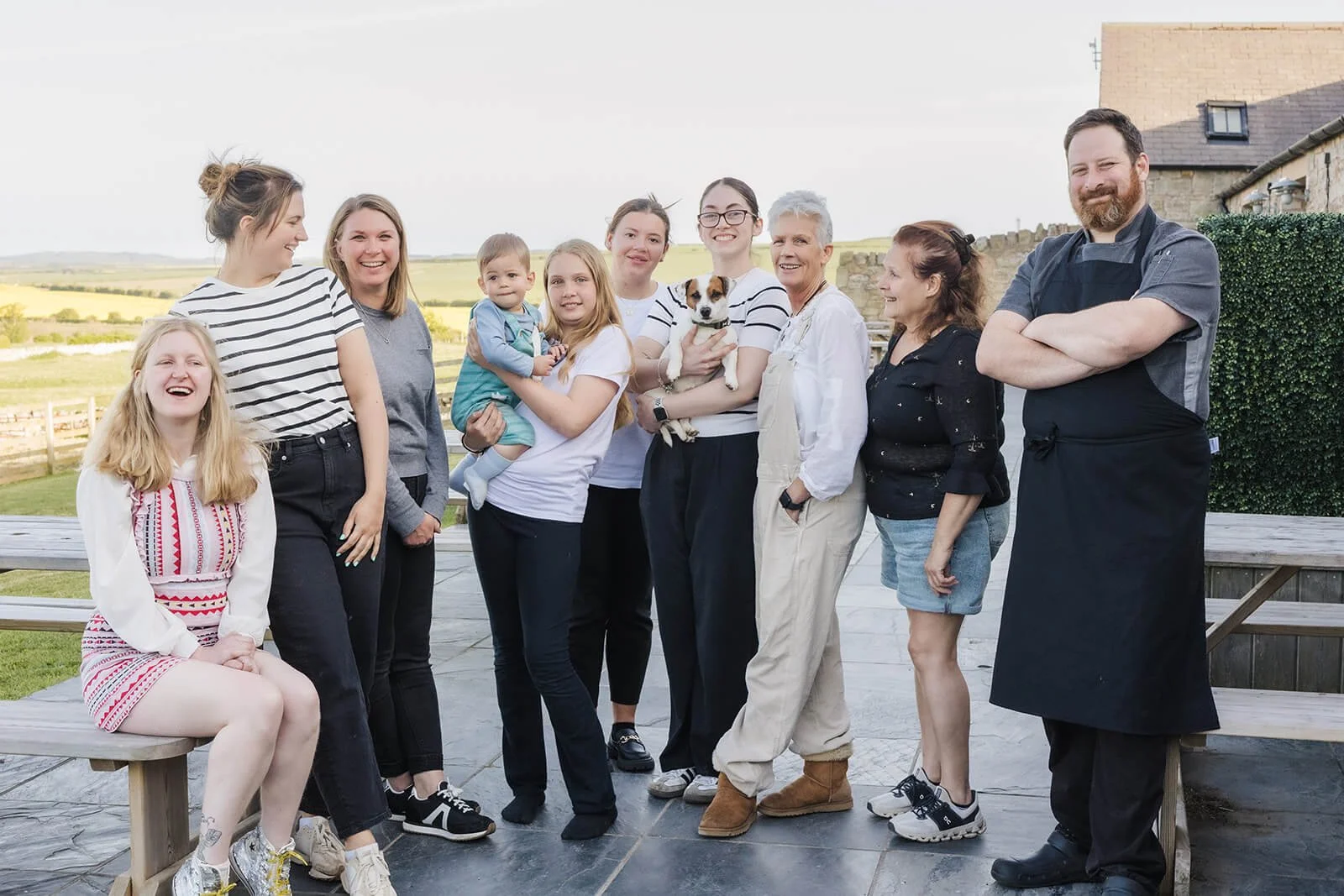
Team photo of The Barn at Beal Staff.
Types of Brand Photography for Product-Based Businesses
If you sell physical products, product photography is usually the priority.
This could mean clean e-commerce style images, styled product photographs, or a combination of both. It depends on where and how you sell.
For example, if you sell online, you may need clear product images on a plain background so customers can properly see what they are buying. If you also use Instagram or email marketing regularly, you might need more styled images that show your products in use or in a more branded setting.
Strong product photography helps you:
sell products more clearly
make your business look more professional
create consistent marketing content
improve trust with potential customers
show quality and detail
This is one of those areas where decent photos really do matter. People cannot pick up your product through a screen, so your images need to do more of the work.
If you’re feeling a bit unsure about the difference between product photography and branding photography, you’re not alone. They often overlap, but they do slightly different jobs. We’ve explained this in more detail in our blog on What’s the Difference Between Brand and Studio Photography?, which is a helpful place to start if you’re figuring out what your business needs.
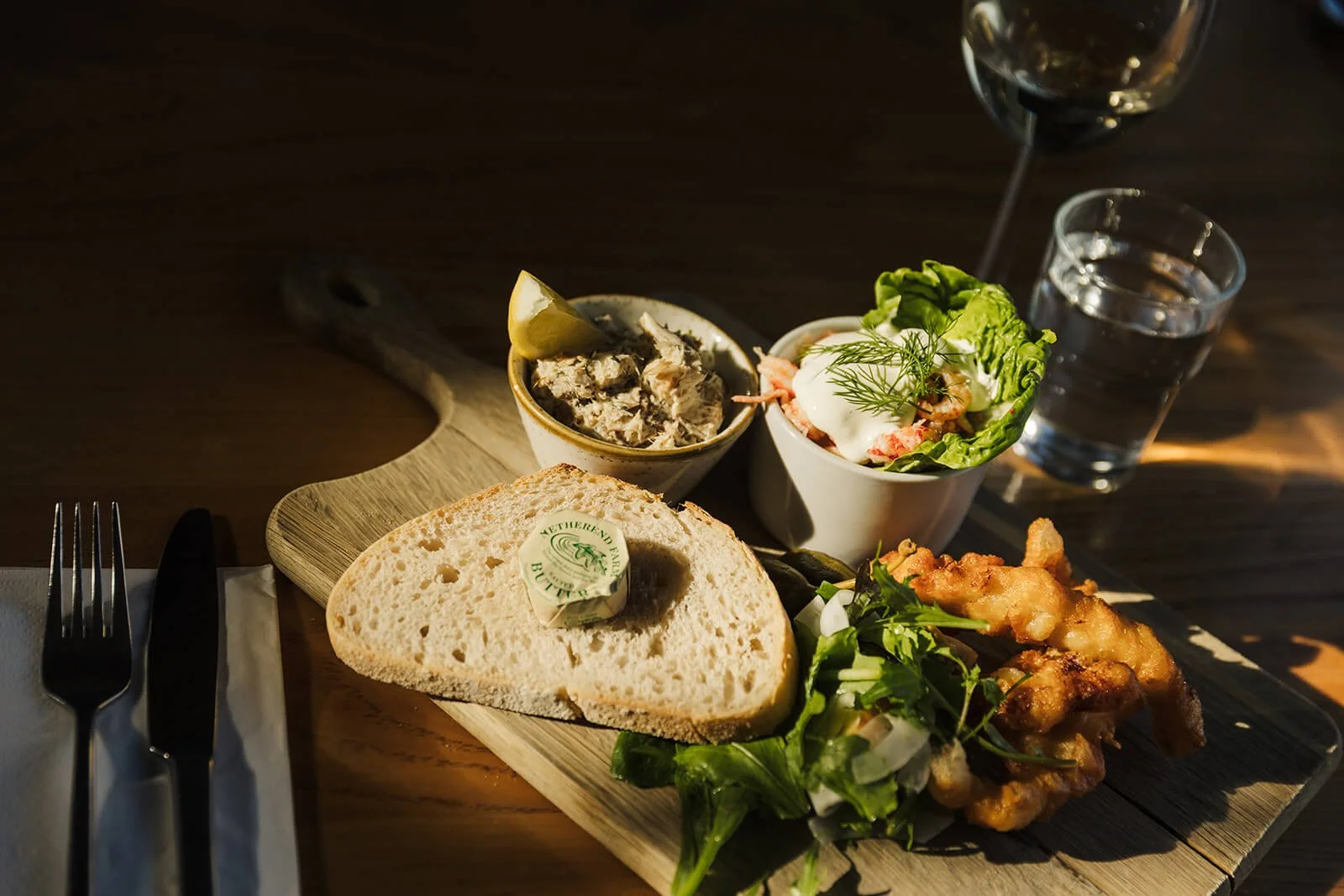
Rustic sharing board served at Barn at Beal photographed on their new menu branding shoot.
Types of Brand Photography for Places, Spaces and Hospitality Businesses
If your business involves a physical space, interiors and environmental photography may matter most.
This is especially true for shops, cafés, salons, studios, holiday lets, restaurants, and venues. Before someone visits in person, your photography is often doing the heavy lifting in helping them imagine the experience.
These images help people get a feel for:
the atmosphere
the quality
the setting
the customer experience
the little details that make your business feel distinctive
For many hospitality and location-based businesses, it’s not just about showing what the place looks like. It’s about showing what it feels like to be there.
That’s often the difference between a business that looks nice online and one that makes people want to book, visit, or recommend it.
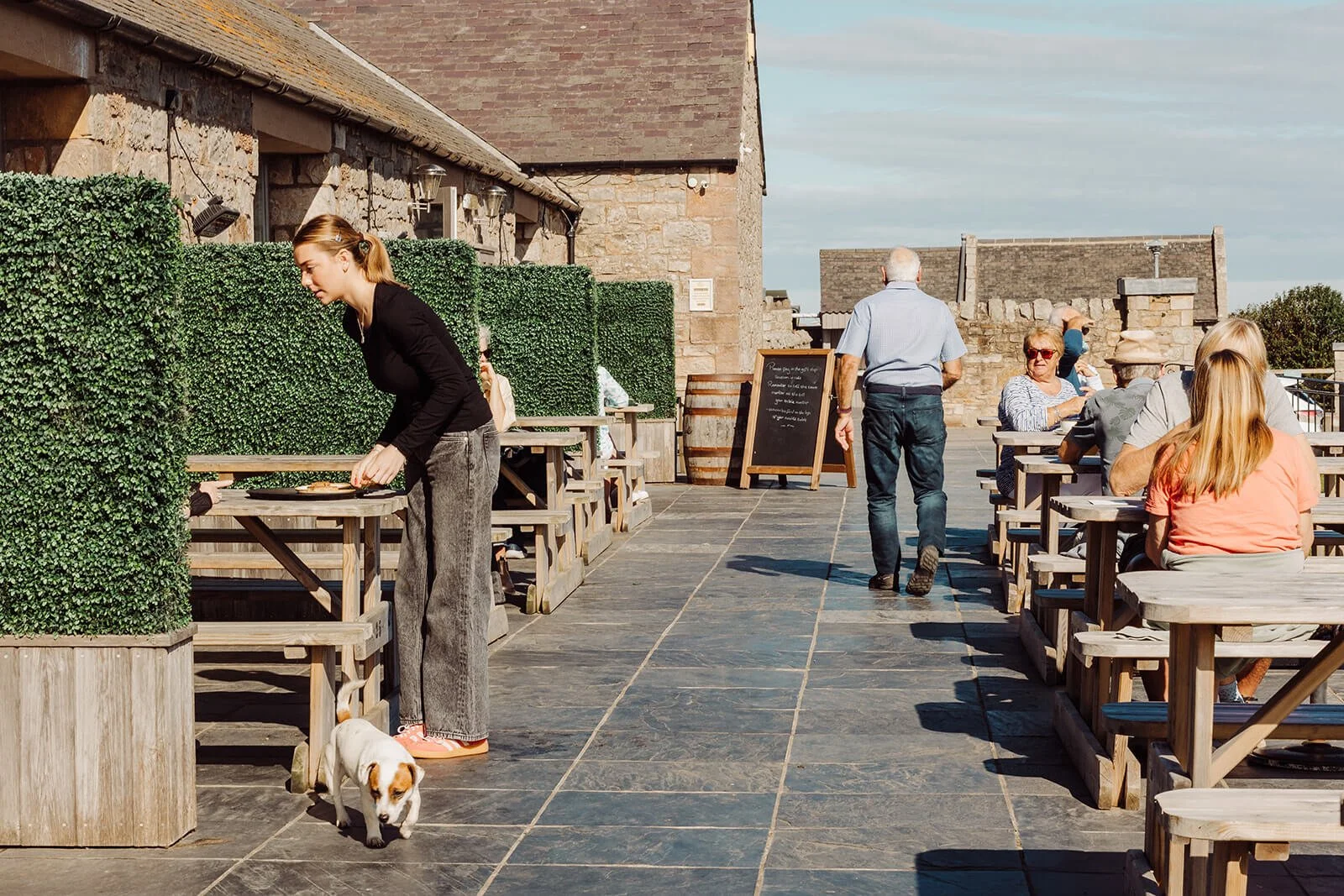
Brand photography at Barn at Beal showing outdoor dining experience and customer atmosphere.
Types of Brand Photography for Teams and Growing Businesses
For some businesses, headshots and team photography are the best place to start.
This is especially useful when you want your website to feel more personal and more professional, or when you want to show the people behind the business rather than just the business name.
A good set of team images can instantly make a brand feel more approachable. People like seeing who they’re dealing with. It builds familiarity and trust, especially for local businesses.
This doesn’t have to mean very formal corporate-style portraits unless that genuinely suits your brand. Team photography can still feel relaxed, warm and natural while looking polished.
If you’re a business with several people involved, even a simple set of updated headshots and a few team interaction images can go a long way.
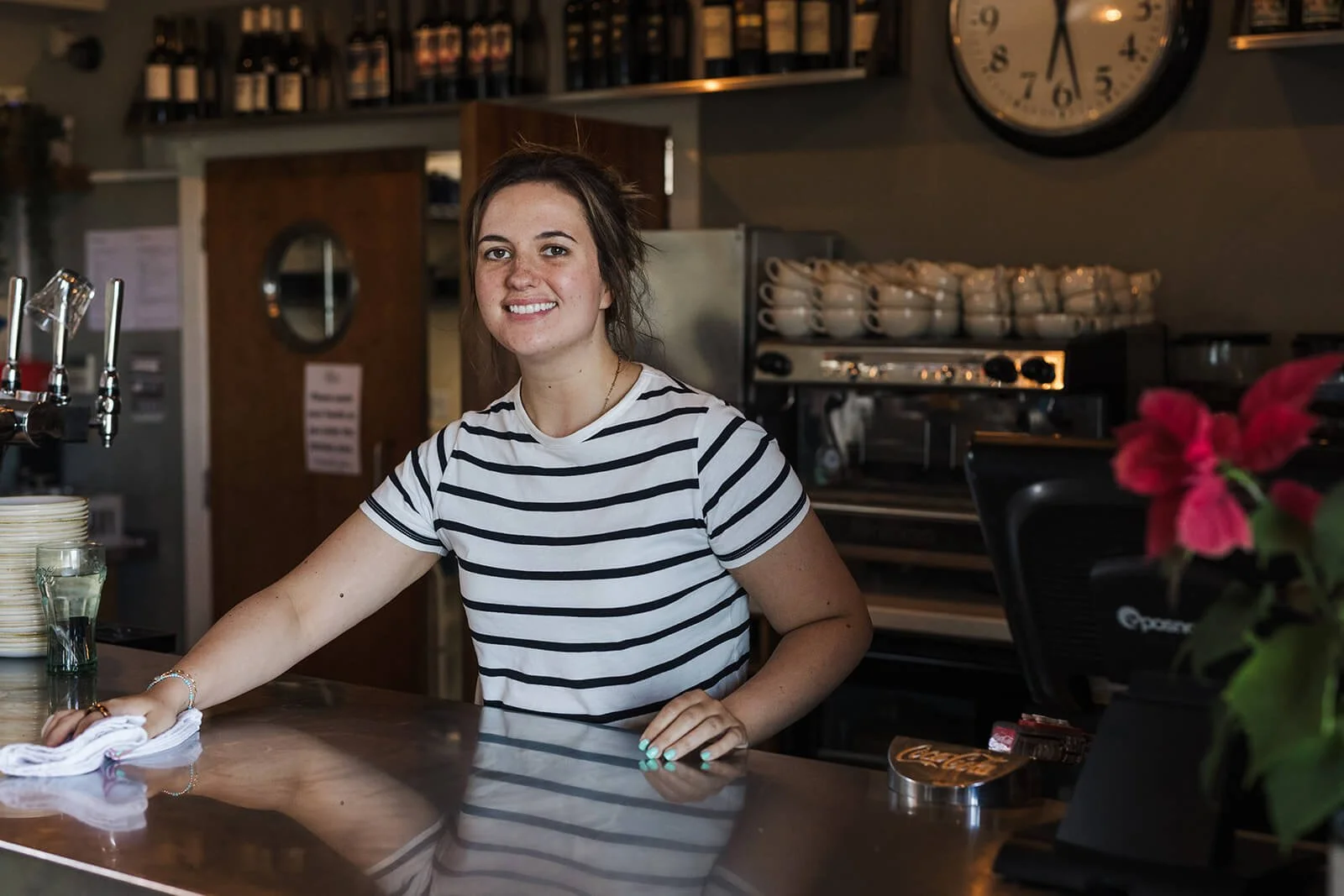
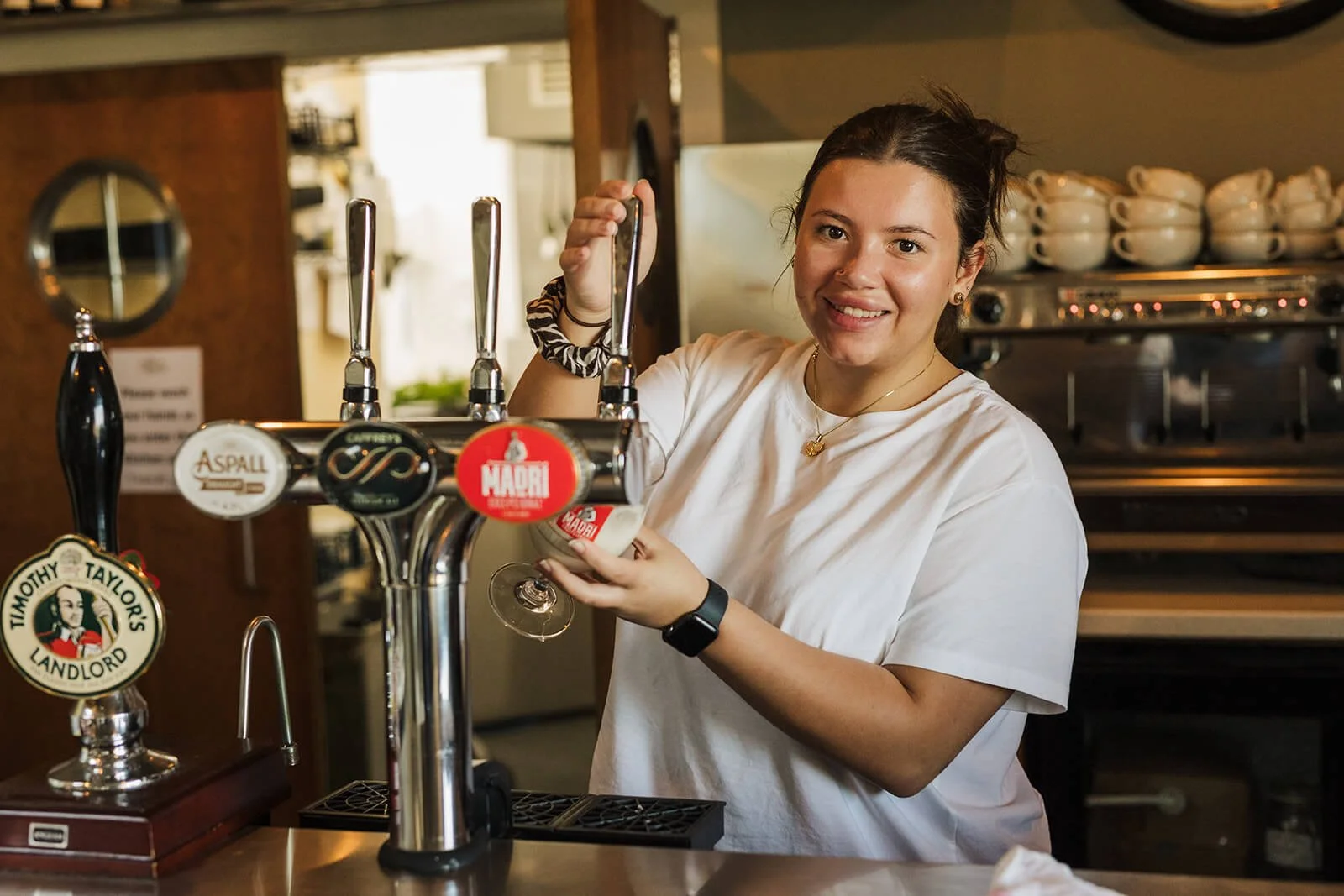
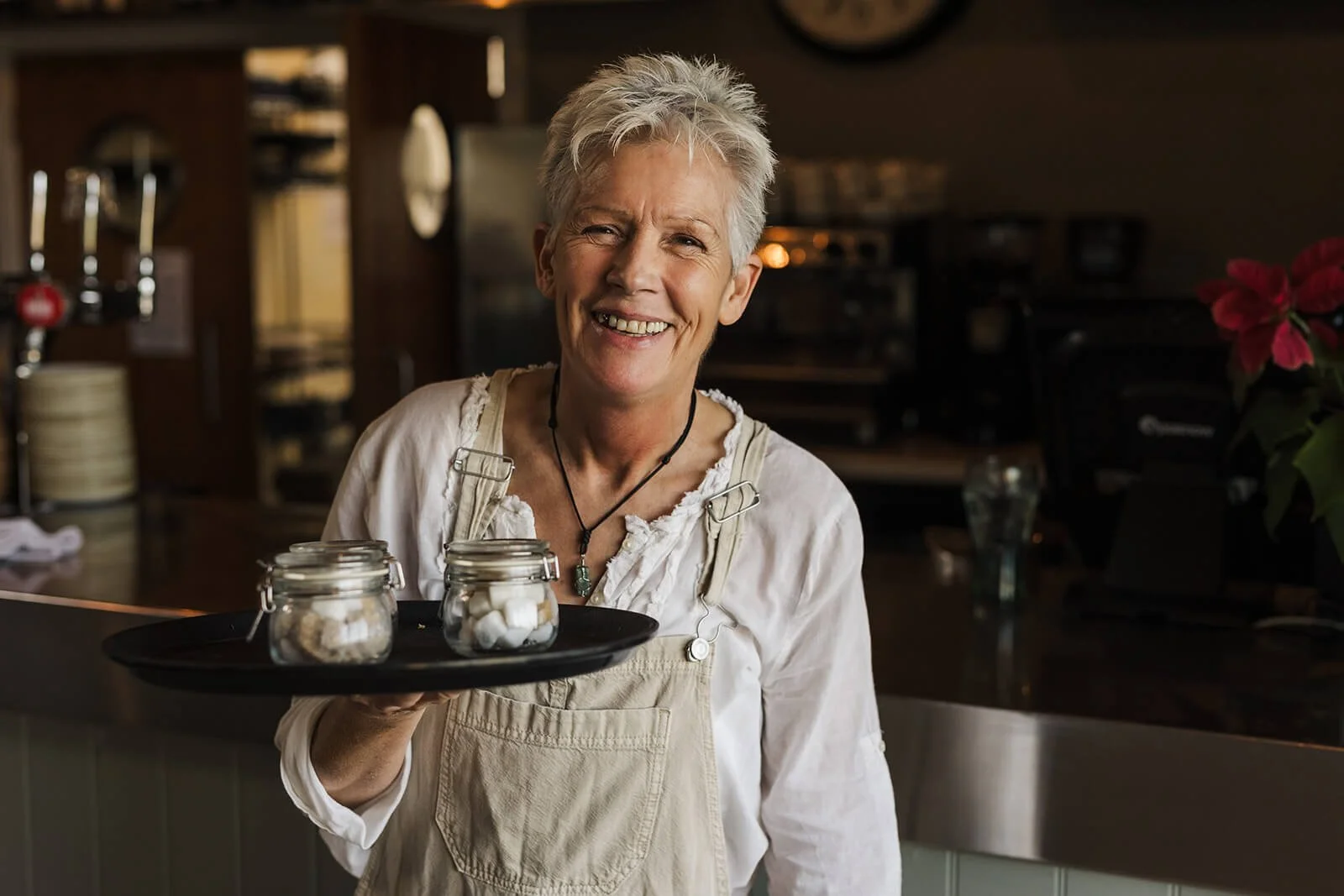
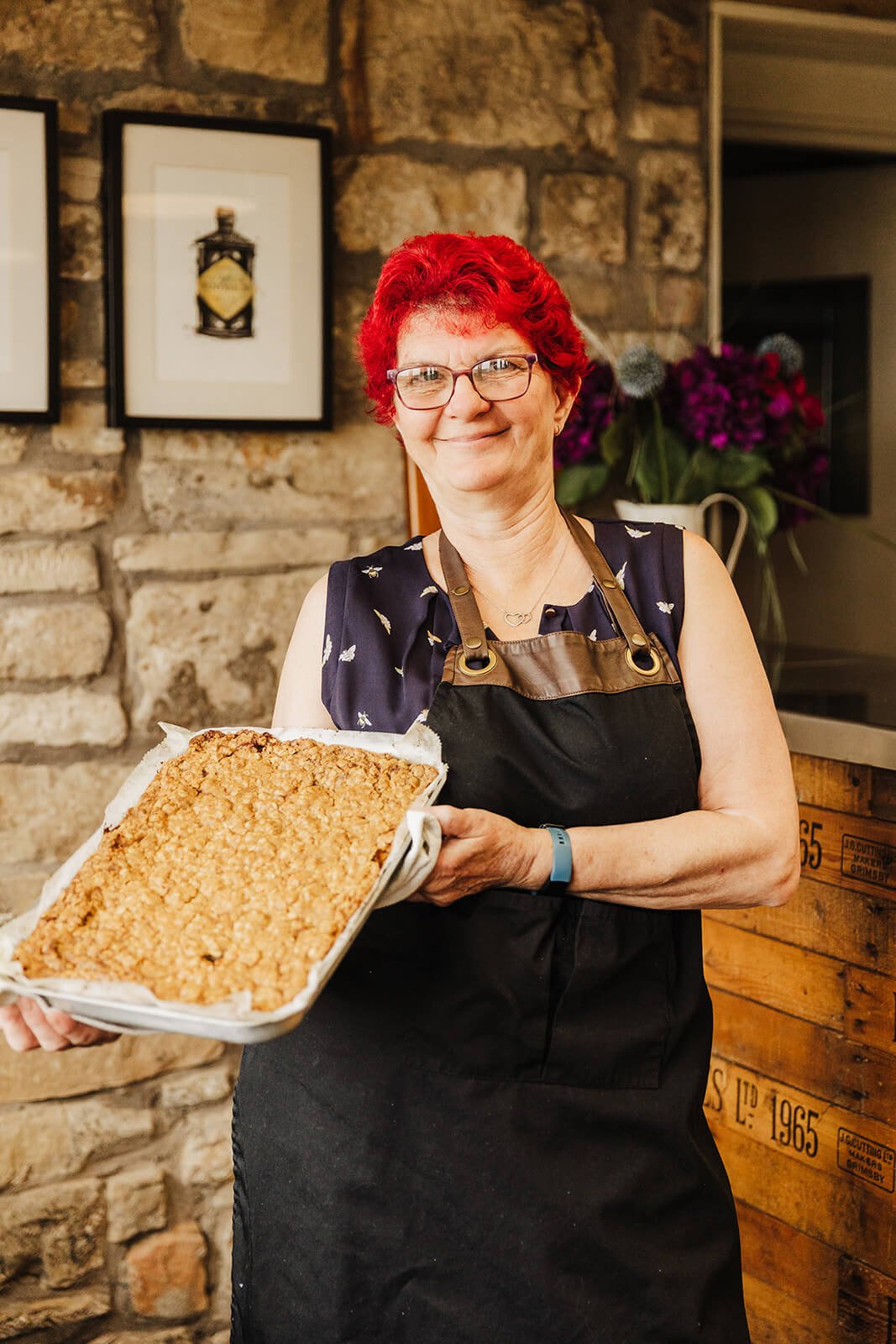
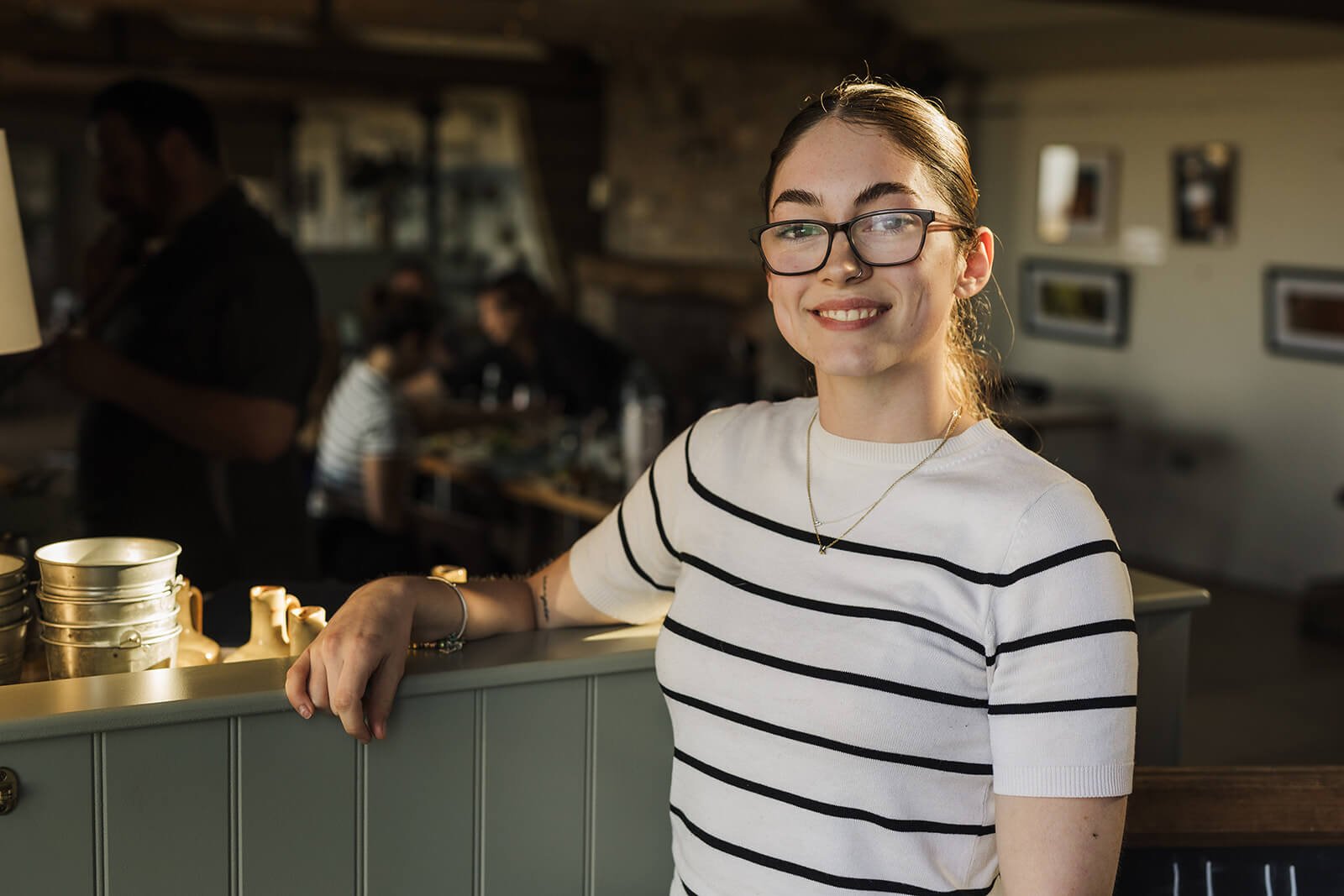
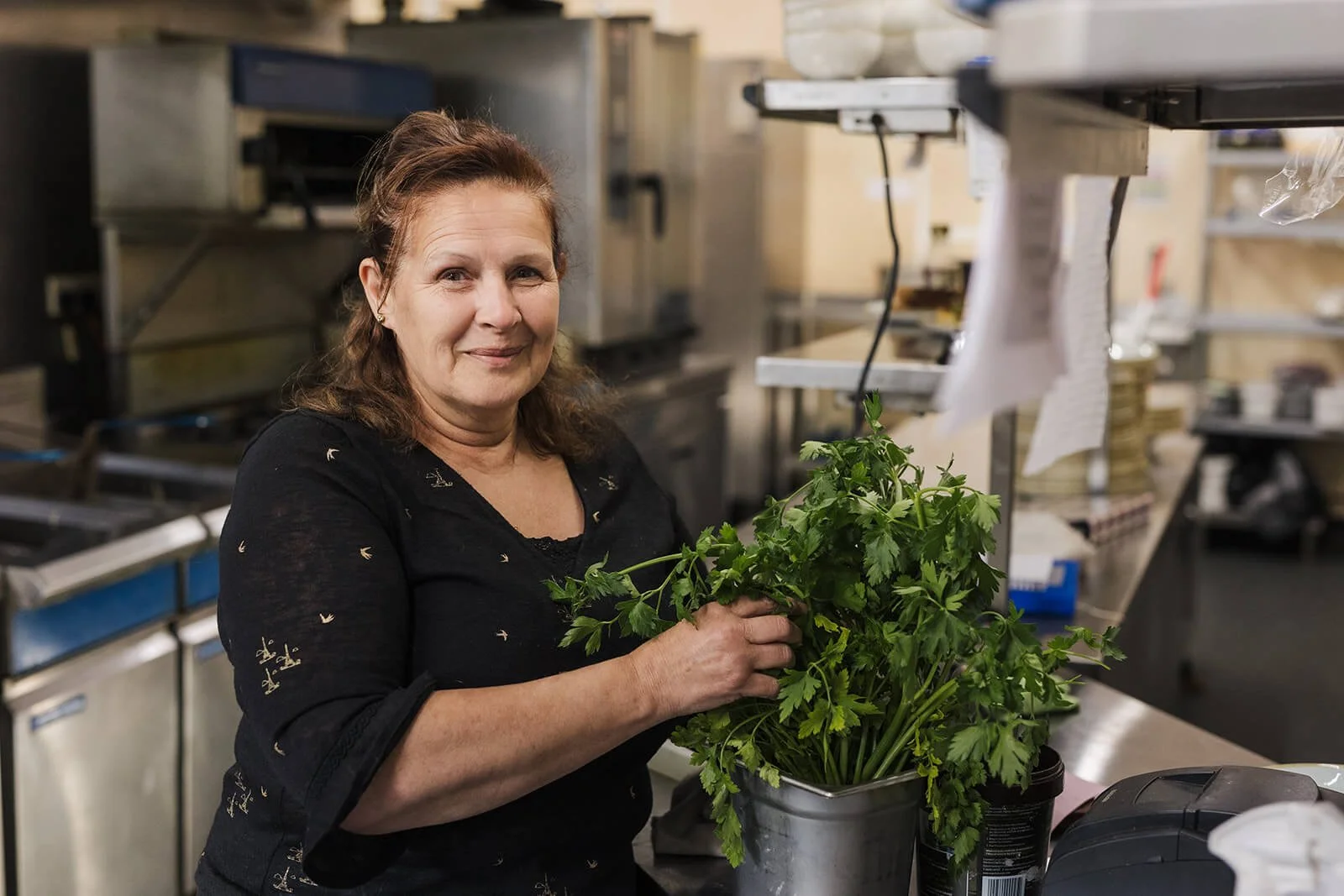
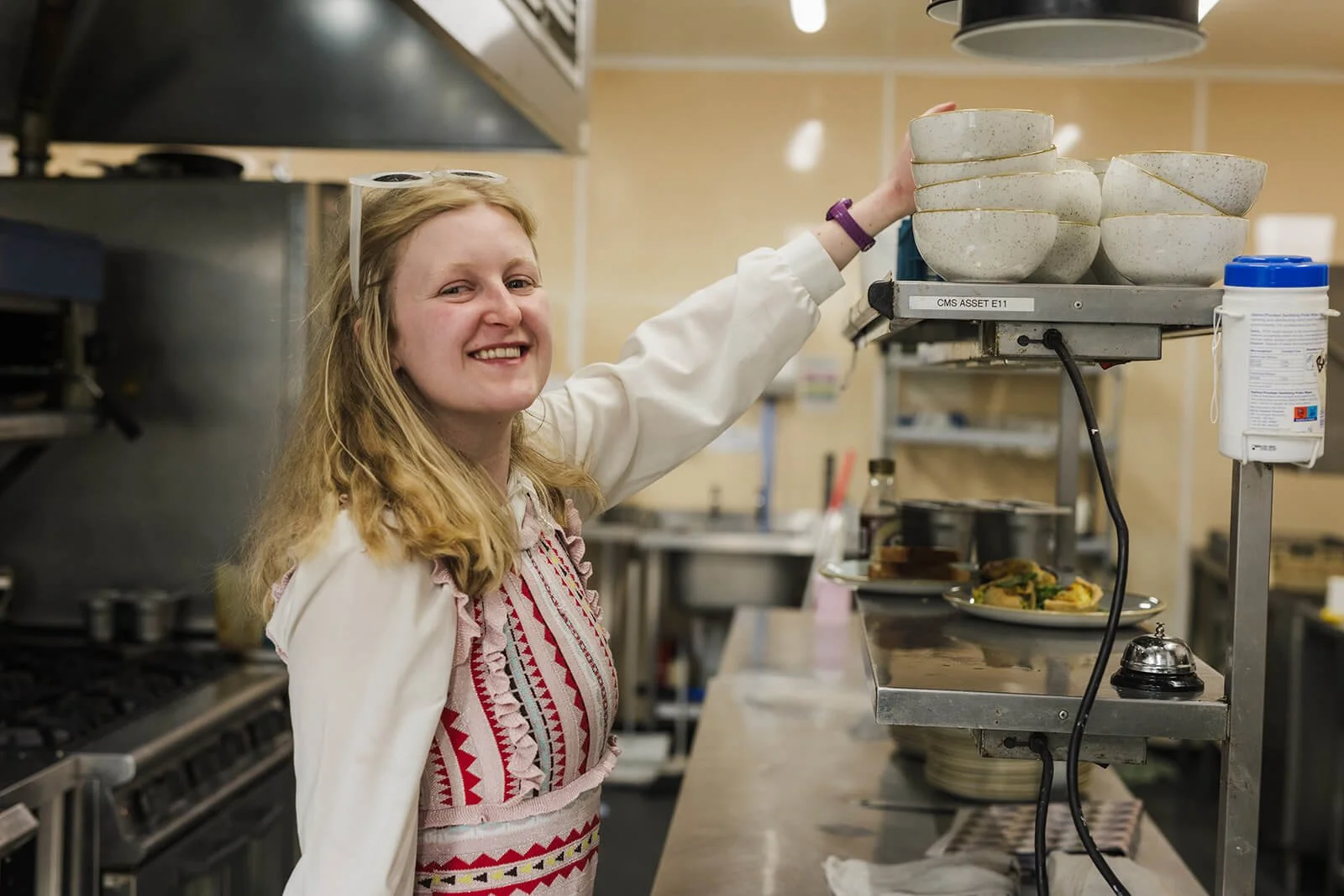
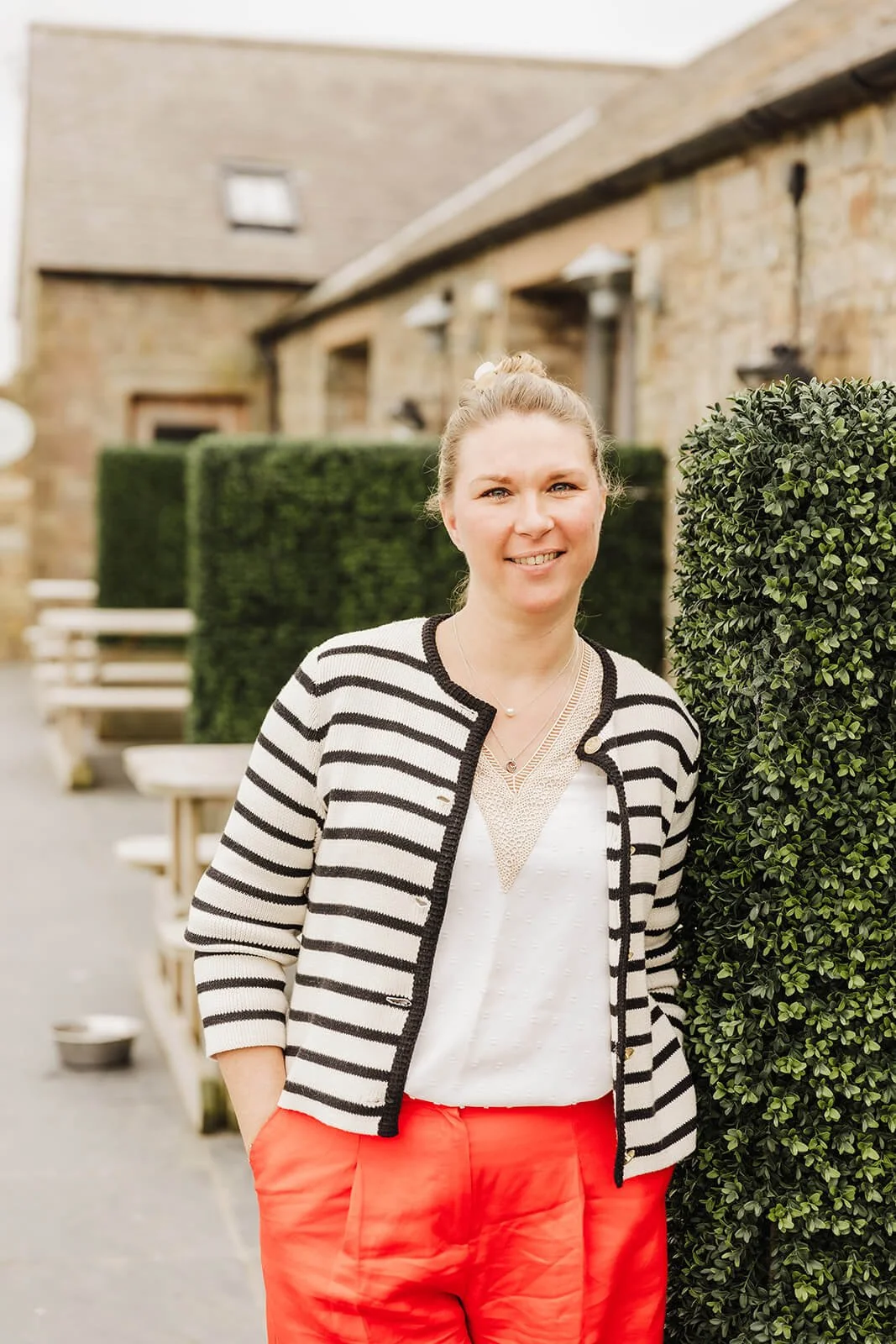
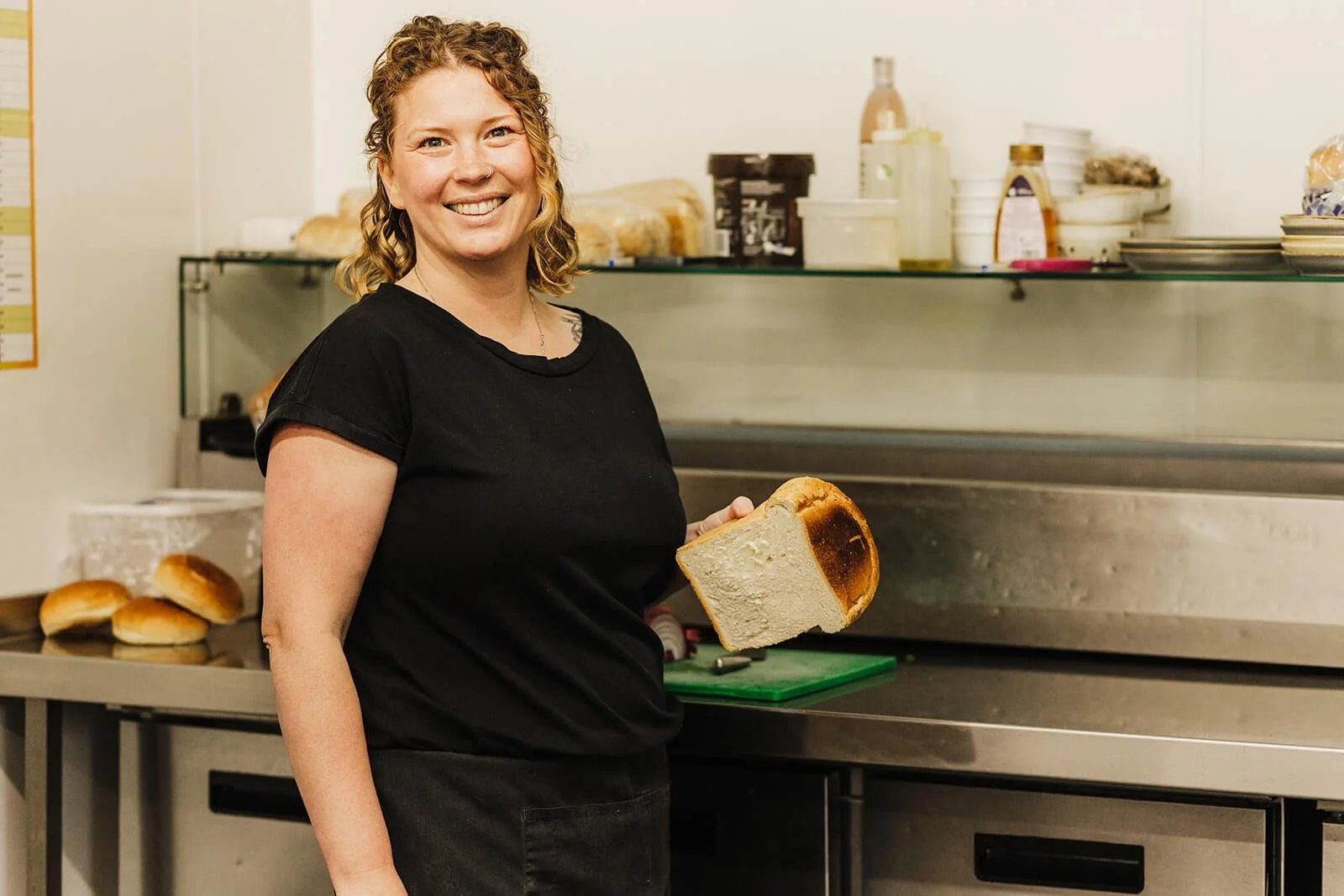
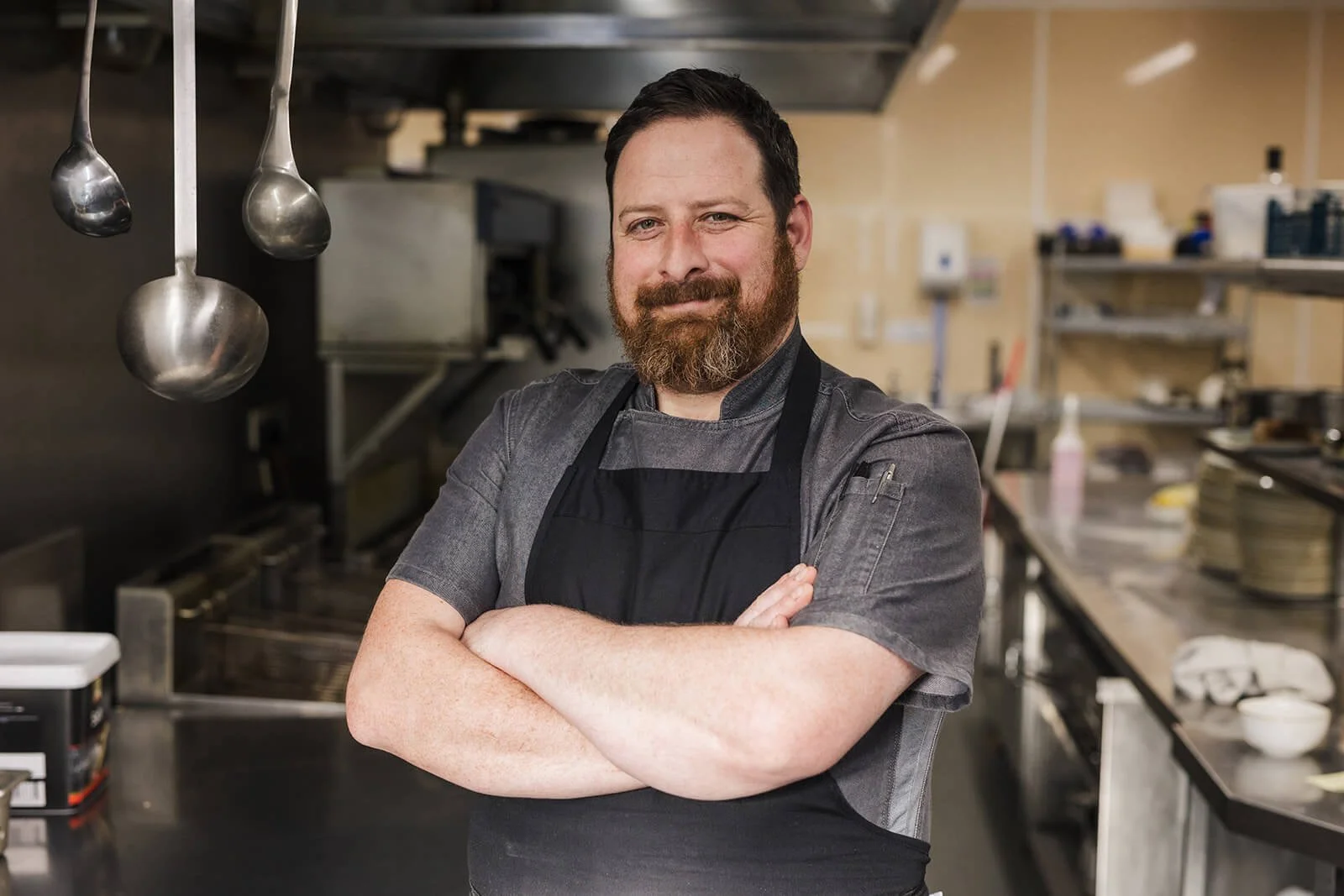
Brand Photography Types in Real Life: Barn at Beal
Barn at Beal is such a good example of why choosing the right types of brand photography matters.
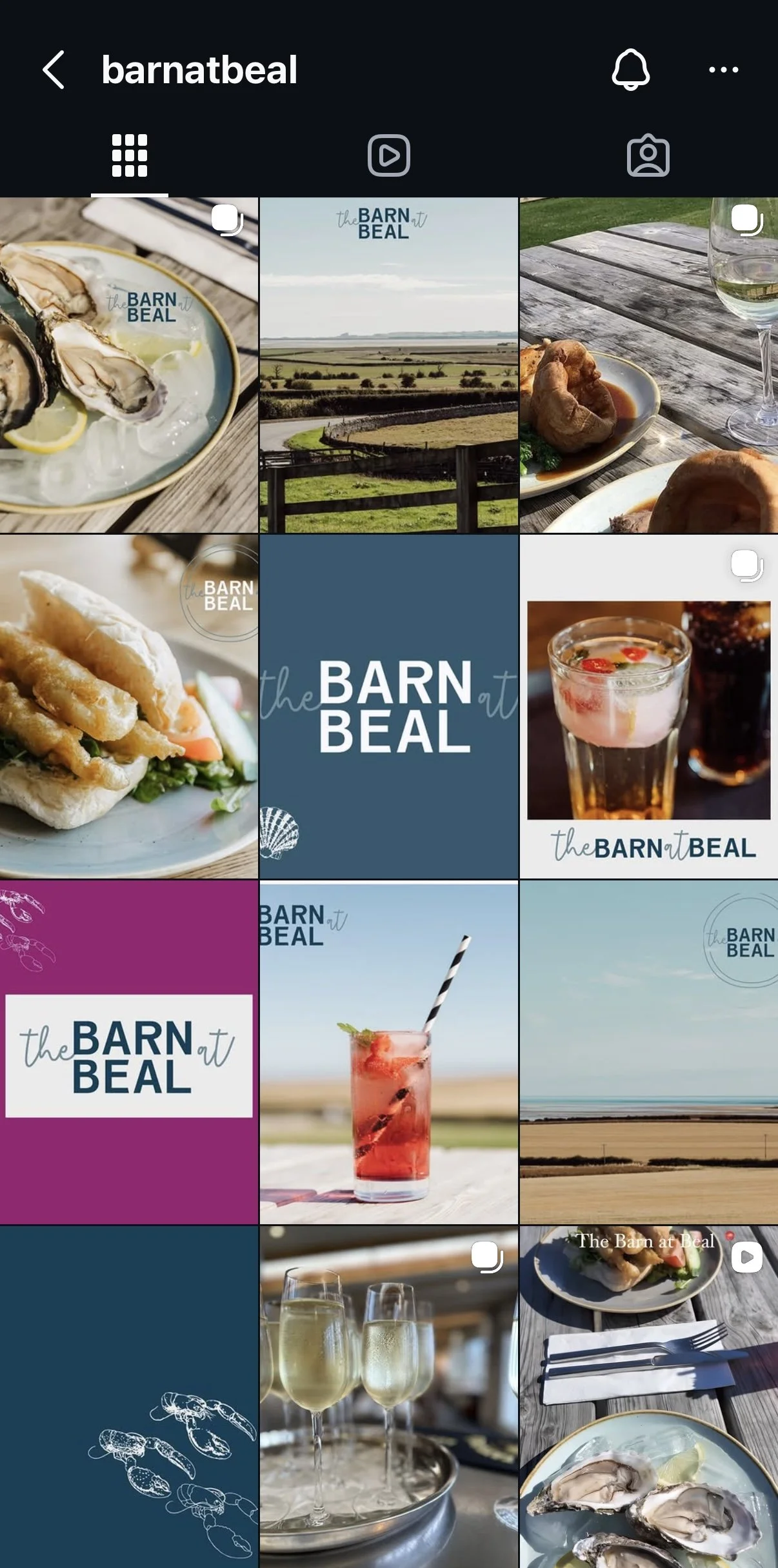
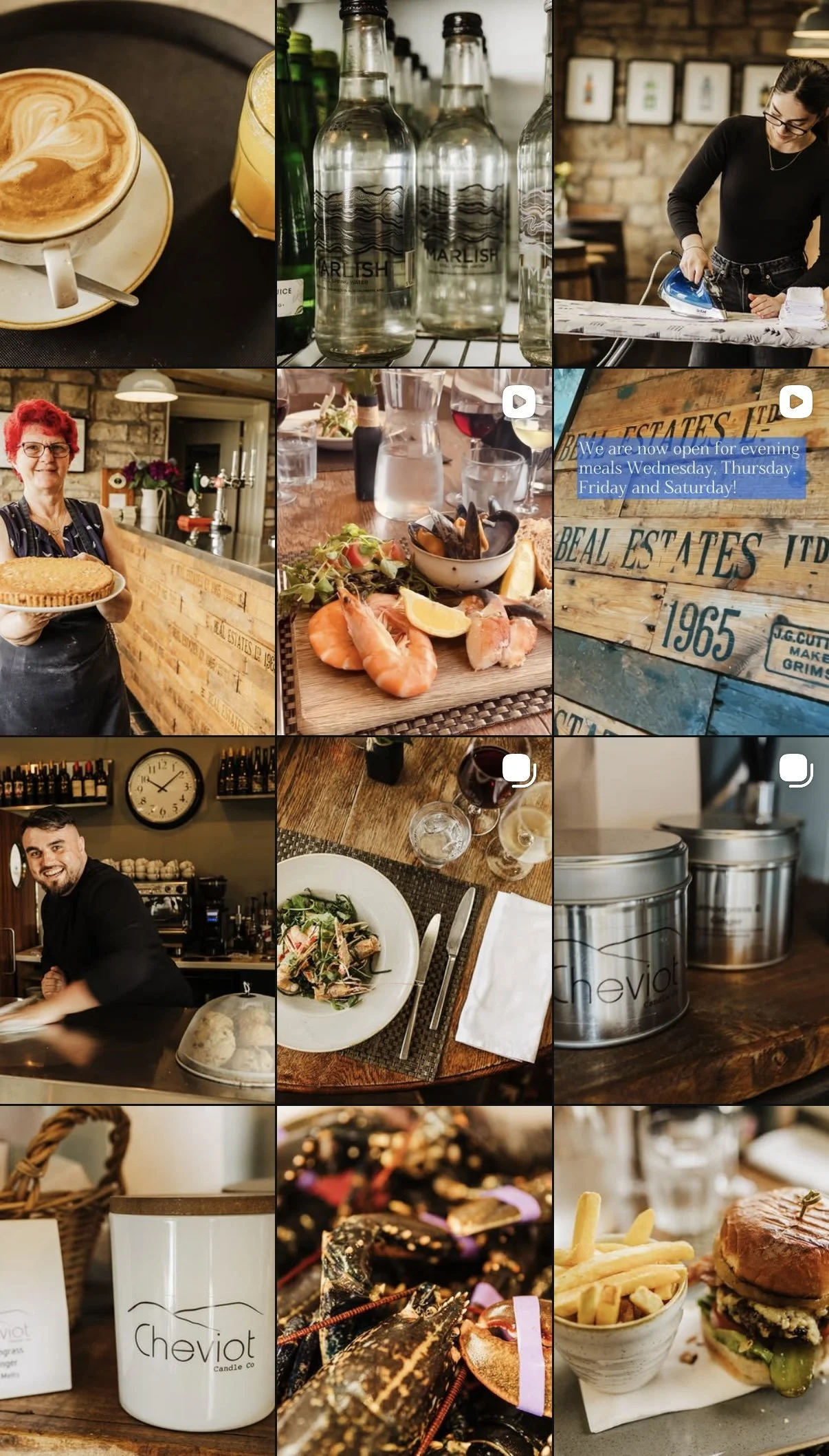
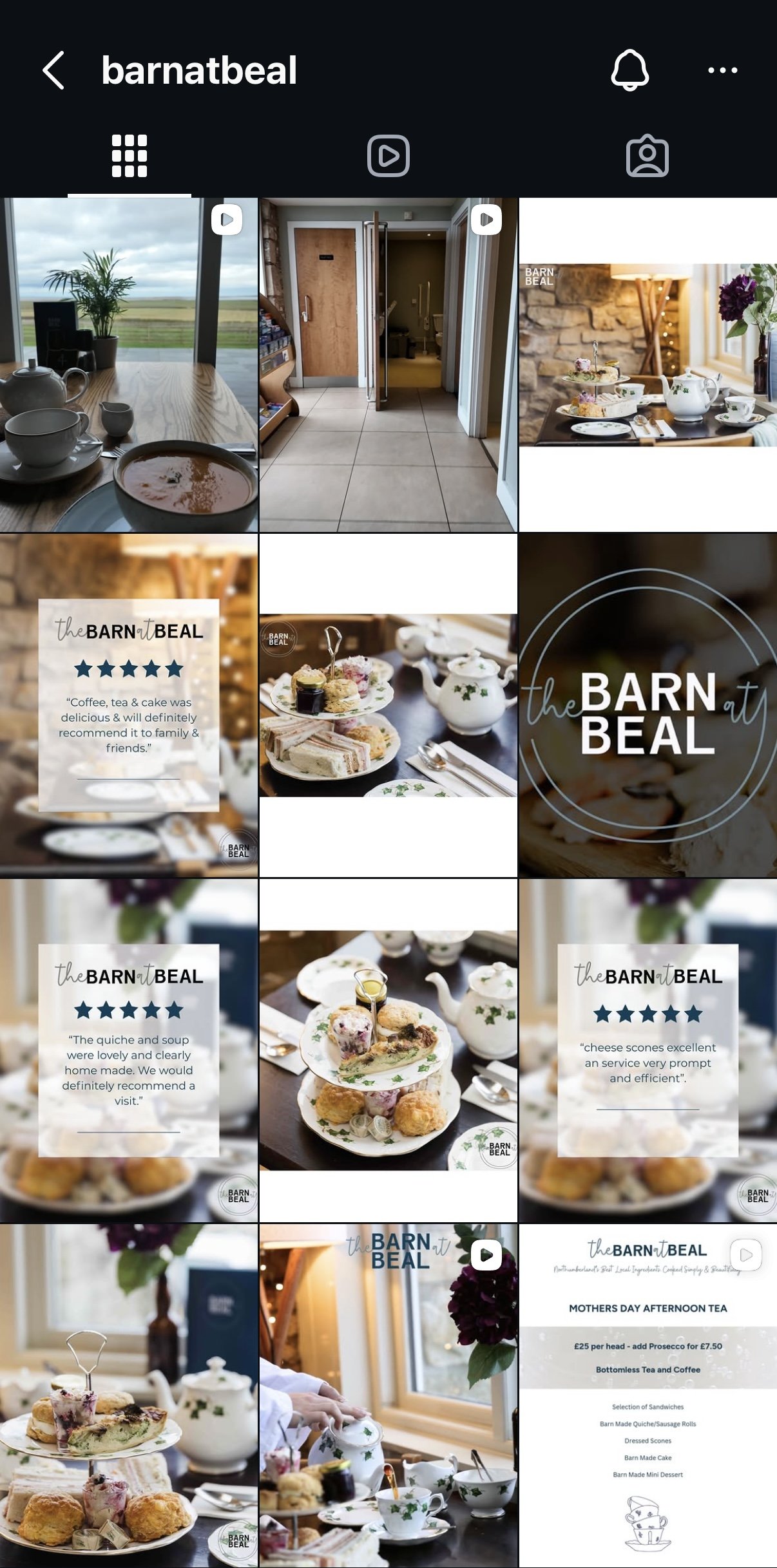
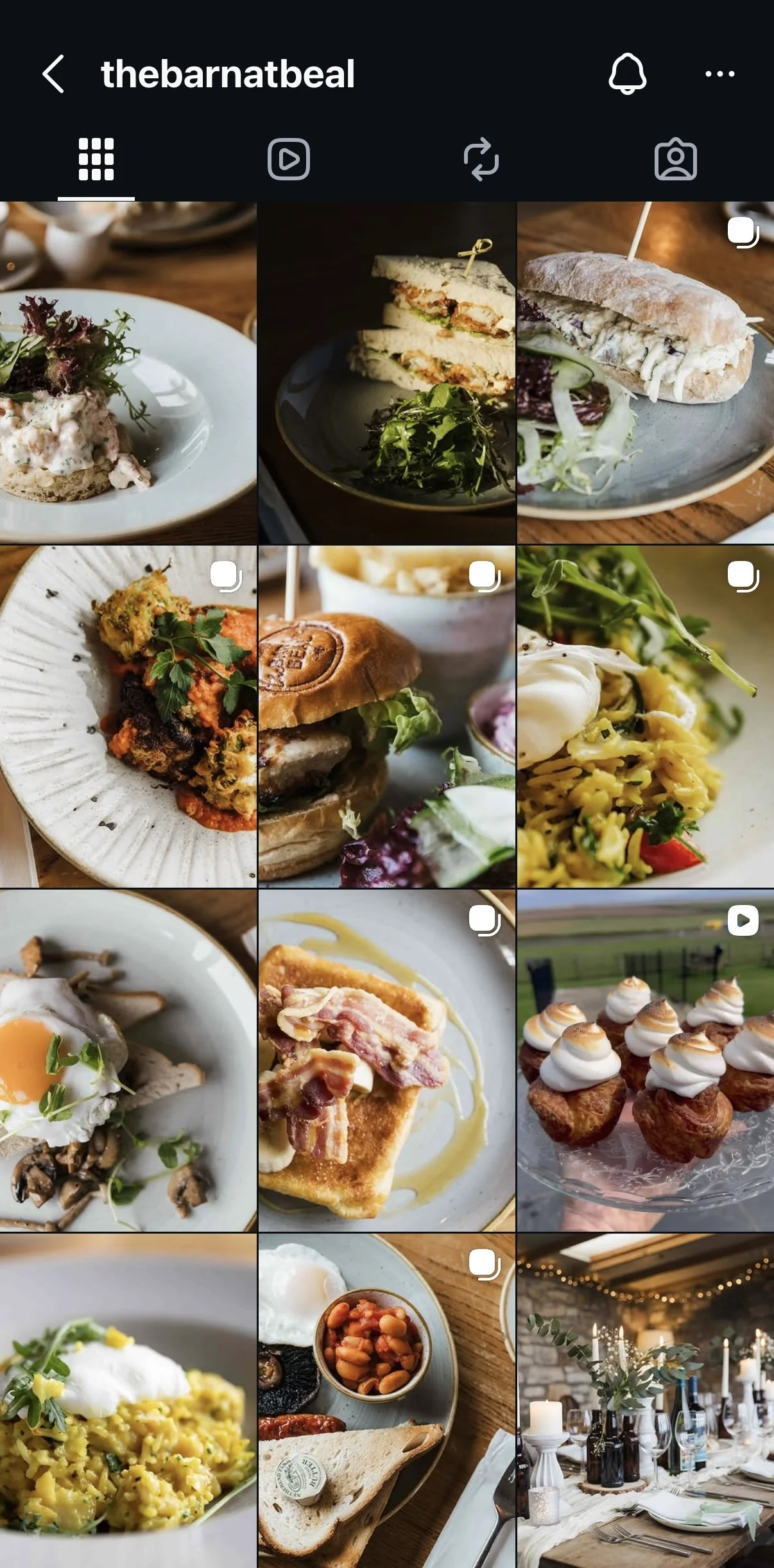
We’ve created a variety of images for them over time, including promotional social media content, product photography of their items and food, and wider brand imagery that supports how they show up across their website and social media.
And that’s exactly why they work so well as a case study here.
They are not relying on one type of image to do every job.
Instead, the photography supports different parts of the business:
product images help show what’s available clearly and attractively
promotional content gives them fresh visuals for social media
brand-led imagery helps create a consistent feel across their online presence
food and item photography helps make what they offer feel tangible and appealing
wider visual storytelling helps people connect with the business before they visit
That mix is often what makes the biggest difference.
Barn at Beal use their images well because the photography is serving a purpose. It is not just there to fill space. It helps support their marketing, website, and day-to-day visibility as a business.
What works especially well is having a thoughtful mix of images that can be used in different places, from social media to website pages to promotional content. When photography is planned with that in mind, it tends to feel much more useful day to day.
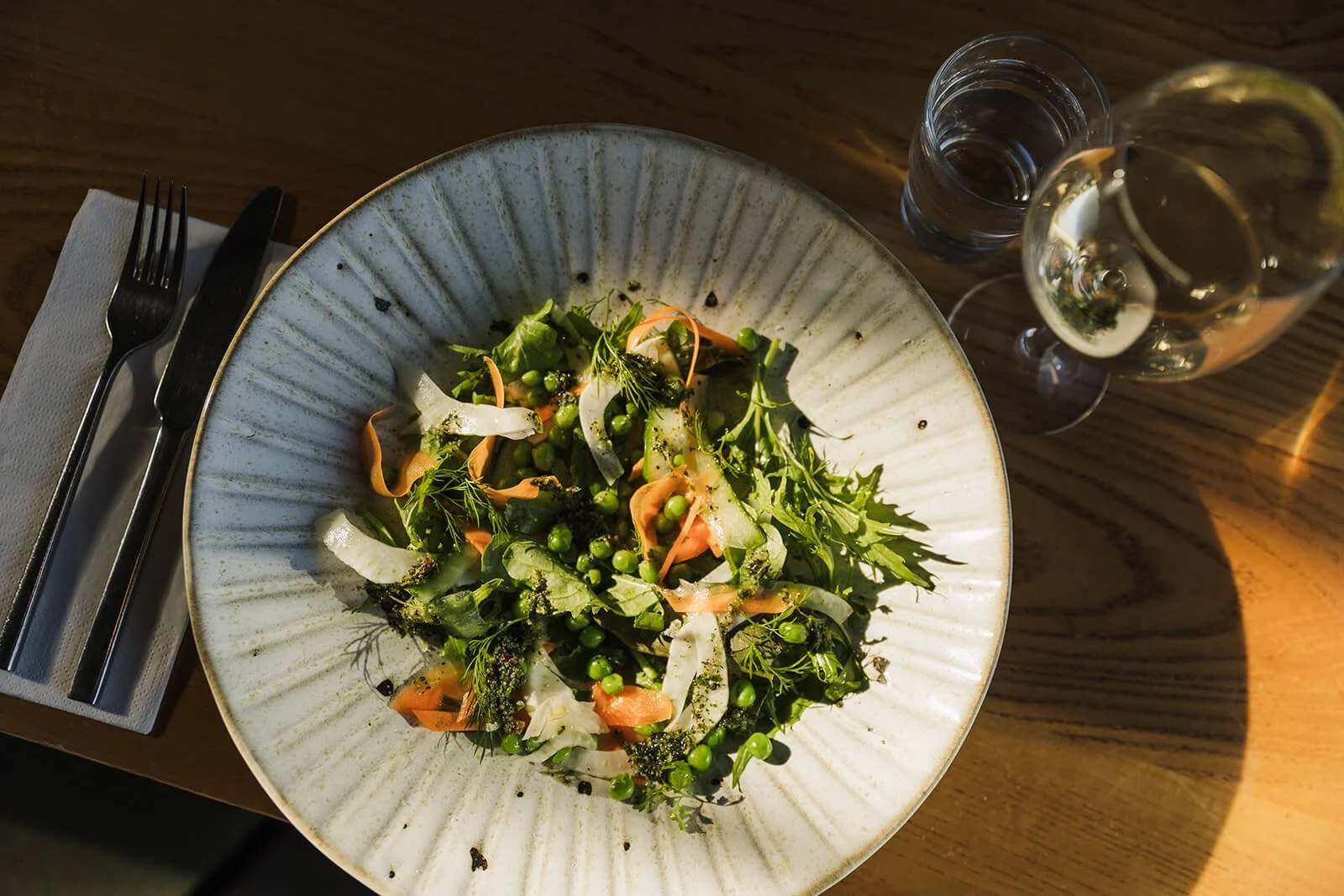
Brand photography capturing a carefully plated dish to showcase menu quality at Barn at Beal.
Barn at Beal Campaign Photography
Another reason Barn at Beal are such a strong example for this is that the photography has not just supported the business in a general, day-to-day way. It has also helped bring specific campaigns and seasonal moments to life throughout the year.
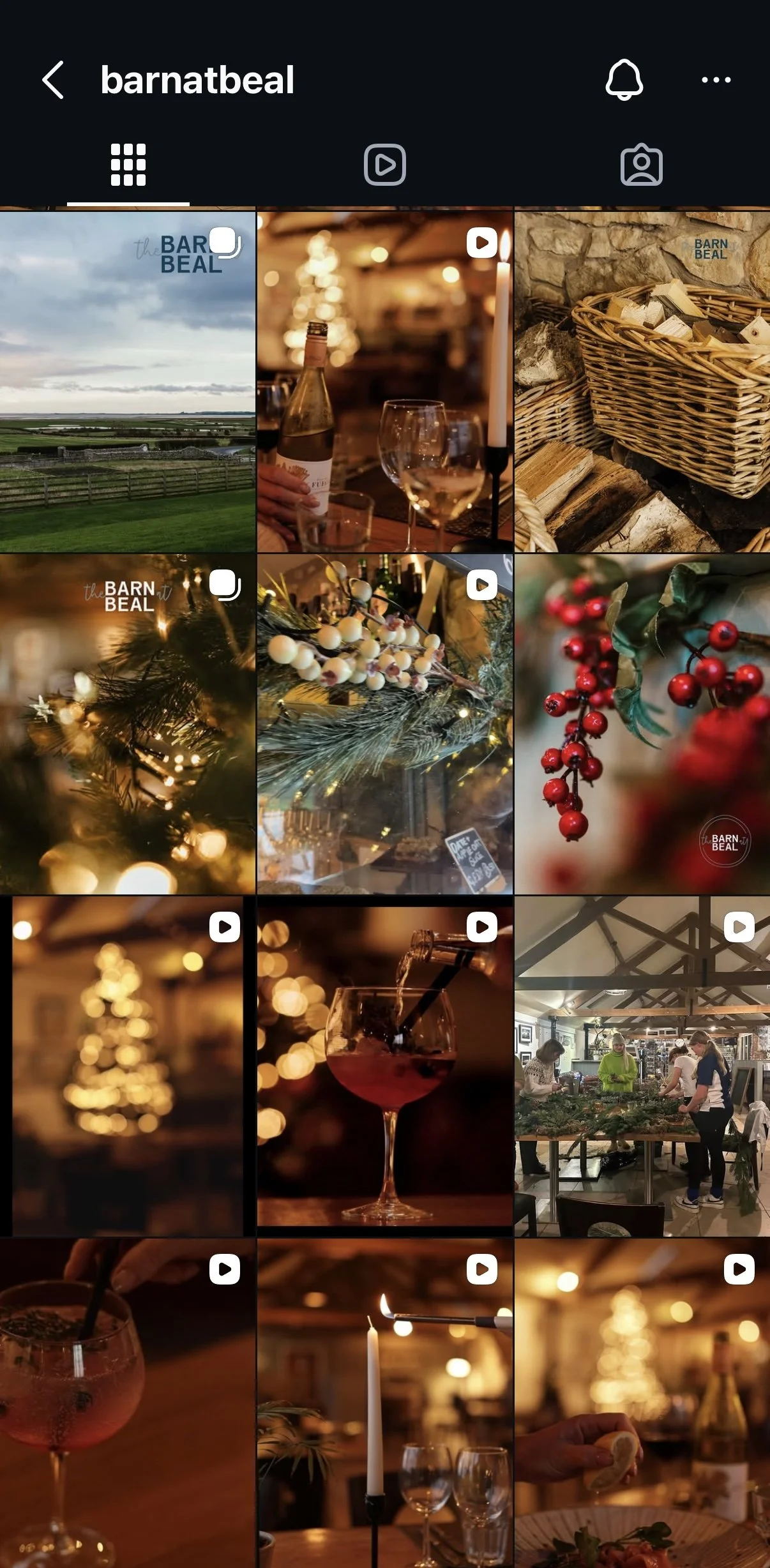
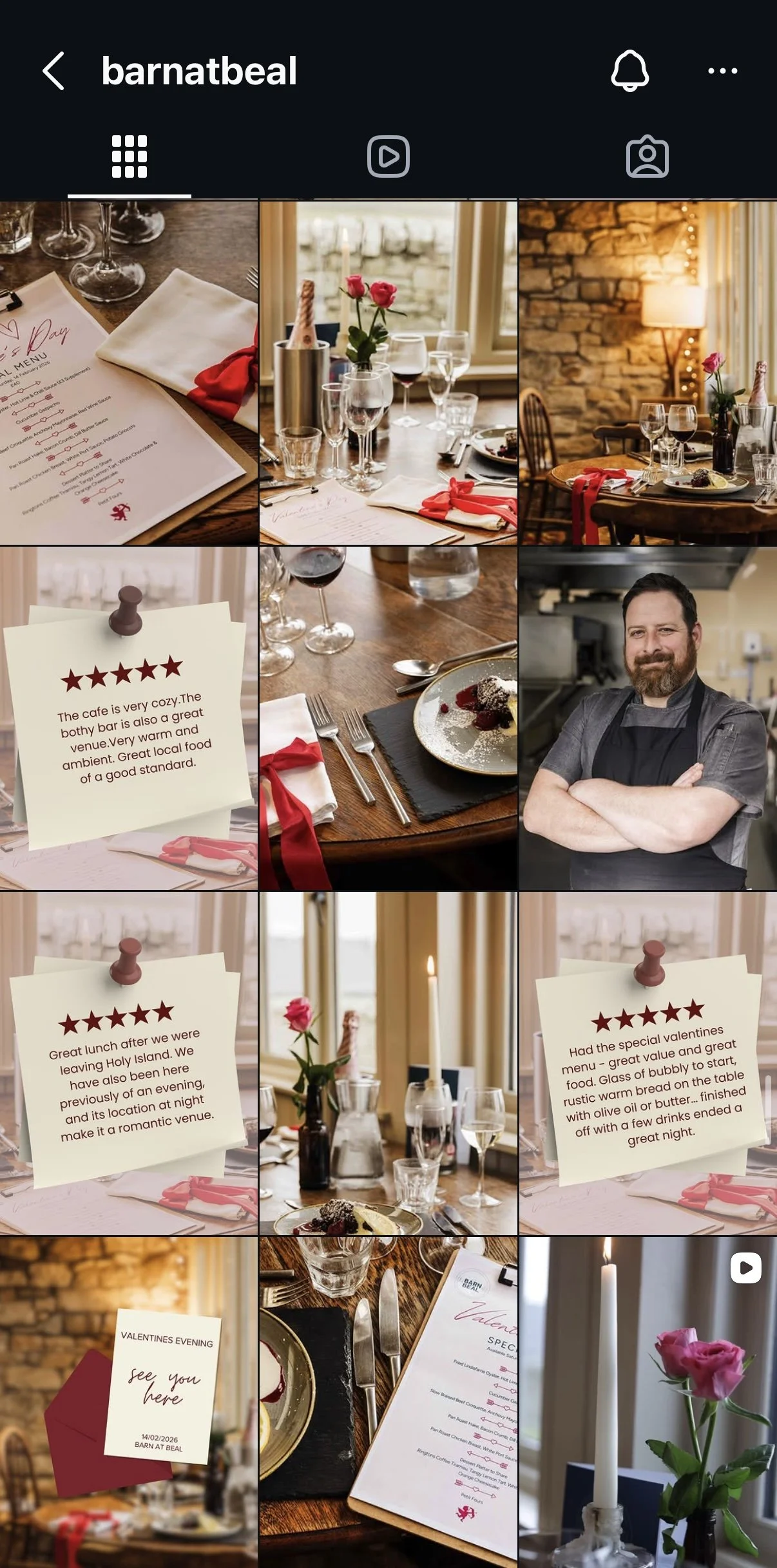
Over time, we’ve created imagery for a range of campaigns including Valentine’s Day, Mother’s Day, weddings, new menu launches, Christmas, tasting evenings, and Easter. Each of these needed something slightly different in terms of mood, message, and how the images would be used.
That’s a really good example of why brand photography is not always one fixed thing. A business often needs different styles of images at different times, depending on what they are promoting.
For Barn at Beal, that has meant creating photography that could support:
seasonal campaigns like Christmas, Easter, Valentine’s Day and Mother’s Day
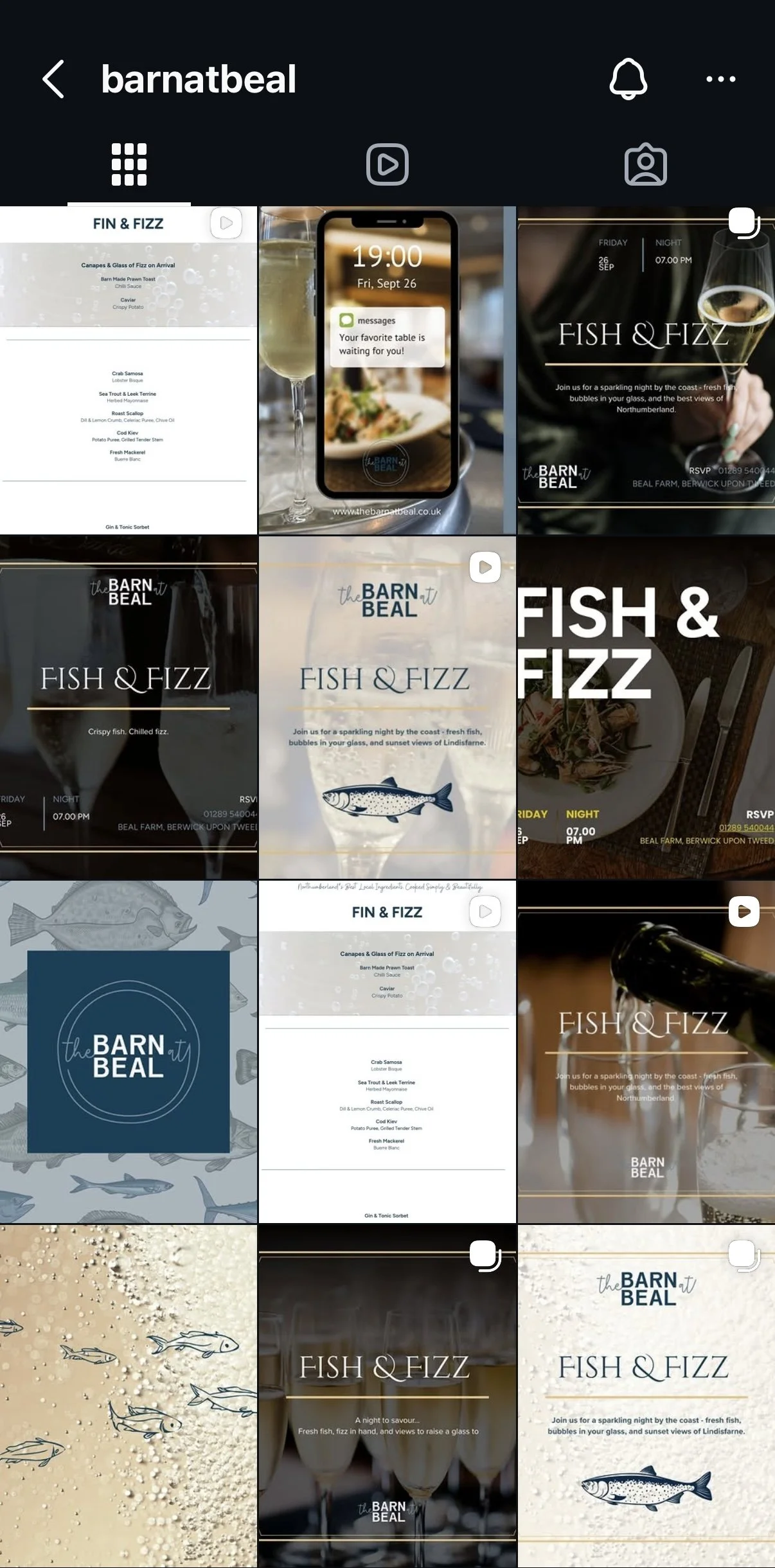
event promotion for weddings and tasting evenings
launch content for new menu releases
social media content that feels fresh and timely
website and marketing visuals that reflect what is happening in the business right now
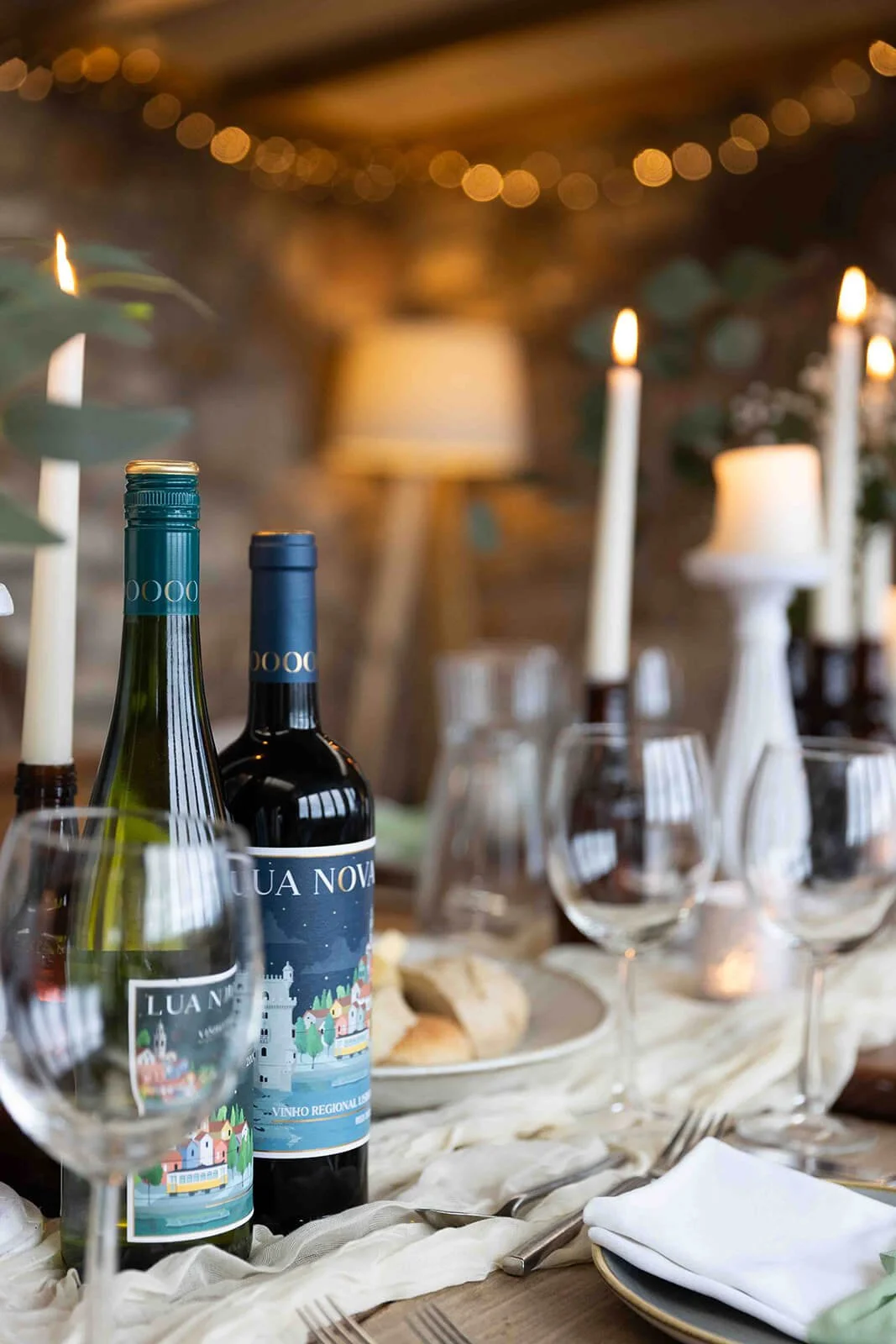
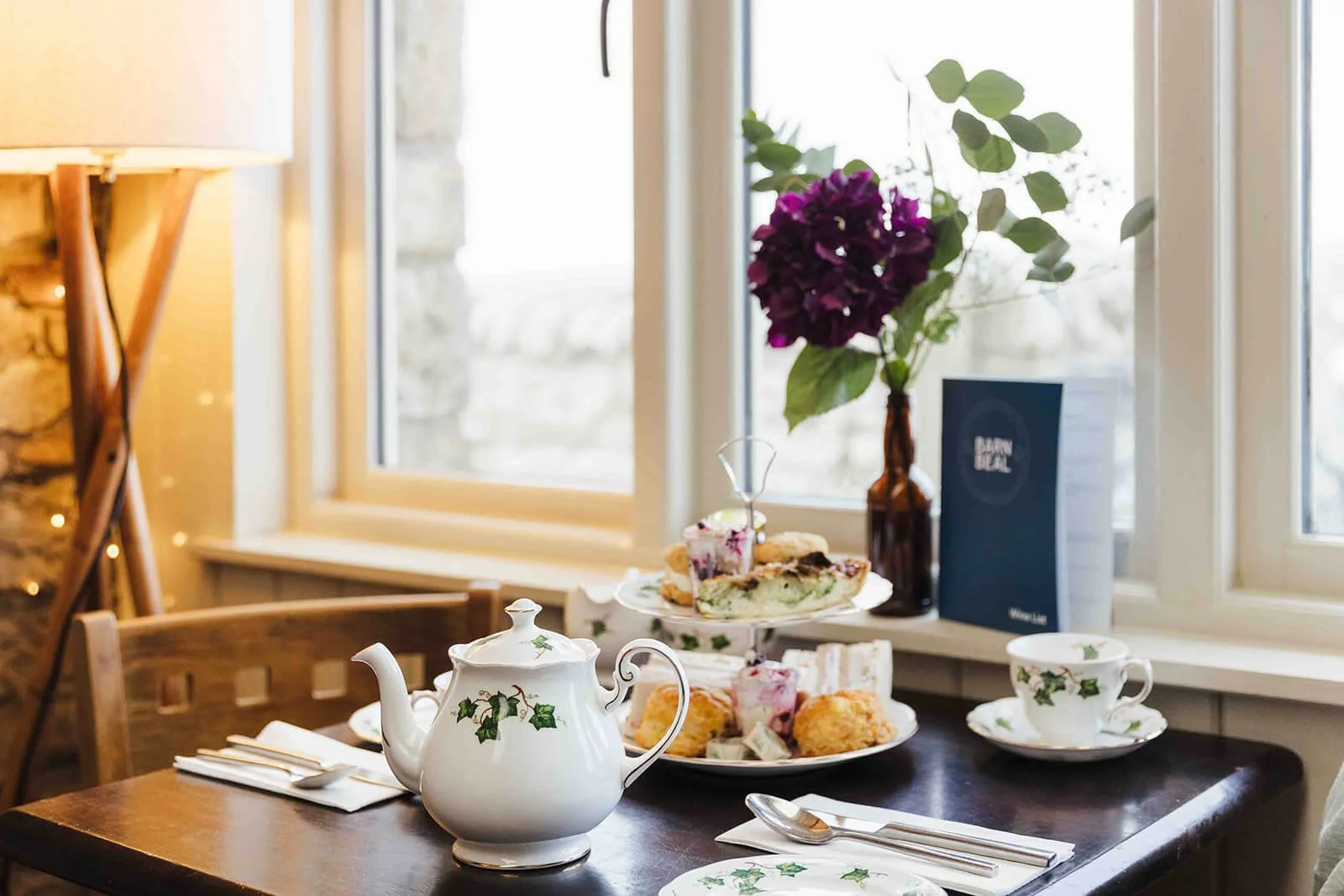
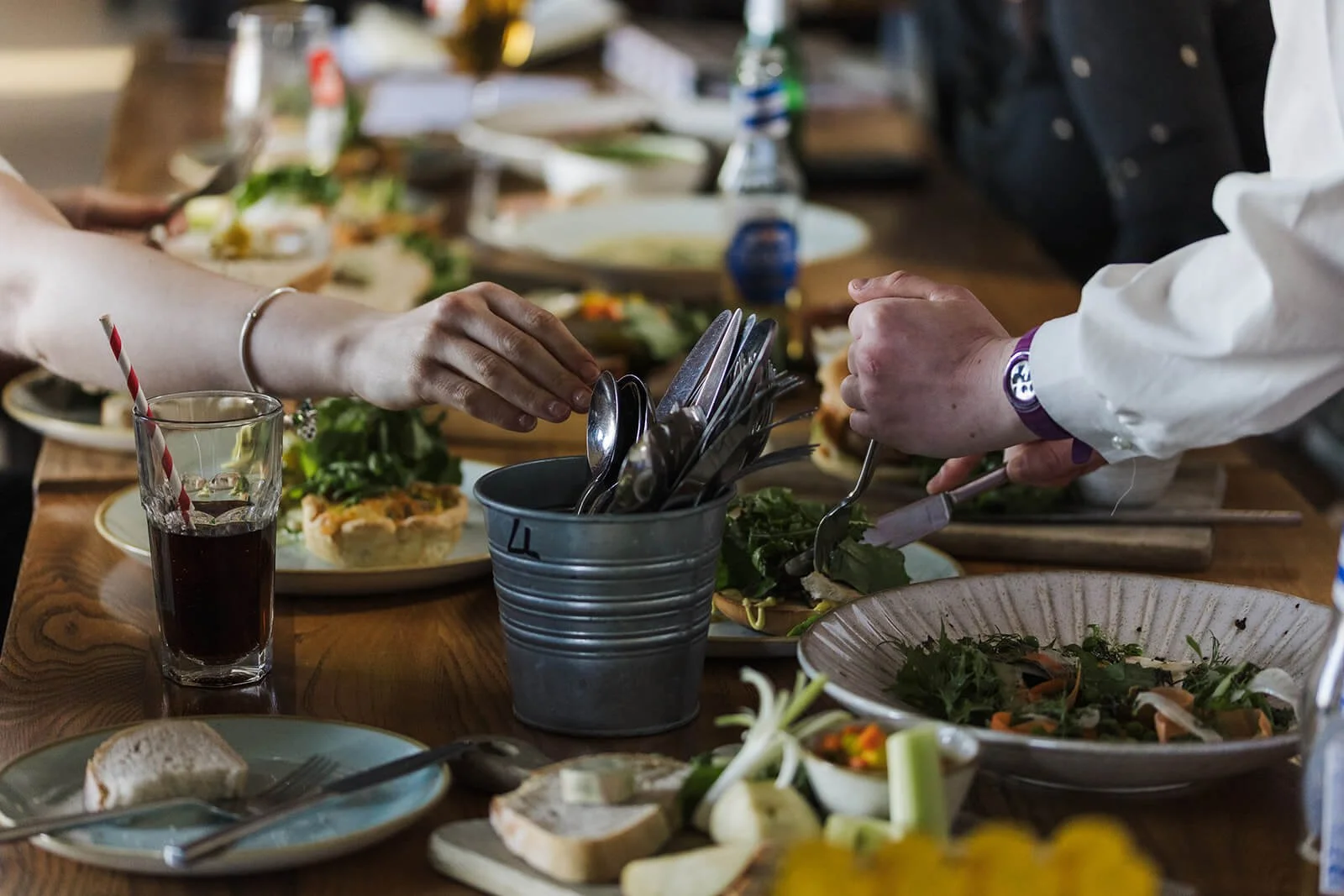
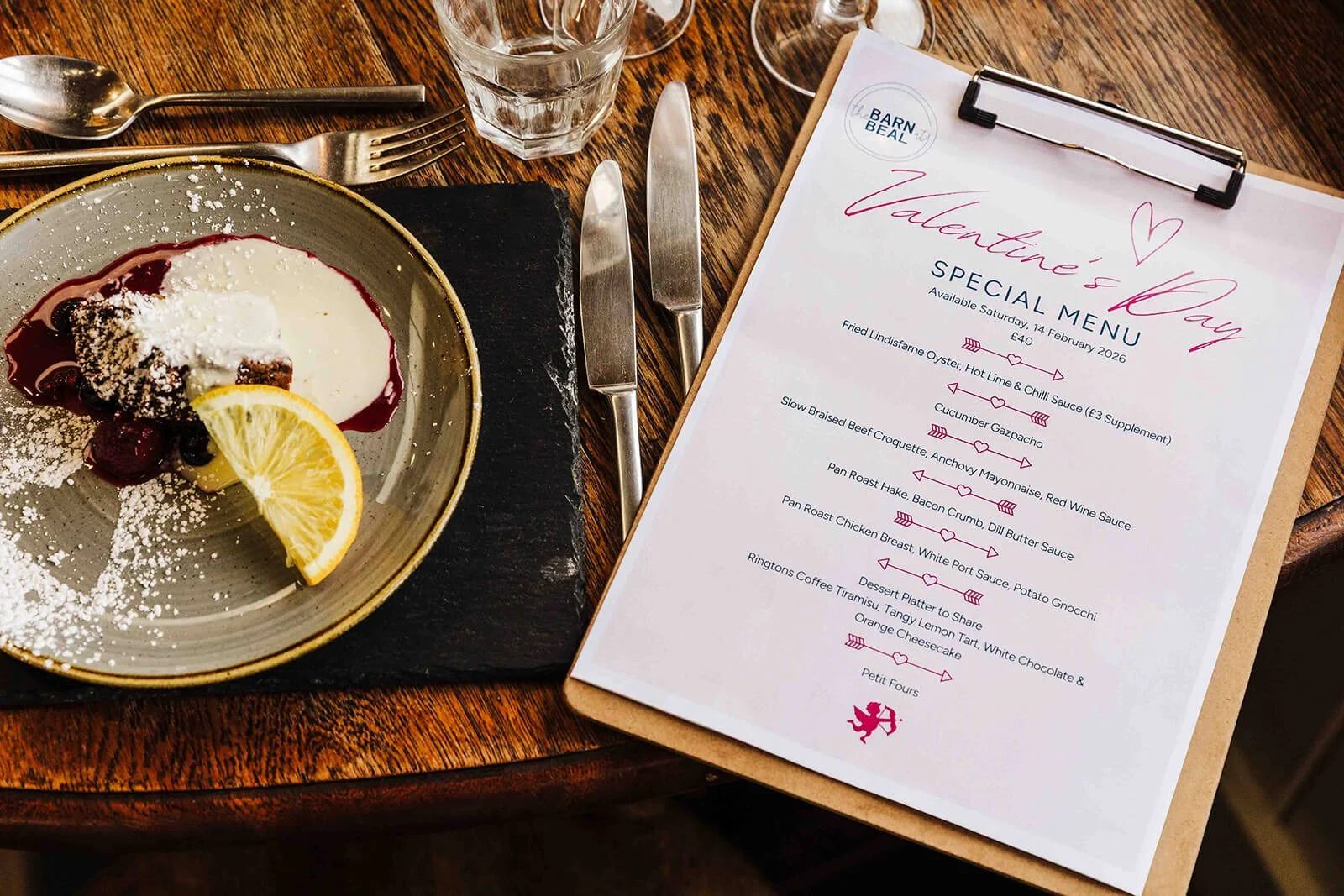
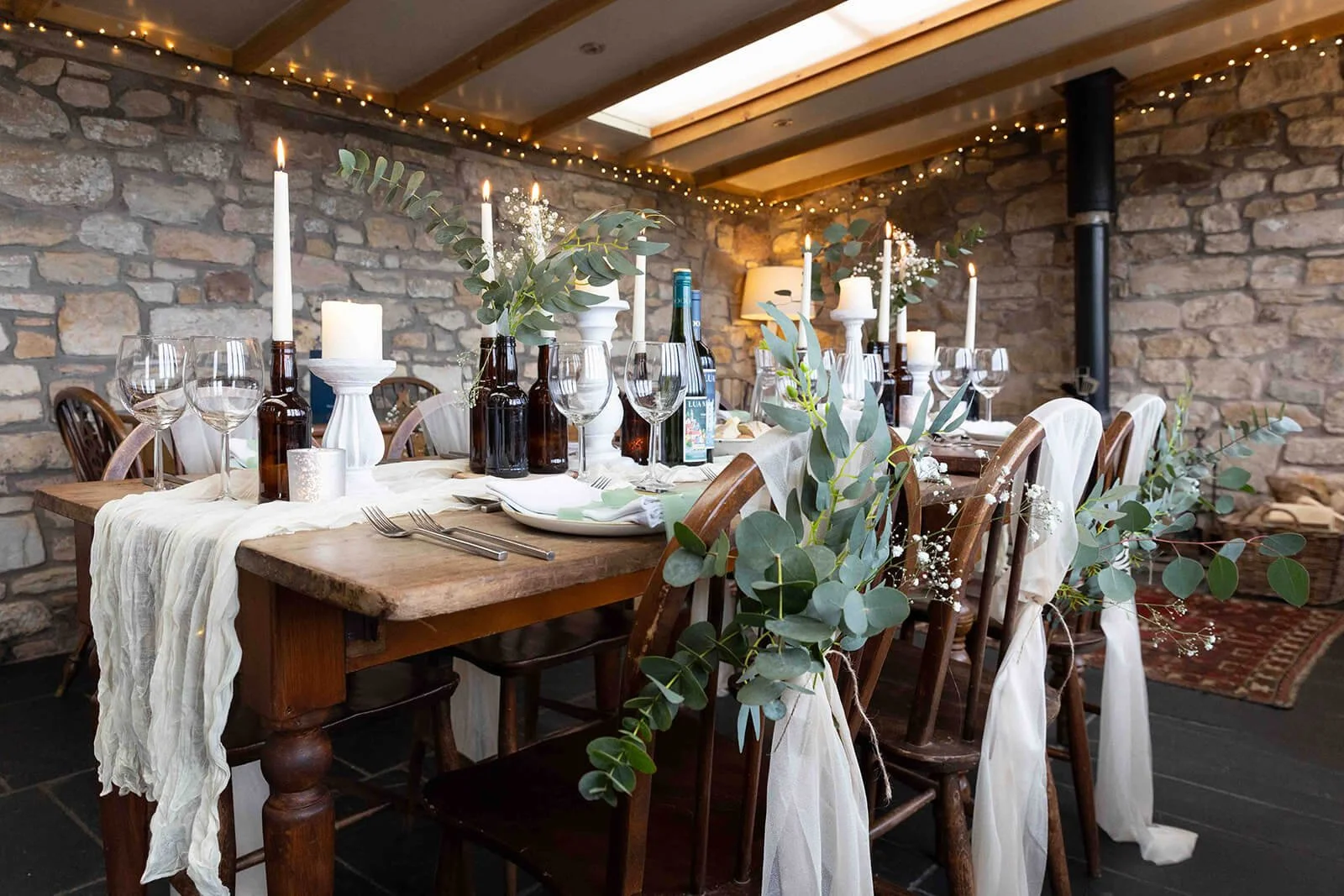
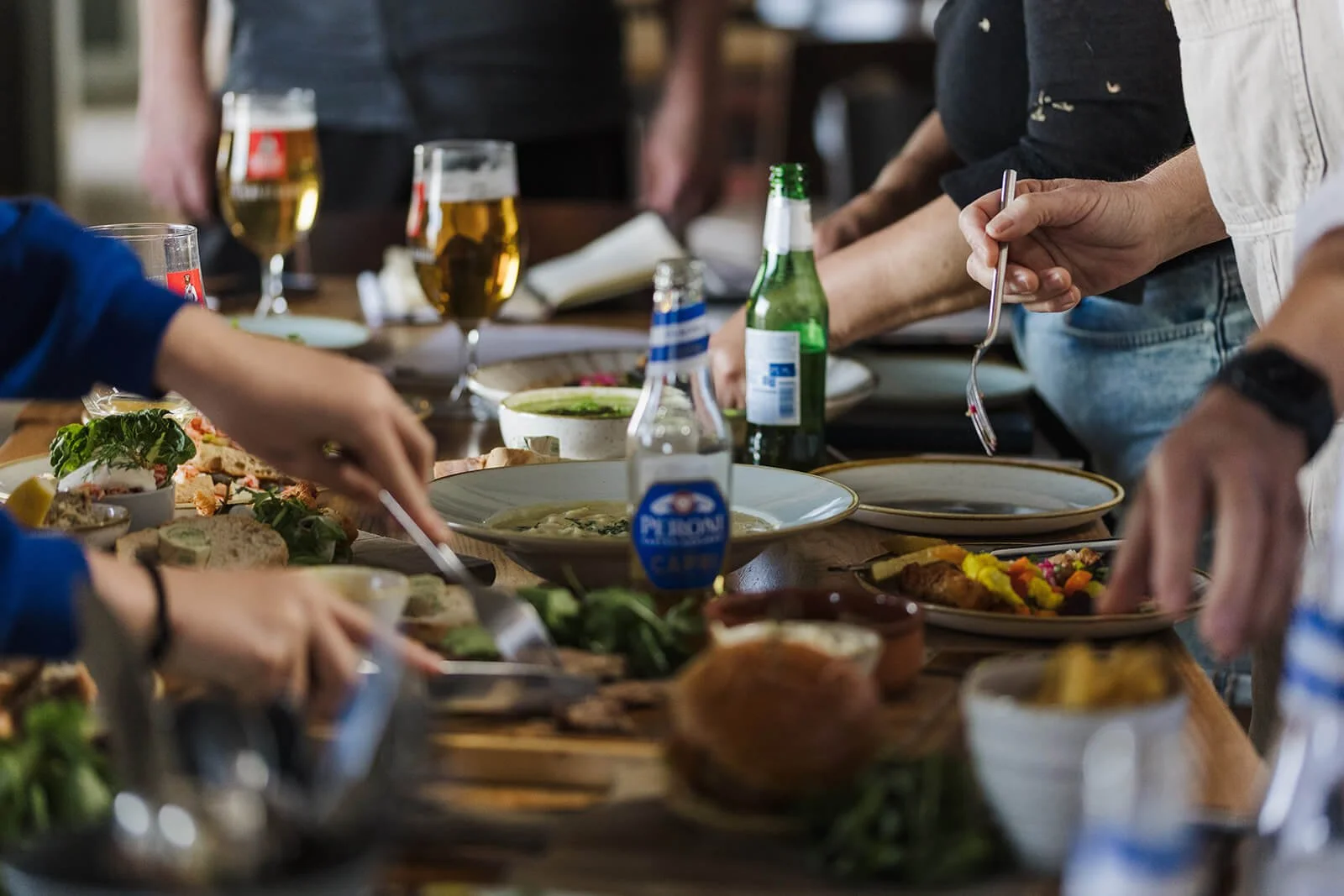
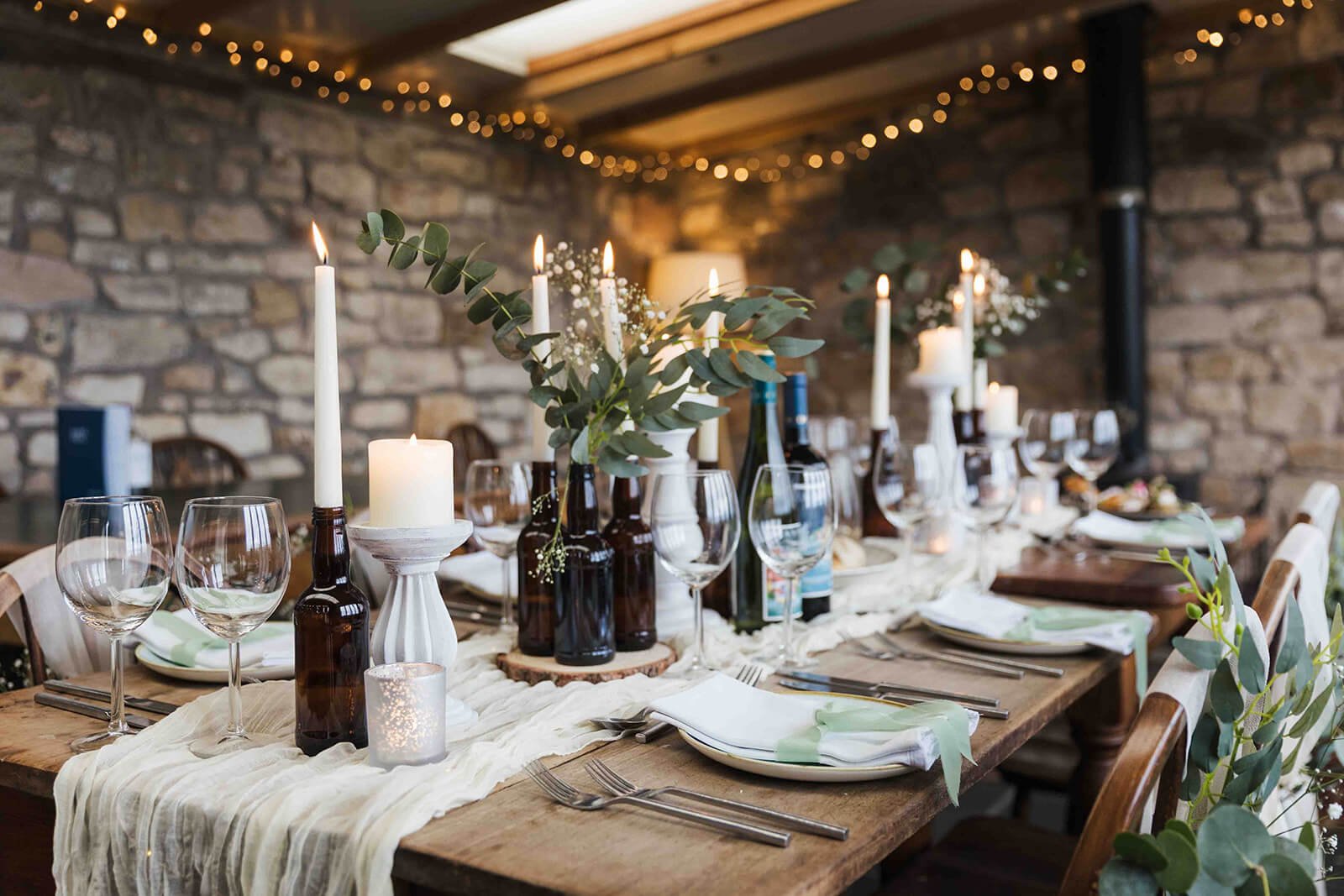
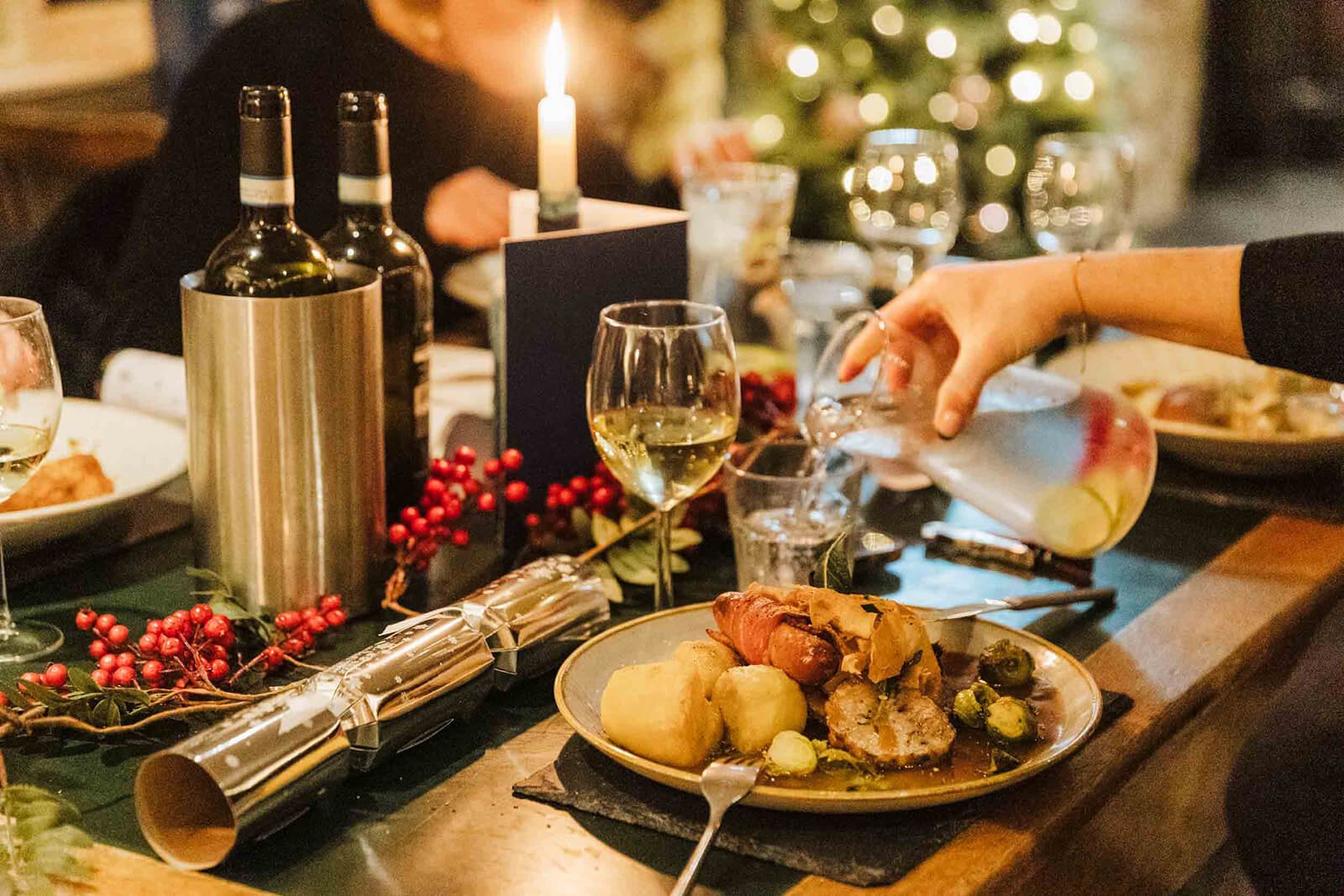
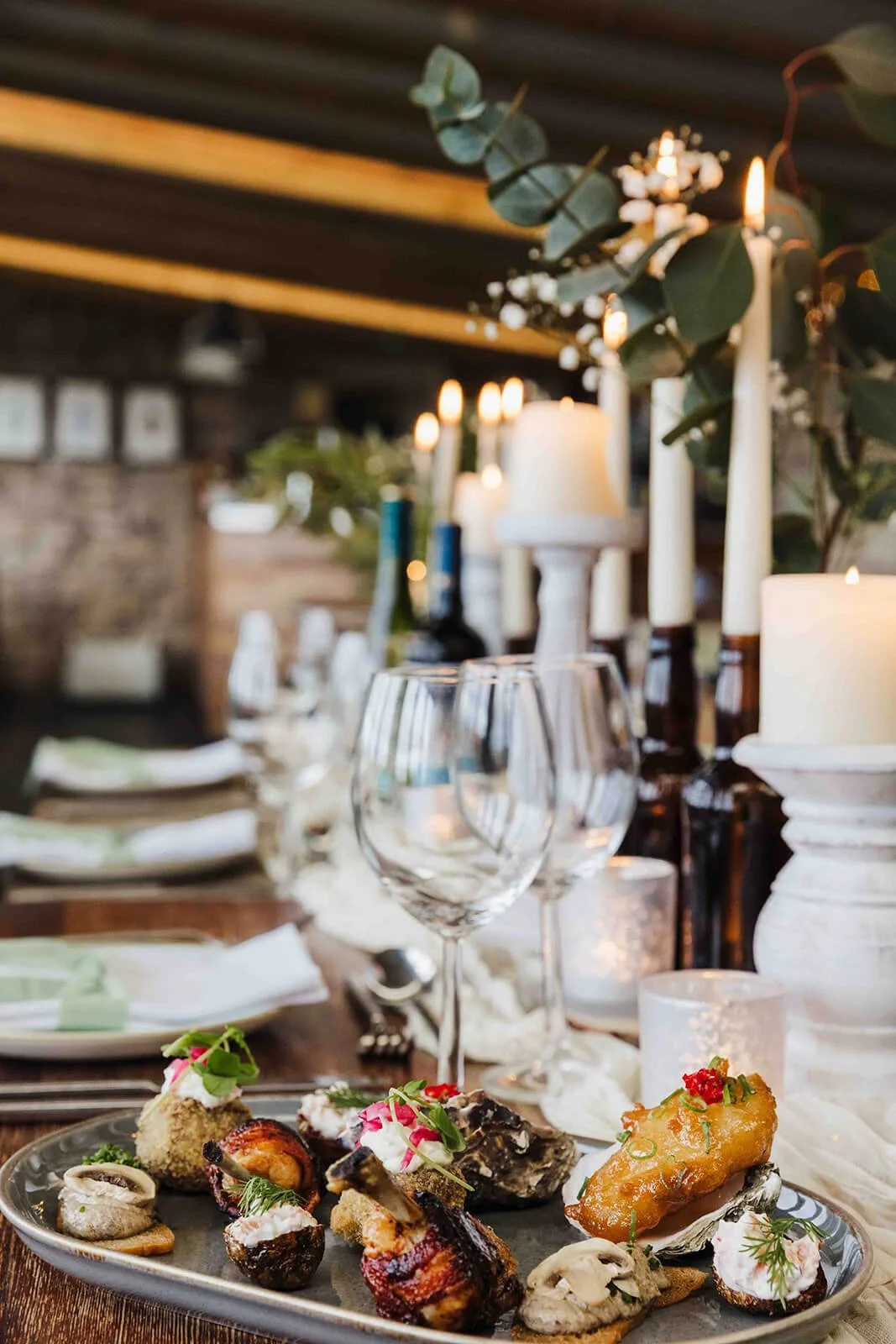
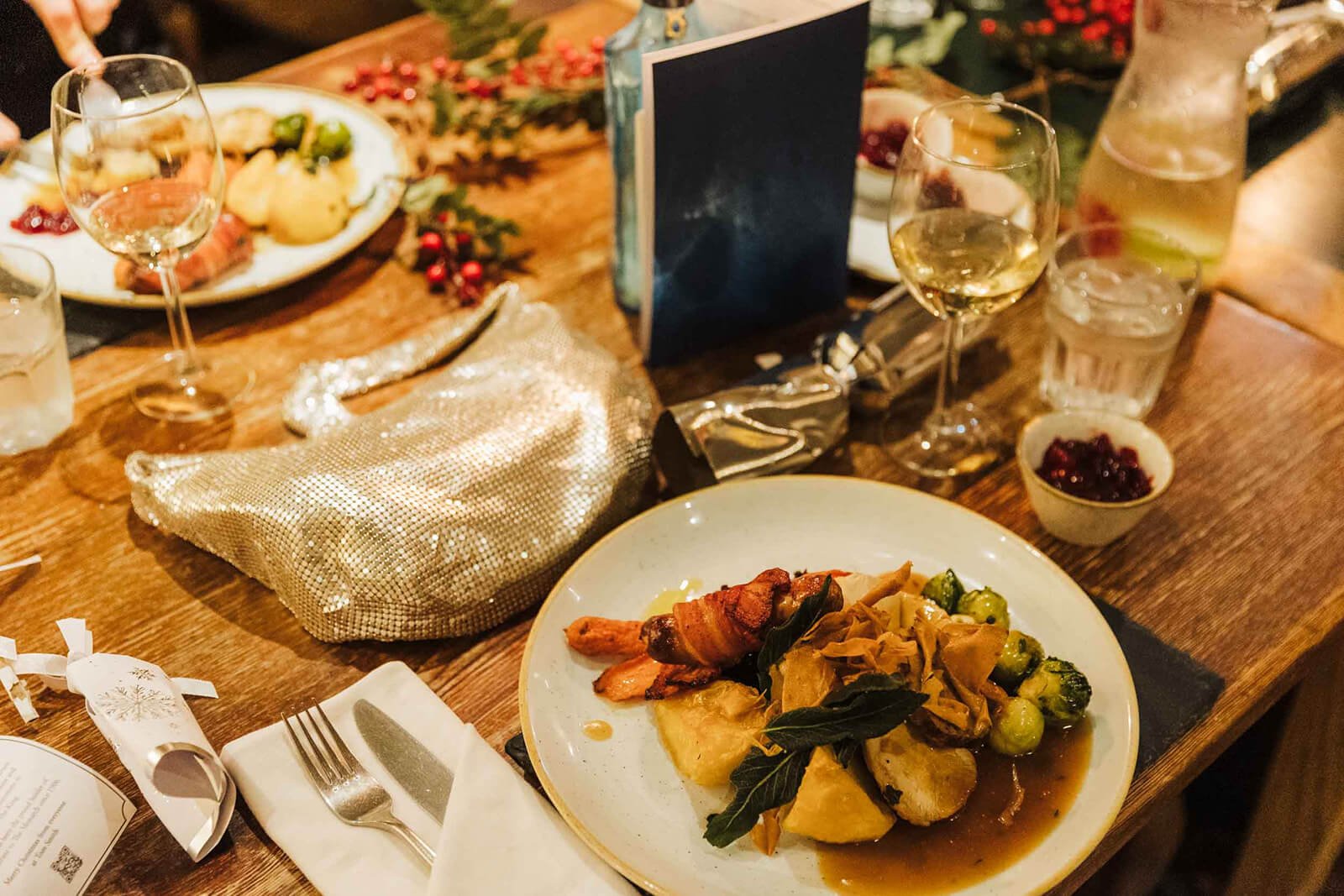
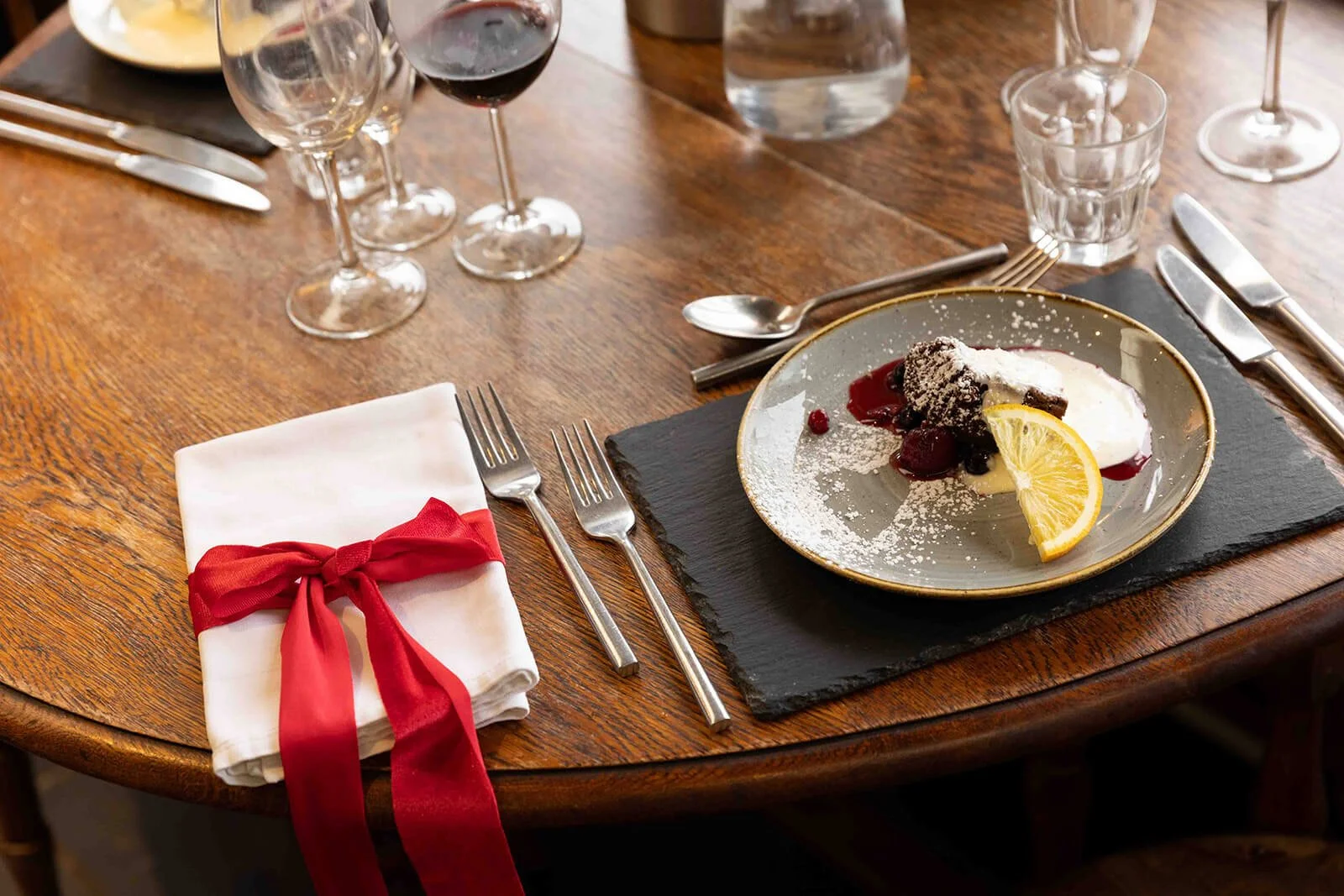
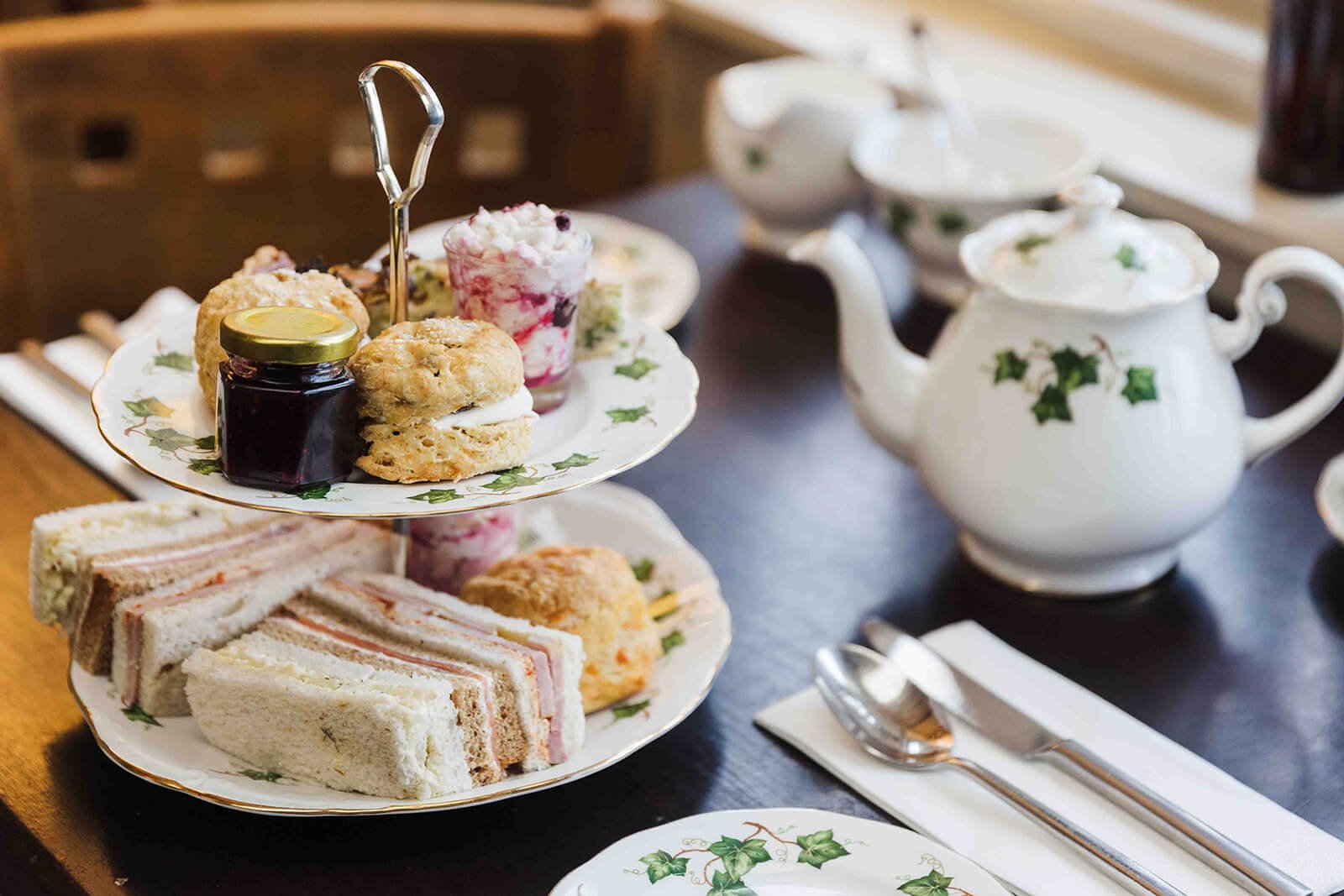
What makes this so valuable is that each campaign gives the business a chance to show another side of what they offer. A Christmas campaign might feel warm and inviting, while a wedding campaign needs to feel thoughtful and experience-led. A new menu release needs images that make the food look appealing straight away, and a tasting evening benefits from capturing atmosphere and detail.
That variety is important because it shows that brand photography can do more than simply give you a bank of images. It can actively support your marketing throughout the year, help you promote different offers and events, and keep your content feeling relevant and current.
Barn at Beal have been a great example of this. The photography has supported a range of campaign styles and seasonal promotions, while still feeling consistent with their wider brand. That balance is often where the strongest brand photography sits.
What works especially well is having a thoughtful mix of images that can be used in different places, from social media to website pages to promotional content. When photography is planned with that in mind, it tends to feel much more useful day to day.
Beyond the Photography: Website and Social Media Content
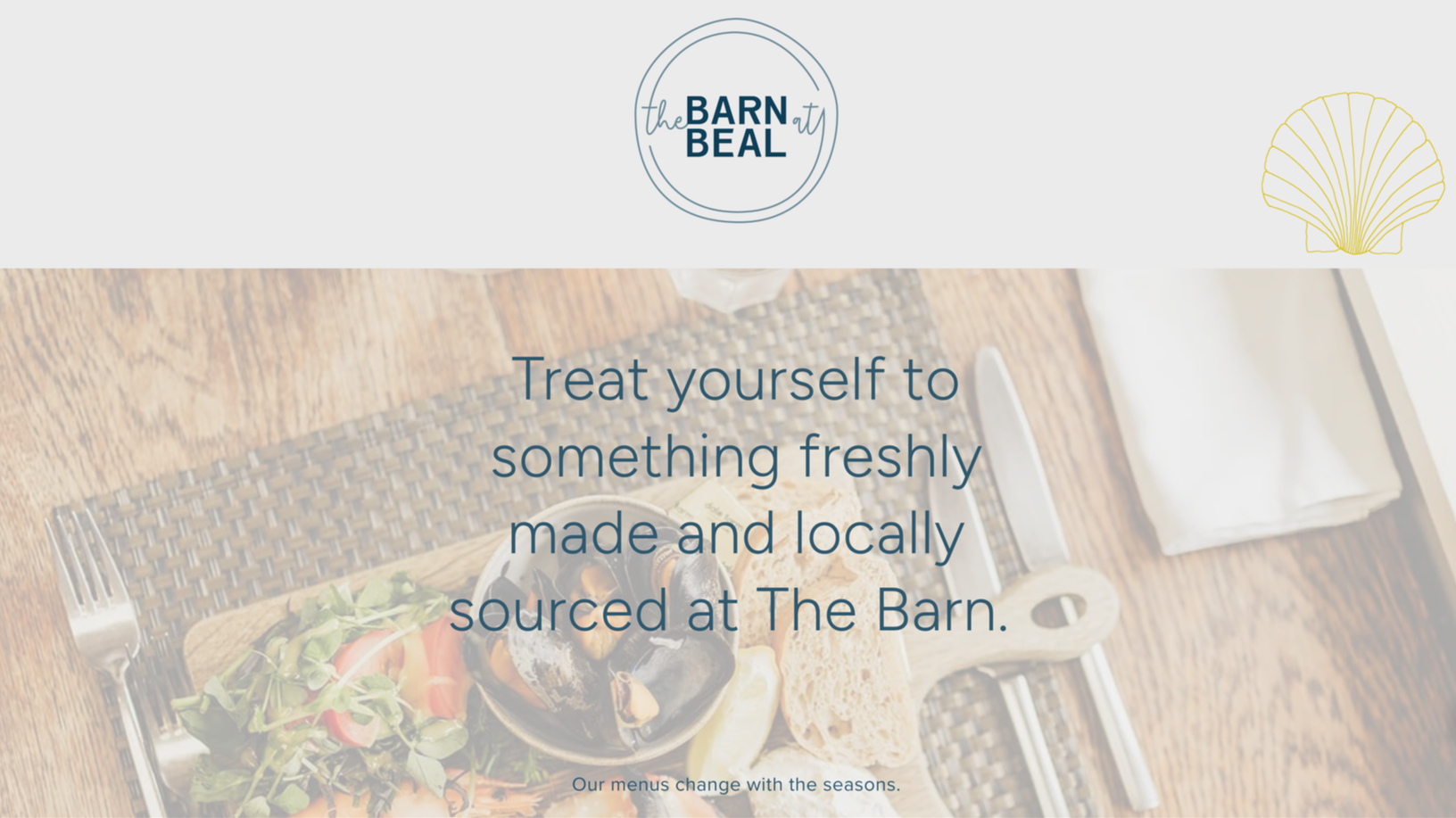
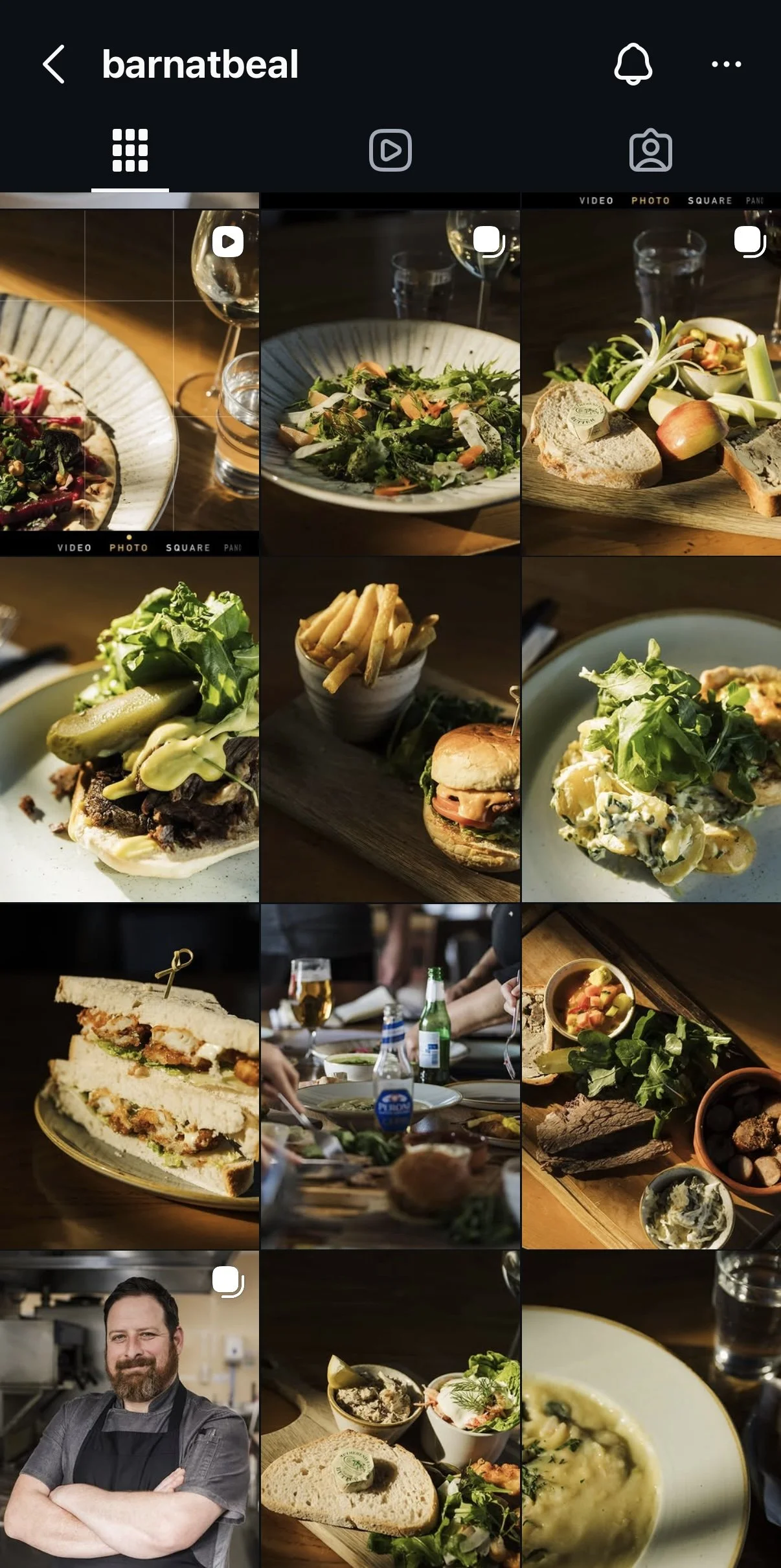
Our work with Barn at Beal goes beyond taking photographs. We also designed and created their website, manage their social media and produce much of the content used across Instagram, Facebook and their wider online marketing.
Working across everything means the photography can be planned with a clear purpose from the beginning. When there is a new menu, event or seasonal campaign coming up, we can plan the website updates, social media posts, captions, photographs and short clips together, rather than trying to make separate pieces of content fit afterwards.
We visit Barn at Beal regularly to capture fresh photographs and short clips as the menus, seasons and events change. This gives them a current and varied collection of content, rather than having to rely on the same photographs throughout the year.
We also update the website whenever needed, whether that means adding a new menu, promoting an event, changing important information or refreshing the photography. Keeping the website current means customers can find the latest information, while social media helps draw attention to what is happening at the restaurant.
For social media, our work includes creating manageable content plans, writing captions, selecting photographs, producing Reels and short clips, and scheduling posts. The result is a much more consistent online presence across the website, Instagram and Facebook.
Barn at Beal is a good example of our complete website design and social media content support service in practice. Photography remains an important part of it, but it works even harder when the website, written content and social media are all planned and updated together.
How to Choose the Right Brand Photography for Your Business
If you’re still not sure what kind of shoot makes sense, this is the simplest way I’d look at it.
If your business is built around you and your expertise, personal brand photography is probably the strongest place to begin.
If you need a wide range of useful content for your website, marketing and social media, a full branding shoot is often the most practical choice.
If you sell physical products, product photography should usually come first.
If your business involves a space or visitor experience, interiors and environment photography may be the priority.
If your business is team-led and you want to show the people behind it, headshots and team photography may be the right starting point.
And quite often, the answer is not one thing. It’s a combination.
That’s why I always think it helps to step back and ask not “what kind of photos should I book?” but “what am I trying to communicate?”
Because once you know that, the style of shoot becomes much easier to figure out.

Vibrant and Colourful Menu dish styled and photographed at Barn at Beal.
Brand Photography Types and Where You’ll Actually Use Them
It’s also worth thinking about where the images are going to live.
Your photography might need to work across:
your website
social media
printed promotional material
blog posts
online press features
newsletters
sales pages
brochures or guides
A beautiful image that only works in one tiny square on Instagram is lovely, but it may not be all that useful if you also need website banners, portrait crops, and content that tells a fuller story.
Versatility matters.
That’s one reason full brand shoots can be so helpful. They give you a broader library of content to use across your website, social media, blogs, and marketing, so your imagery feels more consistent and much easier to use across the different parts of your business.

Barista preparing the coffee behind counter at Barn at Beal on their branding shoot.
What Makes Brand Photography Feel Effective Rather Than Just Nice
This bit matters.
The best brand photography is not just visually nice. It feels aligned with the business. It communicates something. It helps the right people connect with what you do.
That could mean your images feel calm and premium. Or colourful and creative. Or grounded and personal. Or polished and practical.
But they should feel like your brand, not somebody else’s version of what a business should look like online.
That’s why choosing the right type of photography matters so much. Because when the style is right, the images feel useful as well as beautiful.
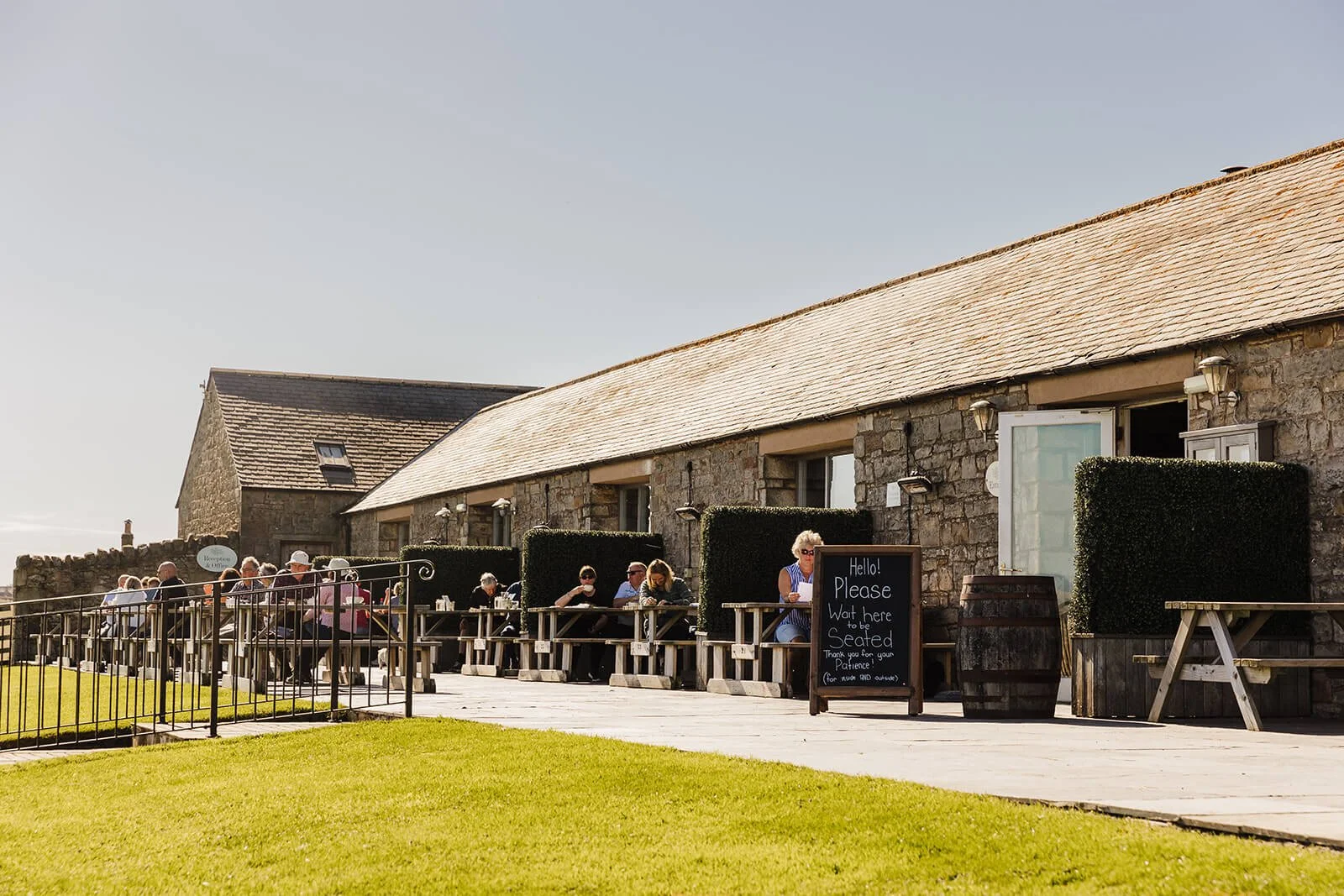
Outdoor photo capturing Barn at Beal location.
Final Thoughts on Brand Photography Types
f you are trying to work out which type of brand photography is right for your business, start with the purpose rather than the label.
Think about what you need the photographs to communicate, where they will be used and what would make your marketing easier. For some businesses, that will mean headshots. For others, it will be product photography, hospitality imagery or a fuller brand shoot covering several needs at once.
Barn at Beal shows how useful that combination can be. Their photography supports the website, social media, menus, events and seasonal campaigns while maintaining a recognisable feel across the business.
Brand photography should not simply look good. It should give you something genuinely useful to work with.
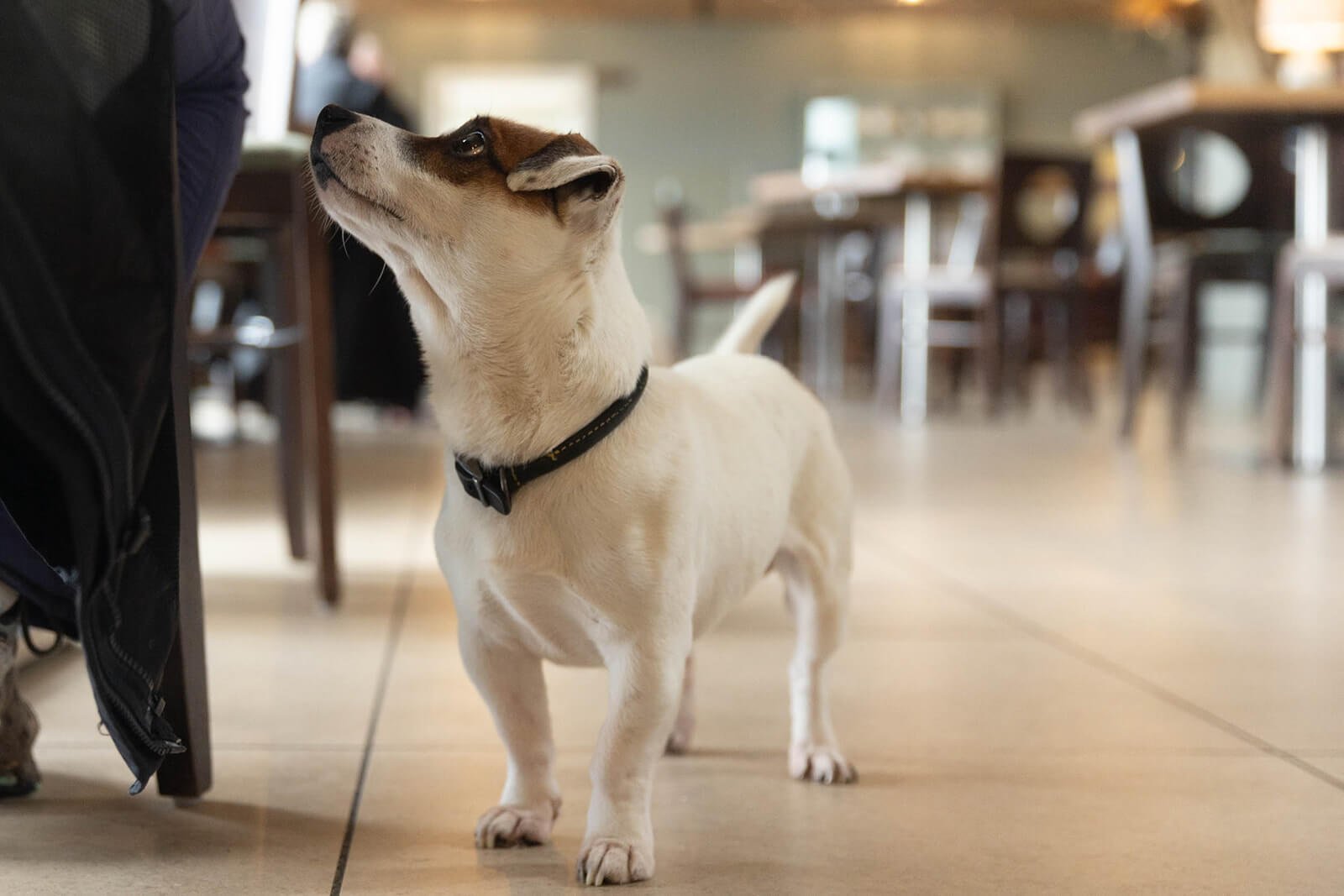
Dog-friendly atmosphere captured at Barn at Beal.
Ready to Talk About Your Brand Photography?
If you’d like to chat through what kind of brand photography would suit your business best, you can book a call with Sarah and start there. Sometimes a quick conversation is the easiest way to work out what you actually need.
Consistent product photos: how to make your product photos cohesive.

Jarvis Pickle Pies at the Edinburgh fringe festival
There’s something instantly reassuring about a brand that looks put together.
You might not always be able to explain why one product stands out over another, but more often than not, it comes down to how consistent the visuals feel. The lighting, the colours, the setting… it all quietly works together.
If your product photos currently feel a little mismatched or “different every time”, you’re not alone. It’s one of the most common things I see when working with food sellers and handmade businesses.
And the good news is, it’s very fixable.
In this blog, I’ll walk you through what consistent, cohesive product photos actually mean, why they matter, and how you can start creating them in a way that feels natural and achievable for your business.
Consistent, cohesive product photos: what are they?
At its simplest, consistent, cohesive product photos are images that feel like they belong together.
They don’t look like they’ve been taken on completely different days, in different rooms, with different lighting and moods. Instead, they tell one clear visual story.
That consistency usually comes from a few key elements:
Lighting that feels the same across every image
Colour tones that don’t clash or shift dramatically
Backgrounds and surfaces that stay within the same style
Styling choices that reflect your brand (not just what’s available at the time)
One of the biggest things I always recommend is keeping your shoots in the same room or location wherever possible. It might sound simple, but it makes a huge difference.
Natural light behaves differently in every space. Even moving from one room to another can completely change the feel of your images. By keeping things in one consistent environment, you remove that variation straight away.
I also tend to steer clients away from very bright or harsh backgrounds. Softer, more neutral tones are much easier to keep consistent and tend to let the product do the talking rather than competing with it.

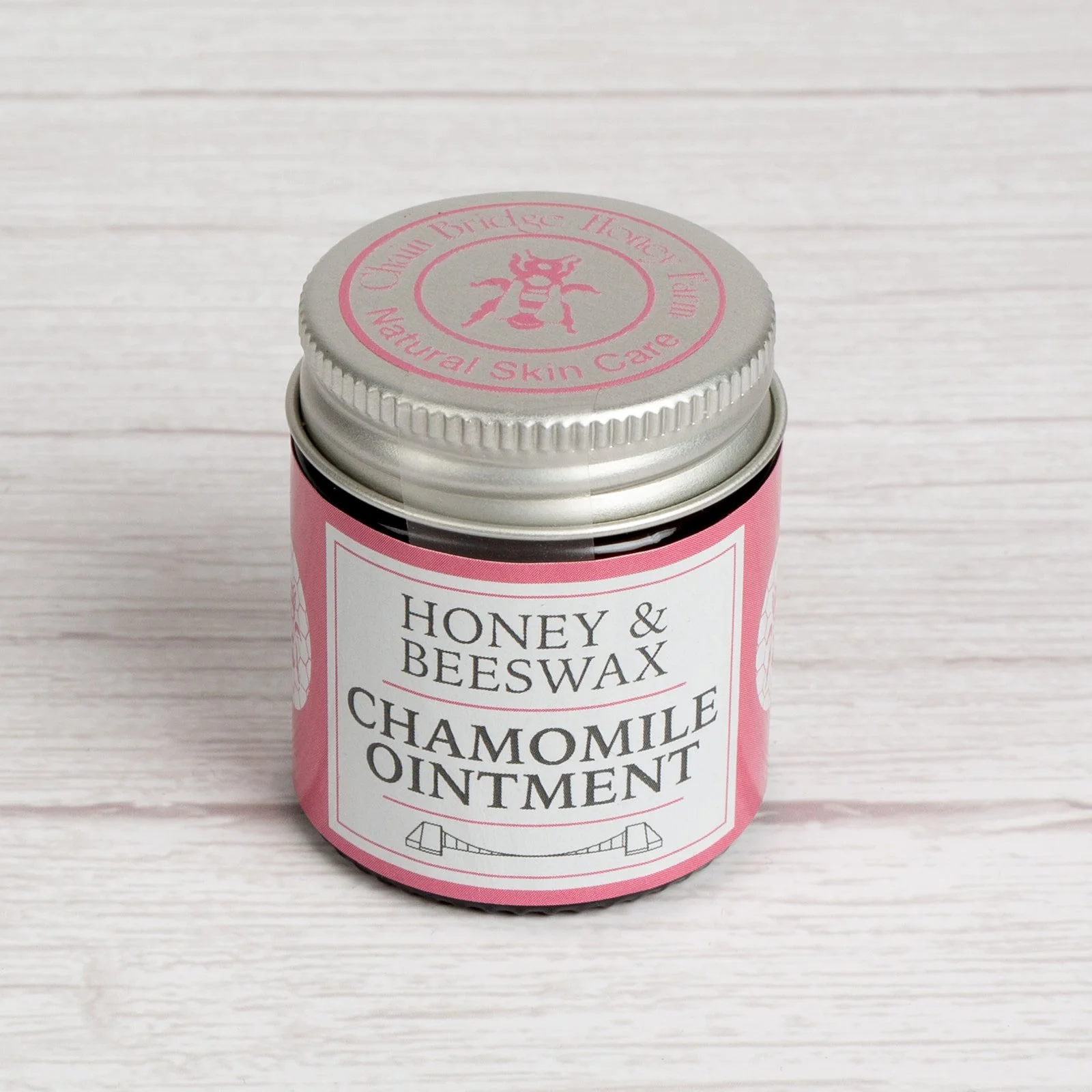
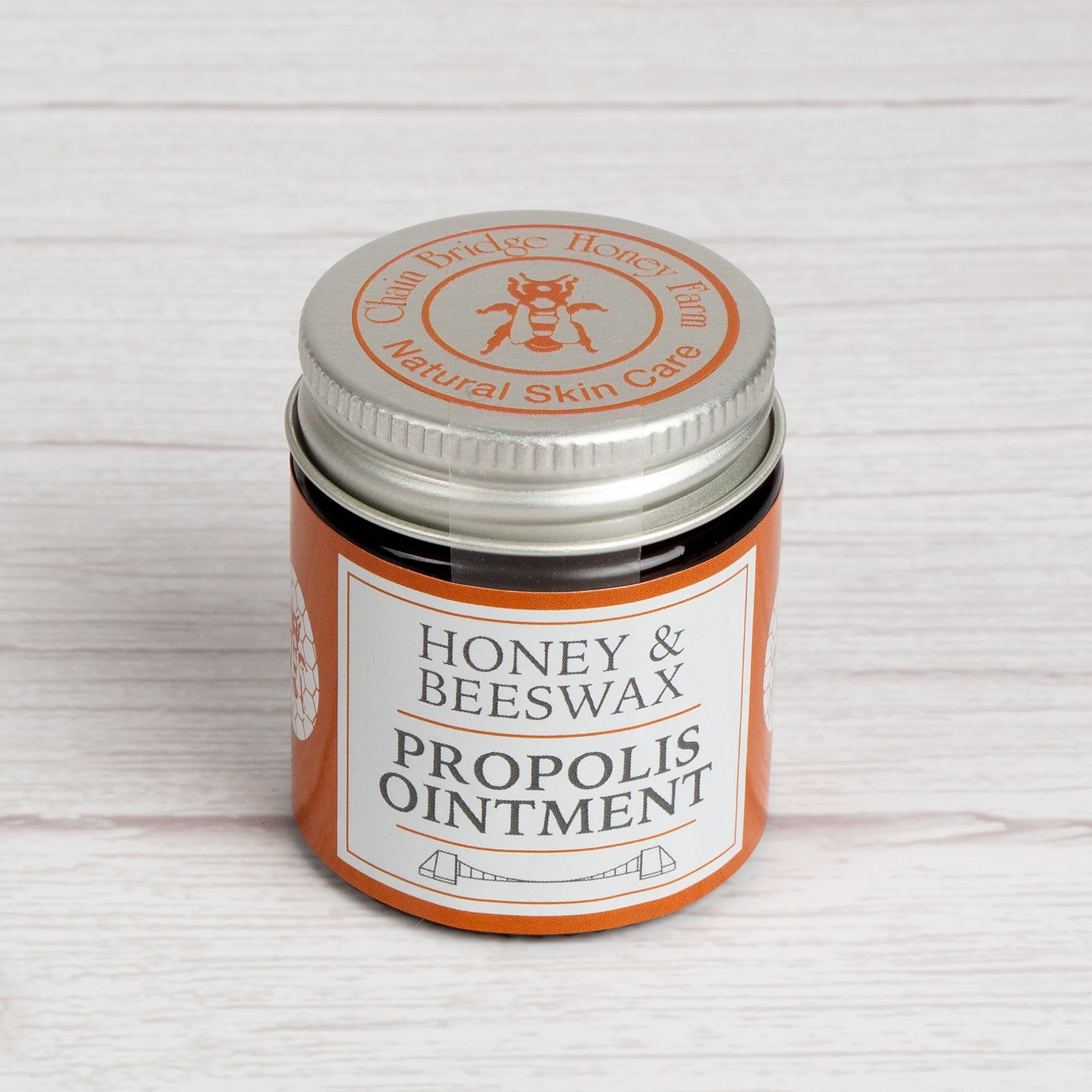
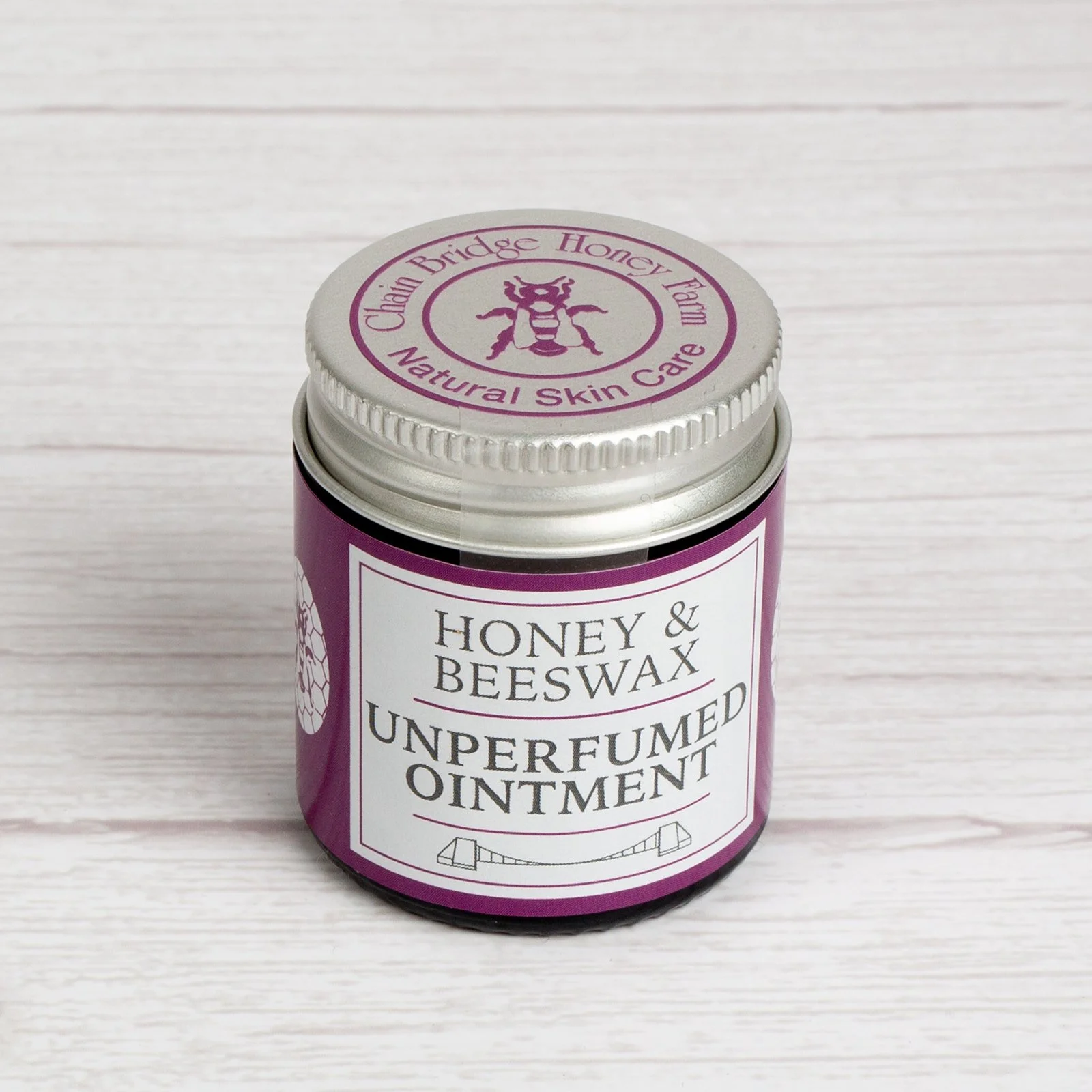
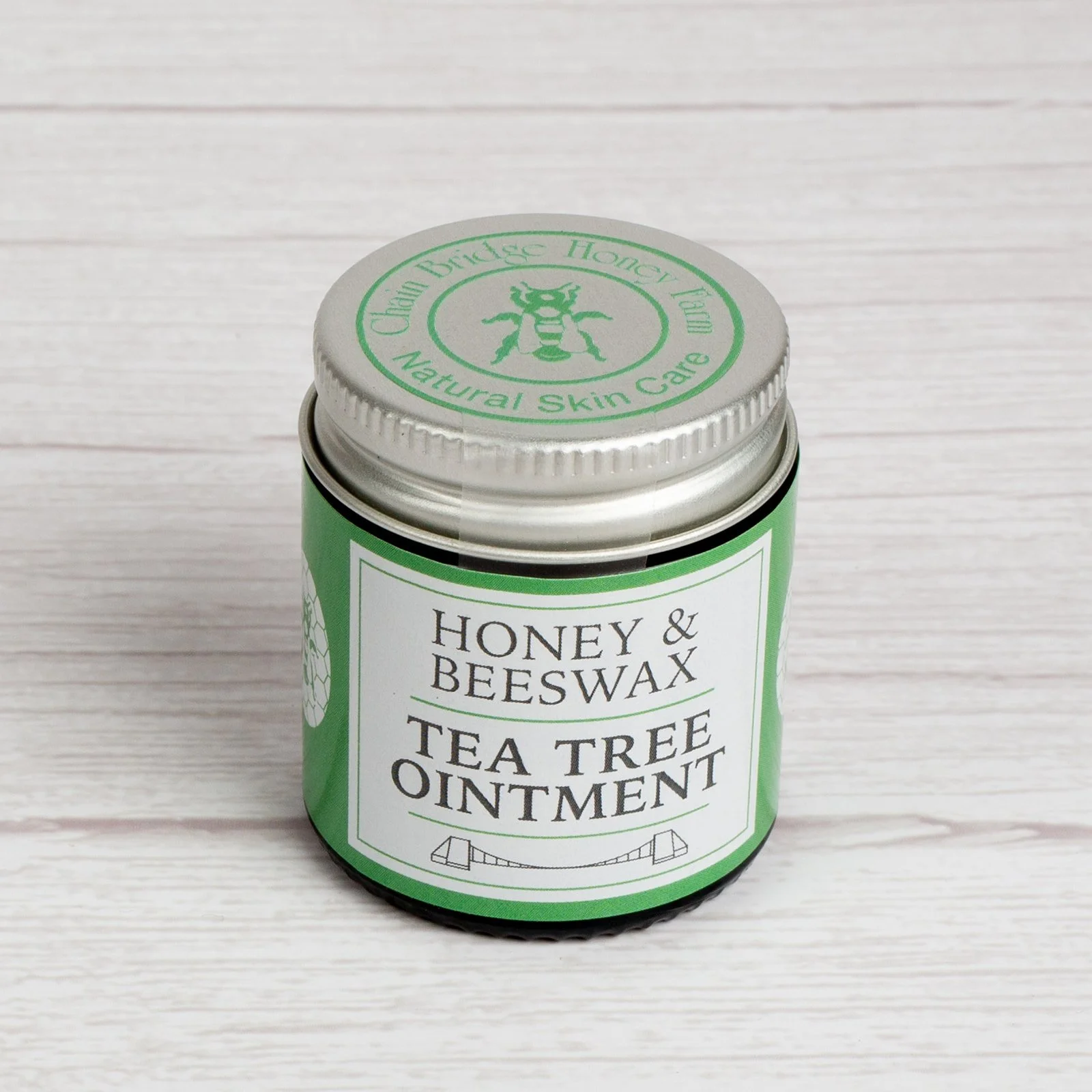
Consistent, cohesive product photos: how do they benefit both the photographer and the client?
When your imagery is consistent, everything becomes easier. Not just visually, but practically too.
For you as a business owner, consistent, cohesive product photos help build trust without you having to say a word. When someone lands on your website or Instagram, they immediately get a sense that your brand is thoughtful and established.
It creates:
Stronger brand recognition
A more professional first impression
A smoother customer journey (nothing feels disjointed or confusing)
More confidence in your product quality
From my side as a photographer, consistency means I can create a much more refined and intentional set of images for you.
When we shoot in the same location where your product is made or sold, everything feels more authentic. It’s your environment, your light, your space. That naturally brings a level of honesty to the images that’s hard to replicate elsewhere.
It also means we can build on previous shoots. Instead of starting from scratch each time, we’re evolving your visual identity in a way that still feels familiar.
And honestly, that’s where the magic tends to happen.
Consistent, cohesive product photos: real-life examples
Jarvis Pickle Pies
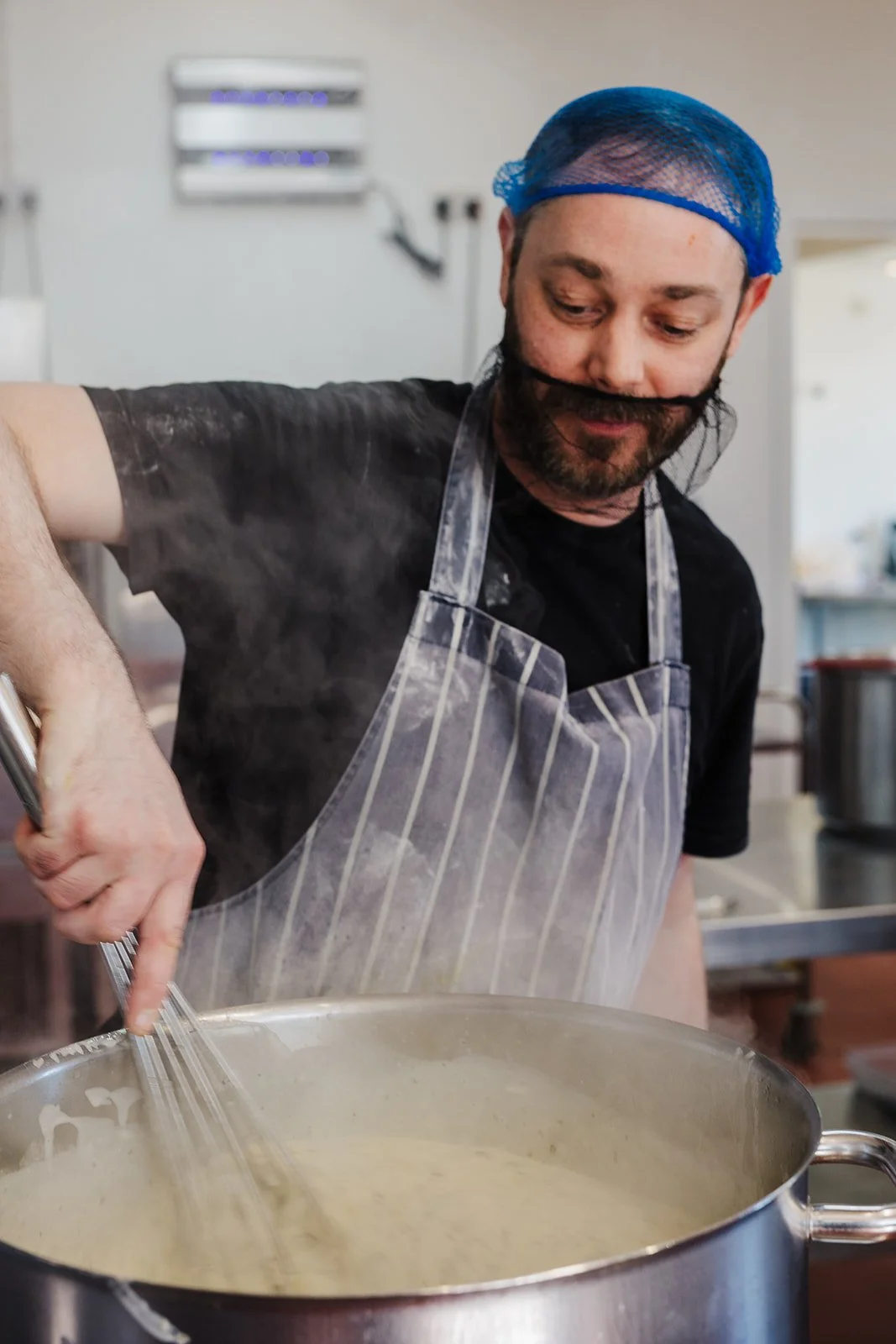
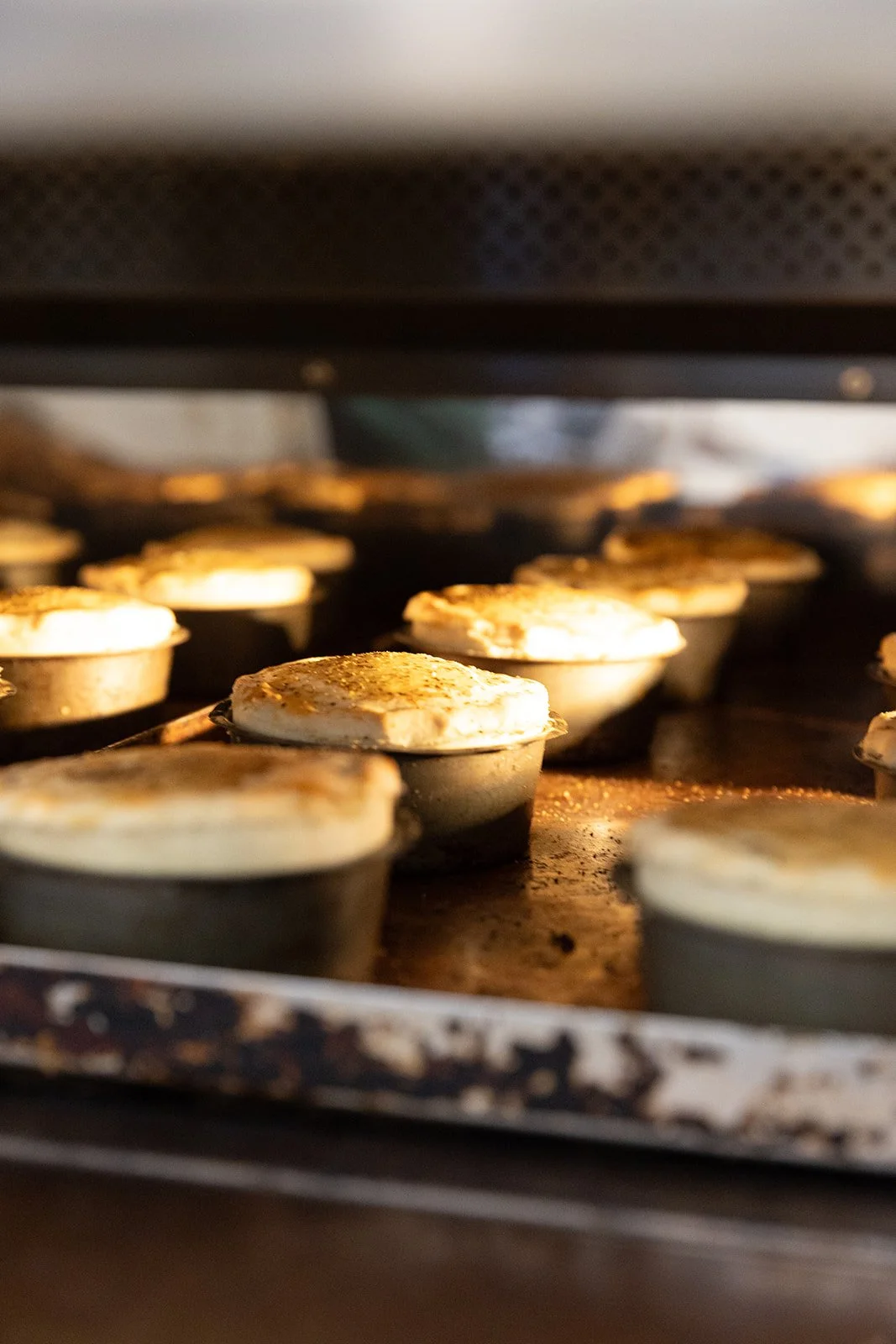
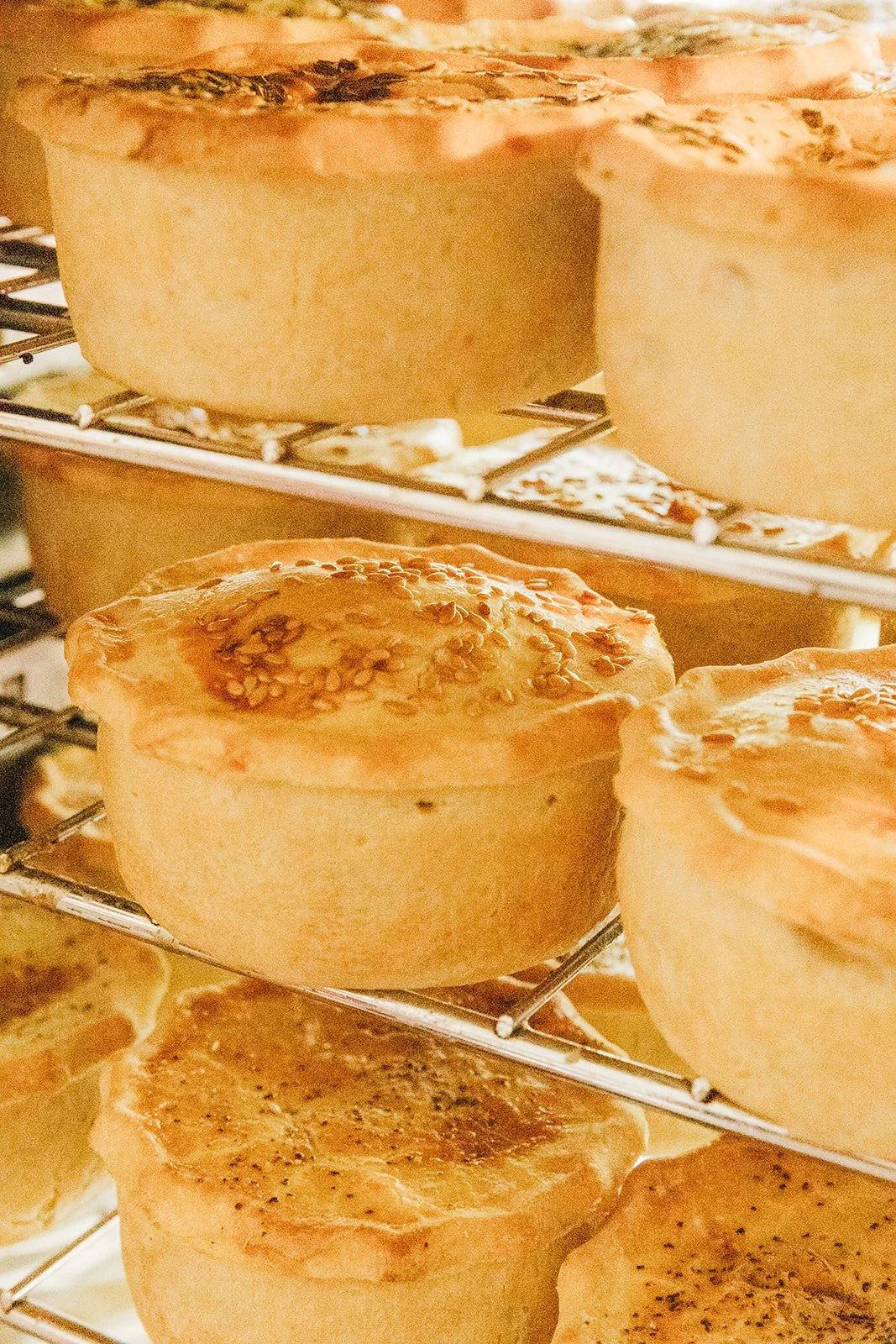
Working with Jarvis Pickle Pies was a really good example of how consistency can shape a brand’s visual identity.
Because the shoot took place where the products are actually made, everything felt grounded from the start. The textures, the surfaces, even the natural light all reflected the reality of the business.
We kept the styling simple and avoided anything too bright or distracting. Softer tones allowed the pies themselves to stand out, while still keeping everything visually connected across the full set of images.
The result was a collection of photos that didn’t just look good individually, but worked together as a whole.
Chain Bridge Honey Farm
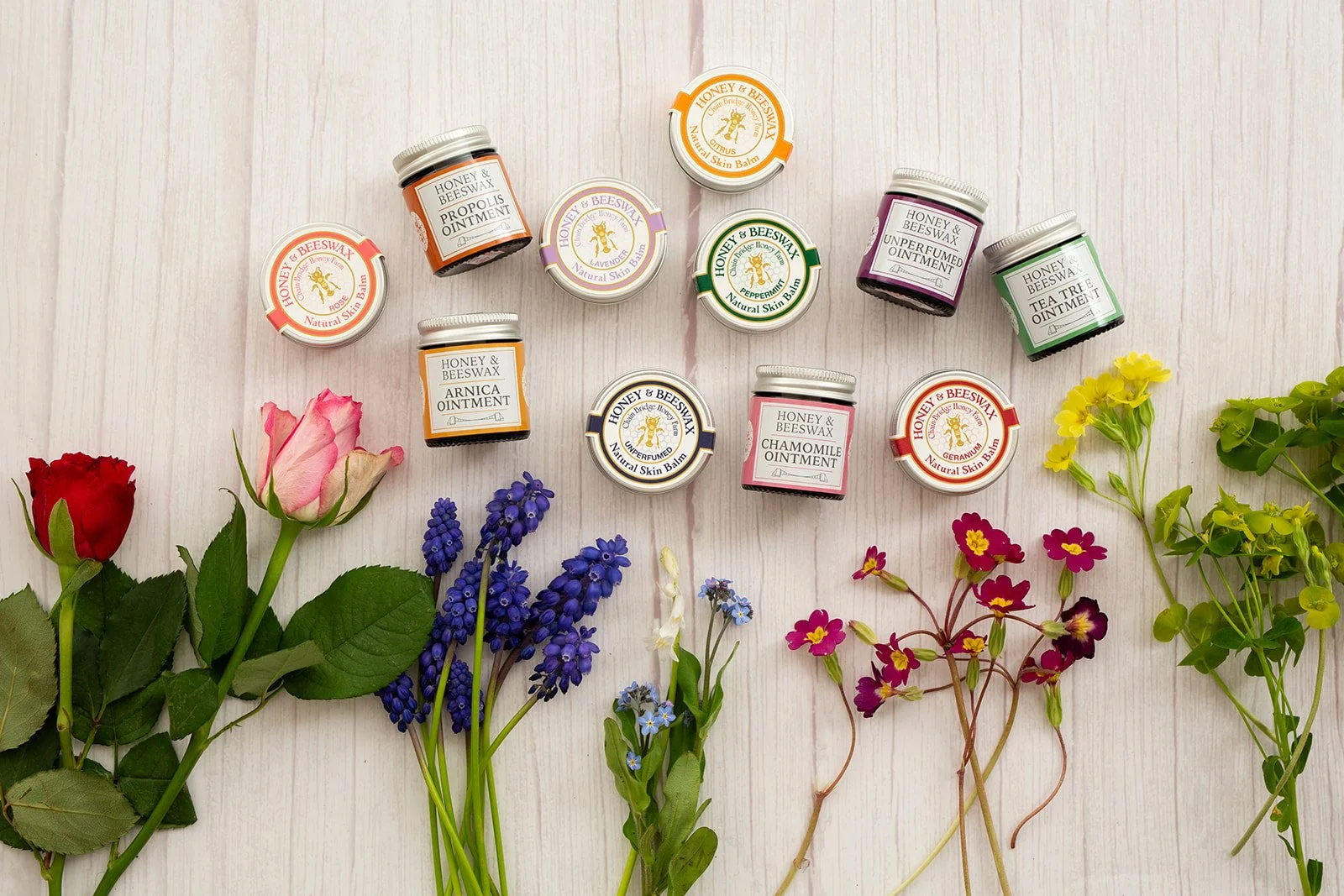
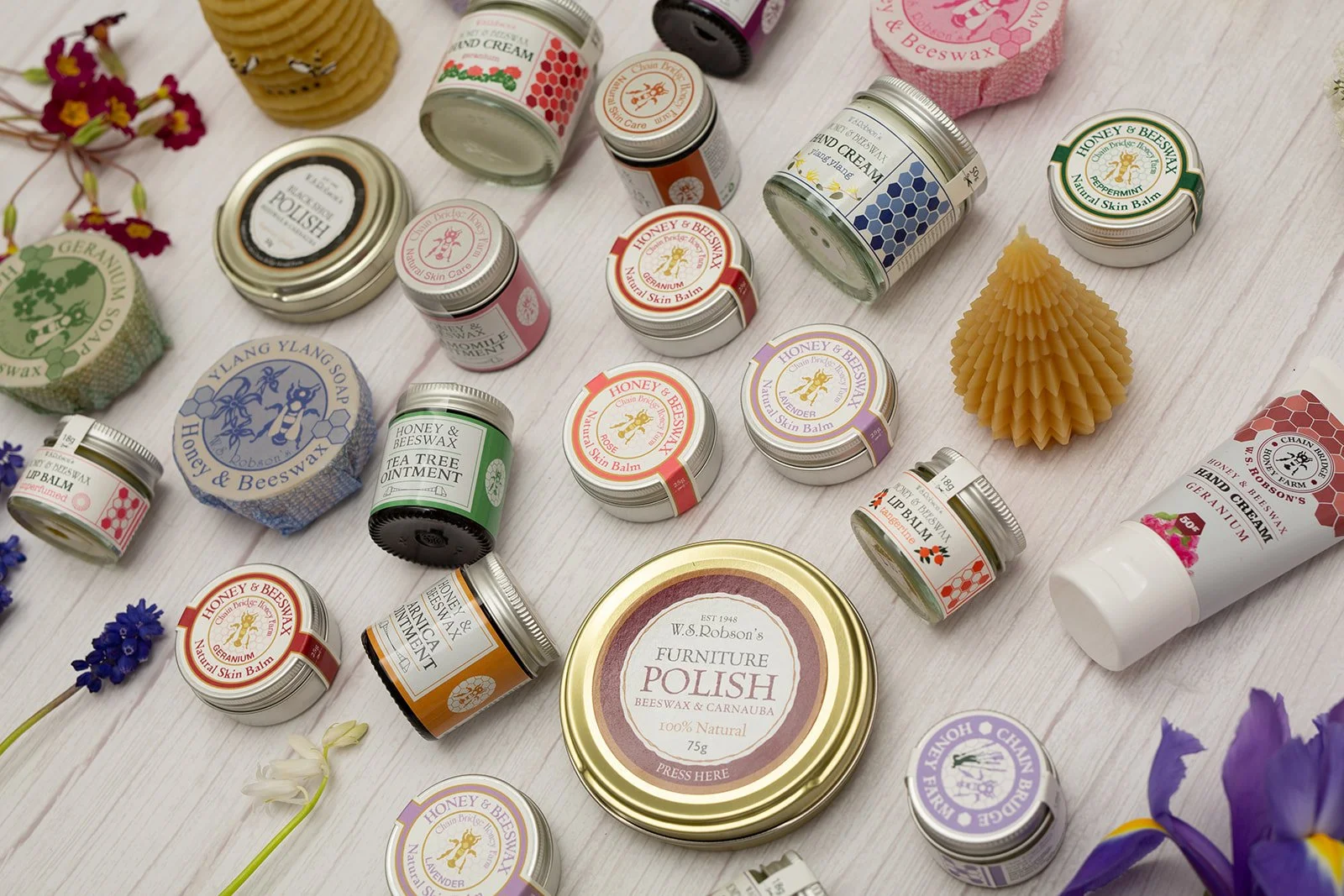
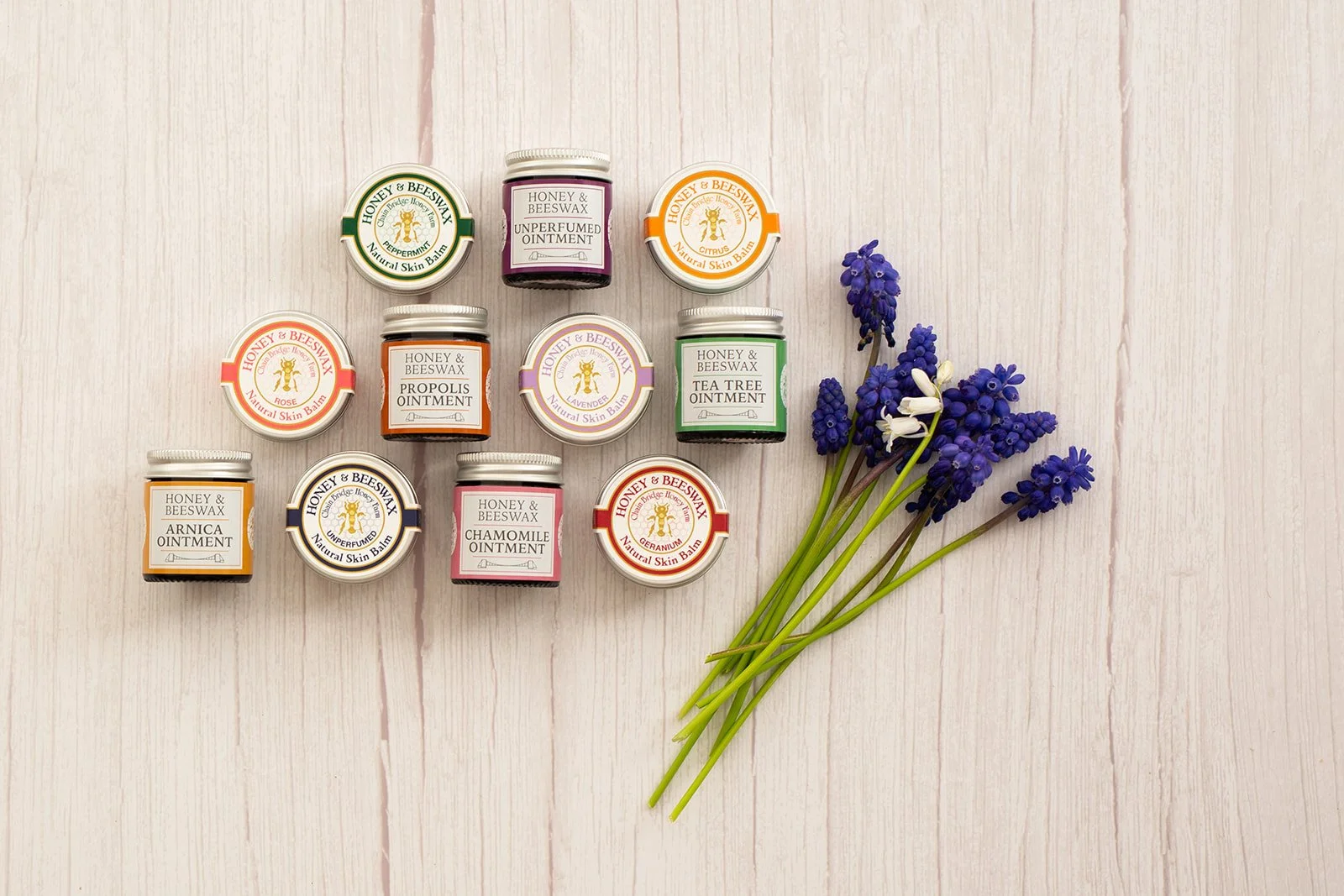
With Chain Bridge Honey Farm, the approach was similar but tailored to their products.
Again, everything was photographed on location, which helped keep that sense of authenticity. The tones were kept warm and natural, reflecting the product itself, and the backgrounds stayed within a soft, neutral palette.
There was no need for anything overly styled or artificial. The consistency came from keeping things simple and intentional.
Across both of these shoots, the key wasn’t doing anything complicated. It was about making deliberate choices and sticking to them.
Consistent, cohesive product photos: how to start creating your own
If you’re looking at your current images and thinking they feel a bit all over the place, here are a few simple starting points.
First, choose one location and stick to it. Ideally, this is where your product is made or sold. It instantly grounds your imagery and removes unnecessary variation.
Next, think about your colour palette. You don’t need anything complicated. In fact, simpler is usually better. Soft, neutral tones tend to work well across most products and are much easier to keep consistent over time.
Then, pay attention to your lighting. Natural light is brilliant, but it does need to be used consistently. Shooting at similar times of day and in the same spot will help keep everything aligned.
And finally, be mindful of your background choices. Bright, bold colours might feel eye-catching in the moment, but they can quickly make your images feel disjointed when placed next to each other.
Consistency isn’t about making everything identical. It’s about making sure everything feels connected.
Consistent, cohesive product photos: common mistakes to avoid
A few things I often see that can break that sense of cohesion:
Switching locations between shoots
Using completely different props or styling each time
Choosing bright or clashing backgrounds
Shooting in inconsistent lighting conditions
Trying to follow too many trends at once
None of these are “wrong” on their own, but when combined, they can make your brand feel a bit scattered.
Keeping things simple and repeatable will always give you a stronger result.
Ready to create consistent, cohesive product photos?
If you’re feeling like your product imagery could be more aligned, you don’t need to overhaul everything overnight.
Start small. Choose your space. Simplify your styling. Pay attention to your light.
And if you’d rather have someone guide you through it properly, that’s exactly what I do.
I specialise in product photography for food and handmade businesses, creating images that feel natural, consistent, and true to your brand.
If that sounds like what you’re looking for, you’re very welcome to get in touch and enquire about a shoot. We can create something that not only looks good, but actually works for your business long term.
Building a Brand Story Through Photography: The Good Ship Illustration

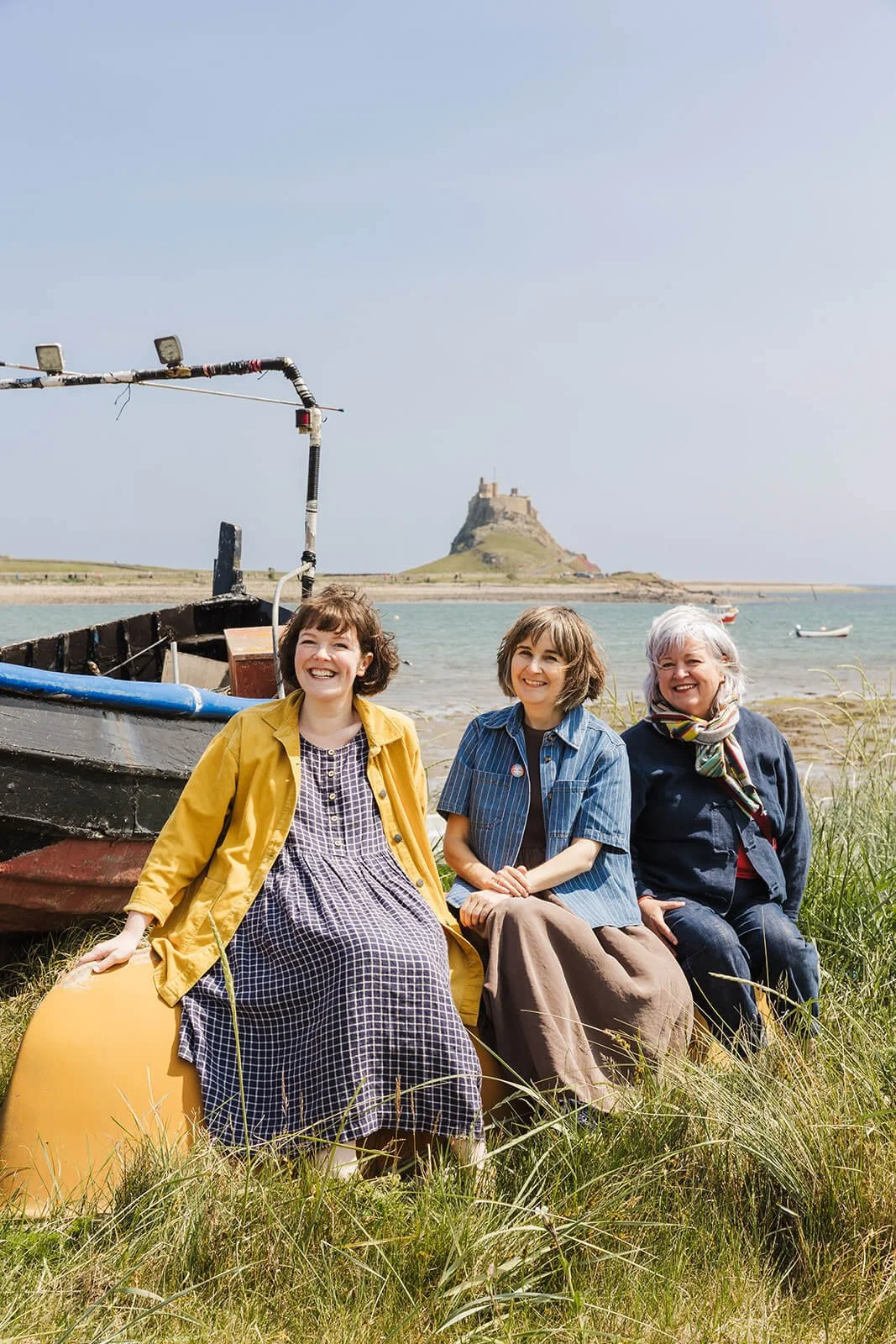
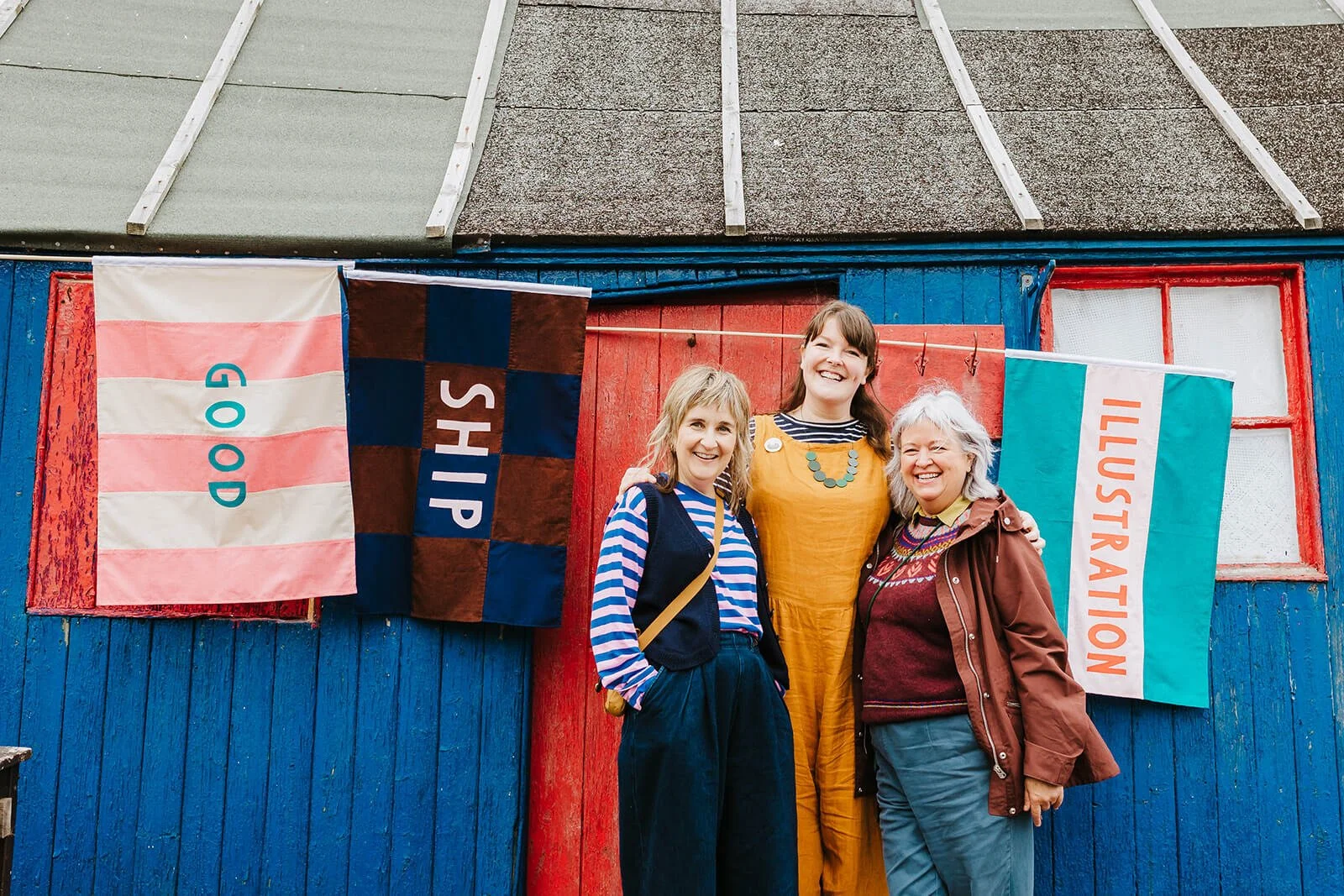
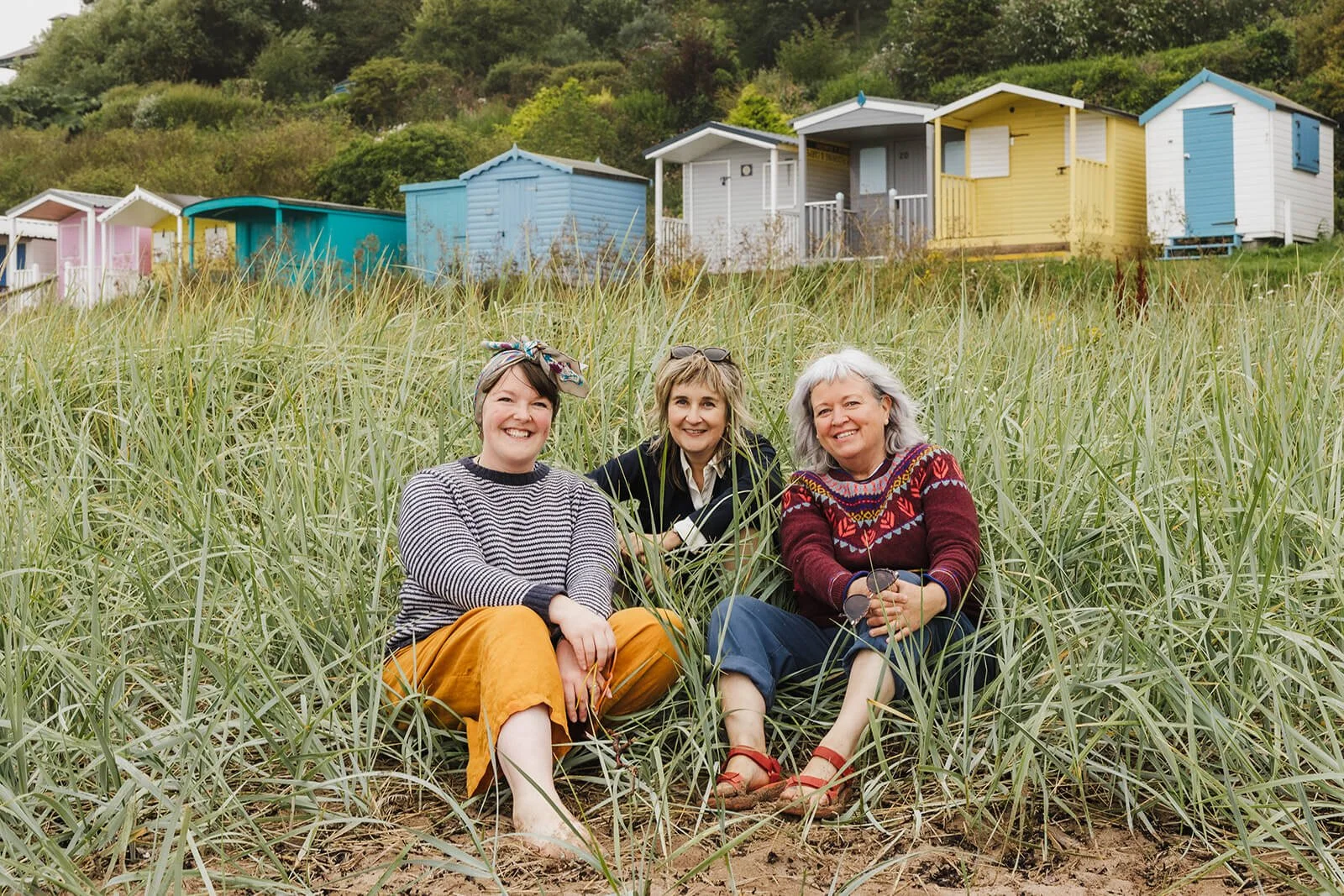
Helen, Katie and Tania From Good Ship Illustration at Coldingham Sands.
Creative businesses are built on personality.
The work might begin with a sketchbook, a studio desk, or a laptop, but what people really connect with is the person behind the work - the voice, the values, the atmosphere.
That’s where brand photography for creative businesses becomes powerful.
Done well, it’s not just a set of images for a website. It becomes visual storytelling: photographs that show how you work, where you work, and what it feels like to be part of your world.
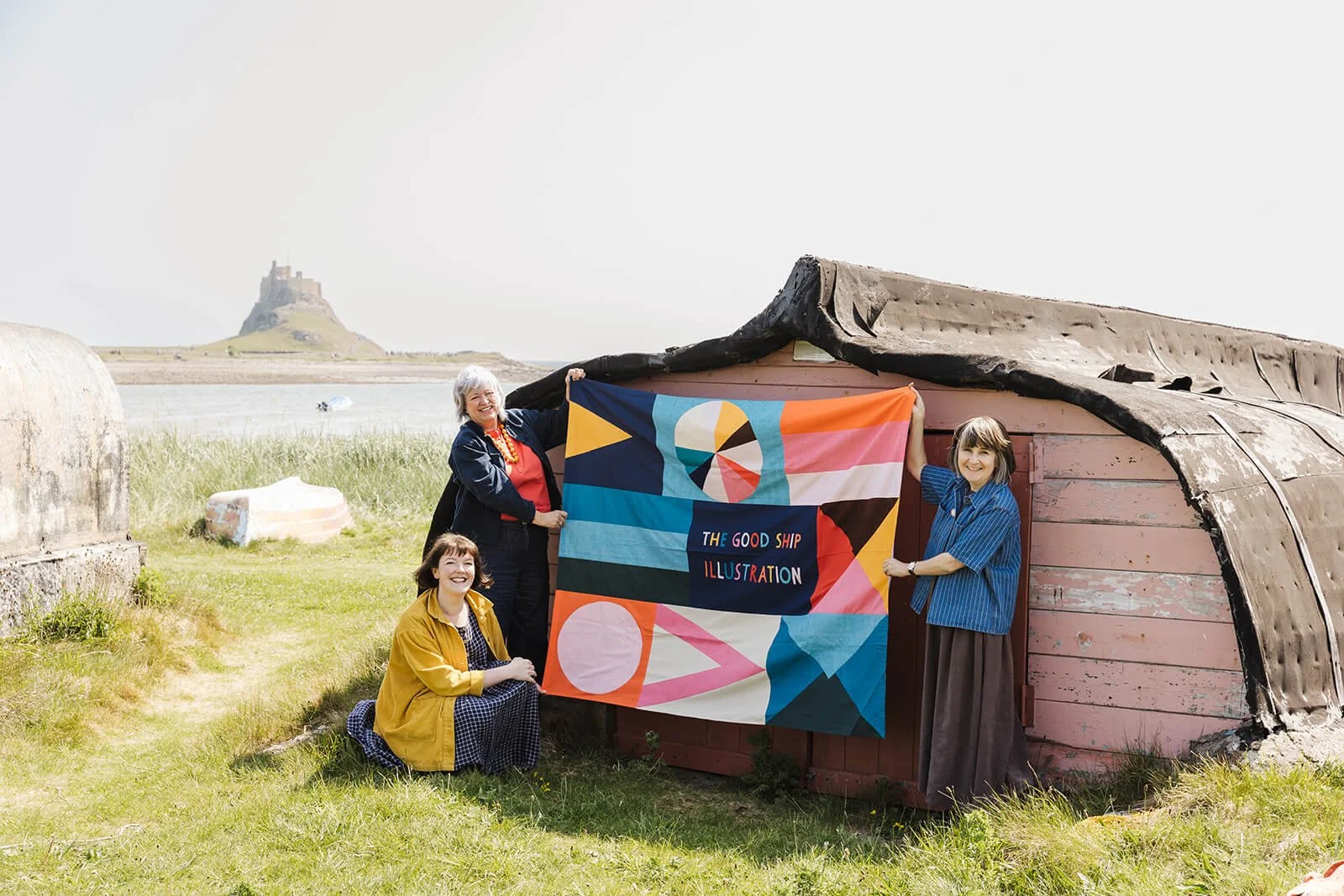
One of my favourite examples of this is the ongoing photography we’ve created with The Good Ship Illustration - a creative business run by illustrators Tania Willis, Katie Chappell, and Helen Stephens.
Together they teach illustrators and artists how to build thriving creative careers through courses, mentorship, their podcast, and the much-loved Friday Art Club on Instagram Live.
Their brand is joyful, thoughtful, slightly rebellious, funny, wholesome and deeply human.
And the photography needed to reflect exactly that.
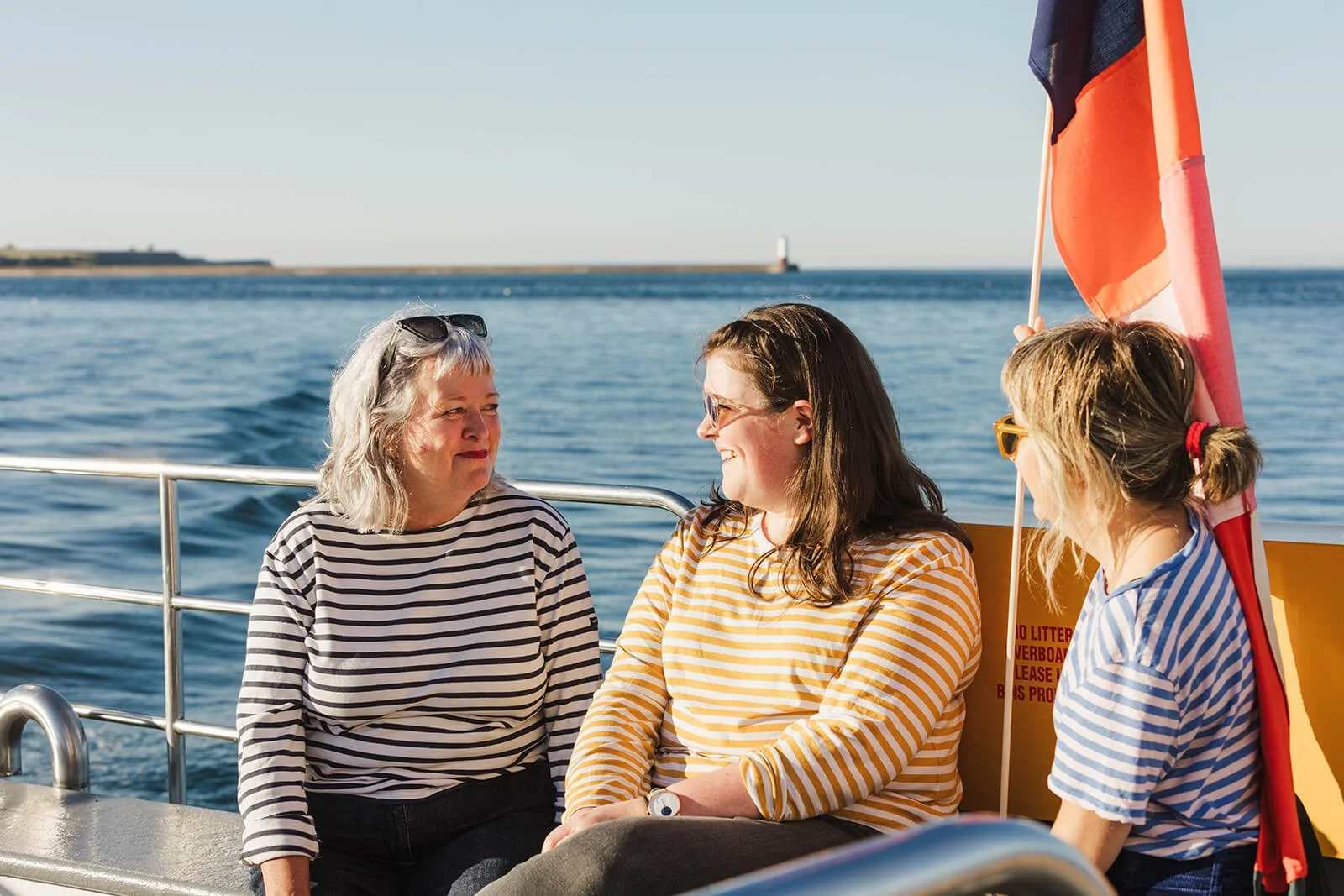
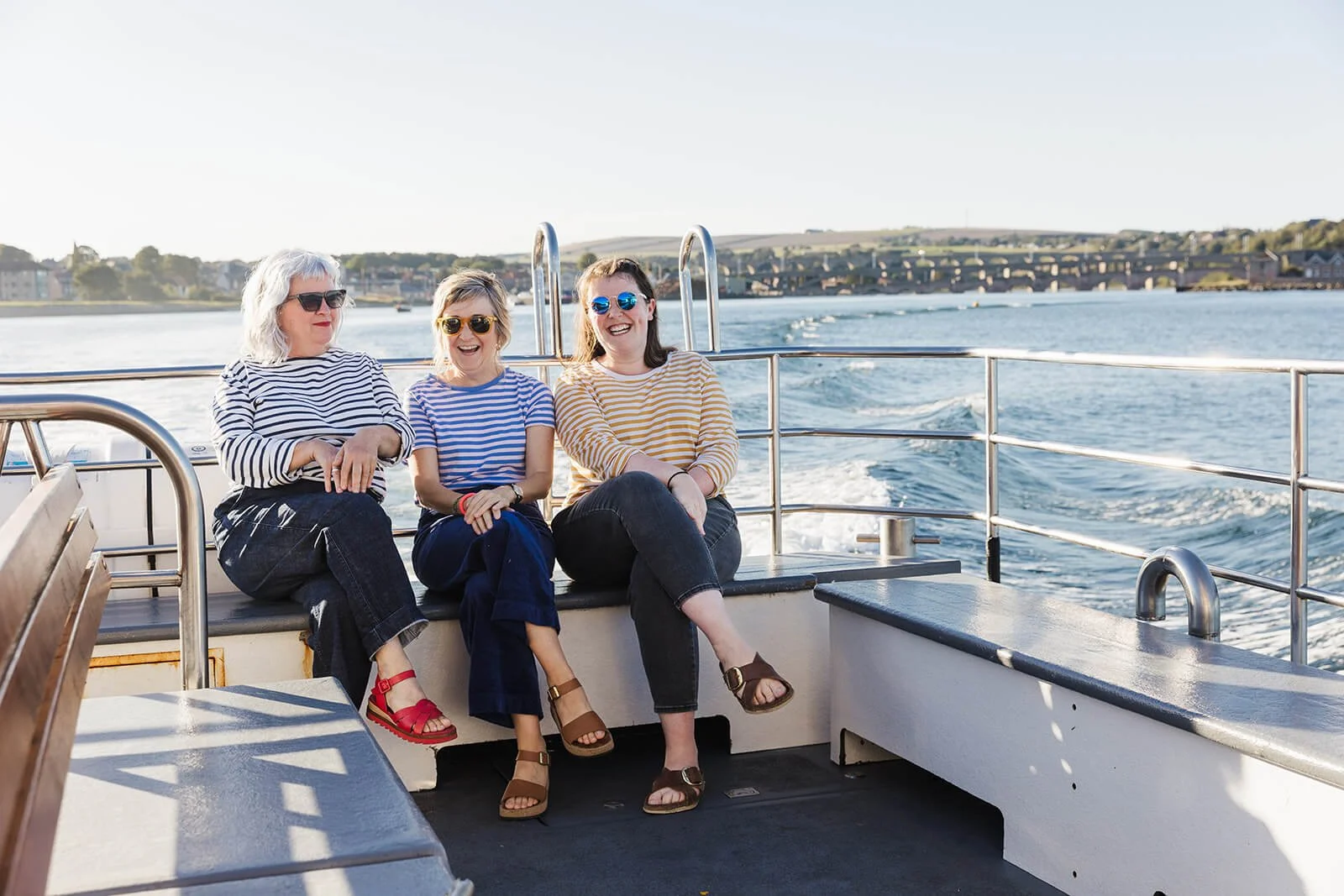
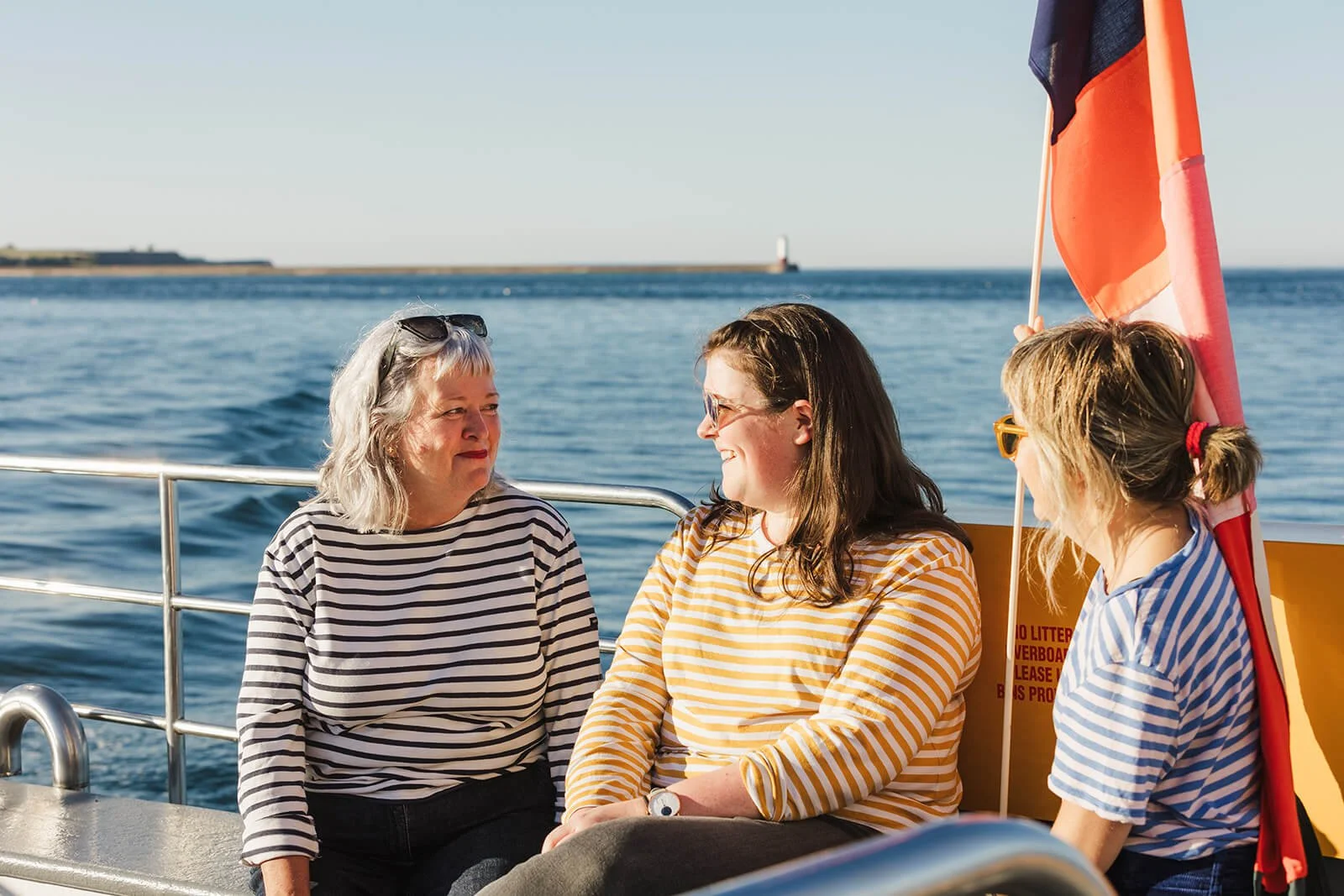
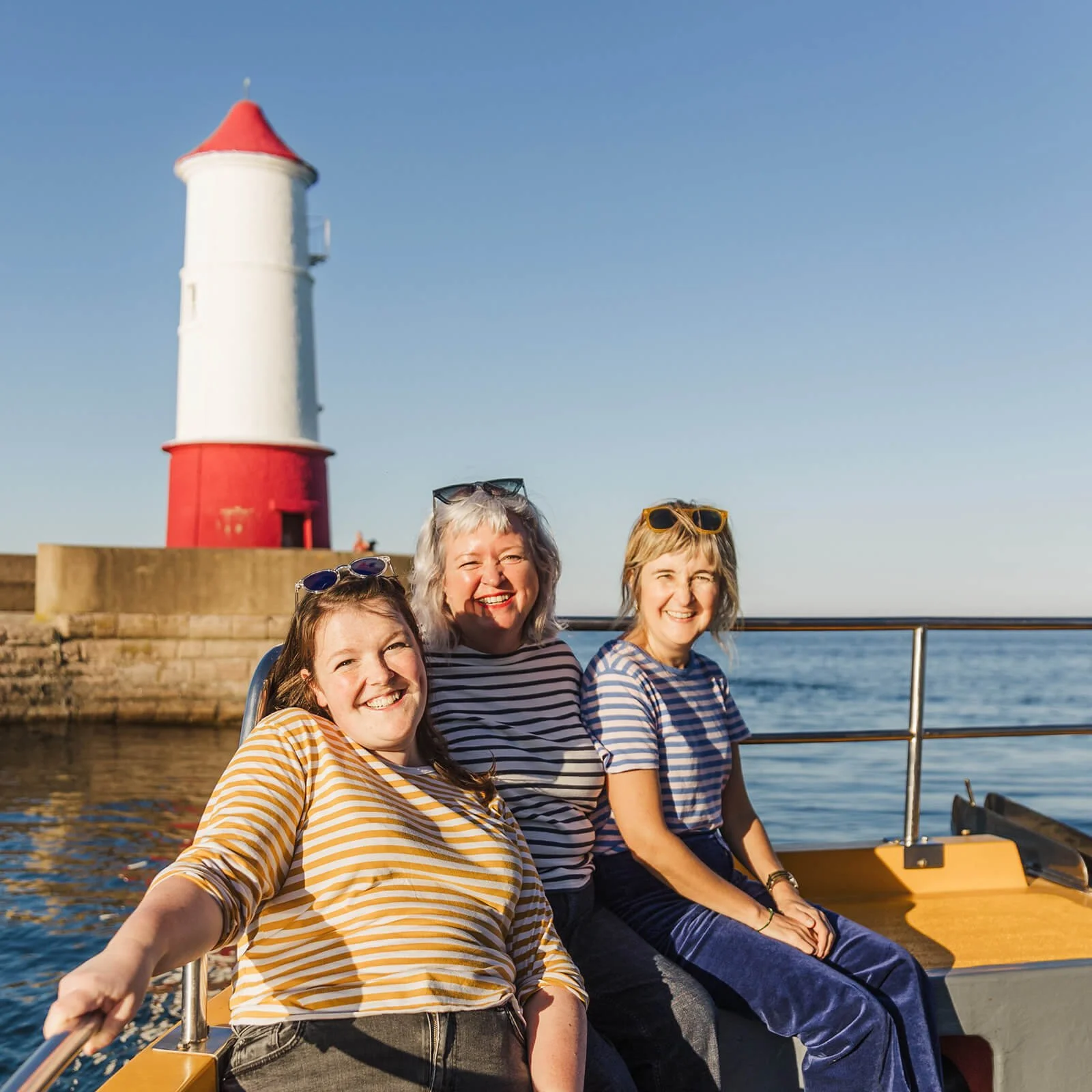
Good Ship Illustrations Voyage on the Border Belle.
Visual Storytelling for Creative Businesses
When creative businesses invest in photography, the goal isn’t simply to look professional.
It’s to show people what it feels like to work with you.
For The Good Ship Illustration, that meant capturing:
the friendship between the three founders
the creative chaos of sketchbooks and studio tables
their sense of humour and warmth
the places that inspire their work
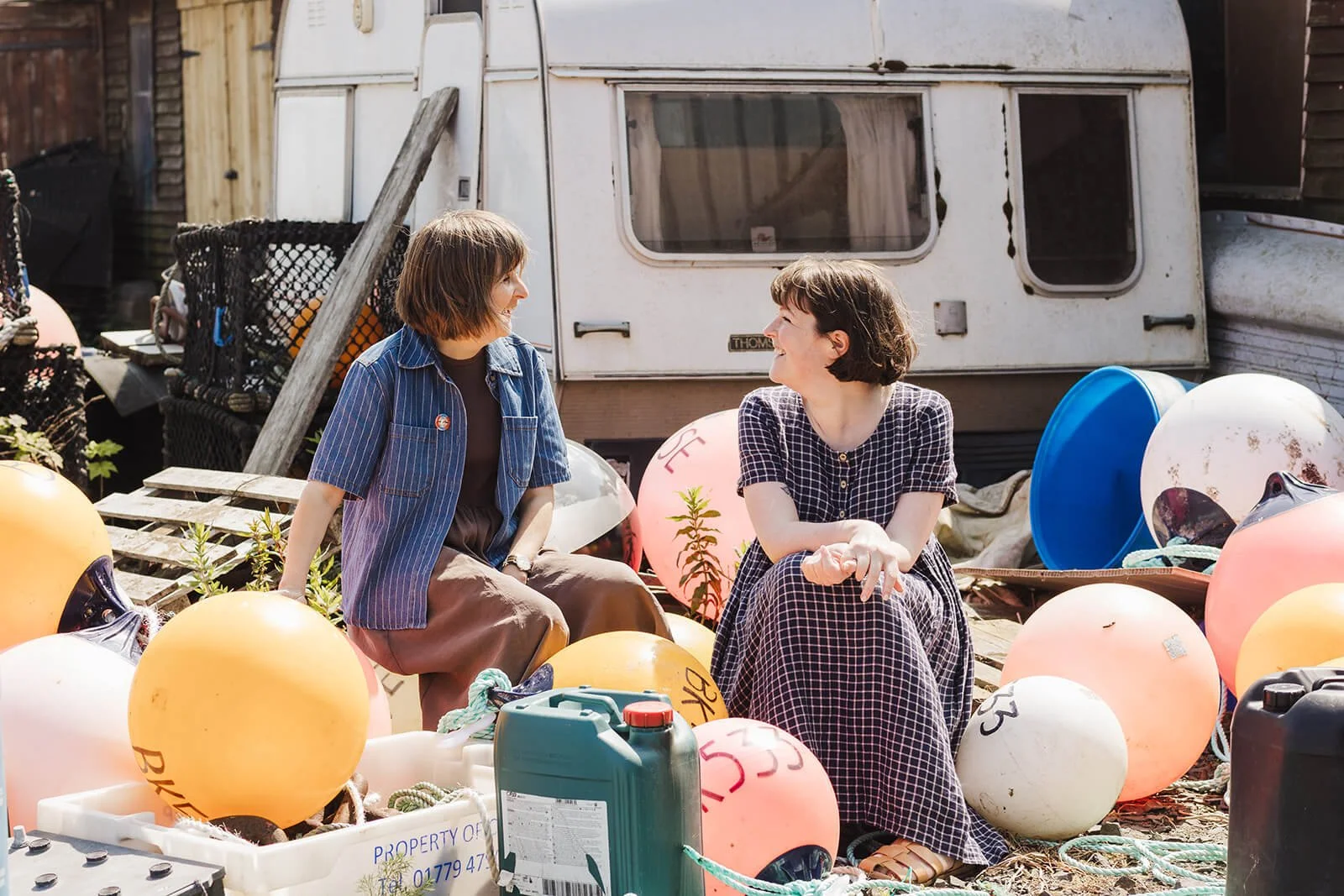
Helen and Katie from Good Ship Illustrations at Holy Island for their Branding Shoot.
Over several shoots we’ve photographed them:
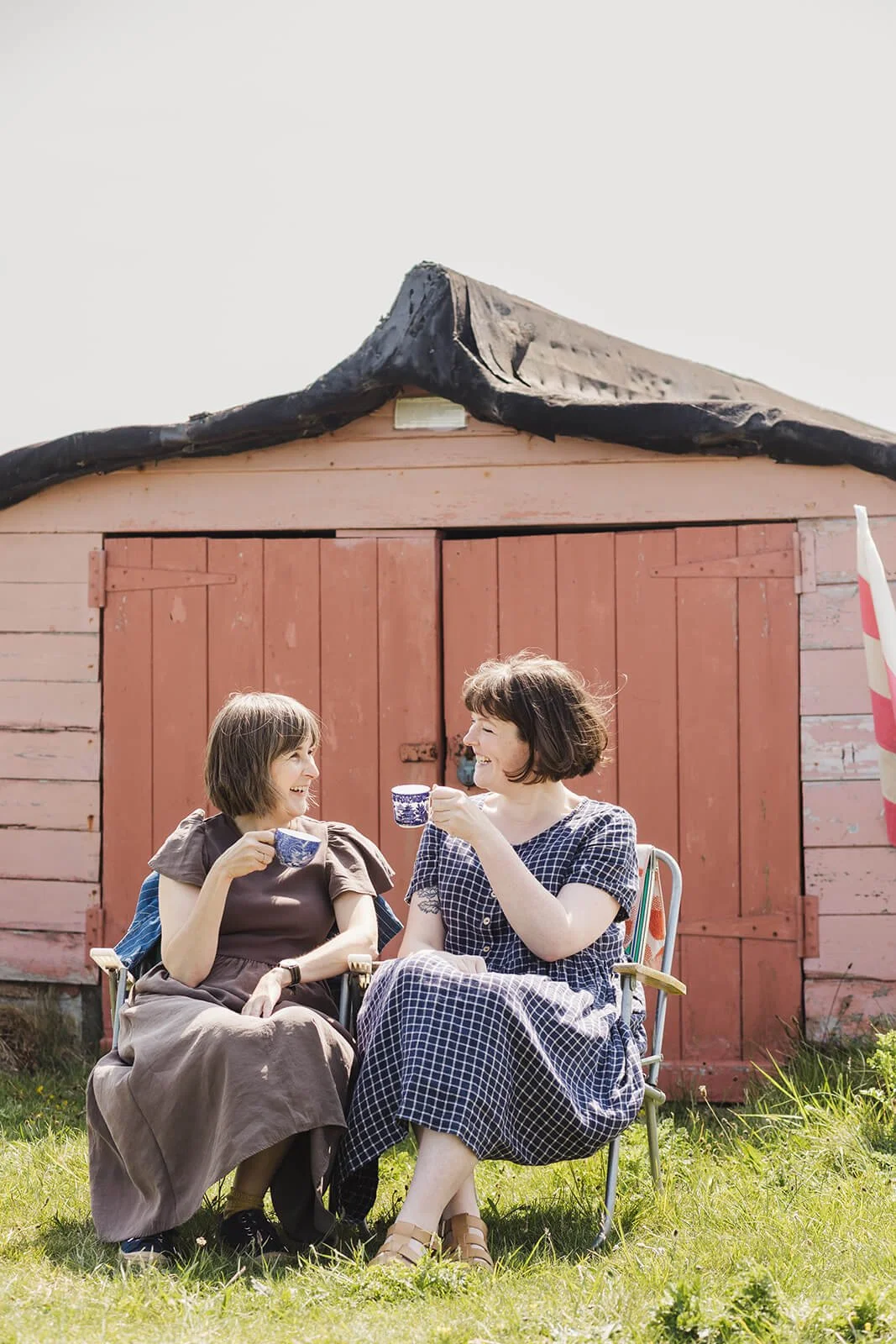
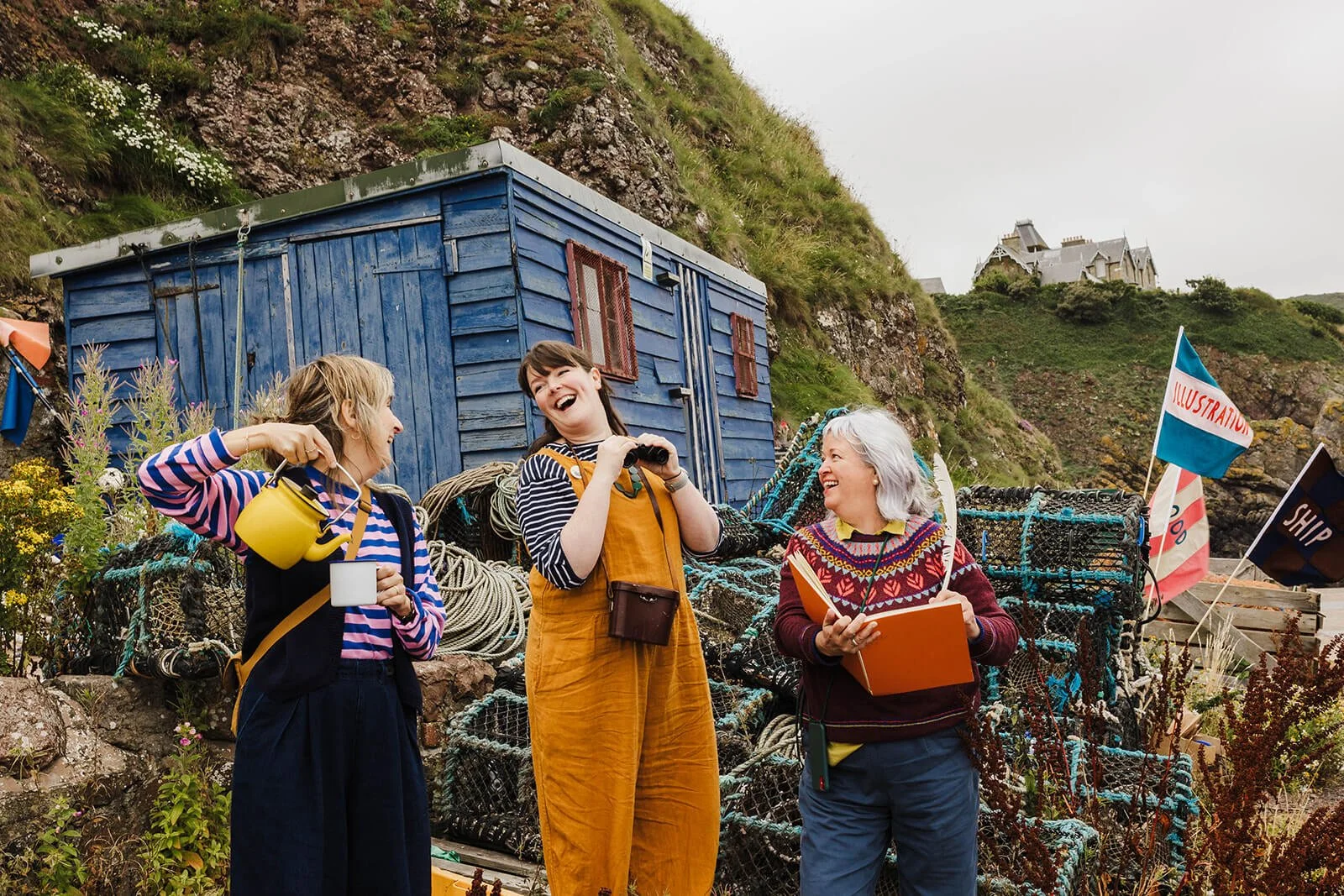
gathered around a kitchen table with mugs of tea and piles of sketchbooks
recording their podcast and course lessons
laughing together between takes
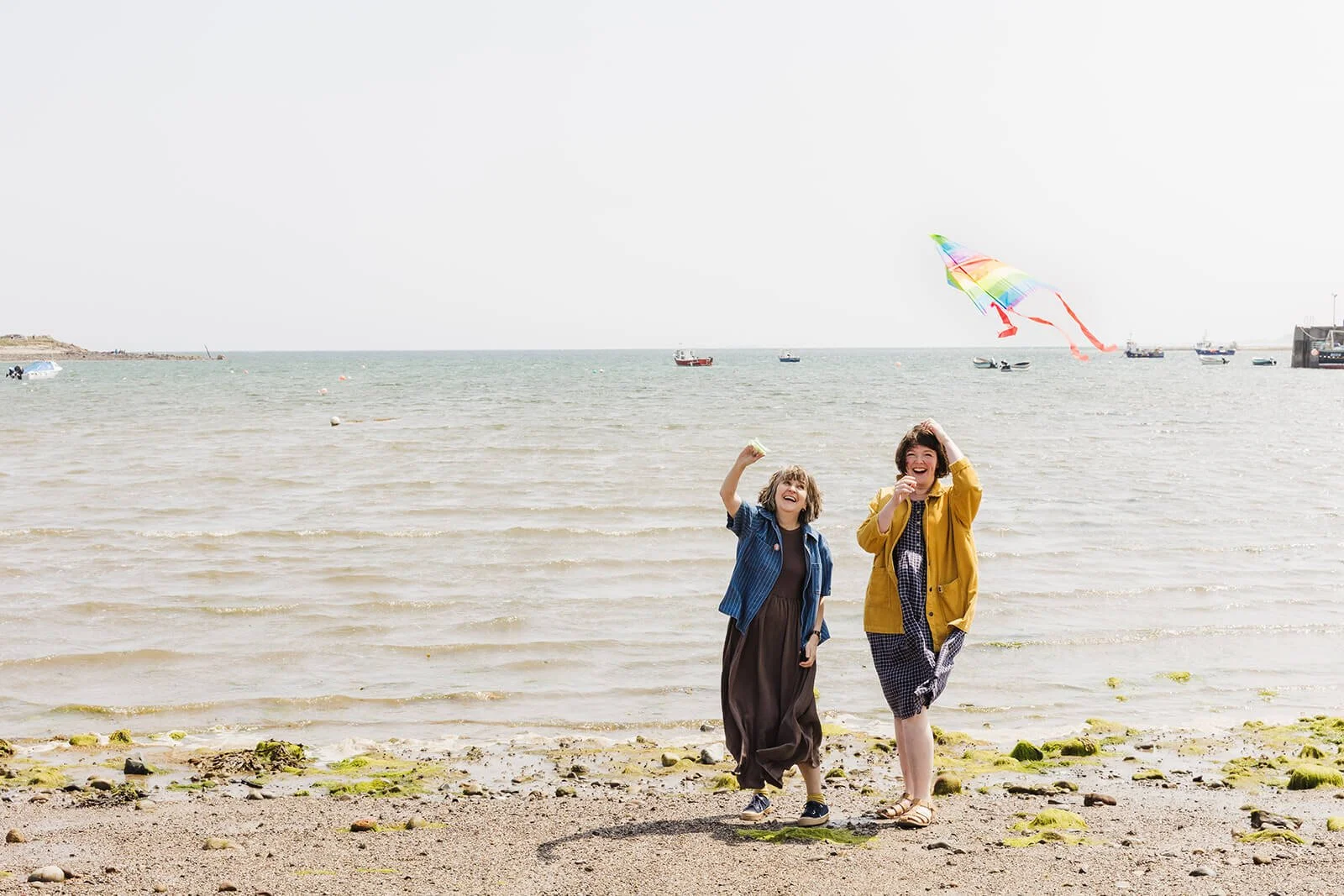
walking along windy beaches with sketchbooks tucked under their arms
These moments tell a story far more effectively than posed portraits ever could.
For creative businesses in particular, imagery like this becomes the foundation for everything - websites, course launches, podcast promotion, newsletters, and social media.
From Studio to Seaside: Photographing The Good Ship World
One of the things that makes The Good Ship Illustration so distinctive is the sense of place woven through their brand.
Many of our shoots have taken place around the Northumberland and Scottish Borders coastline - especially St Abbs Harbour, Coldingham Sands, and Berwick-upon-Tweed.
The seaside locations fit their nautical theme beautifully.
Sometimes it’s been calm and sunny.
Other days we’ve been battling wind, rain, and flying hair.
But that unpredictability often becomes part of the magic.
We’ve photographed them:
eating chips wrapped in paper at Coldingham Sands
walking along harbour walls at St Abbs
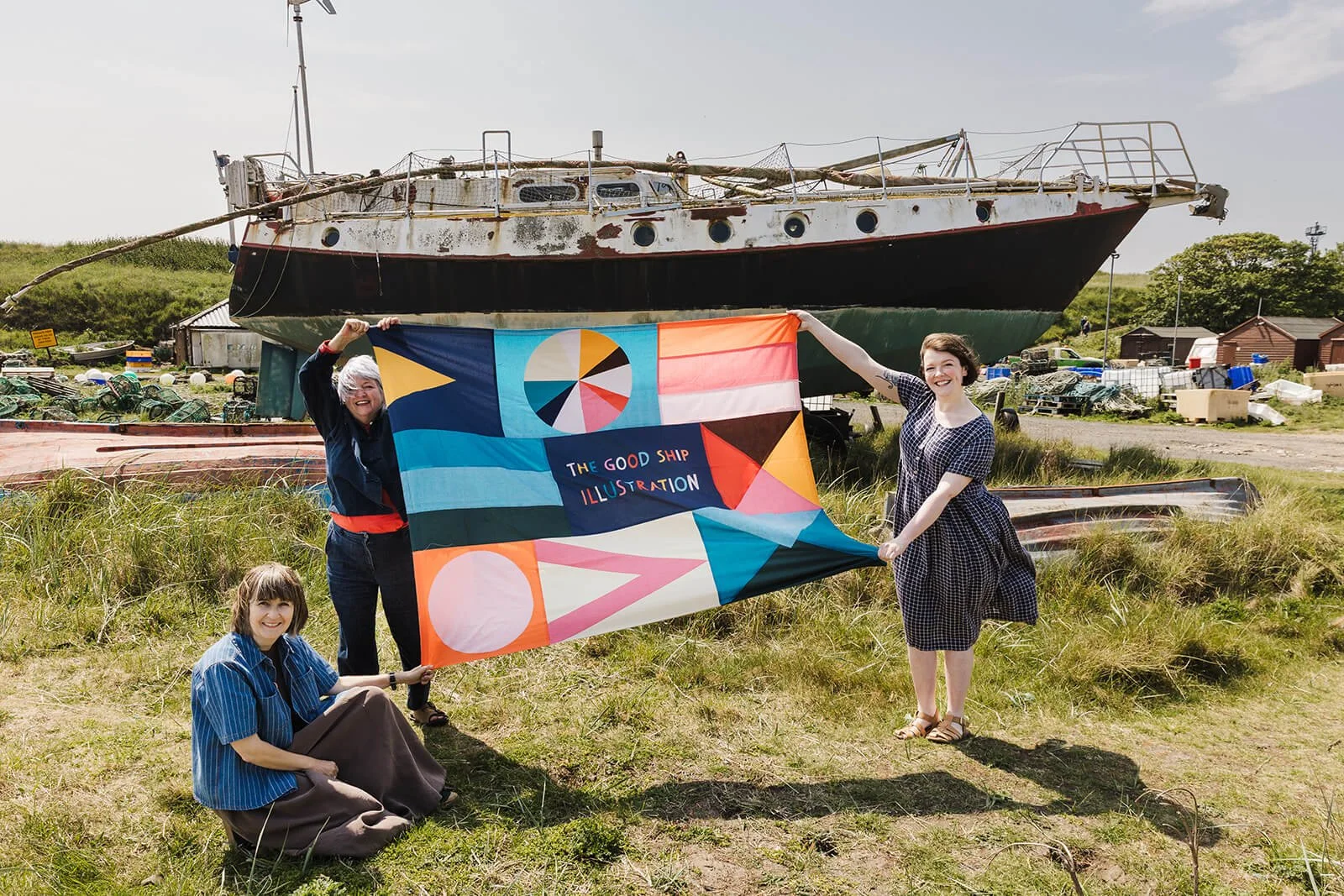
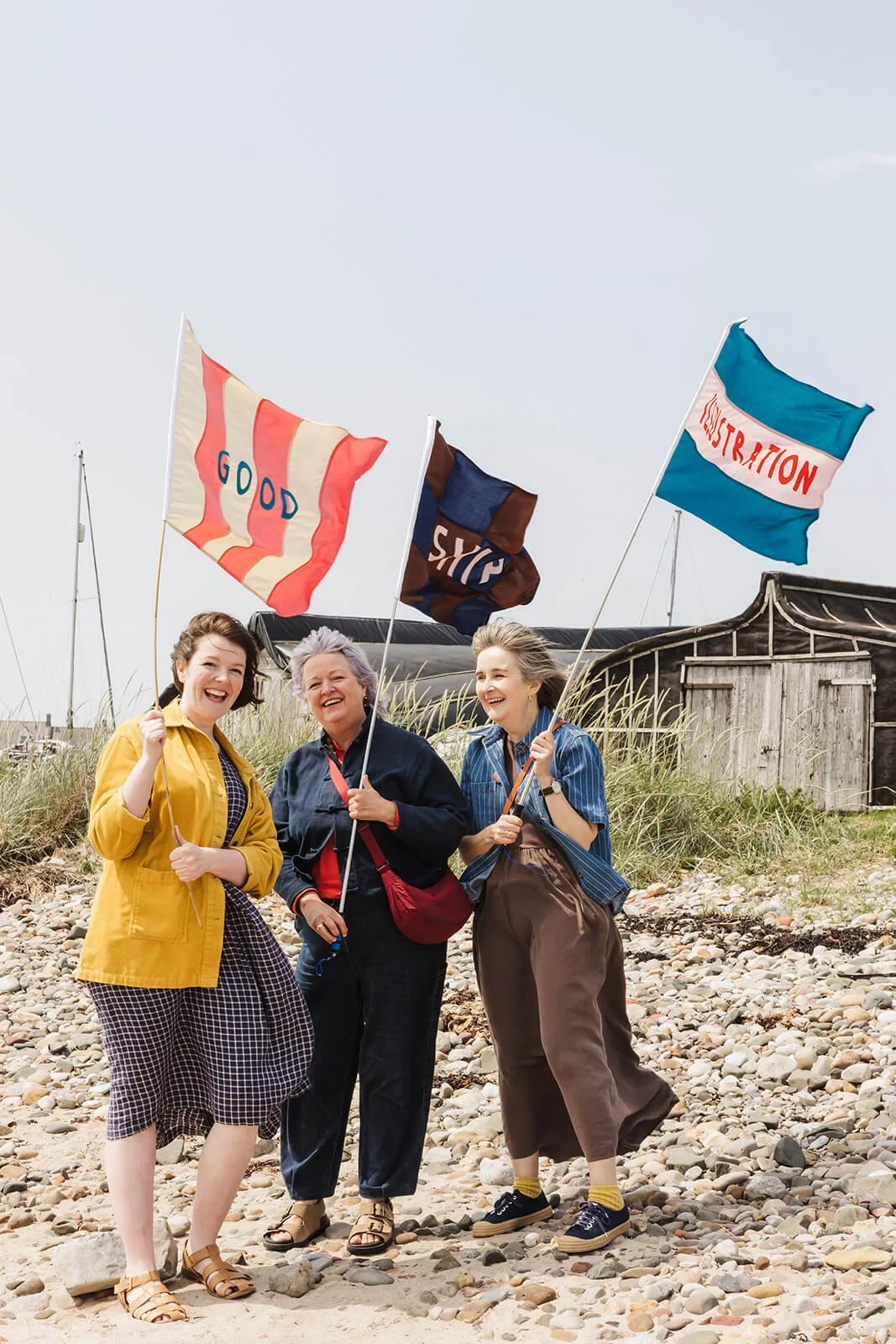
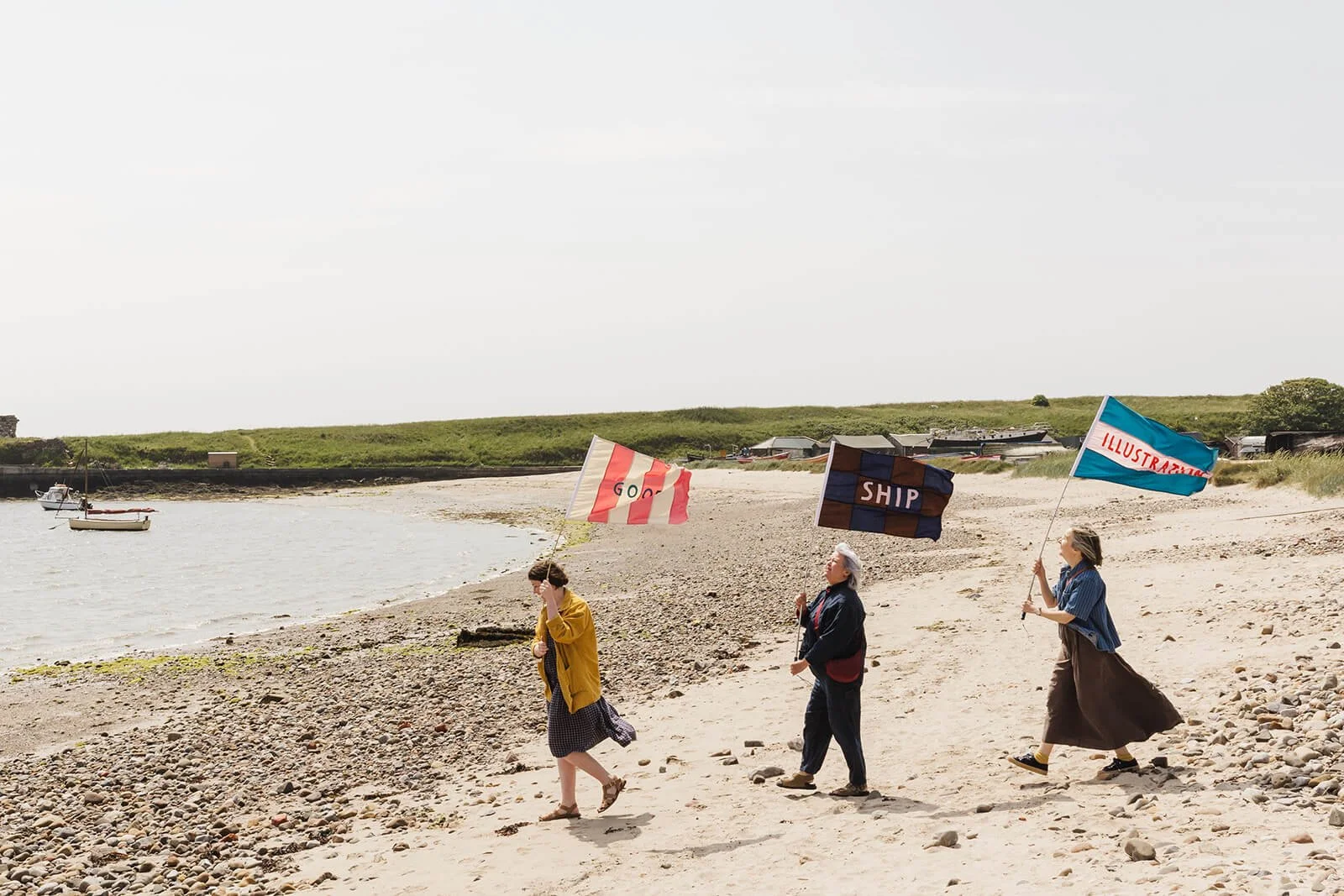
waving handmade nautical flags on a boat on the River Tweed
sheltering under umbrellas and laughing through the rain
Those moments create images that feel natural - exactly how their audience experiences them online.
And over time, these photographs have built a recognisable visual world that supports everything they do.
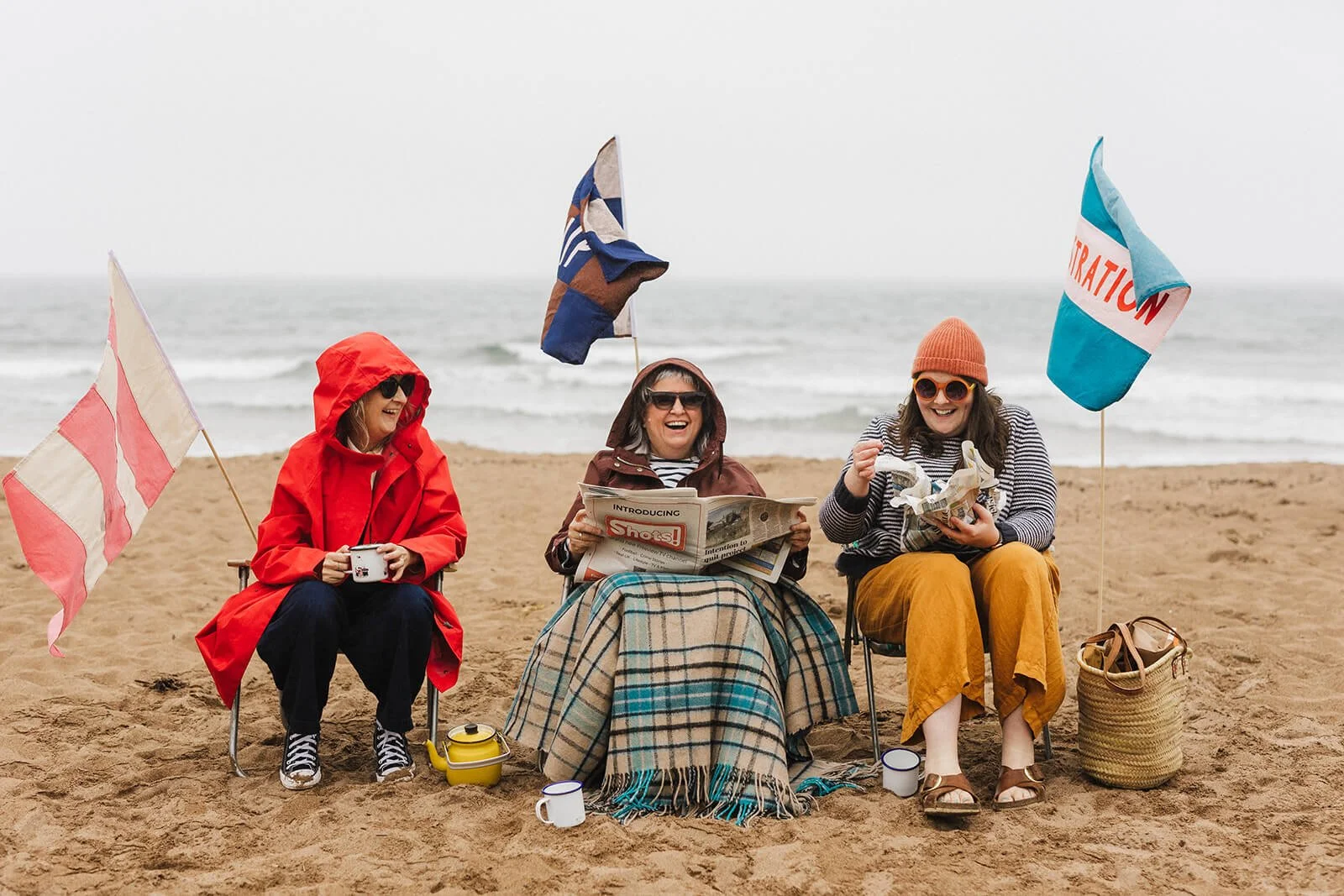
Tea, Chips and Creative Adventures by the Sea.
The Power of a Consistent Brand Colour Palette
One of the most thoughtful elements of The Good Ship’s visual identity is their brand colour palette.
Their colours - sea greens, warm pinks, soft blues and nautical tones - appear everywhere.
You see them in:
the clothes they wear
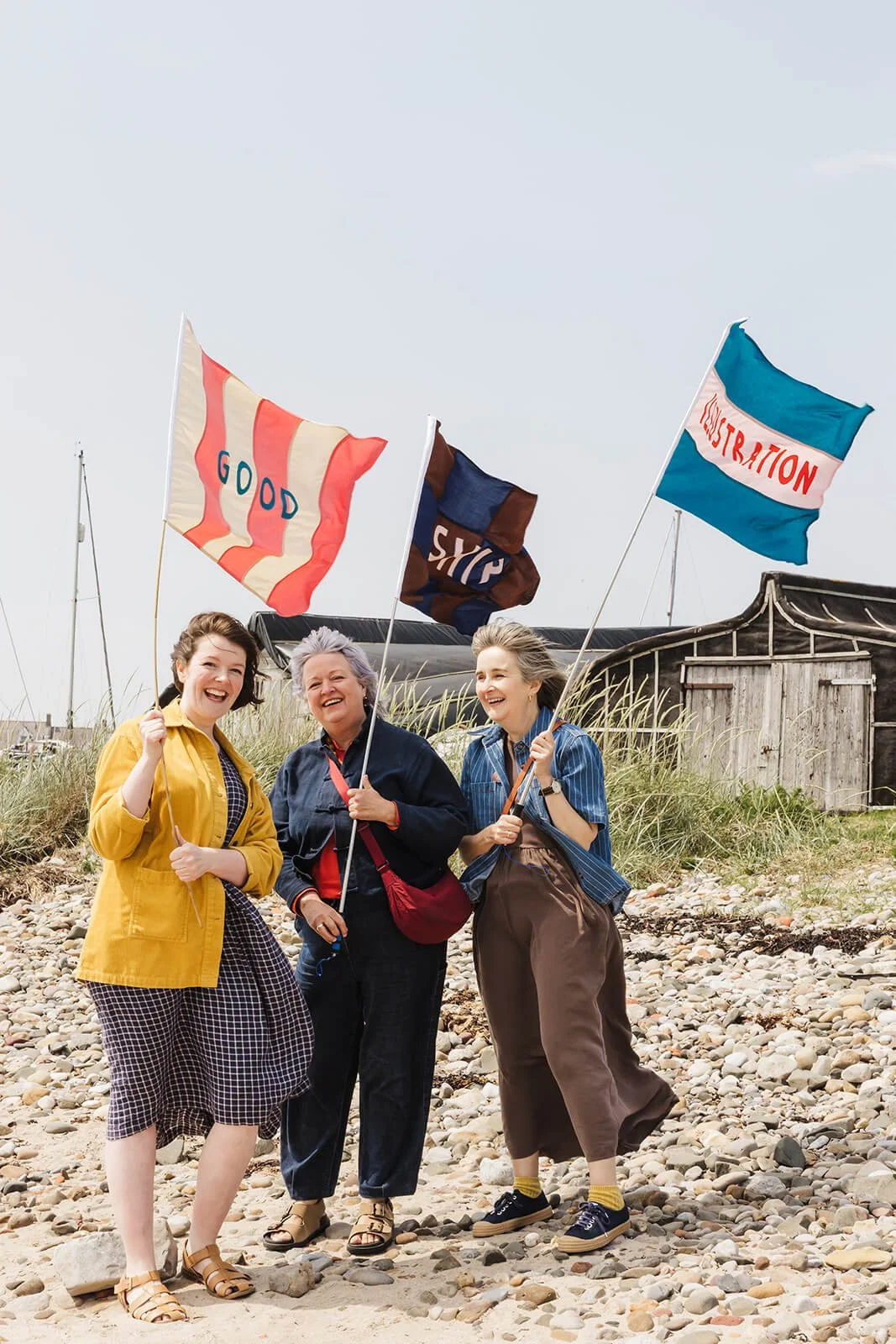
the handmade flags Helen creates
the sketchbooks and props around their studios
the seaside backdrops we choose
It’s a subtle detail, but it brings the entire brand together.
When photography aligns with a brand’s colours, the images slide seamlessly into a website design, course materials, and social media graphics without looking disconnected.
For creative businesses, this kind of visual consistency makes your brand feel intentional and recognisable.
It also makes content creation far easier. Instead of scrambling for images that “sort of work,” you already have a library of photographs that naturally fit your visual identity.

Sketchbooks, Tea and Big Ideas - Tania, Katie and Helen from Good Ship Illustrations.
Why Creative Businesses Need a Photographer Who Gets Their World
Creative businesses are different.
Studios are often messy in the best possible way. Ideas appear halfway through conversations. Props might include paint water, sketchbooks, fabric scraps, or hand-painted flags.
A photographer working with creative entrepreneurs needs to be comfortable inside that world.
It’s not about controlling every detail. It’s about noticing the small moments that reveal personality.
During shoots with The Good Ship, that might mean photographing:
Katie having a laugh and recording BTS between locations
Helen adjusting one of her handmade flags
Tania admiring the vibrant colour pallete of lobster pot rope
These are the moments that make images feel alive.
For creative businesses, the right photographer becomes less like an outsider documenting a shoot and more like someone helping shape the visual language of the brand.
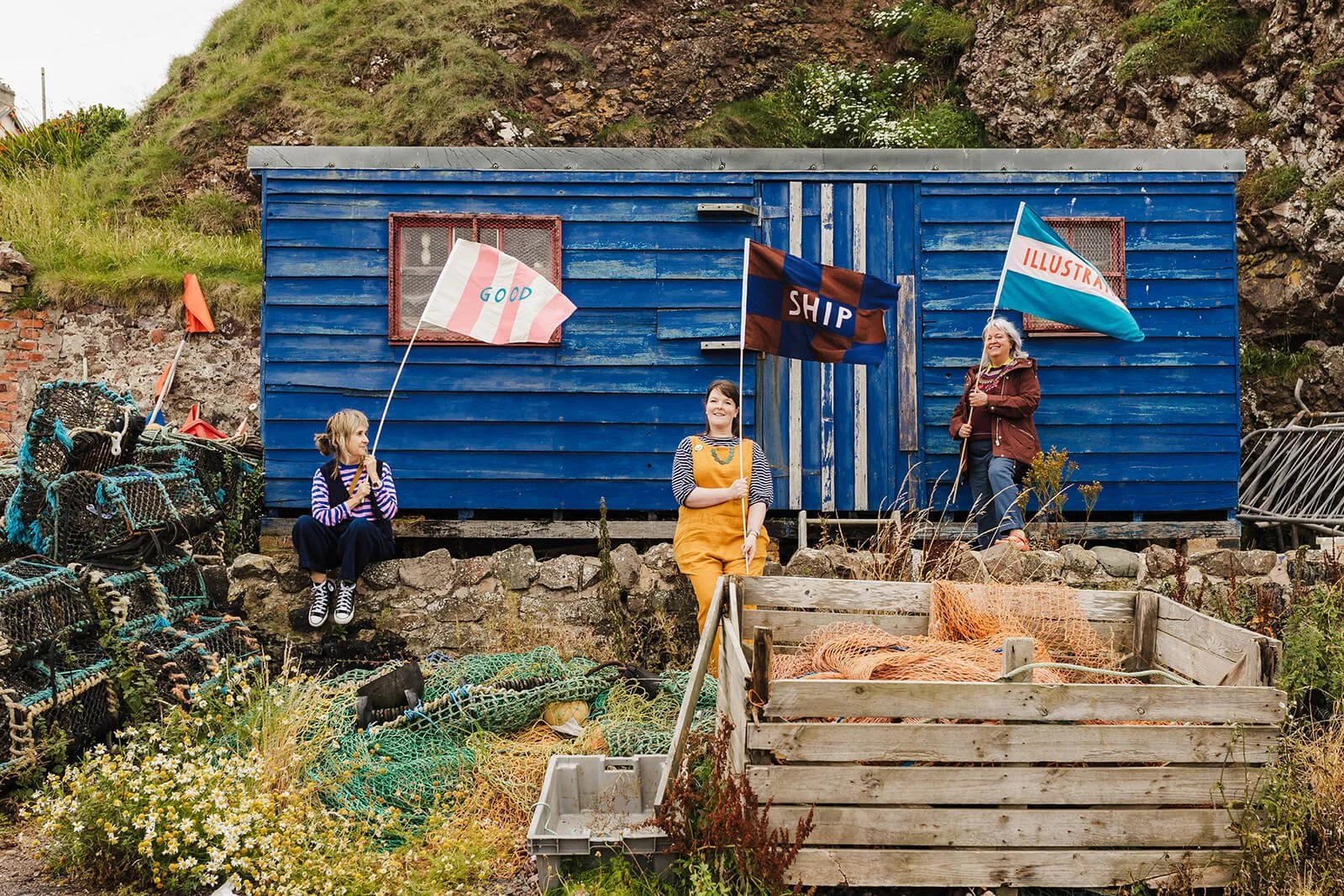
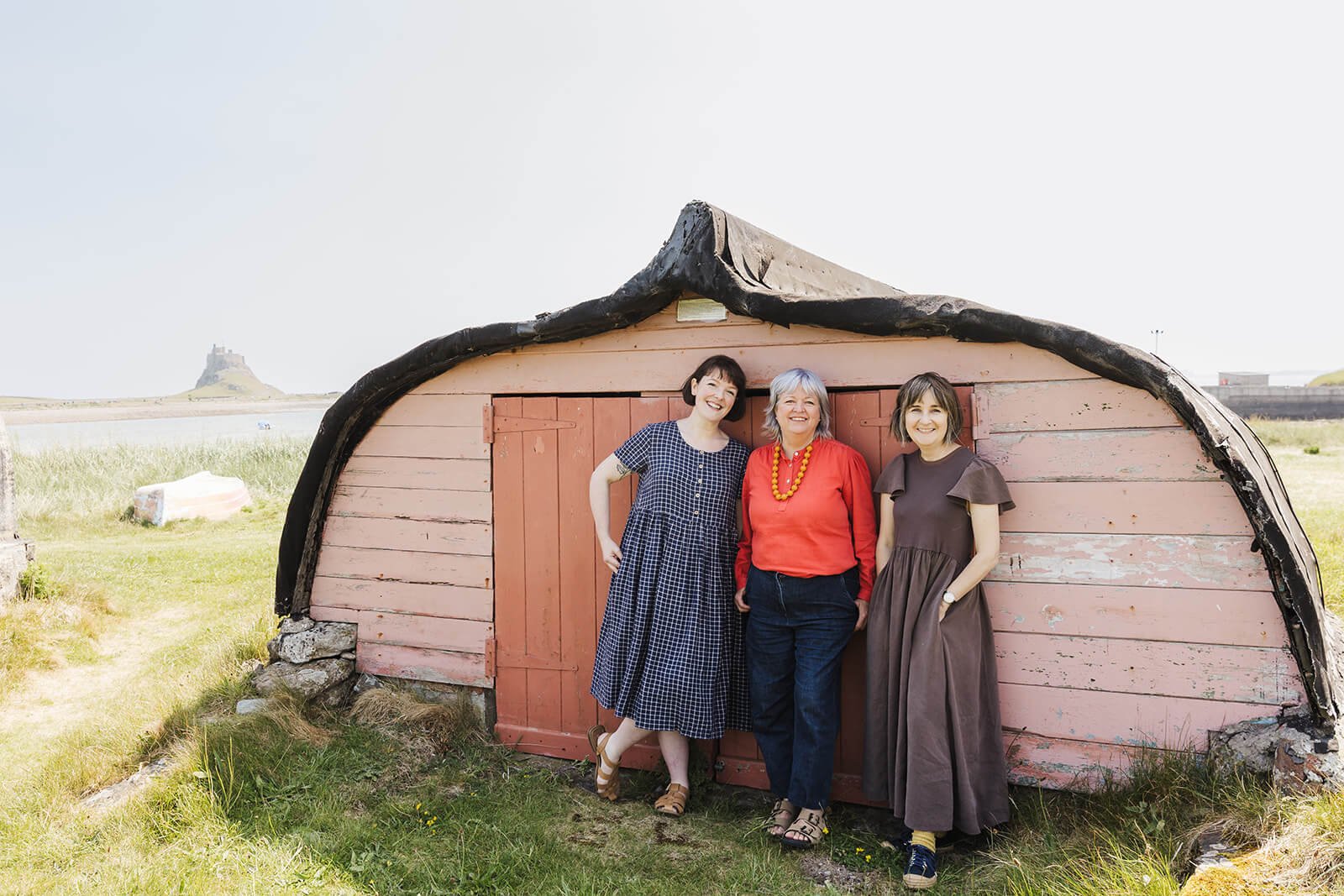
Katie Chappell in between Helen Stephens and Tania Willis.
Why Authentic Brand Photography Matters in the Age of AI
Creative industries are currently having important conversations about AI-generated imagery.
Illustrators, artists, and designers are particularly aware of how quickly artificial images can appear online.
While AI tools have their place, they cannot replace something fundamental:
real people creating real work.
When audiences visit a website, they want to see the human beings behind the business.
They want to see:
the hands that draw the illustrations
the messy studio desks
the laughter between collaborators
the environment where ideas are made
These details build trust.
AI-generated imagery might look polished, but it cannot capture the authenticity of a real creative practice. For communities like the one around The Good Ship Illustration - where honesty, creativity, and human connection are central - authenticity matters deeply.
Real photography shows that there are actual people behind the work.
And in an increasingly synthetic online world, that matters more than ever.
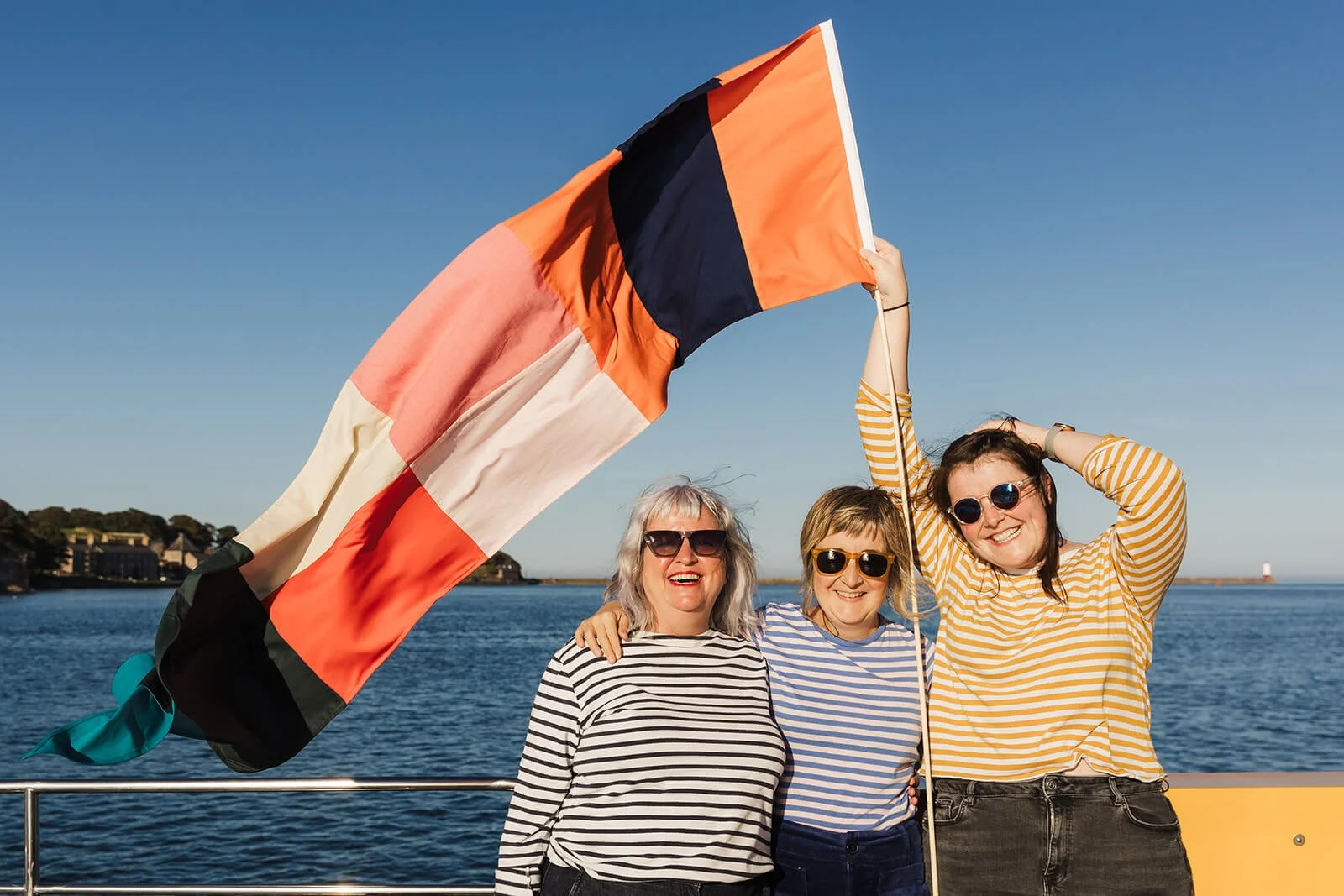
Helen Stephens in between Tania Willis and Katie Chappell.
The Good Ship Illustration: A Brand Photography Story
Over the years, photographing Tania, Katie, and Helen has become less about individual shoots and more about building a visual archive of their journey.
The images now appear across:
course materials
podcast promotion
newsletters
They support everything the business does.
But more importantly, they show the heart of the brand - three illustrators who built a creative community around friendship, generosity, and learning.
If you’d like to explore their work, you can visit:
Tania Willis – illustrator and educator
Katie Chappell – illustrator and creative mentor
Helen Stephens – author and illustrator

Good Ship team on the Lookout for the Next Brilliant Idea at St Abbs.
Building a Creative Community Beyond the Photos
One of the things that makes The Good Ship Illustration so special is that their brand doesn’t stop at their website or their courses.
It flows through their social media, podcast, and the way they show up consistently for their audience.
Their photography plays a quiet but important role in all of this.
You’ll often see the same visual threads running through everything they do - the colours, the humour, the friendship, the slightly windswept seaside energy. It all feels connected.
you can find them on Instagram @thegoodshipillustration
The Friday Art Club
Their Friday Art Club on Instagram Live has become a real cornerstone of their community.
It’s relaxed, welcoming, and genuinely helpful - a space where illustrators can show up as they are, ask questions, and feel part of something.
From a photography point of view, this is where those brand images really come into their own.
When people visit their profile, they’re not just seeing a live video - they’re seeing a consistent visual story that reflects the same warmth and personality they experience in real time.
The Podcast
Their podcast carries that same feeling.
It’s thoughtful, honest, and often very reassuring for creatives navigating the ups and downs of building a business.
The imagery used to support it - whether that’s website banners, episode promotions, or social posts - helps anchor the podcast visually.
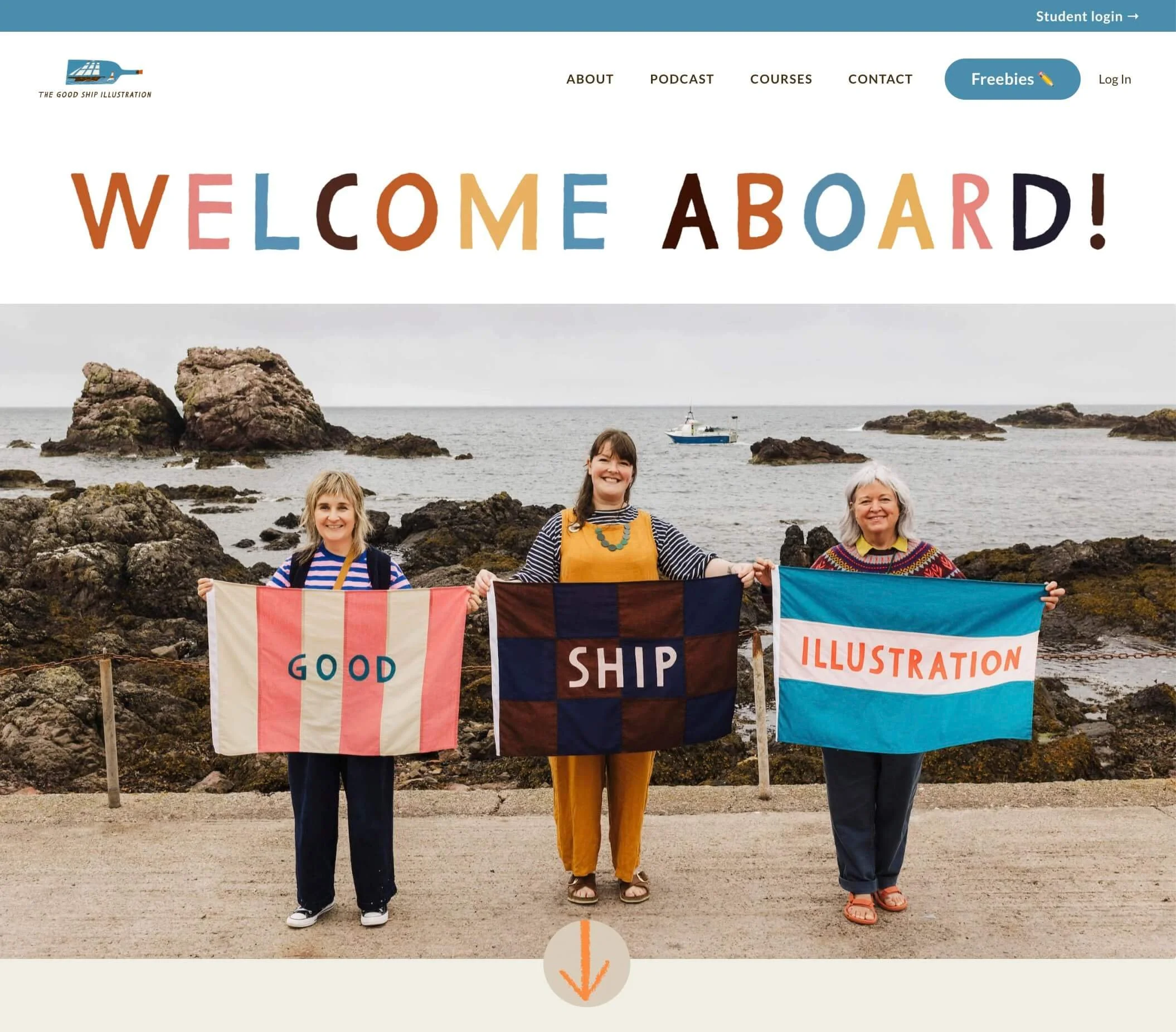
The Good Ship Illustrations Website.
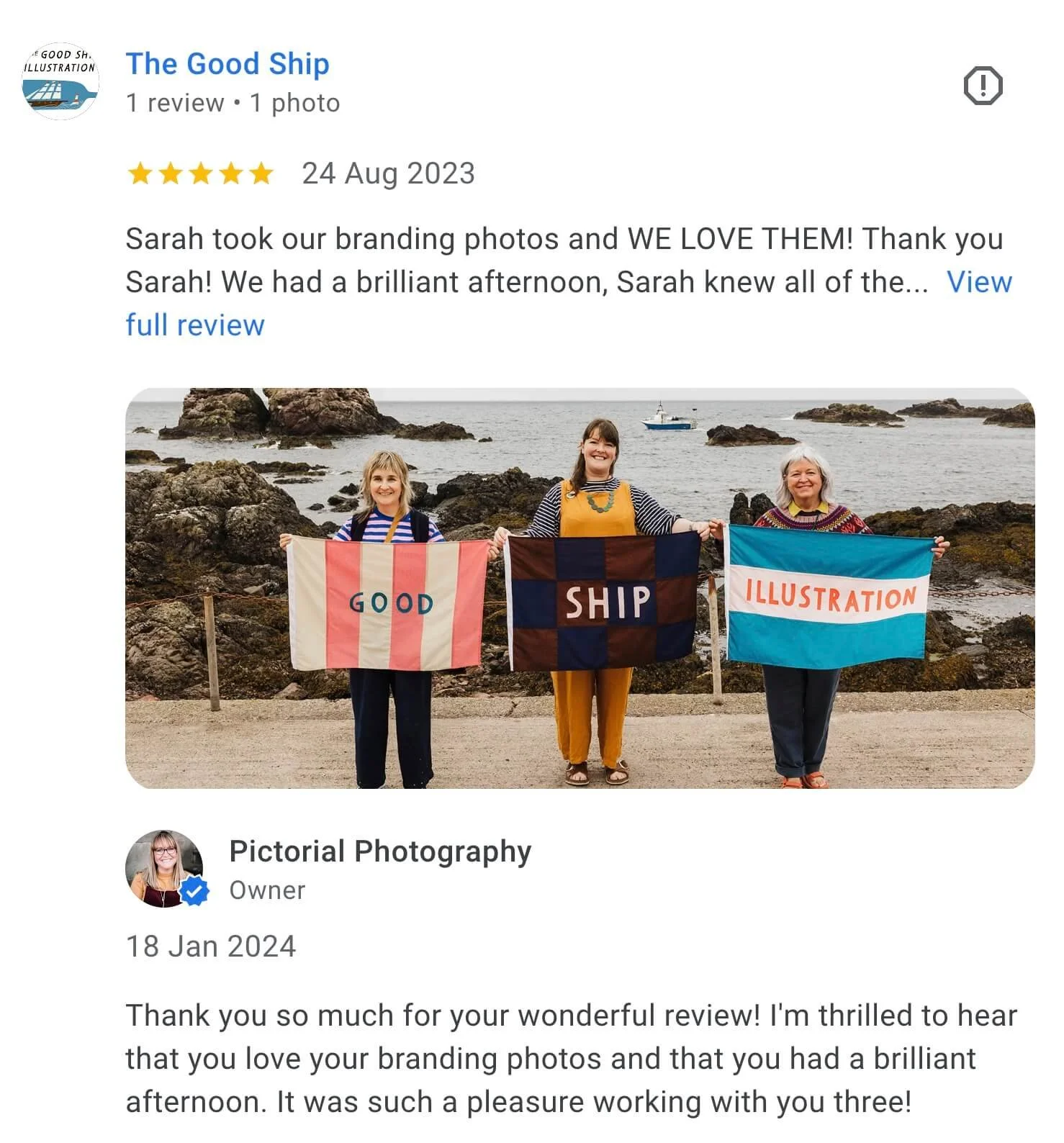
Thinking About Your Own Brand Photography?
If you run a small business or creative practice, your brand photography should reflect your personality, your environment, and the way you actually work.
It doesn’t need to feel overly polished or staged.
Often the most powerful photographs are the simplest ones - you in your studio, collaborating with others, or working in the places that inspire you.
Those images become the visual story of your business.
And over time, that story builds familiarity and trust with the people who want to work with you.
If you’re thinking about creating brand photography for your creative business, I’d love to help you plan something that feels natural, thoughtful, and genuinely you.
If you’re ready for brand photos that feel like you, we’d love to help. Click here to book a call with Sarah - we’ll guide you through every step.
Photography Copyright UK Explained: Who Owns Your Photos and How Image Licences Work.
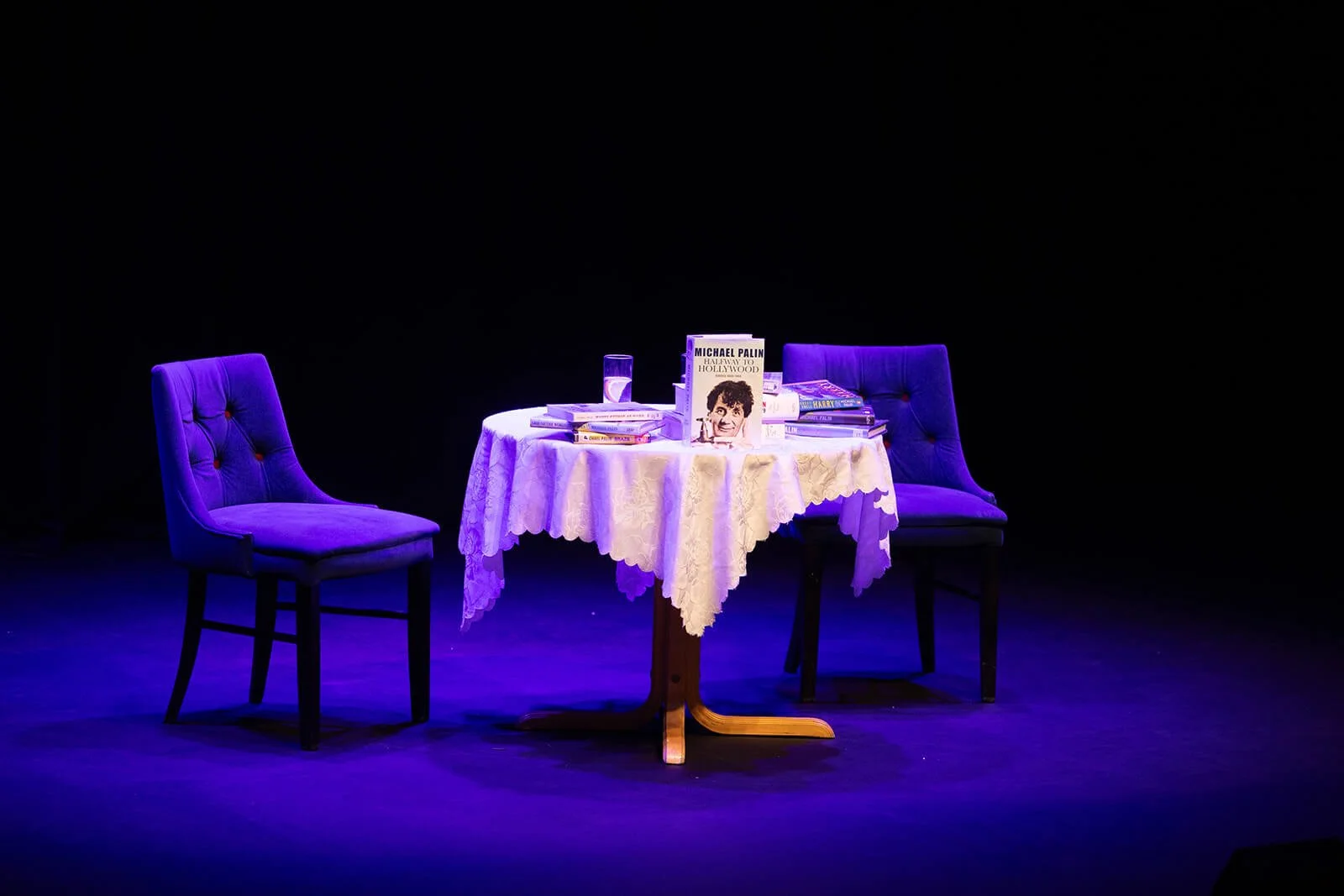
Interview setup at The Maltings for Berwick Literary Festival
If you’ve ever commissioned professional photography for your business or event, you may have wondered something surprisingly common:
Who actually owns the photos?
It’s a question that comes up regularly with brand photography clients here in Northumberland and Berwick-upon-Tweed. You’ve invested in the shoot, the planning, and the final images - so naturally, it can feel like the photos should belong to you completely.
But under UK copyright law, things work a little differently.
Understanding photography copyright in the UK doesn’t have to be complicated. Once you understand the basics - particularly what an image licence means - it becomes much clearer how you can use your photos confidently across your website, marketing, and social media.
Photography Copyright UK: Who Owns the Photos?
Under UK copyright law, the photographer automatically owns the copyright to the images they create. This happens the moment the photograph is taken — no paperwork required.
A simple way to think about it is like buying a book. When you purchase a book, you own the physical copy, but you don’t own the copyright to the story. The author still controls how it can be reproduced or distributed.
Photography works in much the same way.
When you hire a photographer:
You receive the images themselves
But the copyright remains with the photographer
This is standard practice across the creative industries and is written into UK copyright law.
Rather than transferring copyright entirely, photographers provide something called a licence.
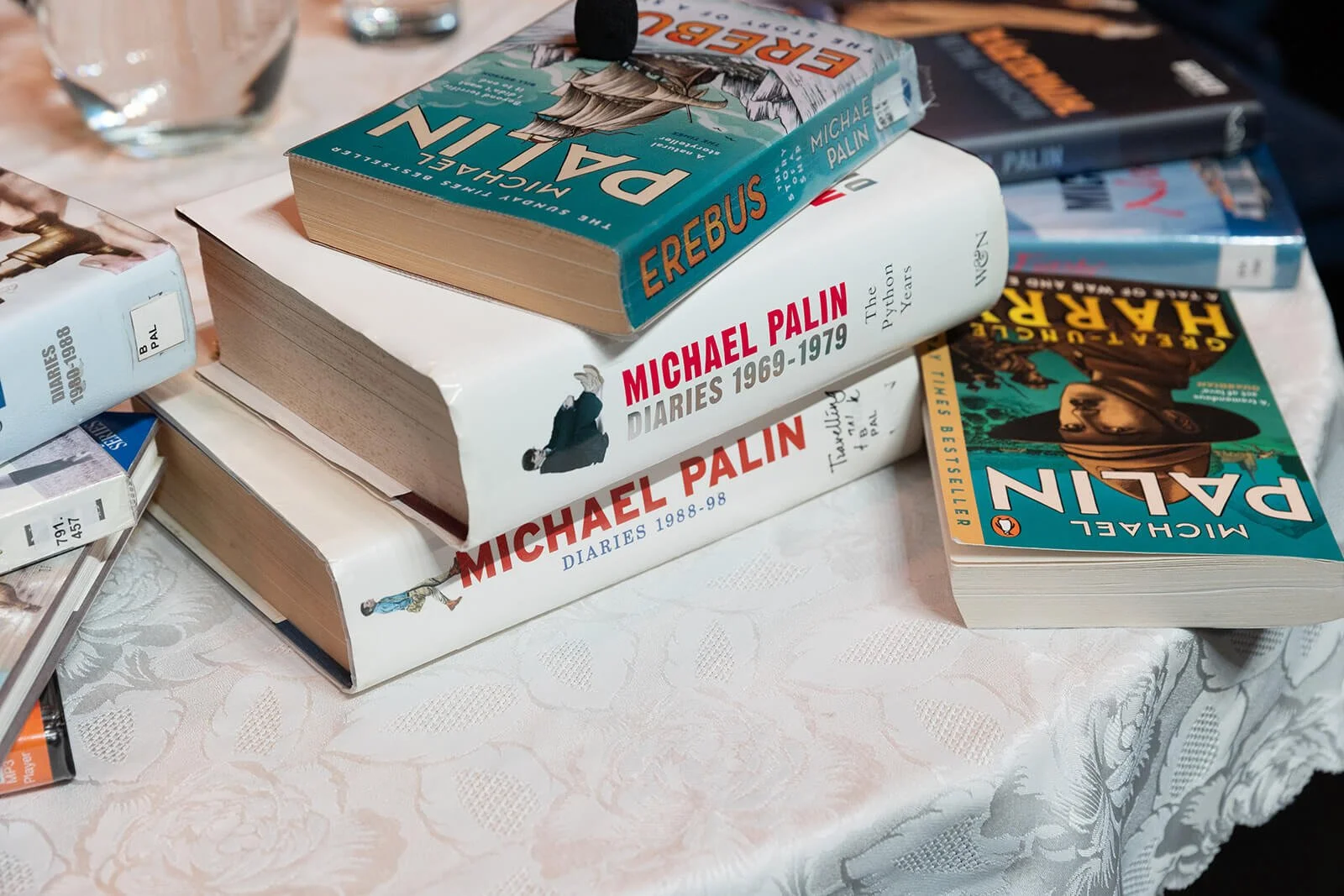
Berwick Literary Festival event photography used under commercial photography copyright UK
Photography Copyright UK: What an Image Licence Means
An image licence simply sets out how you’re allowed to use your photos.
For business clients, this usually covers things like:
Website use
Social media
Press features
Marketing materials
Print advertising
Brochures or packaging
The licence gives you legal permission to use the images for your business, while the photographer retains copyright as the creator.
Photography Copyright UK: What You Can Do With Your Images
With a typical commercial photography licence, businesses can comfortably use their images in most marketing contexts.
For example, you can usually:
Add photos to your website
Share them on social media
Include them in press coverage
Use them in brochures, advertising, or marketing materials
Print them for office displays or promotional materials
In practice, this means your portfolio of images becomes a core visual asset for your brand.
If you’ve invested in professional photography for your website,headshots, or product photography, the licence allows you to use those images wherever your business needs them.
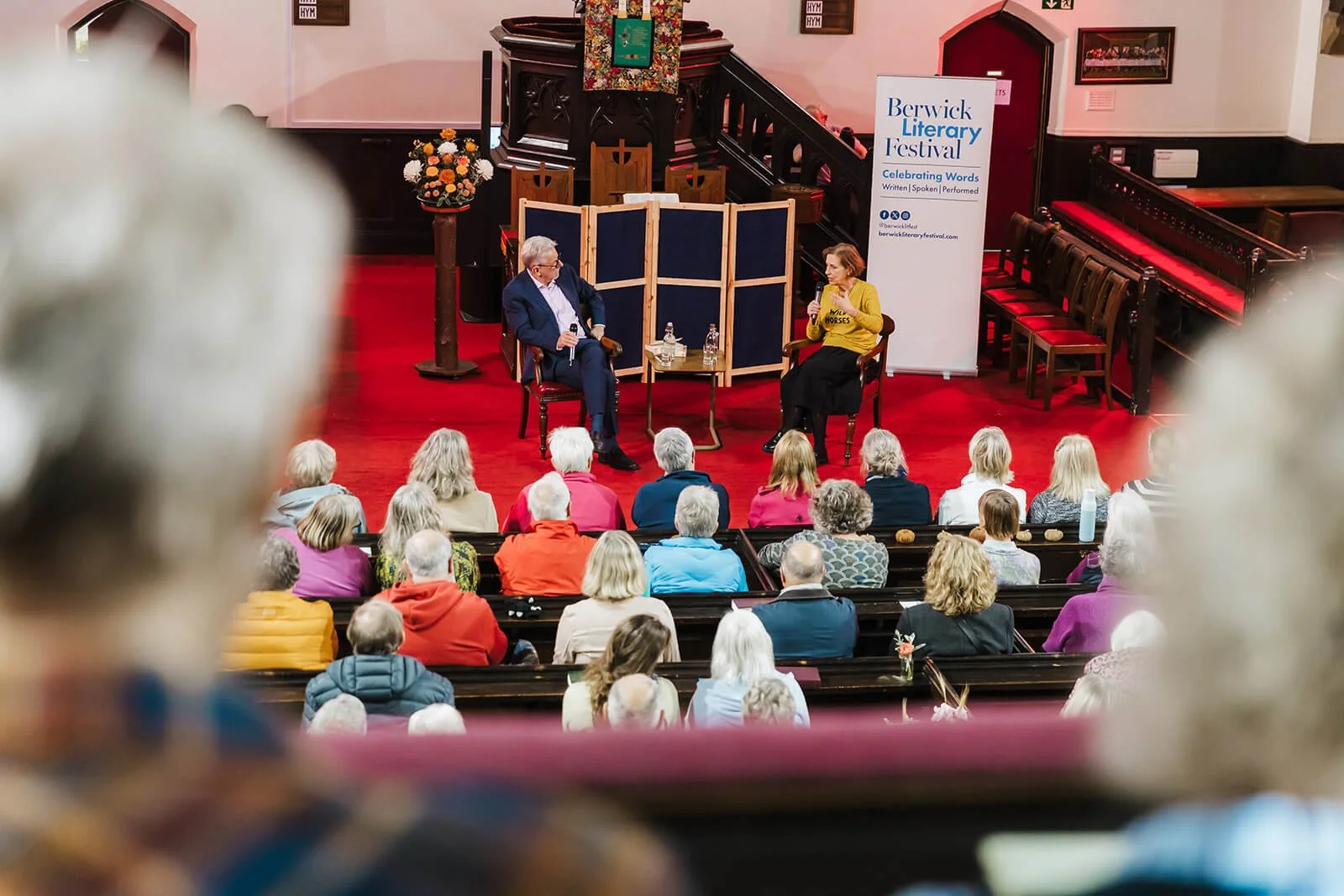
Images photographed for Berwick Literary Festival and used across marketing, press, and editorial with clear licensing agreements in place.
Photography Copyright UK: What You Can’t Do Without Permission
While licences are usually very flexible, there are a few things that typically require additional permission.
These include:
Selling the images to third parties, for example:
Stock photography libraries
Media outlets not connected to your business
Other companies wanting to advertise with the image
Allowing another business to use your images
If another company wants to use one of your photos for their own marketing, they would need permission from the copyright holder.
Editing or significantly altering the images
This is a common question. Small practical adjustments may be fine, but heavier edits — such as strong filters or changes that alter the look of the original photograph — should always be discussed first.
Professional photography is a creative work, and maintaining the integrity of that work helps protect both the photographer’s reputation and the quality of your brand imagery.
Photography Copyright UK: Why Copyright Protects Both Photographer and Client
Copyright isn’t about restricting how you use your photos.
In reality, it protects both sides of the creative process.
For photographers, copyright ensures their work isn’t reused or sold without permission.
For clients, licences provide something equally important: clarity.
You know exactly:
what you can use the images for
where they can appear
how long you can use them for
For businesses investing in professional brand photography, that clarity and security are incredibly valuable.
Real-World Example: How Image Licensing Works in Practice
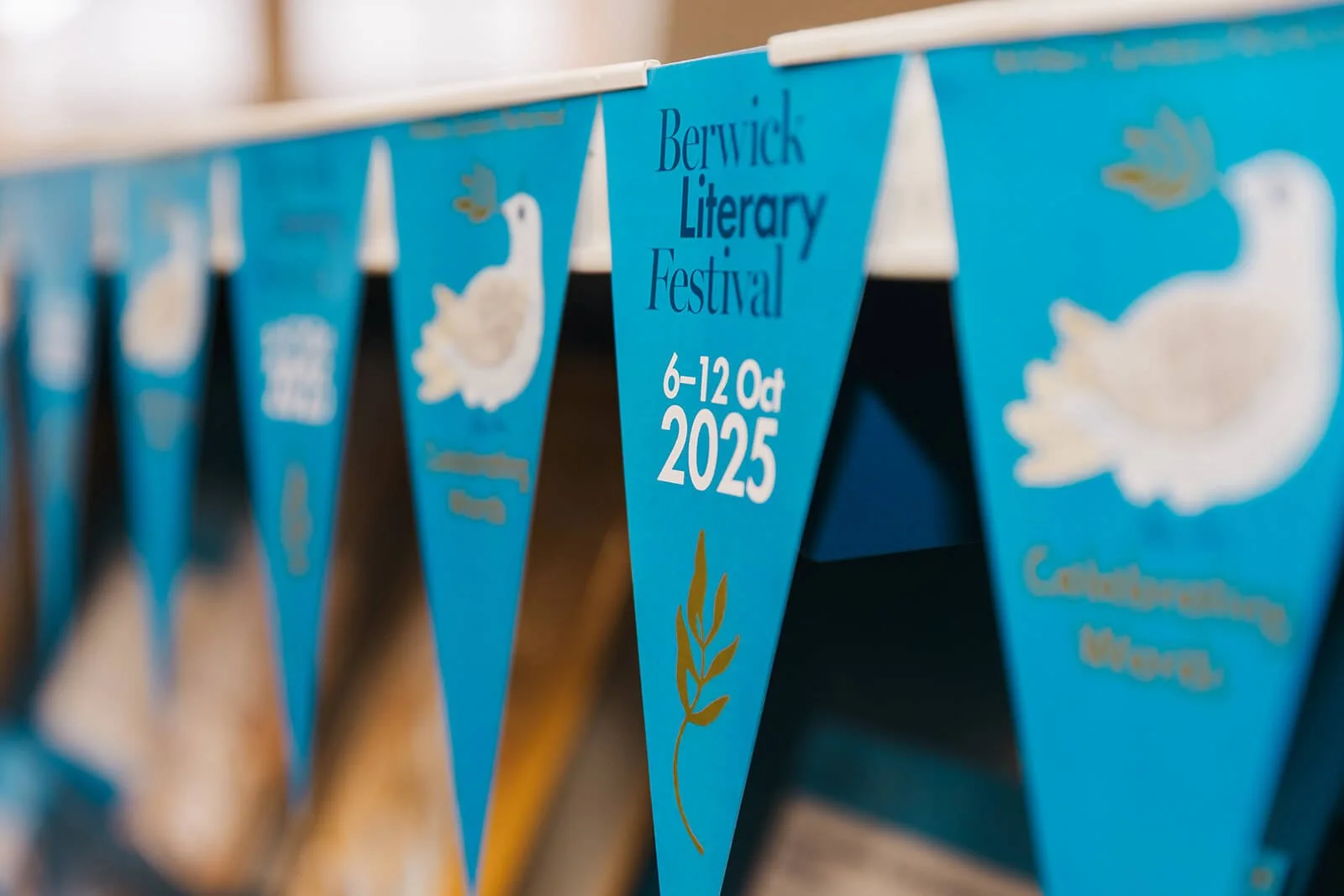
Festival bunting during Berwick Literary Festival events
Working with events like Berwick Literary Festival each year is a good example of how image licensing works in practice.
Across the festival, I’ve photographed a range of speakers and events, including conversations with Michael Palin, Kirsty Wark, and Damian Barr, as well as previous work with the Poet Laureate and Len Pennie.
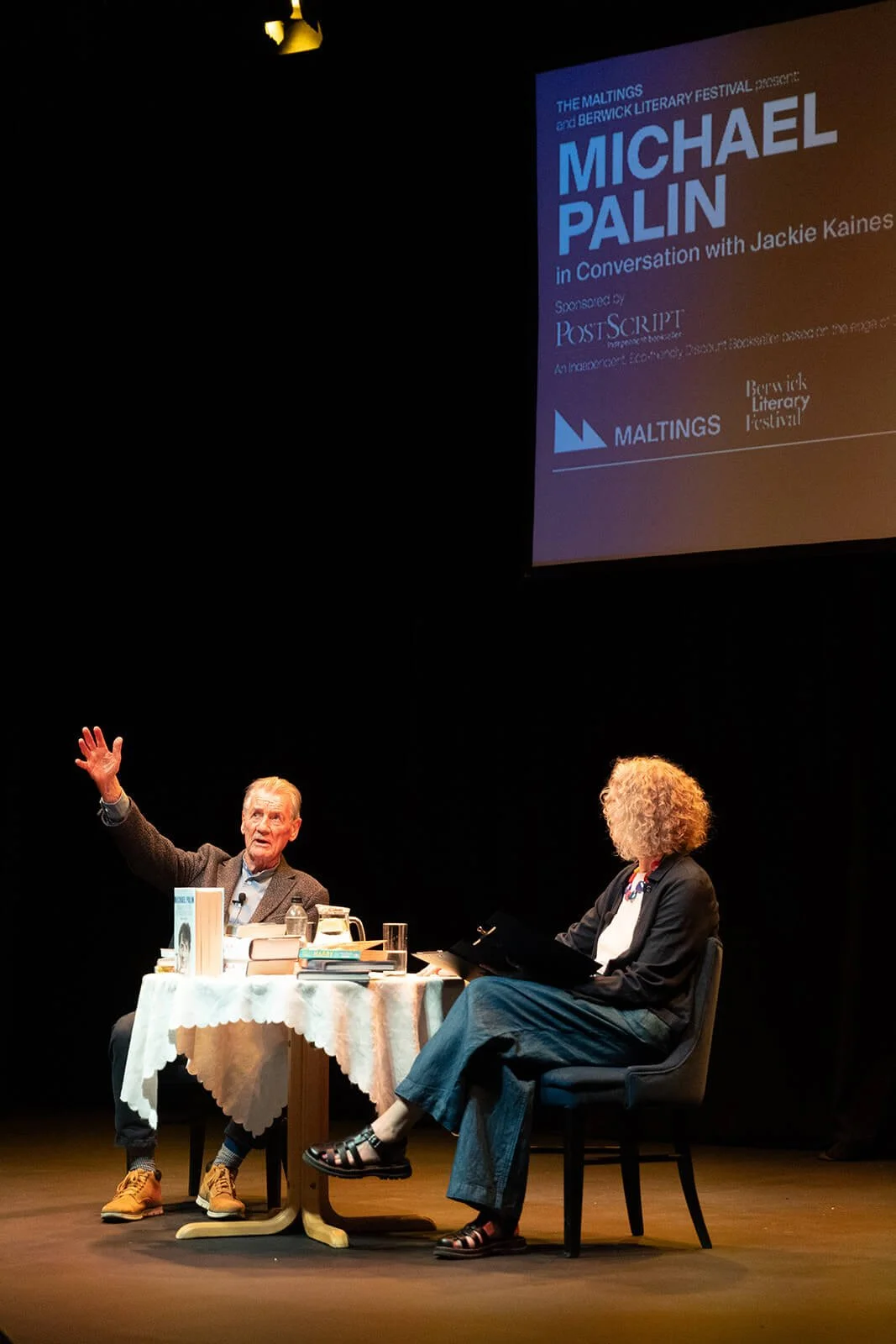
Michael Palin in conversation at The Maltings
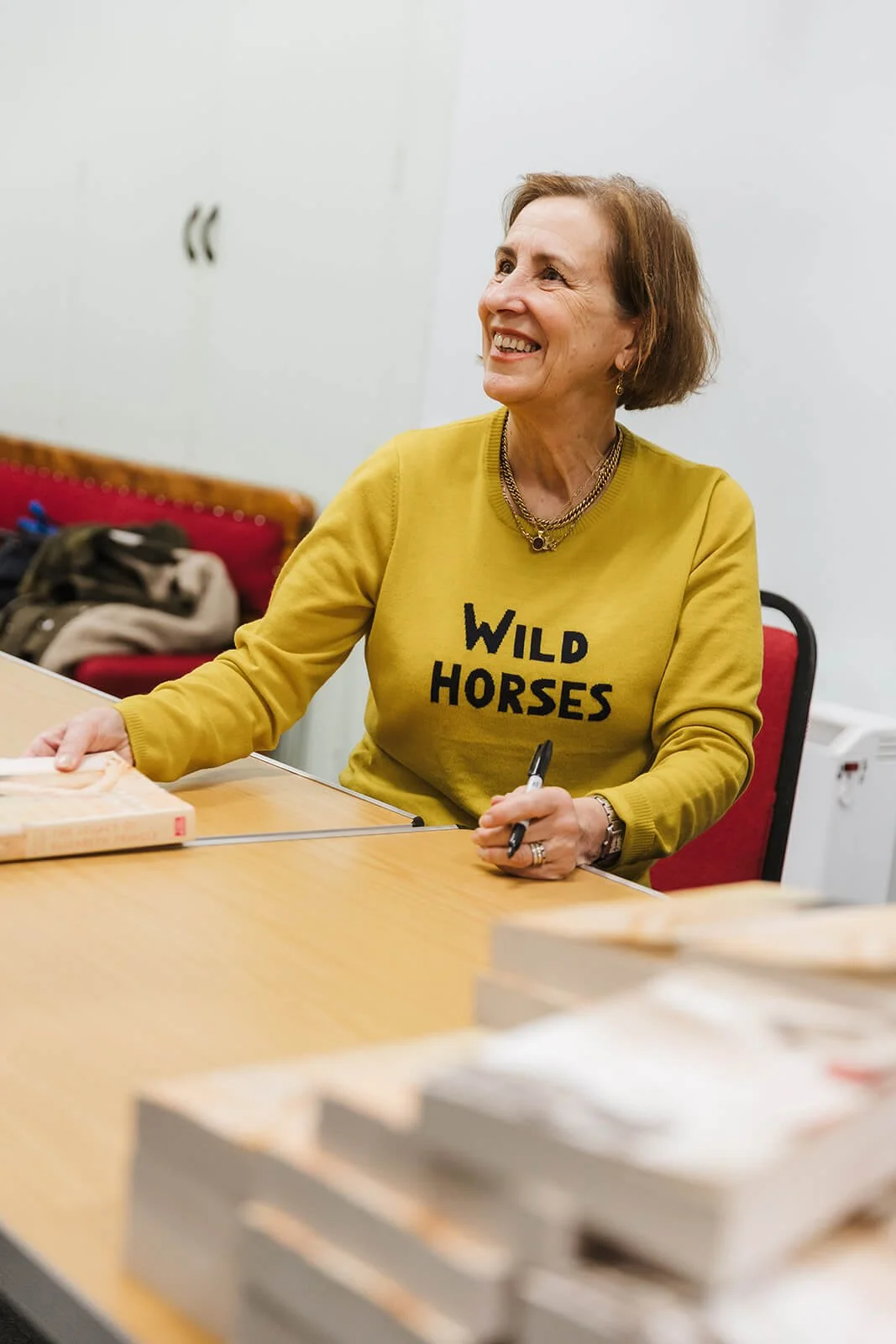
Kirsty Wark book signing at Berwick Literary Festival
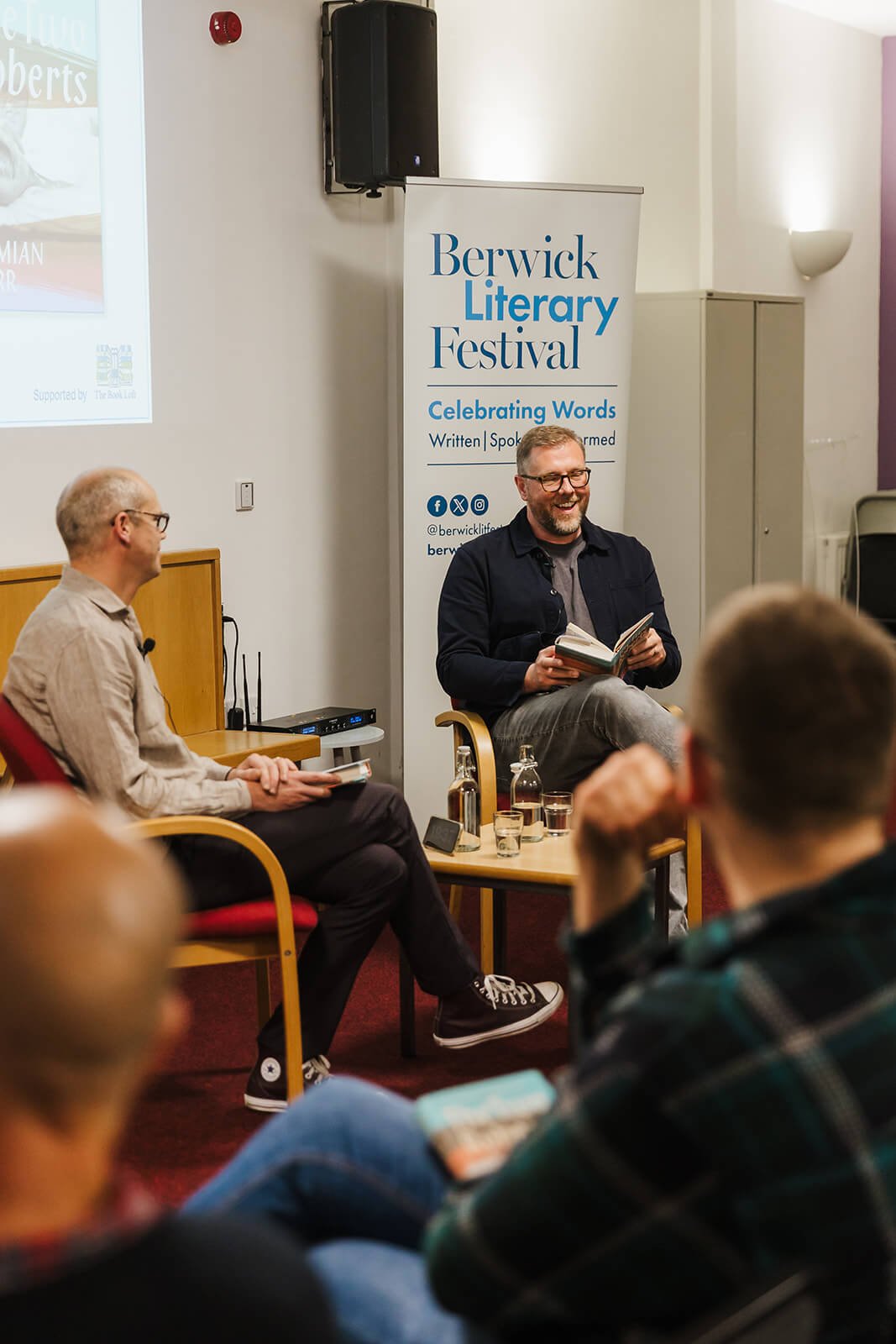
Damian Barr discussing his work at Berwick Literary Festival
Each of these situations involves slightly different considerations when it comes to image use.
For example:
Images may be used for festival marketing and promotion
Shared with press and media outlets
Included in editorial coverage or future campaigns
Because of this, clear licensing and contracts are essential. They ensure everyone understands how the images can be used, where they can appear, and who has permission to share them.
From the client’s perspective, this means they can confidently use the images across multiple platforms without uncertainty. From a photographer’s perspective, it ensures the work is used appropriately and professionally.
It’s a good example of how photography copyright in the UK works in real-world situations — not as a restriction, but as a way of creating clarity for everyone involved.
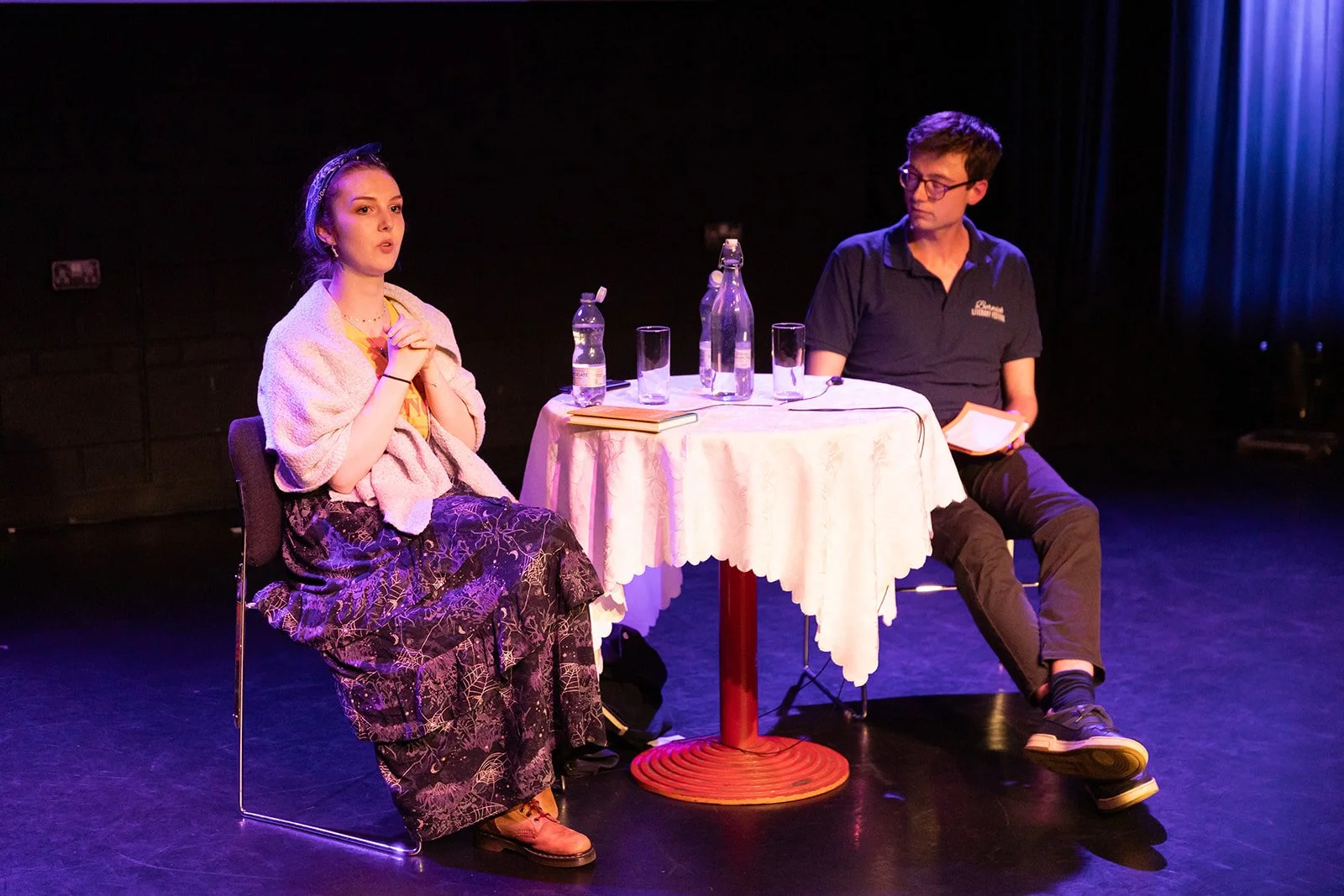
Len Pennie poetry reading photographed for festival marketing under photography copyright UK
Maltings
Photography Copyright UK: FAQs
Can I print my photos myself?
Yes.
Your licence allows you to print images for your business, whether that’s marketing materials, framed prints, or promotional displays.
Can my designer use the photos in a brochure or website?
Yes.
If a designer is working on behalf of your business, they can use the images within your licence for brand materials such as websites, brochures, or advertising.
Can the photographer sell my images to someone else?
No.
Professional photographers will not license your commissioned images to another business without permission. Your images remain connected to your brand and project.
Do I need to credit the photographer?
Credit is required as part of the licence. Where images are reproduced in print or online, credit should be given to Pictorial Photography, ideally with a hyperlink back to the website.
This helps support creative work and ensures images are used professionally.
Can I edit the photos myself?
Generally, it’s best to discuss edits first.
This helps ensure any changes still reflect the intended look and quality of the original photography. Most photographers are happy to help with adjustments when needed.
A Final Thought on Photography Copyright UK
Understanding photography copyright in the UK doesn’t need to feel complicated.
In reality, photography copyright in the UK is simply about making sure that:
photographers retain ownership of their creative work
clients receive clear, flexible rights to use their images
And that makes professional photography a much stronger long-term investment.
Have Questions About Image Licensing?
If you’re planning brand photography or want to understand how image licensing works for your business, feel free to get in touch.
Questions about copyright and image usage are always welcome - and it’s always better to clarify things before a shoot.
Why Everyone Is Talking About Mandy Bryson’s Menagerie of Idioms.
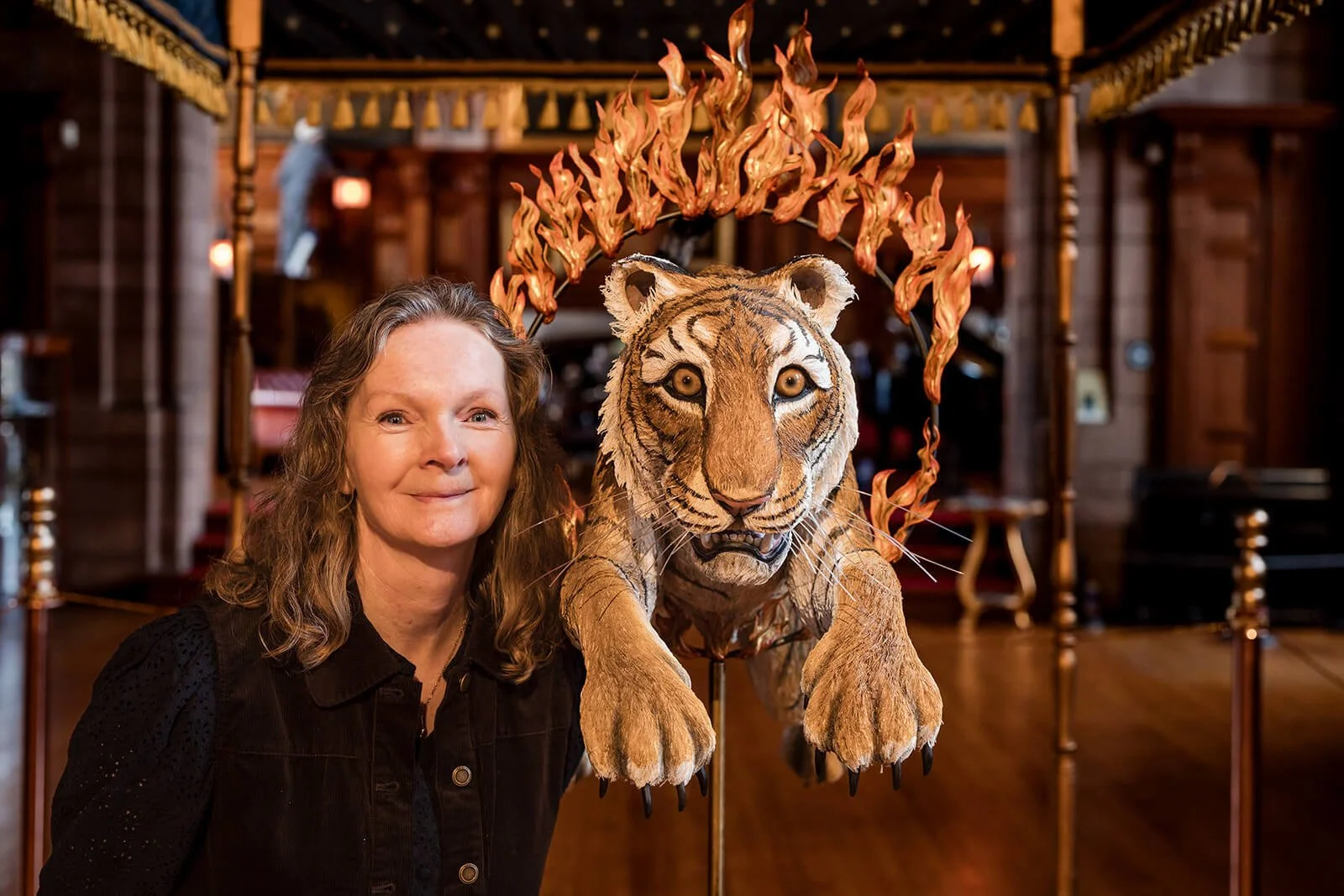
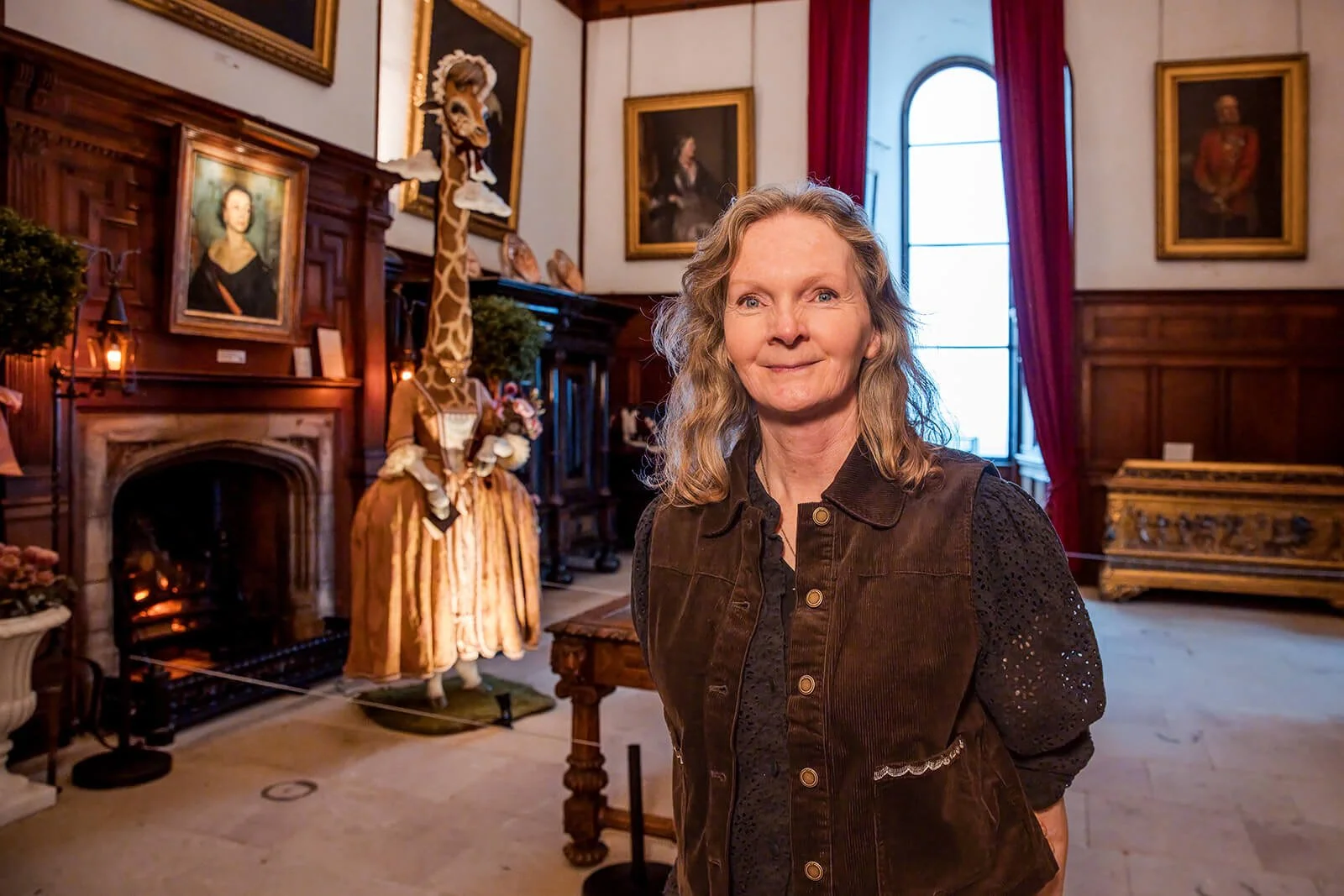
Artist Mandy Bryson with her work at Bamburgh Castle.
Who is Mandy Bryson?
Before visiting the exhibition at Bamburgh Castle, I already knew a little about Mandy Bryson’s work and the kind of sculptures she creates. She’s a Berwick sculptor and prop maker known for creating incredibly detailed faux-taxidermy animals, often used to tell humorous or slightly surreal stories.
What stood out to me straight away when seeing the sculptures in person was the level of craftsmanship. Even though the animals are part of playful scenes based on idioms, the anatomy and form feel very believable.
Mandy studied at Edinburgh College of Art, where she was awarded the Andrew Grant Scholarship and stayed on to continue studying at postgraduate level. That strong foundation in sculpting is really noticeable in her work. There’s a clear understanding of how both animals and people move, which helps the sculptures feel full of character rather than just decorative objects.
Alongside her sculpture work, Mandy has also worked as a florist in the events industry and as a prop maker. After seeing the exhibition, it’s easy to understand how those experiences have influenced her installations. Many of the scenes feel quite theatrical, almost like you’ve walked into a moment from a story.
Something Mandy often talks about is embracing her inner child and drawing inspiration from the toys and books she loved growing up. That sense of imagination definitely comes through in the exhibition.
This blog focuses on Mandy Bryson’s latest exhibition, Menagerie of Idioms, currently on display at Bamburgh Castle. If you’d like to see more of Mandy’s work beyond this exhibition, you can explore her previous projects on her website here.

Tom, Dick and Harry are Performing a Balancing Act, work of Mandy Bryson.
Inspiration Behind the Menagerie
While speaking with Mandy during the shoot, she mentioned that part of the inspiration for Menagerie of Idioms came from something quite unusual - the Cement Menagerie in Branxton.
The Cement Menagerie was a back garden filled with life-sized concrete animals created by retired joiner John Fairnington for his disabled son Edwin. Over time the garden became packed with weathered sculptures, creating a slightly surreal collection of animals in the middle of a small Northumberland village.
Although the sculptures are no longer there, the story clearly stayed with Mandy.
Knowing this makes the exhibition feel even more interesting, because there’s a similar sense of curiosity running through it — a collection of animals gathered together in unexpected ways, each one with its own personality.
Walking through the castle, it almost feels like discovering a strange and playful menagerie hidden inside the historic rooms.

Sculpture at Mandy Bryson’s Exhibition inside Bamburgh Castle.
The Exhibition at Bamburgh Castle
The exhibition is currently displayed at Bamburgh Castle on the North East coast of Northumberland and runs from 14th February 2026 until November 2026.
You can find more information about the Tails & Tales – Indoor Sculpture Trail on the Bamburgh Castle website.
Entry to the exhibition is included with general admission to the castle. Which can be found at https://www.bamburghcastle.com/castle/
The setting of Bamburgh Castle adds a completely different layer to the exhibition. As you walk through the castle’s historic rooms, the sculptures appear along the way, almost like you are following a trail through the building.
The large rooms work really well with the scale of the sculptures, allowing each installation to have its own space. At the same time, the contrast between the historic castle setting and the colourful, playful characters makes the experience feel even more memorable.
Moving from room to room almost feels like stepping into different chapters of a story.
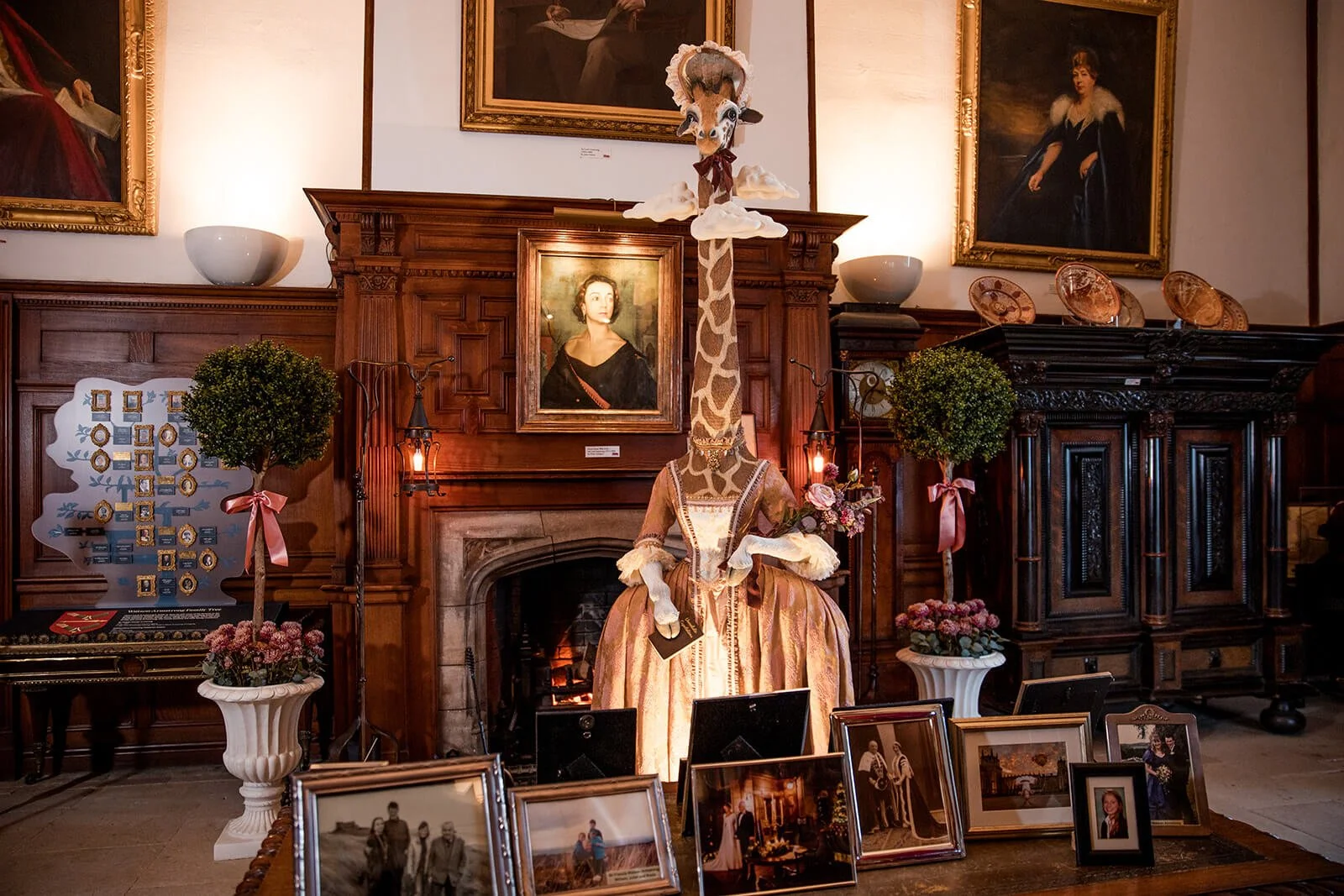
Gwendoline has her Head in the C…..
Shooting the Exhibition
I really enjoyed photographing and filming behind the scenes of this exhibition with Sarah and Mandy, as it was such a unique and interesting shoot to be part of. The scale of the sculptures has an instant wow factor when you see them in person, and it was something we had to keep in mind while shooting to make sure that sense of size really came across in the images. Being able to look closely at the sculptures while photographing them also made me appreciate the level of detail that has gone into each piece. Capturing those textures and expressions through the camera was really satisfying. There were also two moving sculptures in the exhibition, which were particularly interesting to film. We used an Osmo to capture some behind-the-scenes clips for social media, as well as filming some slow-motion shots on the DSLR which helped show a bit more of the atmosphere and movement within the exhibition.
The Atmosphere of the Exhibition
Walking into the exhibition, the first thing that really struck me was the scale of the sculptures. They were much bigger than I had expected, and immediately filled the space.
The level of detail gives each piece a real sense of presence. As you move through the rooms, every sculpture feels like its own little scene, full of personality and humour.
Some of the idioms are easy to recognise straight away, while others take a bit more thinking. This makes the exhibition quite interactive, because you naturally start trying to work out what each scene represents.
Music playing in the background adds another layer to the experience. It helps create an immersive atmosphere and makes the installations feel more alive as you walk through the castle.
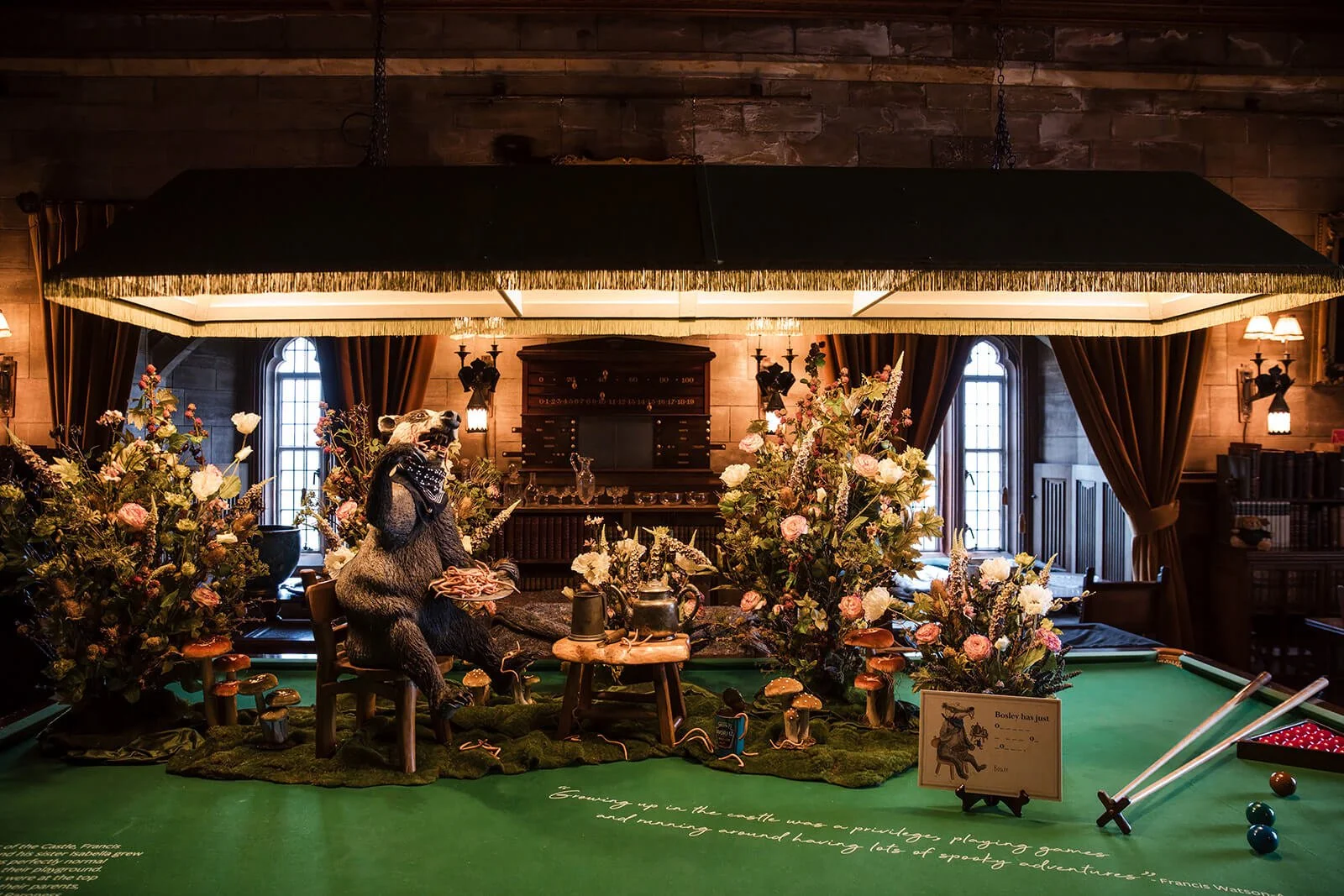
Mandy Bryson’s Faux-Taxidermy work displayed at Bamburgh Castles Billiard room.
What is an Idiom?
An idiom is a phrase where the meaning isn’t taken literally from the words themselves. Instead, it has a figurative meaning that people understand through common use in language.
Idioms are part of everyday conversation and often create funny or imaginative images in your mind.
In Menagerie of Idioms, these phrases are transformed into physical scenes through sculpture and theatrical installation. Instead of simply reading the phrase, visitors get to see it brought to life.
Each sculpture represents a well-known saying, and as you walk through the exhibition you can try to guess the idiom behind each one.
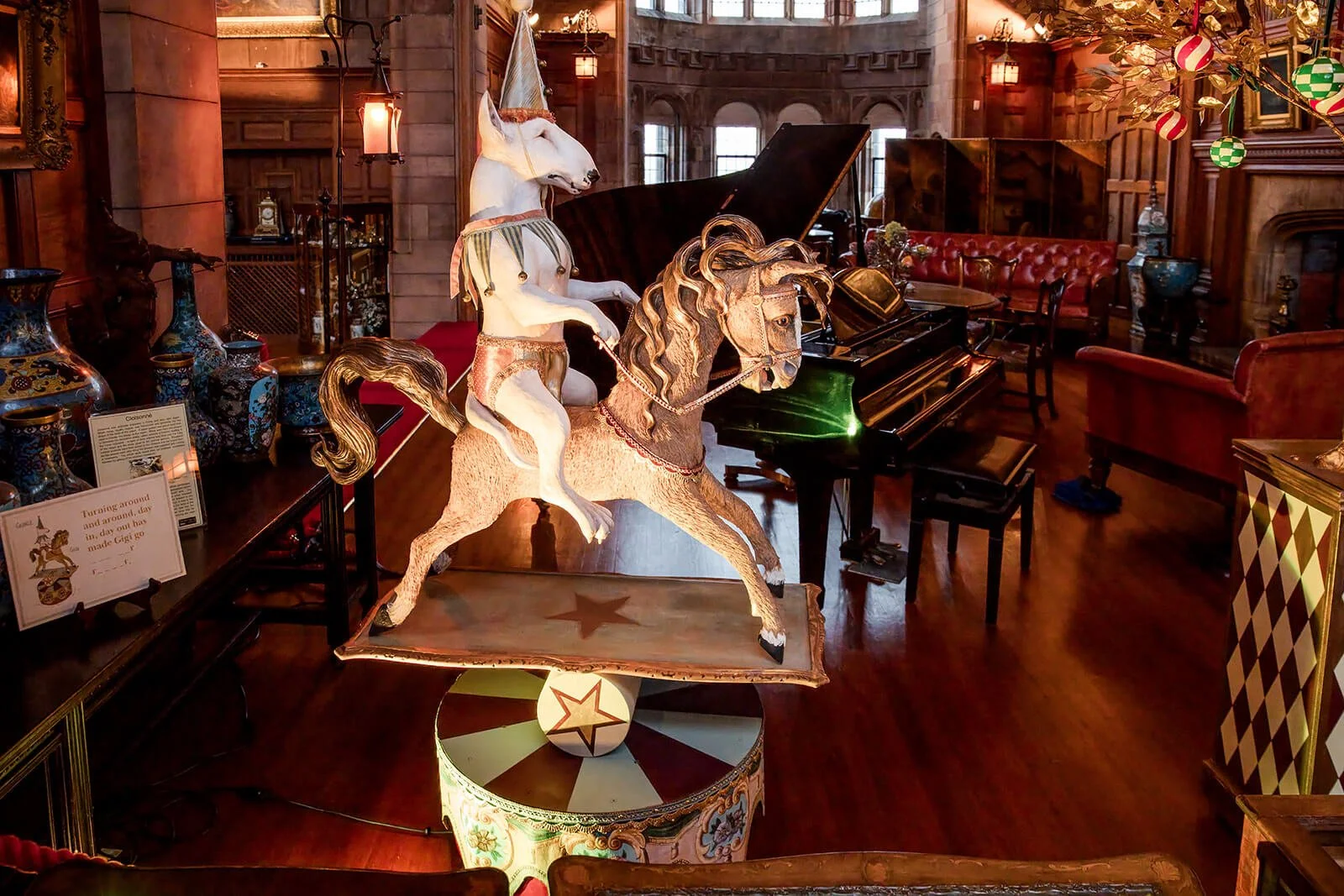
Mandy Bryson’s Moving Sculpture at Bamburgh Castle.
Why Animals Work So Well With Idioms
Animals appear in many idioms because they have long been used to describe human behaviour.
For example:
Bees are often linked with hard work
Foxes suggest cleverness
Pigs are sometimes used to represent messiness or impossibility
Tigers suggest strength or danger
Because these associations already exist in our minds, animals make idioms easier to visualise.
Turning them into sculptures makes the phrases feel even clearer and often quite funny. In this exhibition the animals feel full of personality, which helps people connect the scene with the phrase it represents.
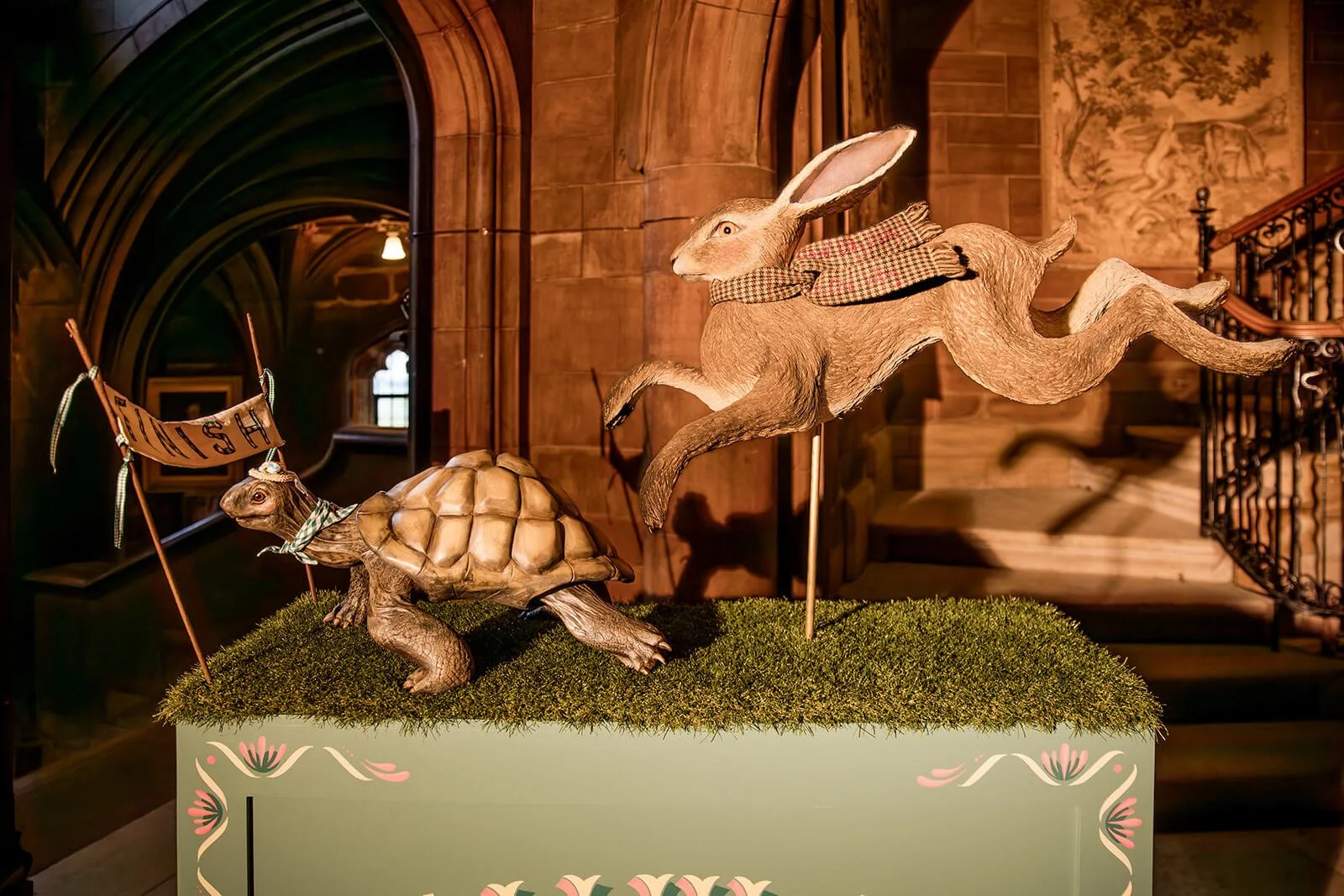
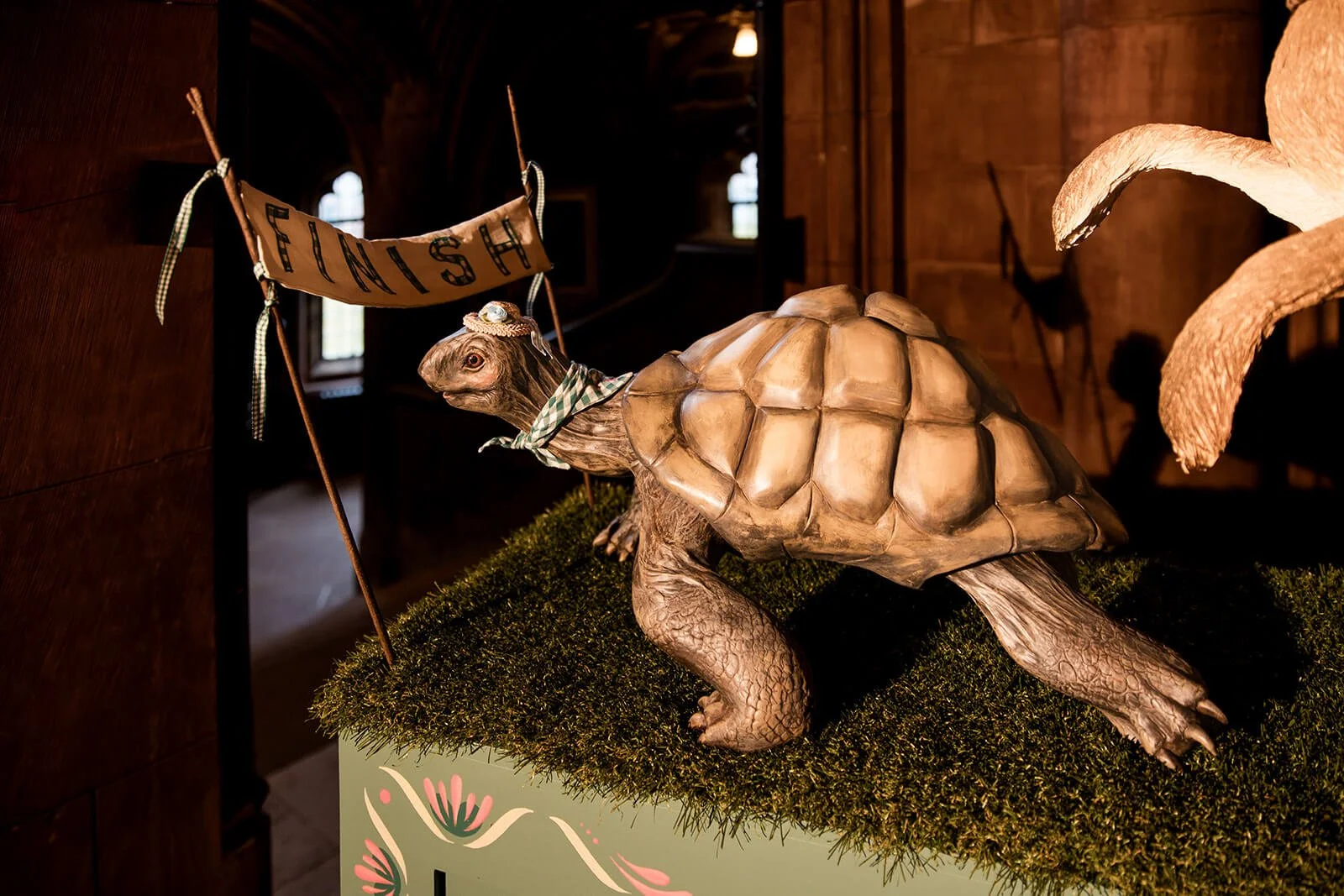
‘Slow and Steady’ Wins The Race… Sculpture by Mandy Bryson.
The Craft Behind the Sculptures
Looking closely at the sculptures, the amount of detail in each piece really stands out.
Mandy told us that each sculpture can take anywhere from two weeks to two months to complete depending on its complexity.
The fur on the animals is created by shredding and layering fabric, which gives them a surprisingly realistic texture. Seeing this up close really shows how much time and patience goes into each piece.
Small details in the faces and expressions give every character its own personality. Many of the installations also include recycled or vintage objects, which adds charm and helps build the storytelling within each scene.
It’s only when you stand close to the work that you realise just how much craftsmanship has gone into creating each sculpture.
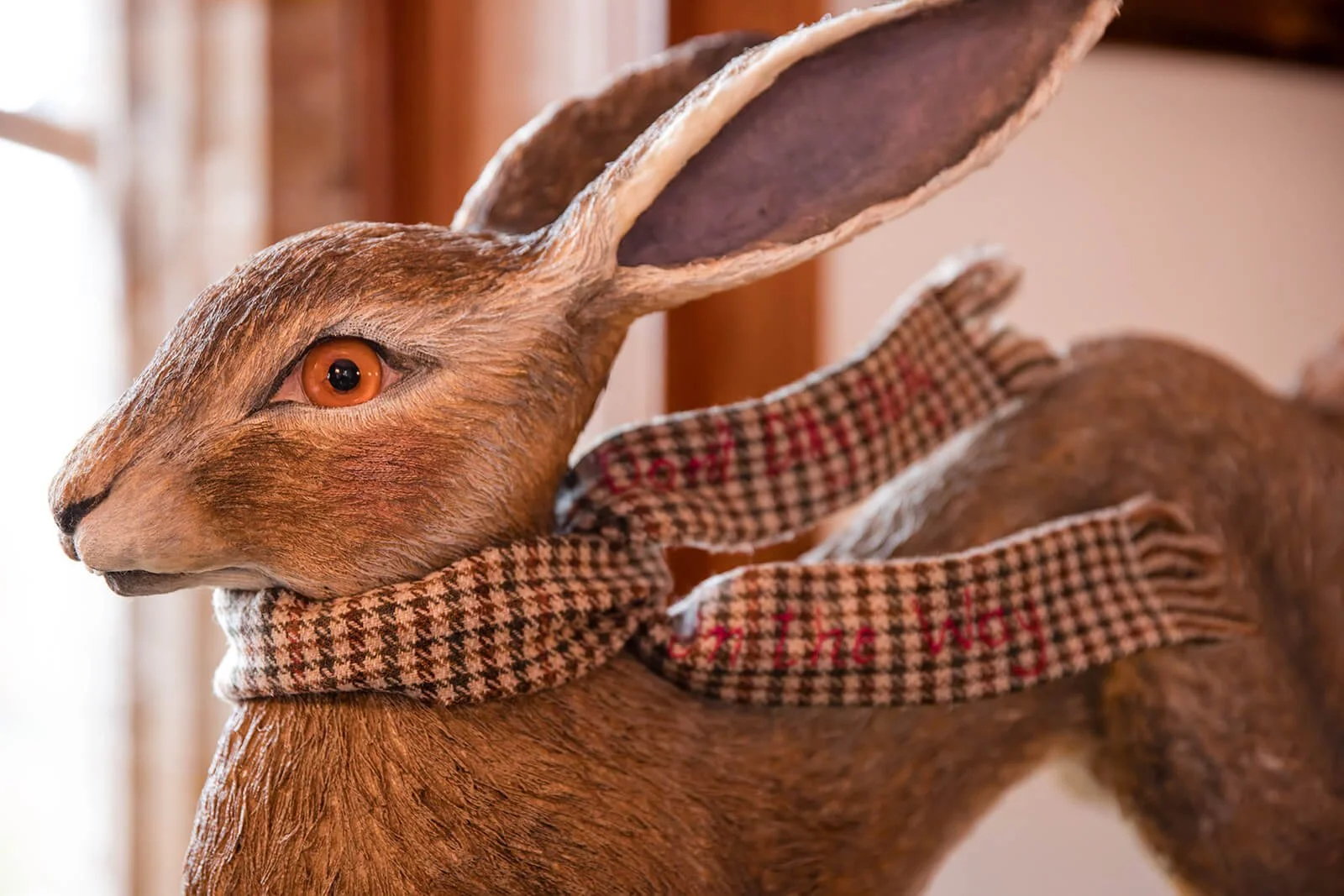
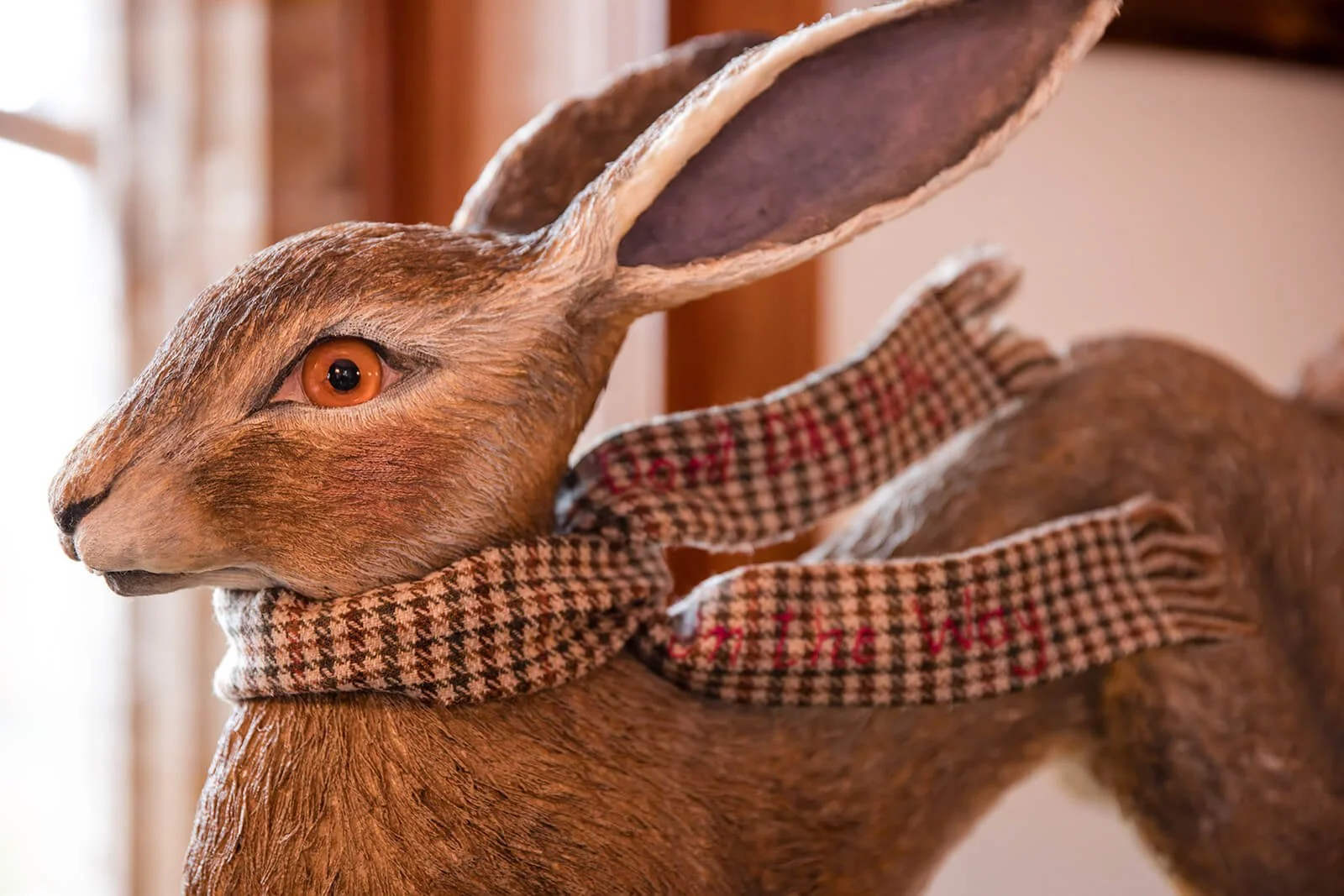
Hector the Hare by Mandy Bryson.
A Personal Favourite
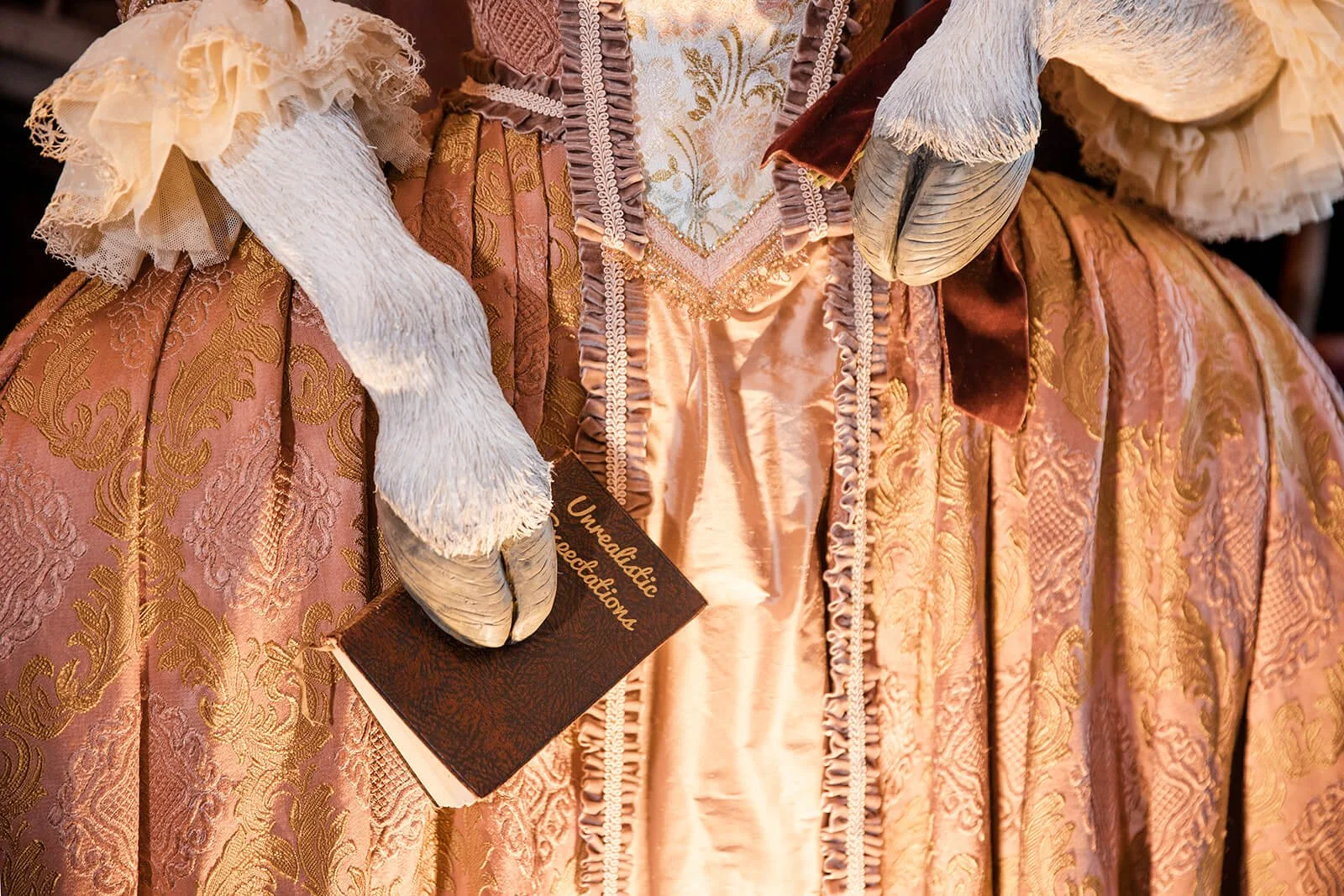
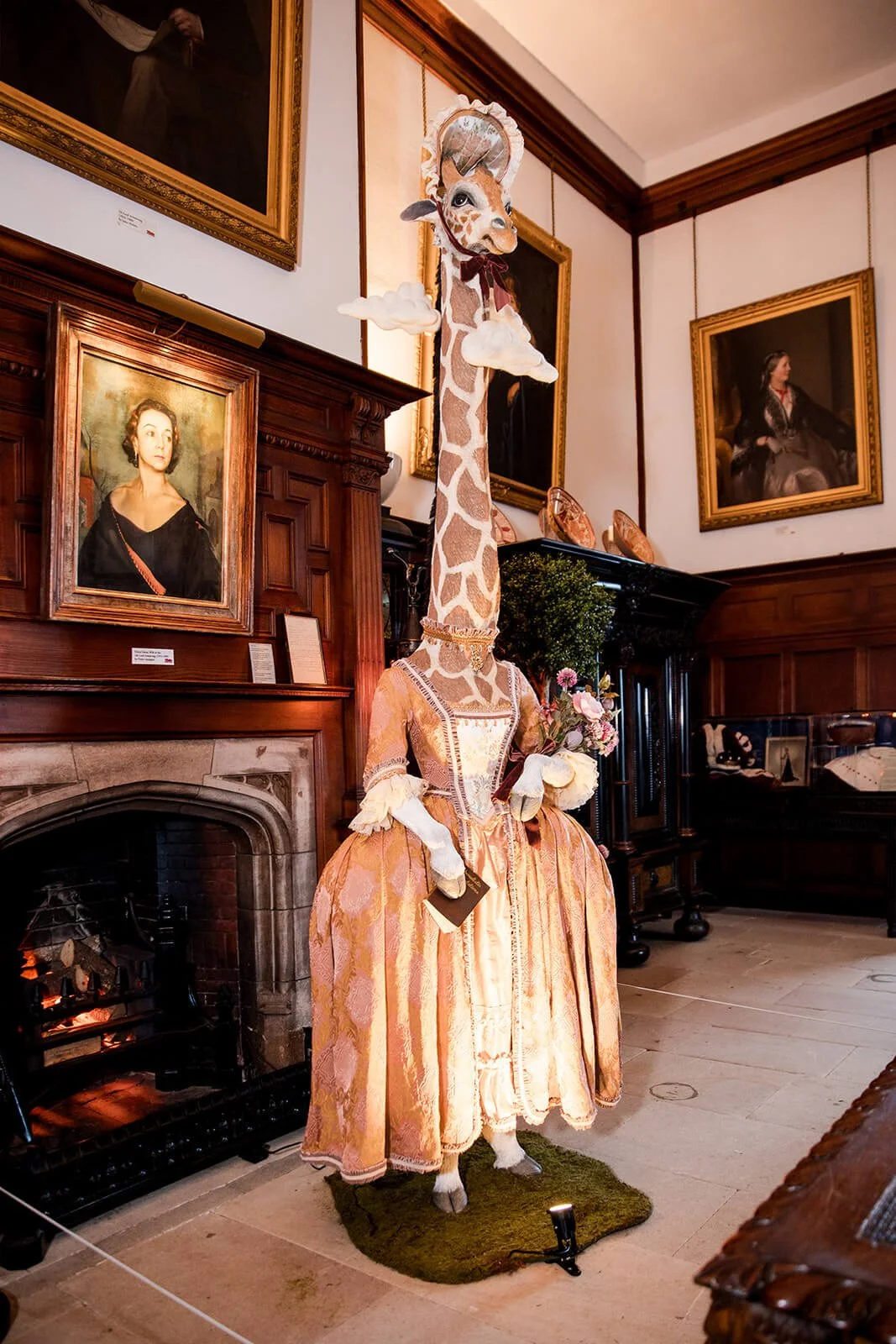
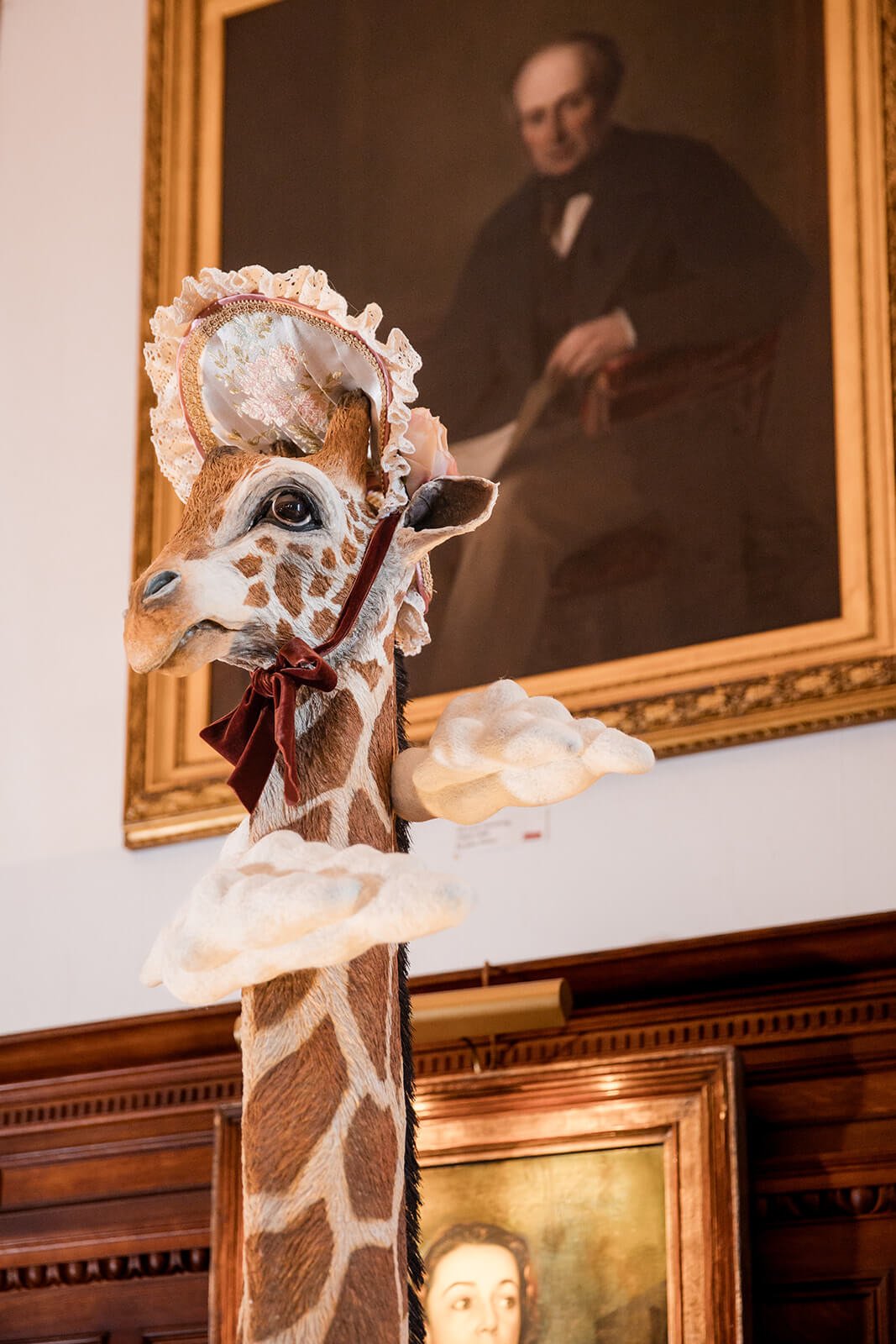
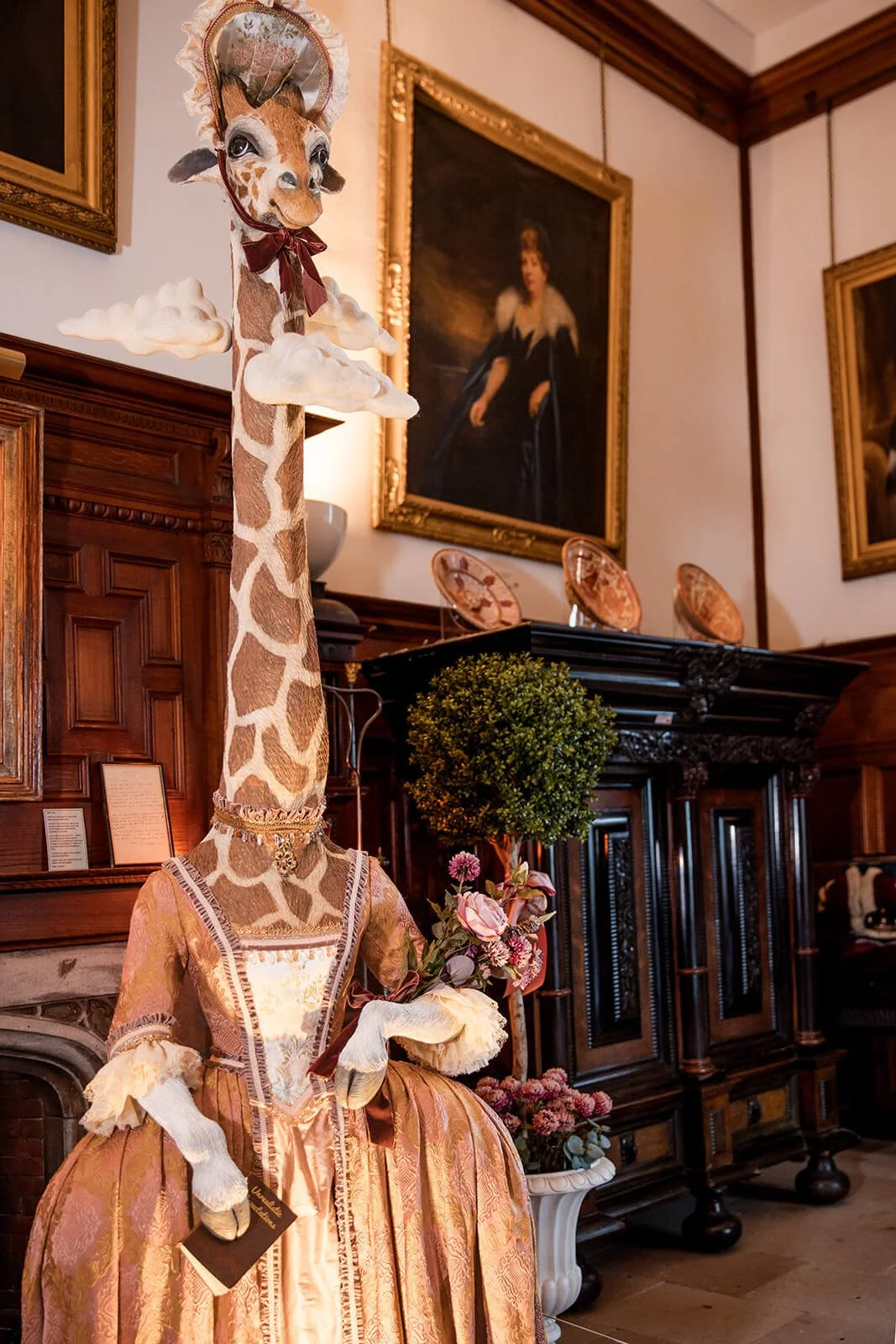
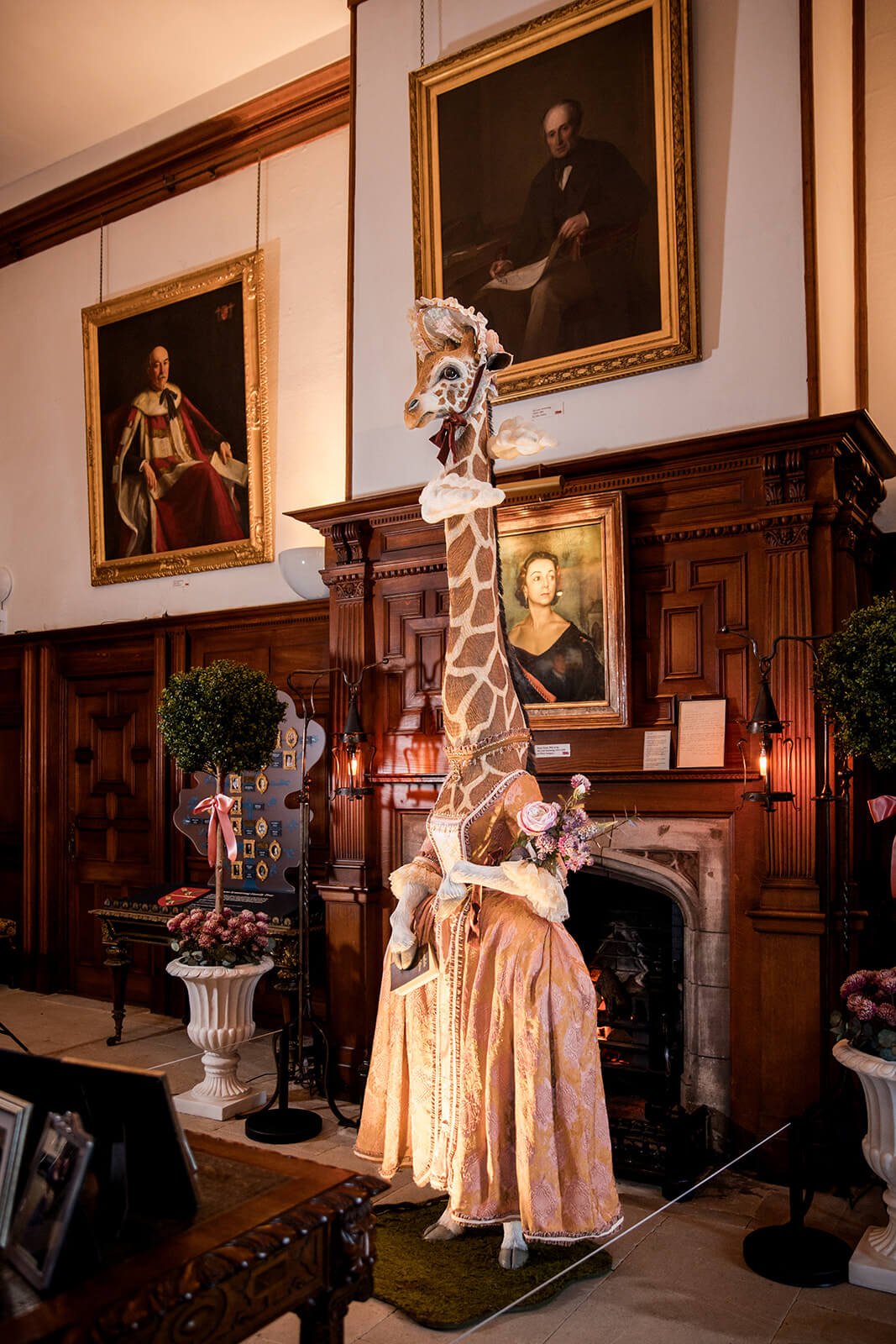
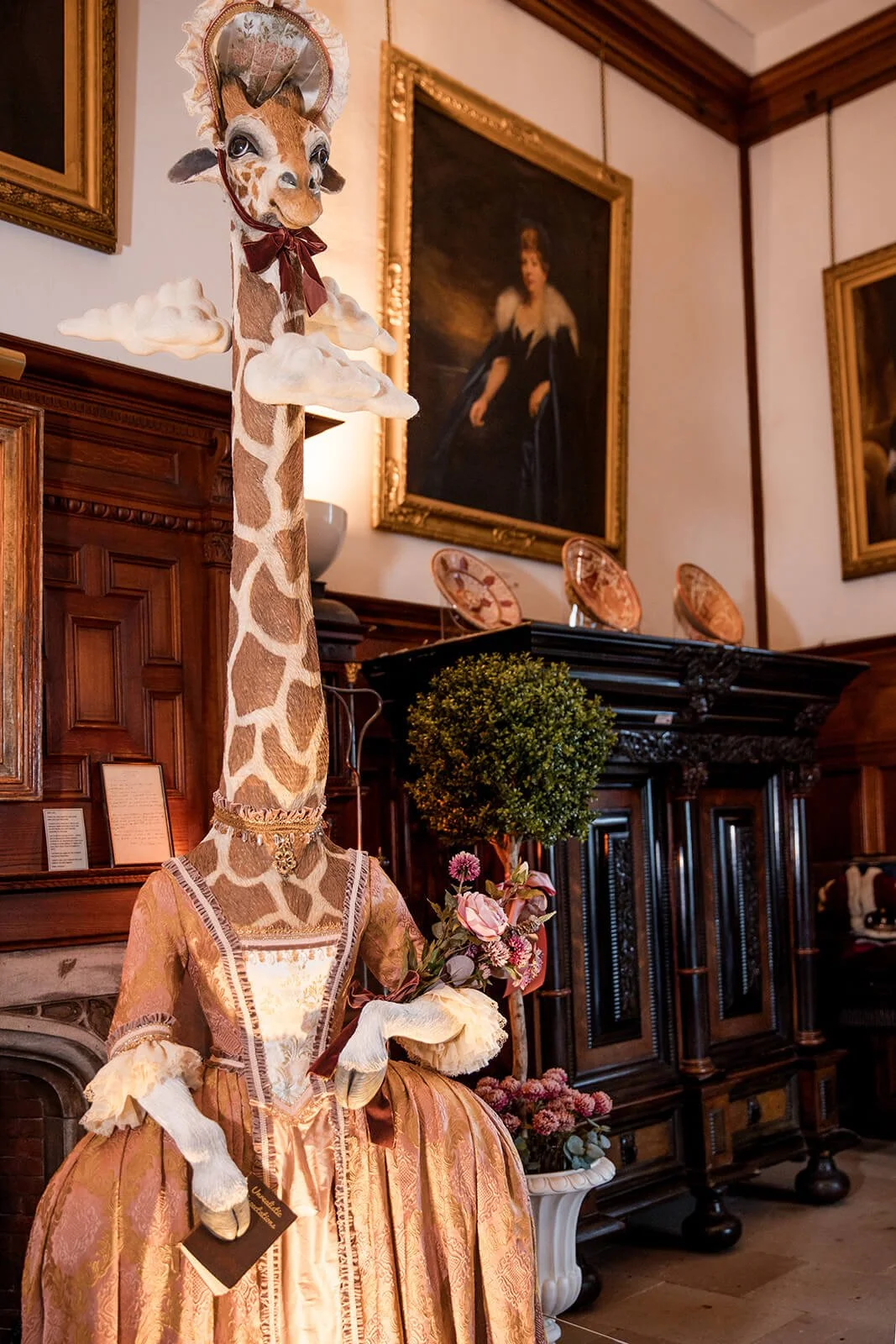
One sculpture that really stood out to me was Gwendoline – Head in the Clouds.
The piece immediately caught my attention because of its scale. The giraffe stands tall in a room overlooking the North Sea, which makes the whole scene feel even more striking.
Gwendoline is dressed in a beautifully made gown created specifically for the sculpture. The level of detail in both the giraffe and the costume is impressive.
There is also something quite amusing about seeing such a tall, elegant giraffe standing proudly in a gown. The humour of the scene makes it even more memorable.
This idiom was one I recognised almost immediately, which made it particularly satisfying to spot.
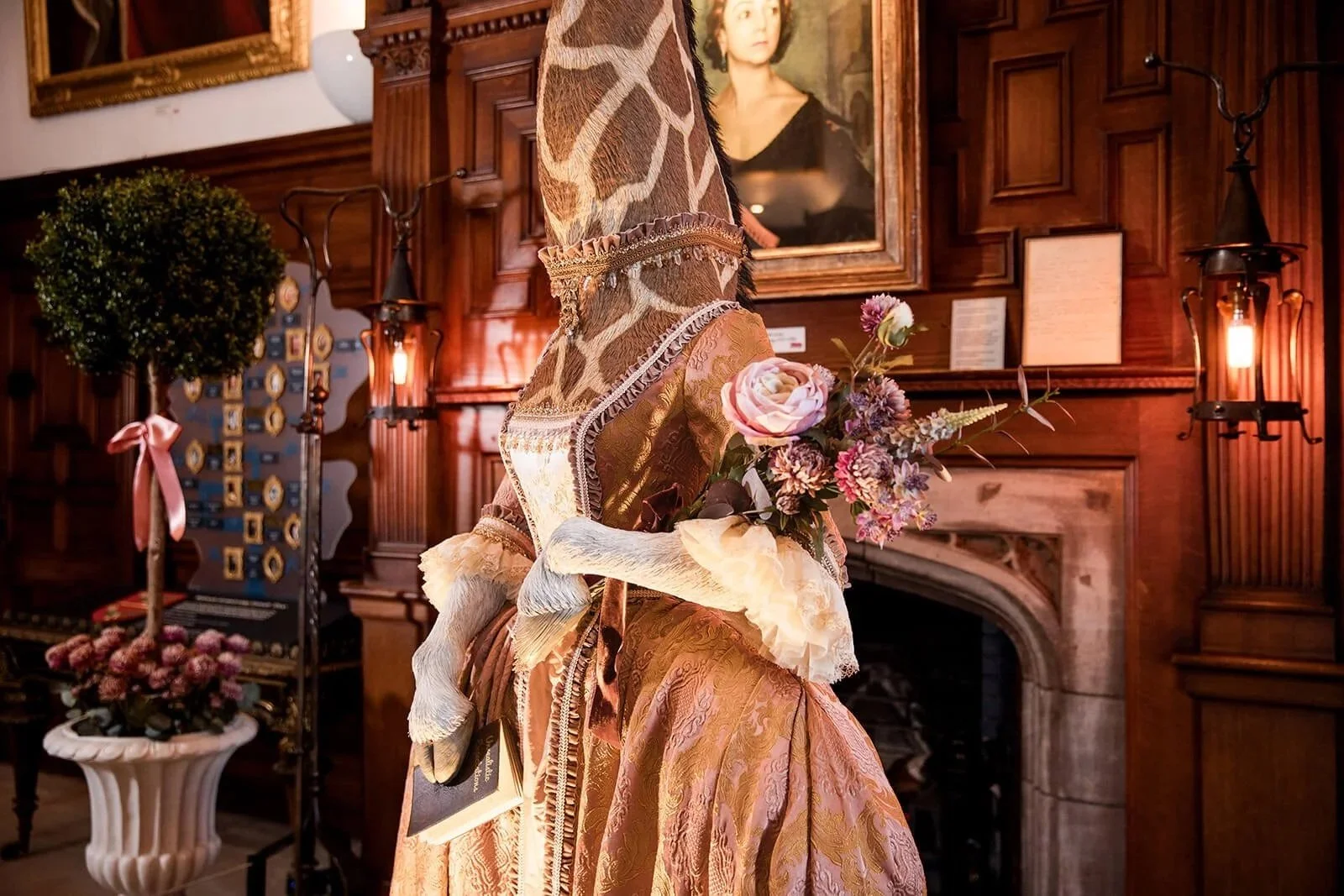
Idioms in the Exhibition
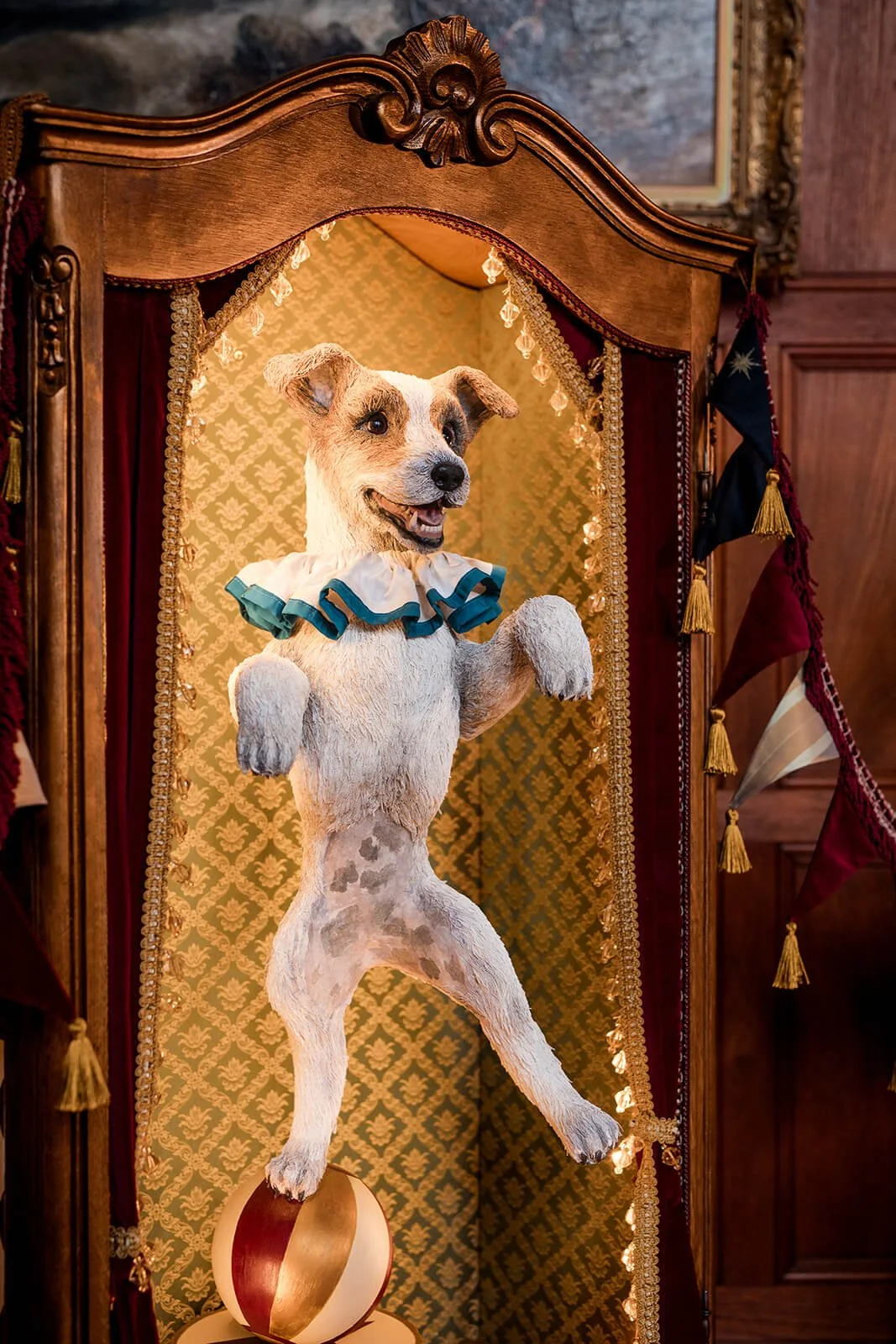
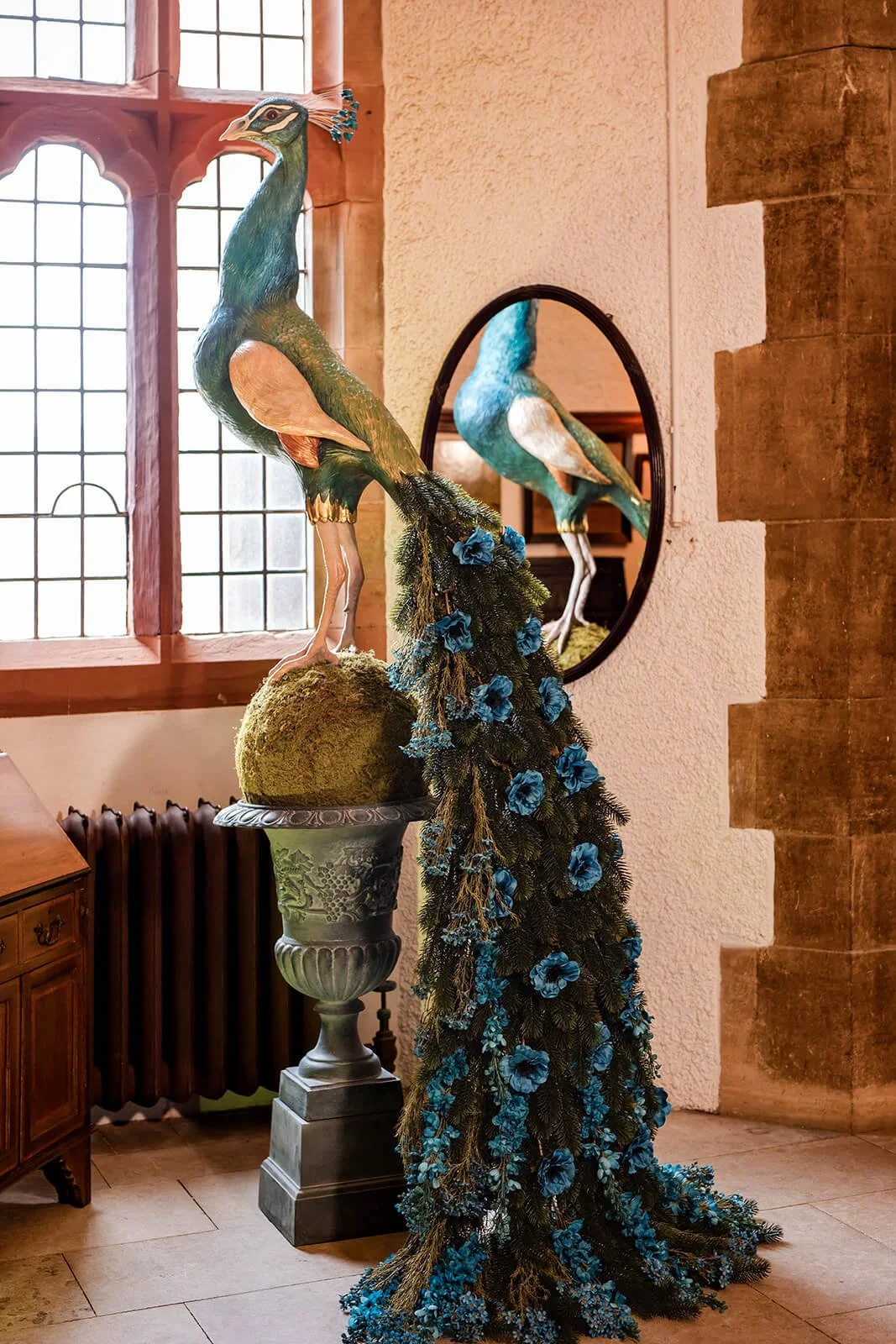
Some of the sculptures featured in the exhibition include:


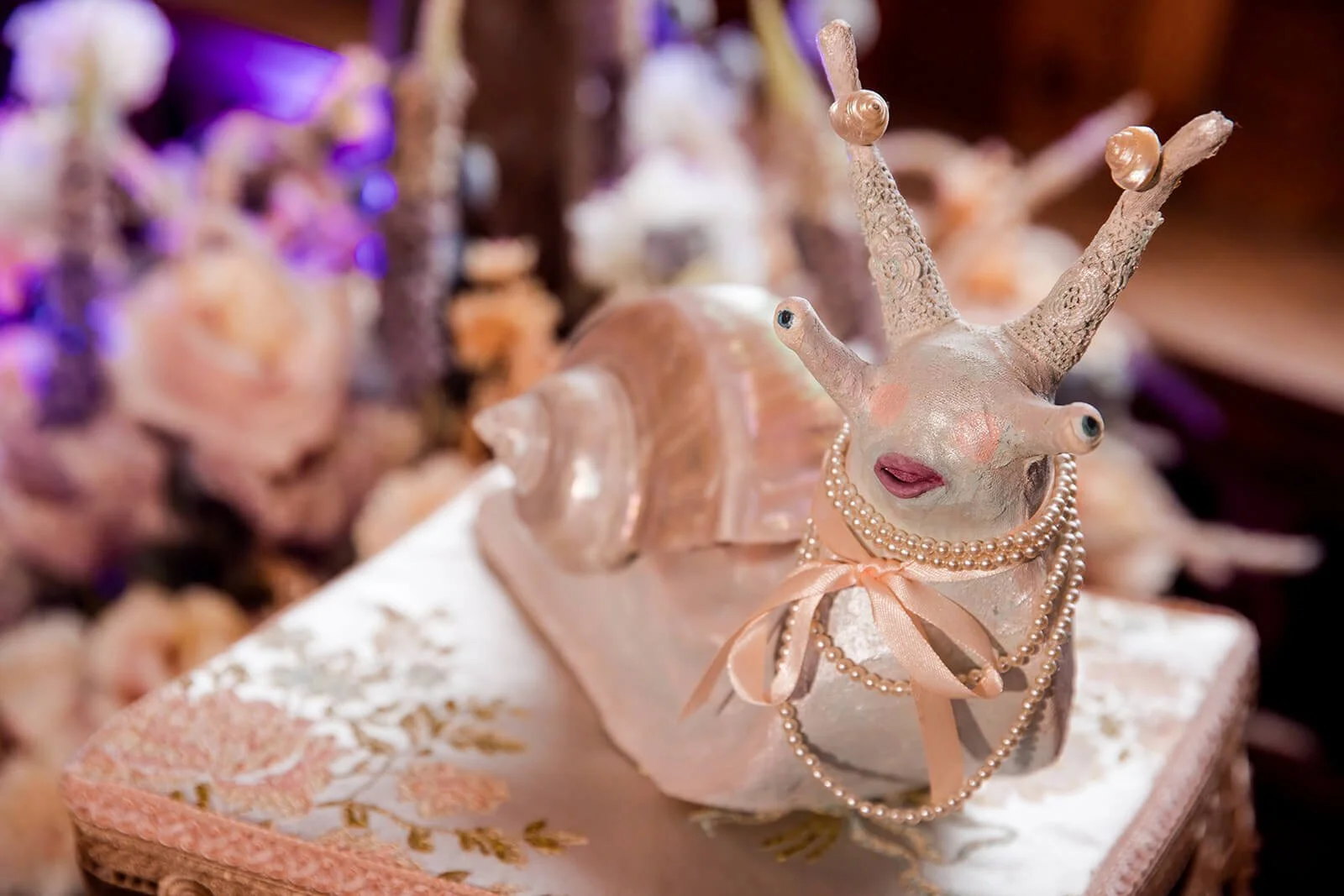
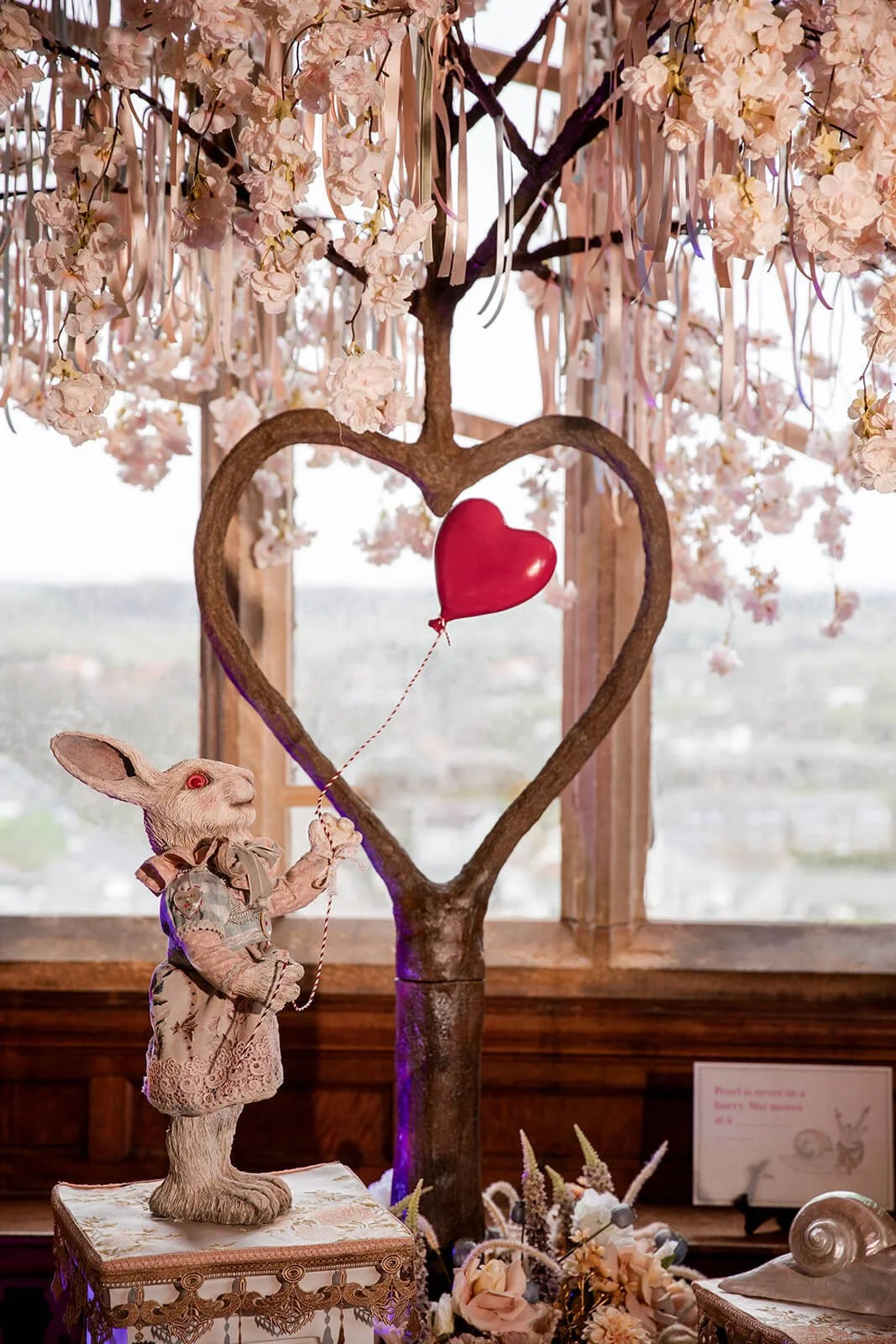
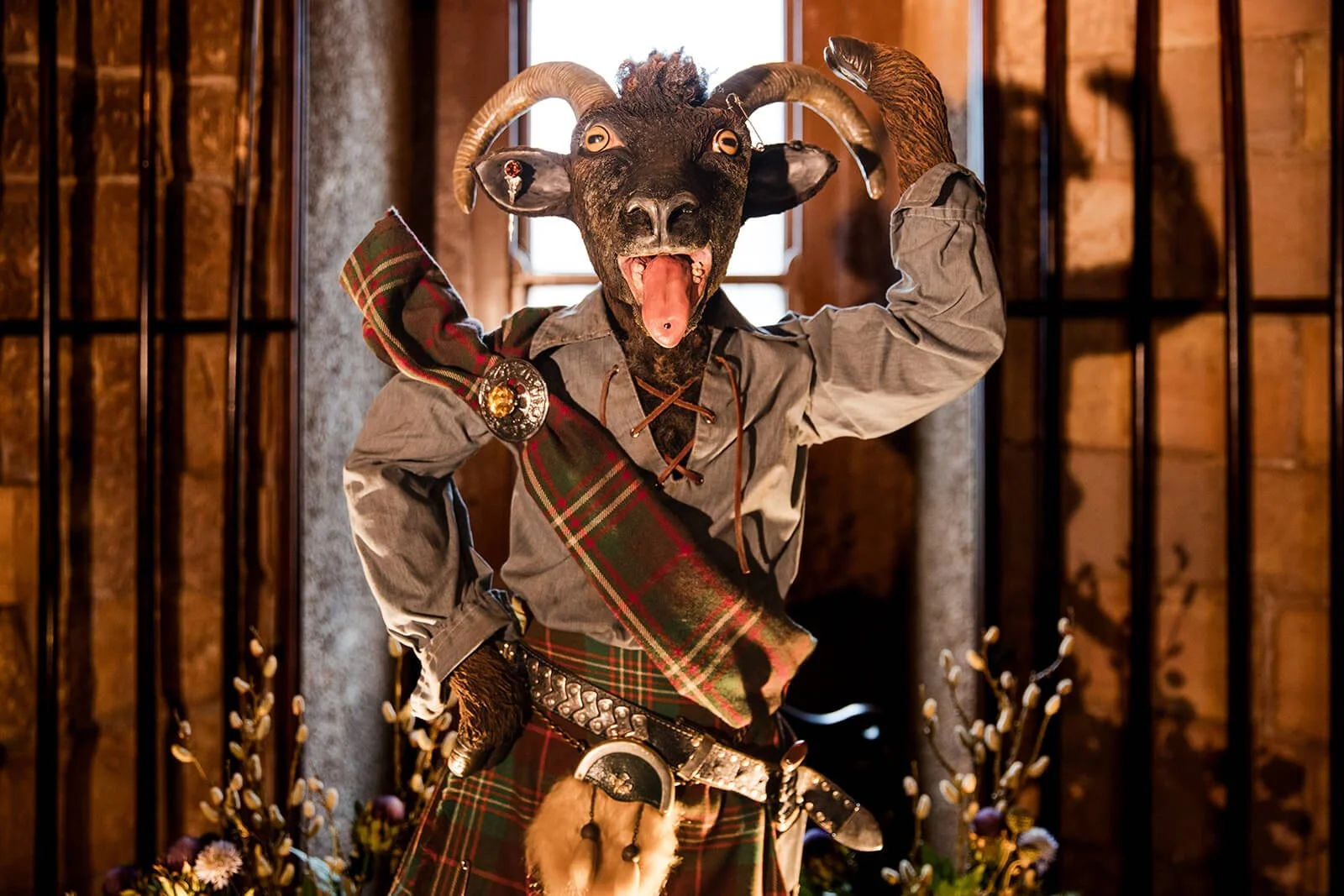
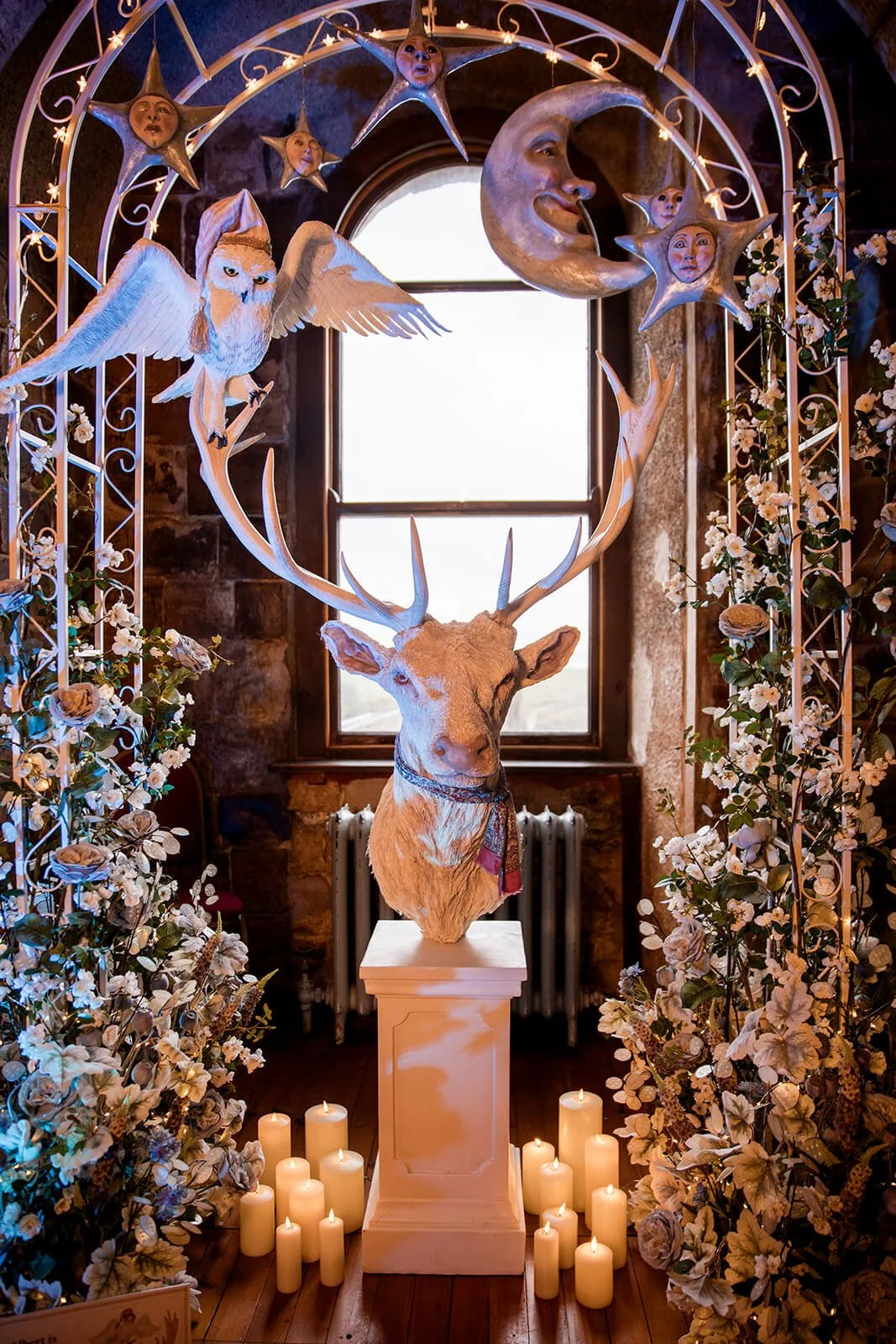
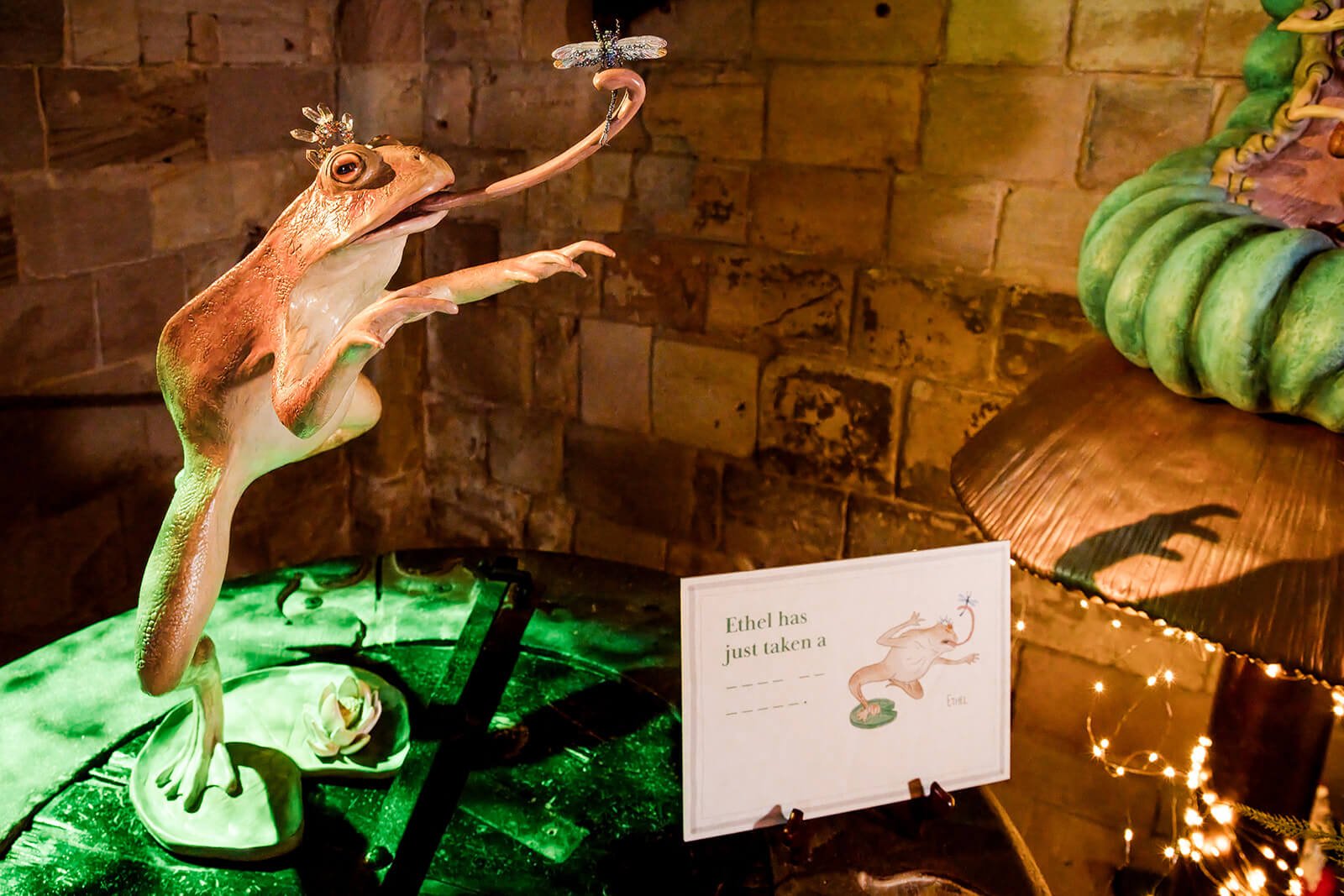
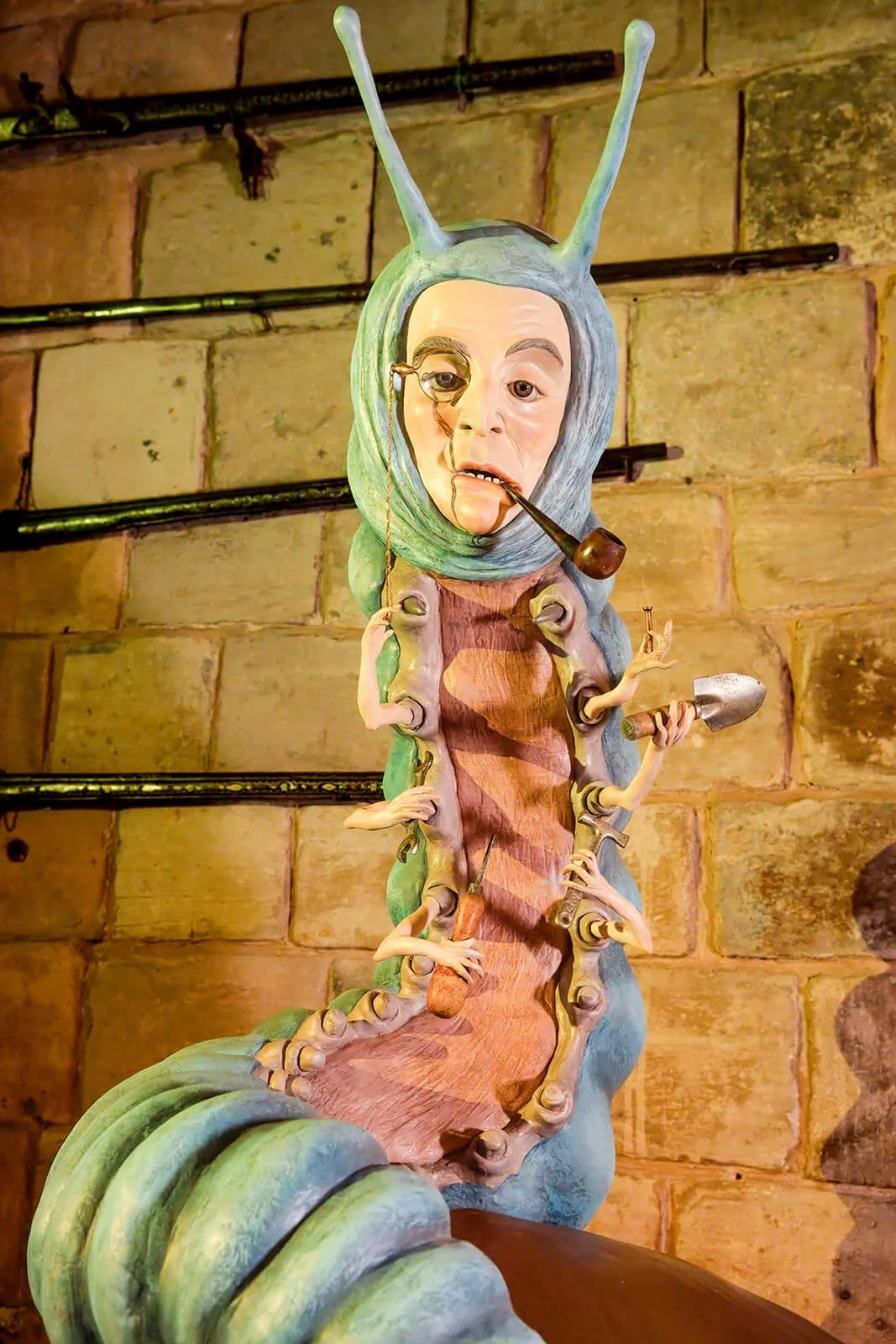
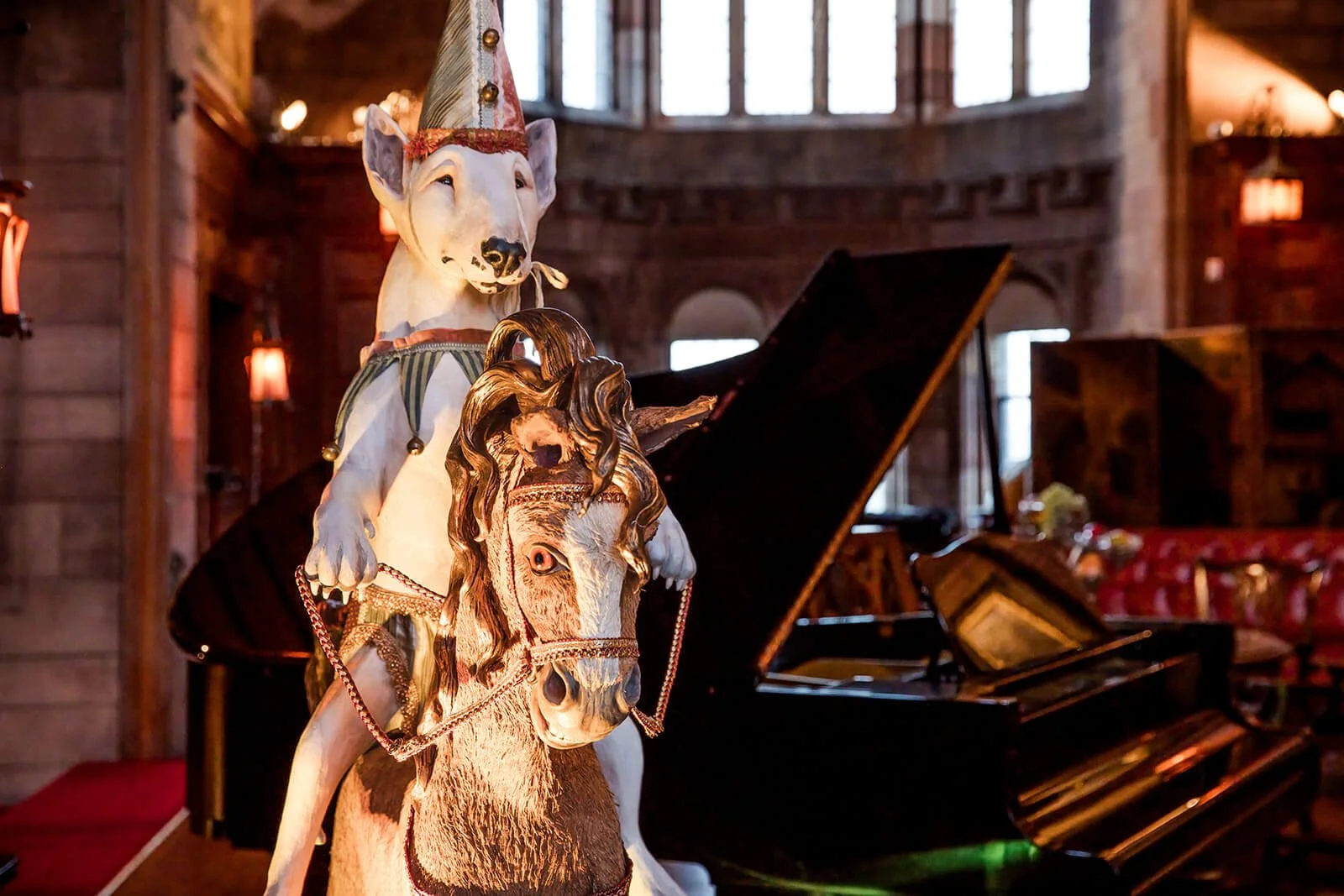
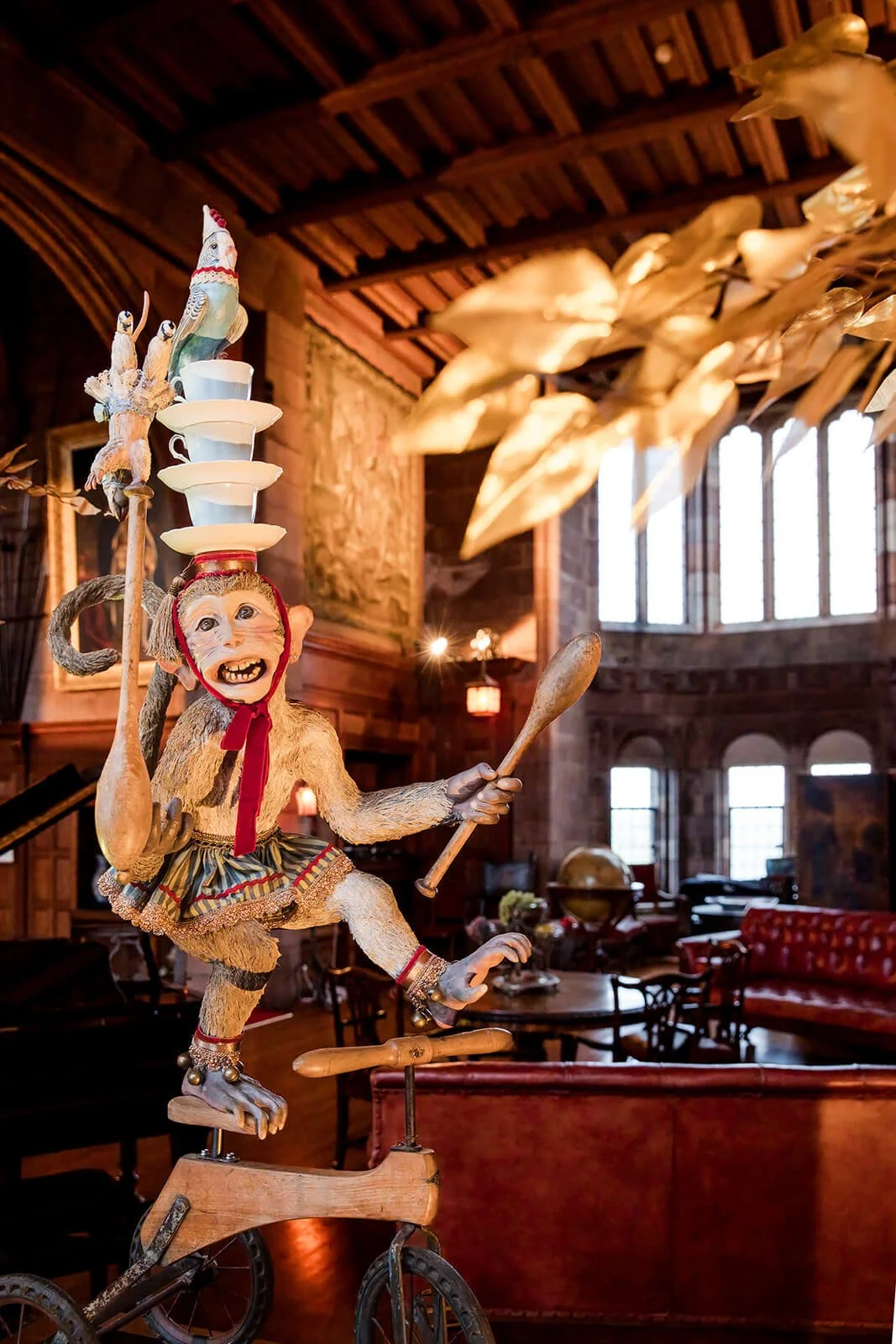
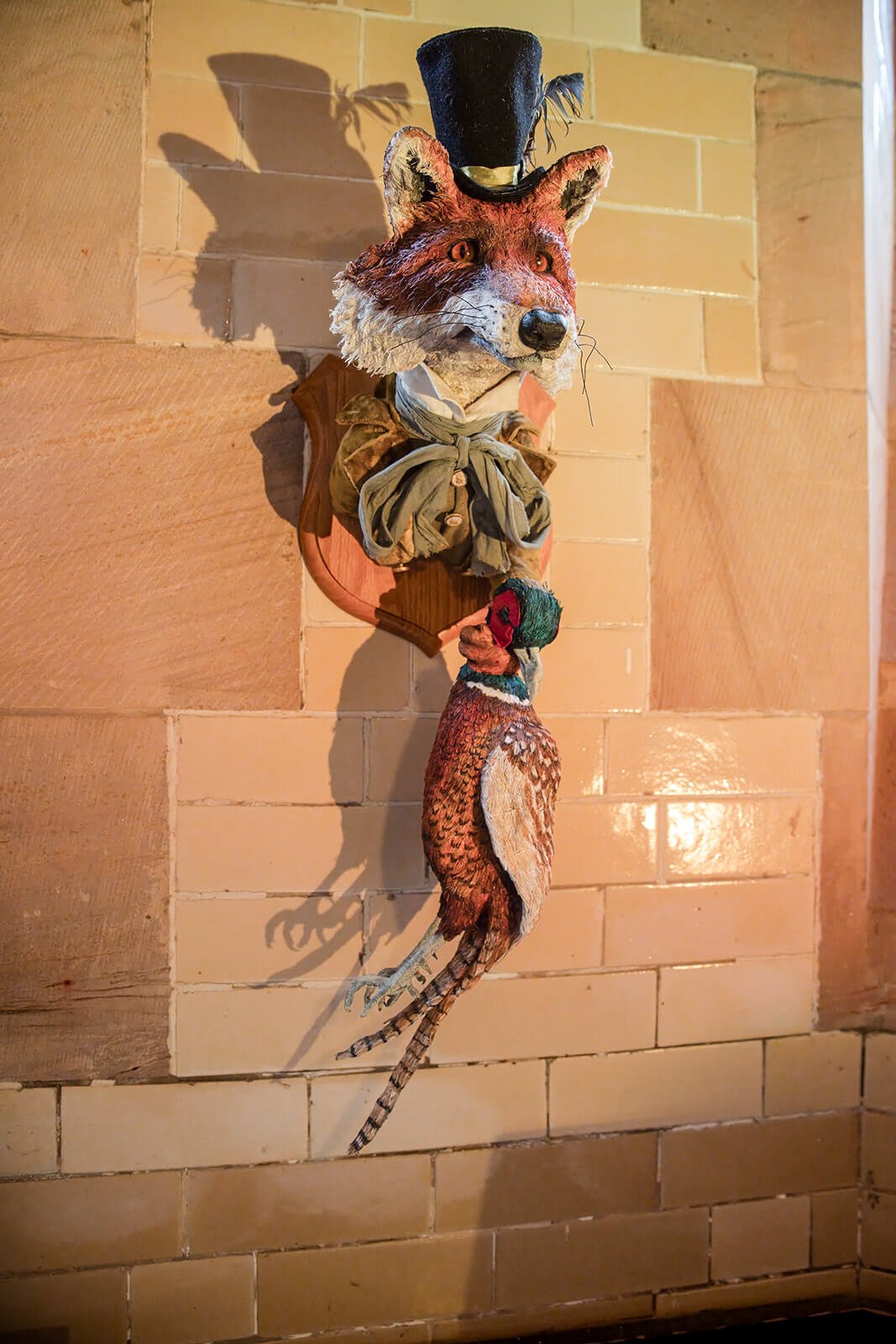
Pearl- Snails Pace
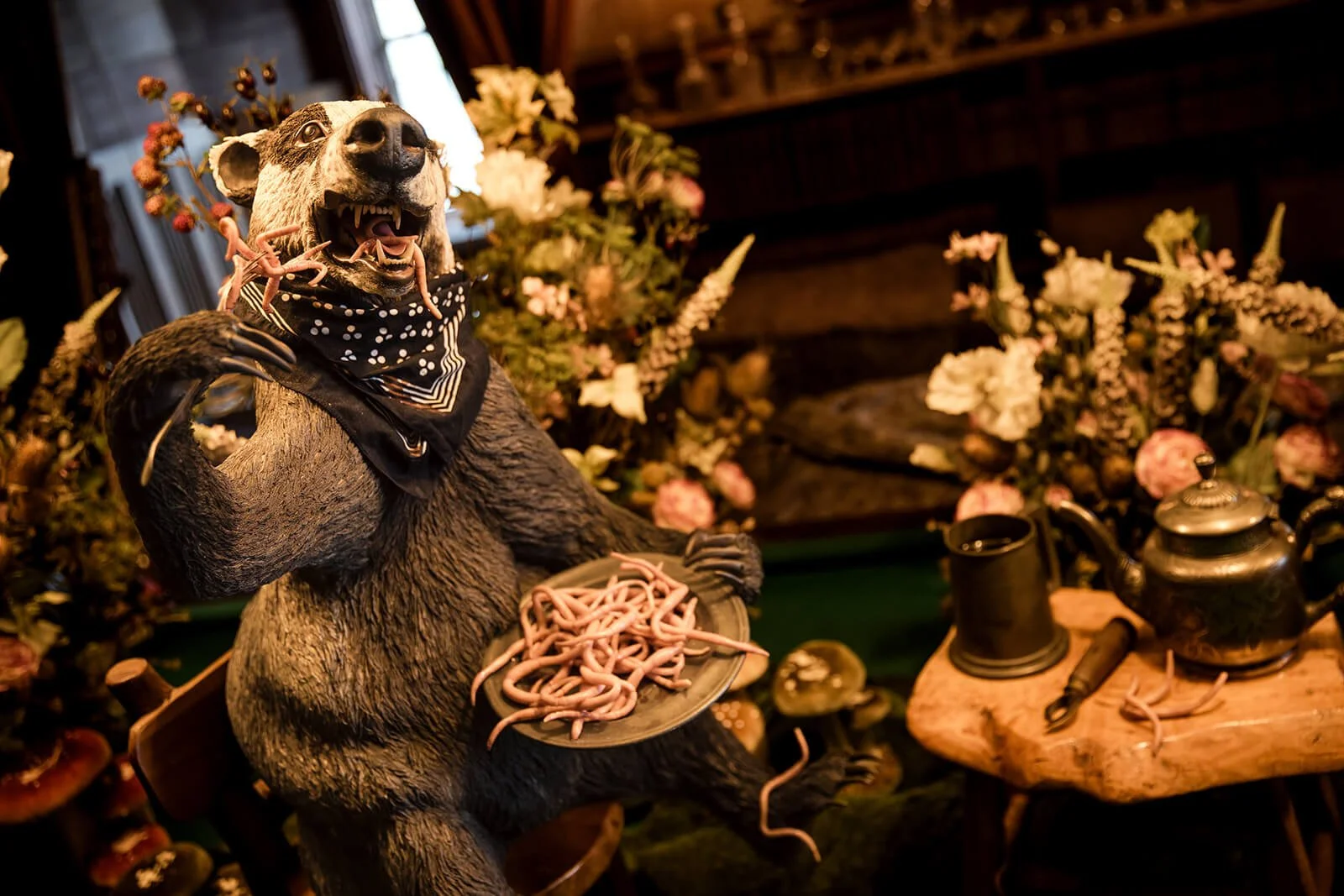
Bosley- Opened A Can Of Worms
Maxi- On The Ball
Victoria and Albert-Night Owl
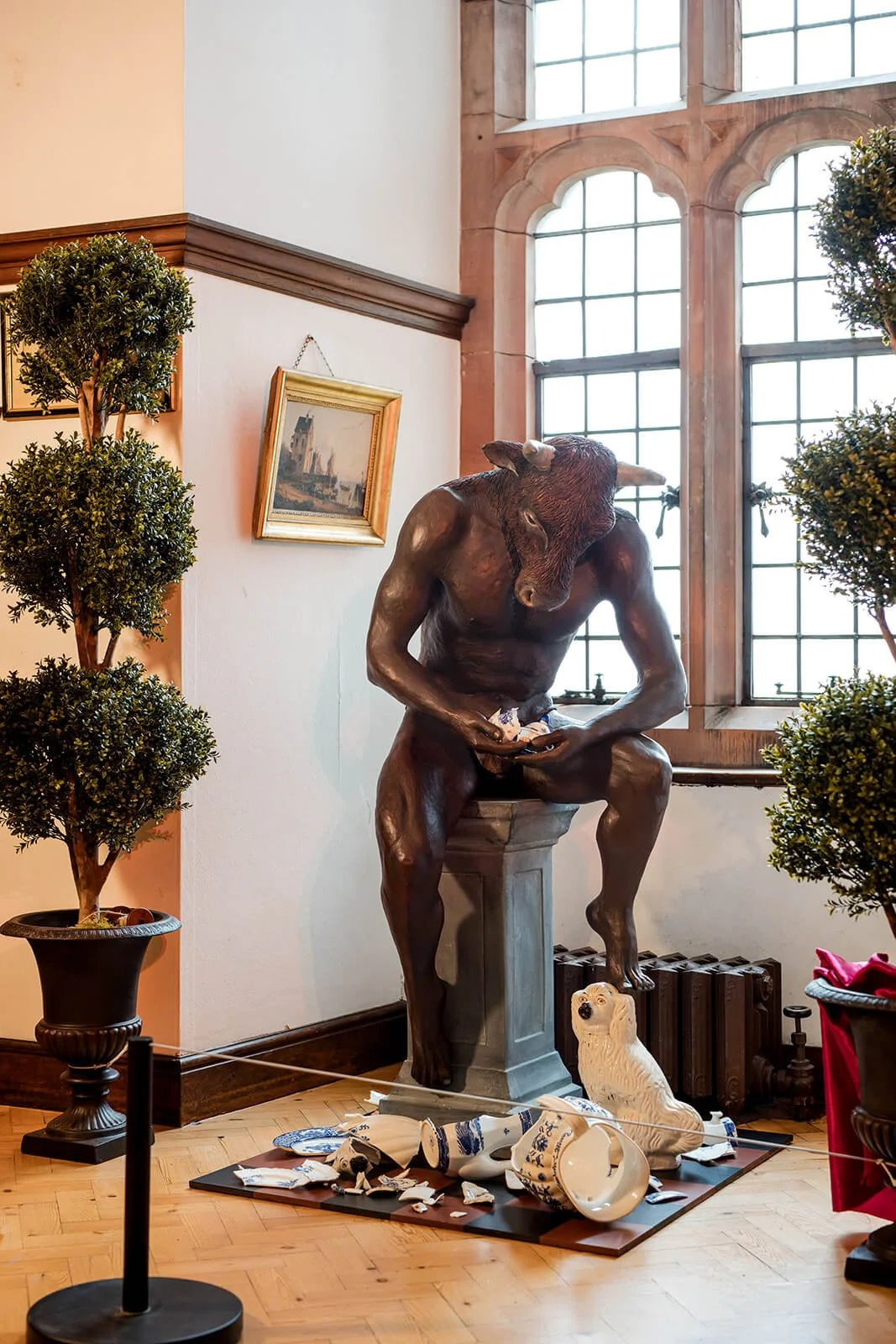
Jason- Bull In A China Shop
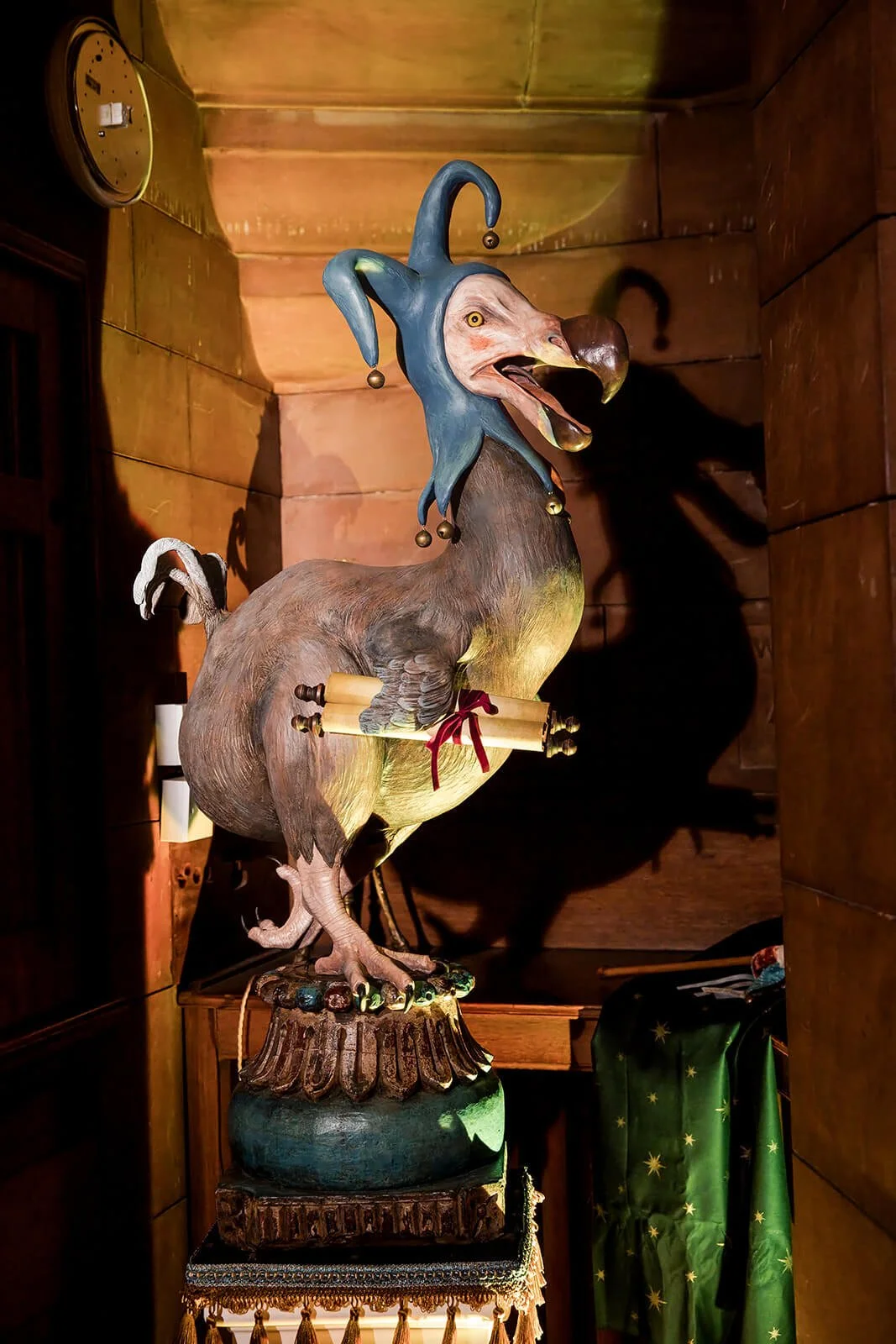
Fagan- A Bird In The Hand Is Worth Two In The Bushes
Mandy- Wears Her Heart On Her Sleeve
Tallulah- Slow and Steady Wins The Race
Yorick- No Fool Like an Old Fool
Bobby Dazzler-Jumping Through Hoops
George and Gigi - On His High Horse/ Off her Rocker
Tom,Dick and Harry - Balancing act
Cyril- Proud as a Peacock
Angus- Black Sheep of the Family
Gwendoline- Head In The Clouds
Ethel- Leap Of Faith
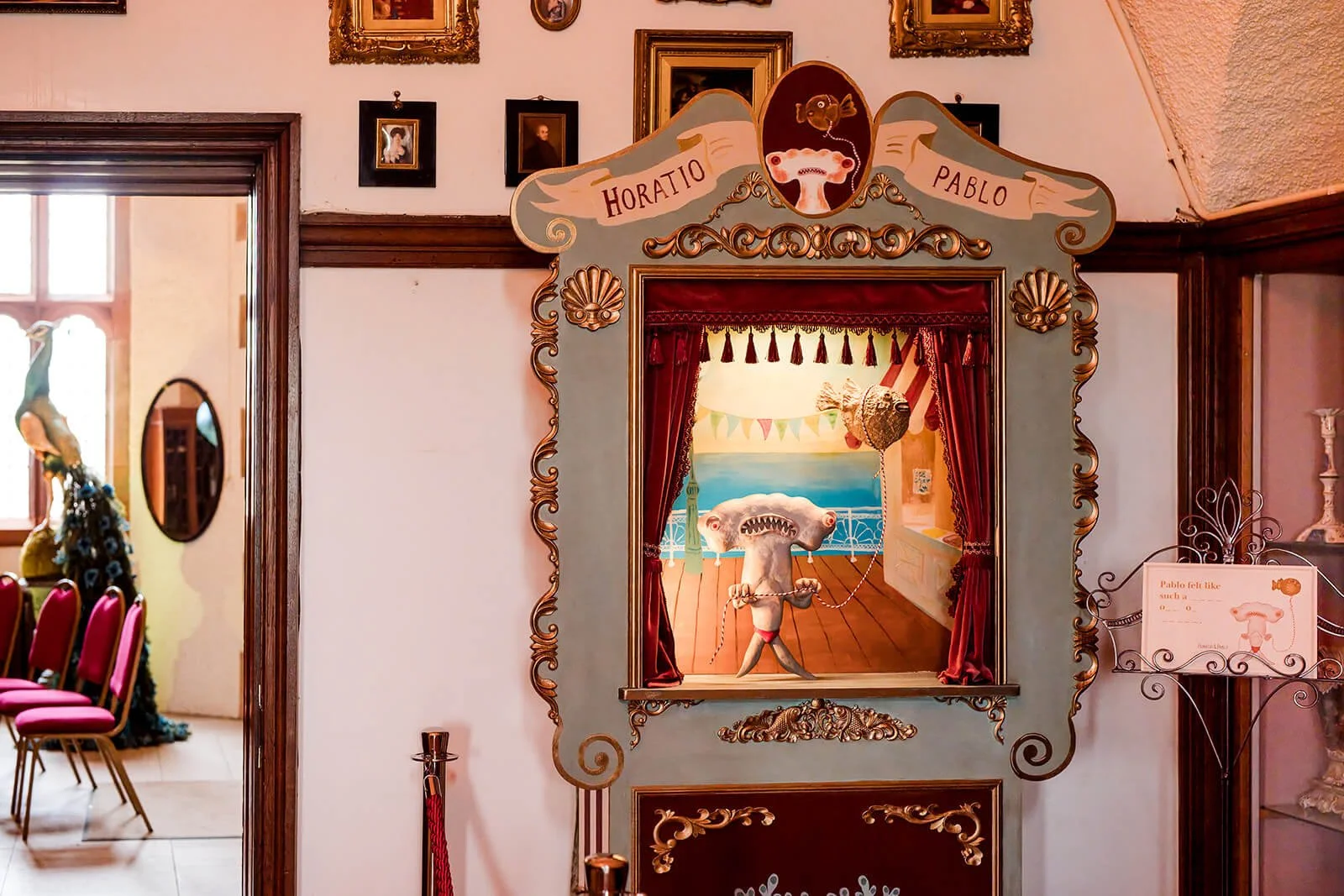
Horatio and Pablo- Fish Out of Water
Hector- Dilly Dally
Jane Doe and Robina- Early Bird
Cedric-Many Hands Make Light Work
Can you match up the idioms?
Keep your eyes peeled for Horatio, the fish out of water, who makes a few secret appearances in photos hidden around the castle….

Horatio is Hidden in Plain Sight, Hidden photos Amongst the Exhibition.
Who Would Enjoy This Exhibition?
The exhibition works well for a wide range of visitors.
Children will likely enjoy the playful animals and the challenge of guessing the idioms as they move through the castle.
Creative visitors, particularly those interested in sculpture, prop making, or visual storytelling, will probably appreciate the level of detail and craftsmanship in each piece.
For people already visiting Bamburgh Castle, the exhibition adds something a little different to the experience. It turns the castle into something more interactive, encouraging visitors to explore each room and discover the characters waiting inside.
Overall, it’s an exhibition that combines art, humour, and storytelling, making it enjoyable for families, creatives, and anyone curious about seeing language brought to life through sculpture.
What’s the Difference Between Brand and Studio Photography?
If you’ve ever wondered whether you need brand photography or studio photography, you’re not alone. It’s a question I get asked a lot.
Both can look professional. Both can sit happily on a website or social media. But they do very different jobs — and choosing the right approach can change how your business is perceived.
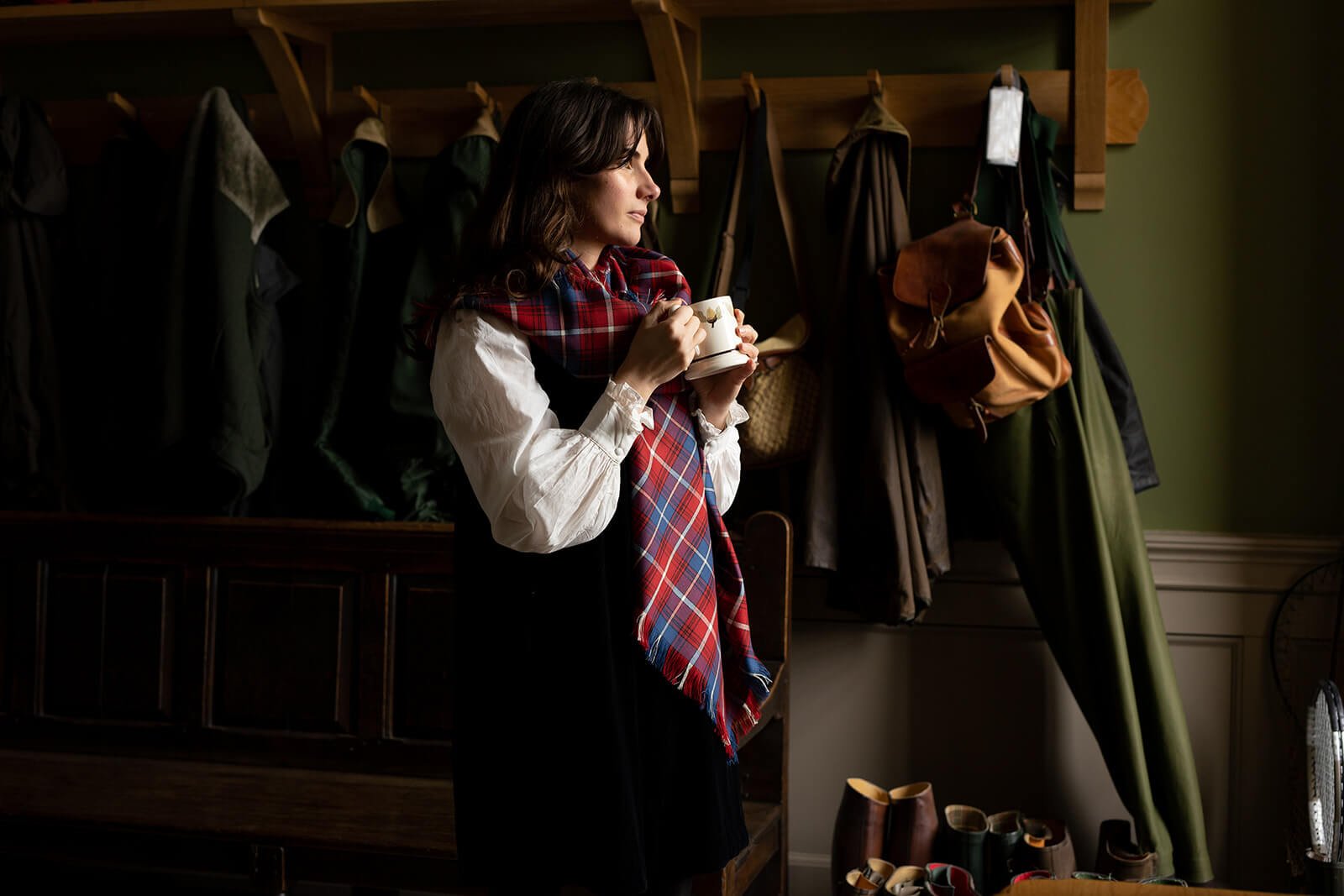
Using International Tartans as an example, this blog looks at how studio photography and brand photography work separately, and why combining the two often gives businesses the most flexible and useful image library.
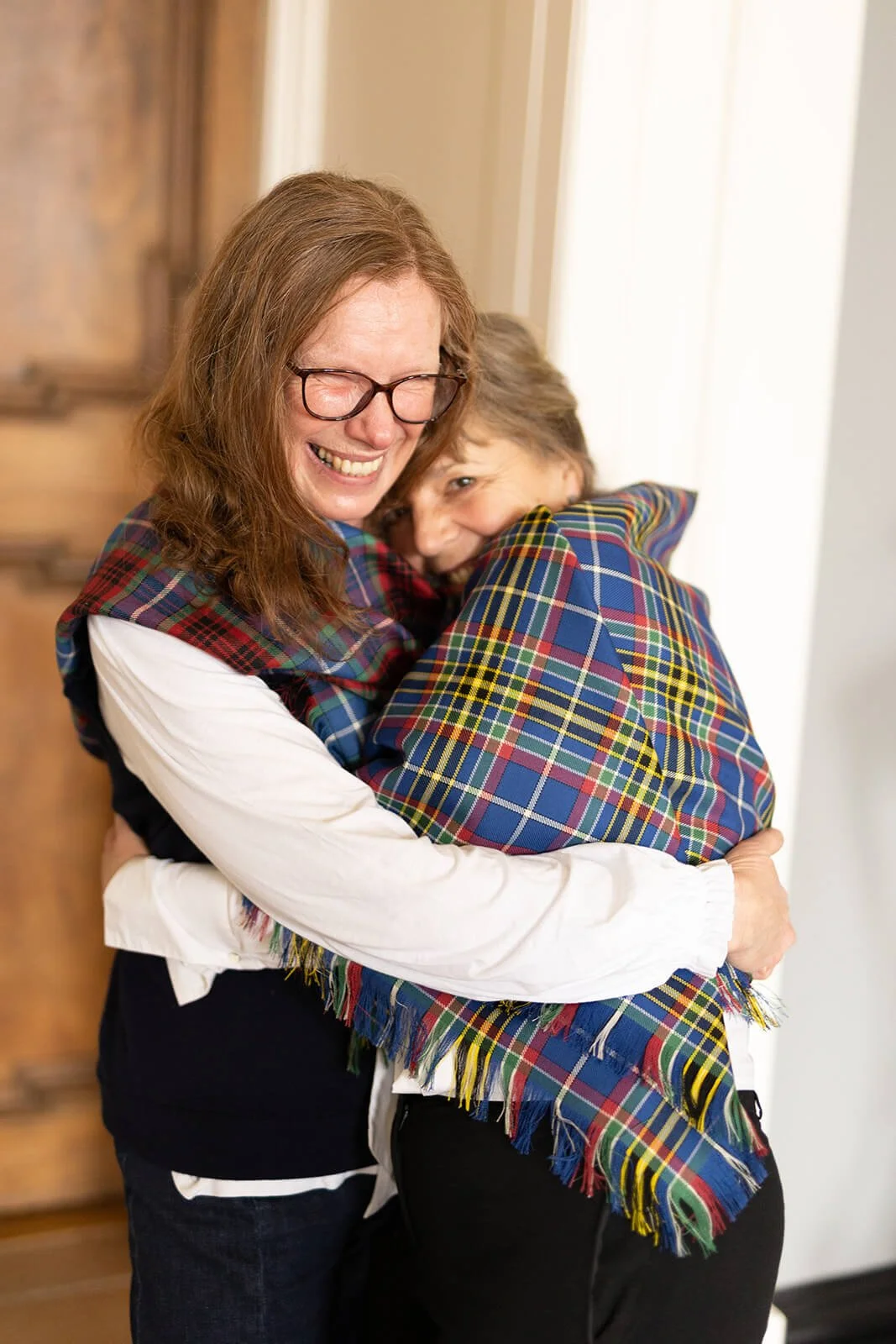
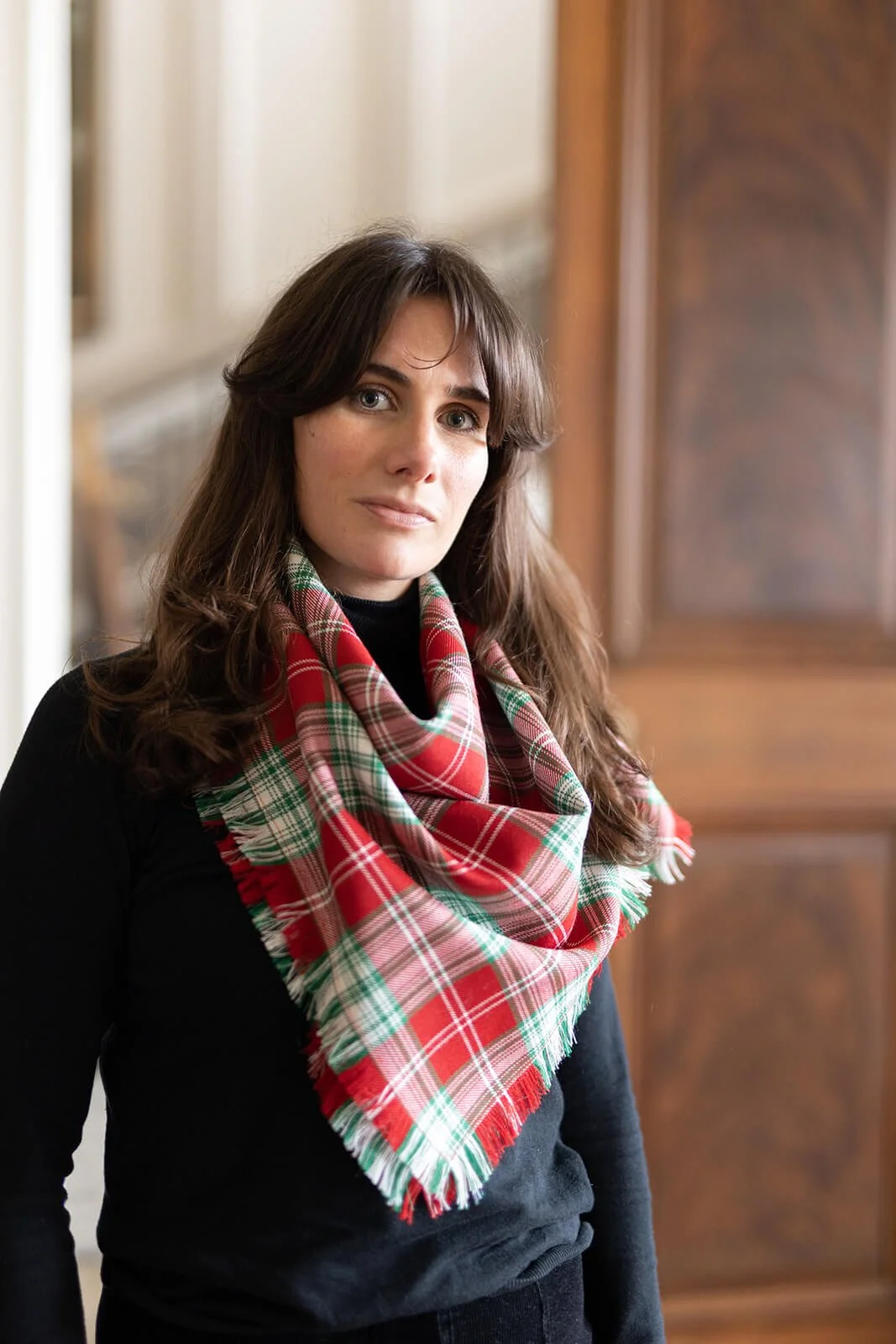
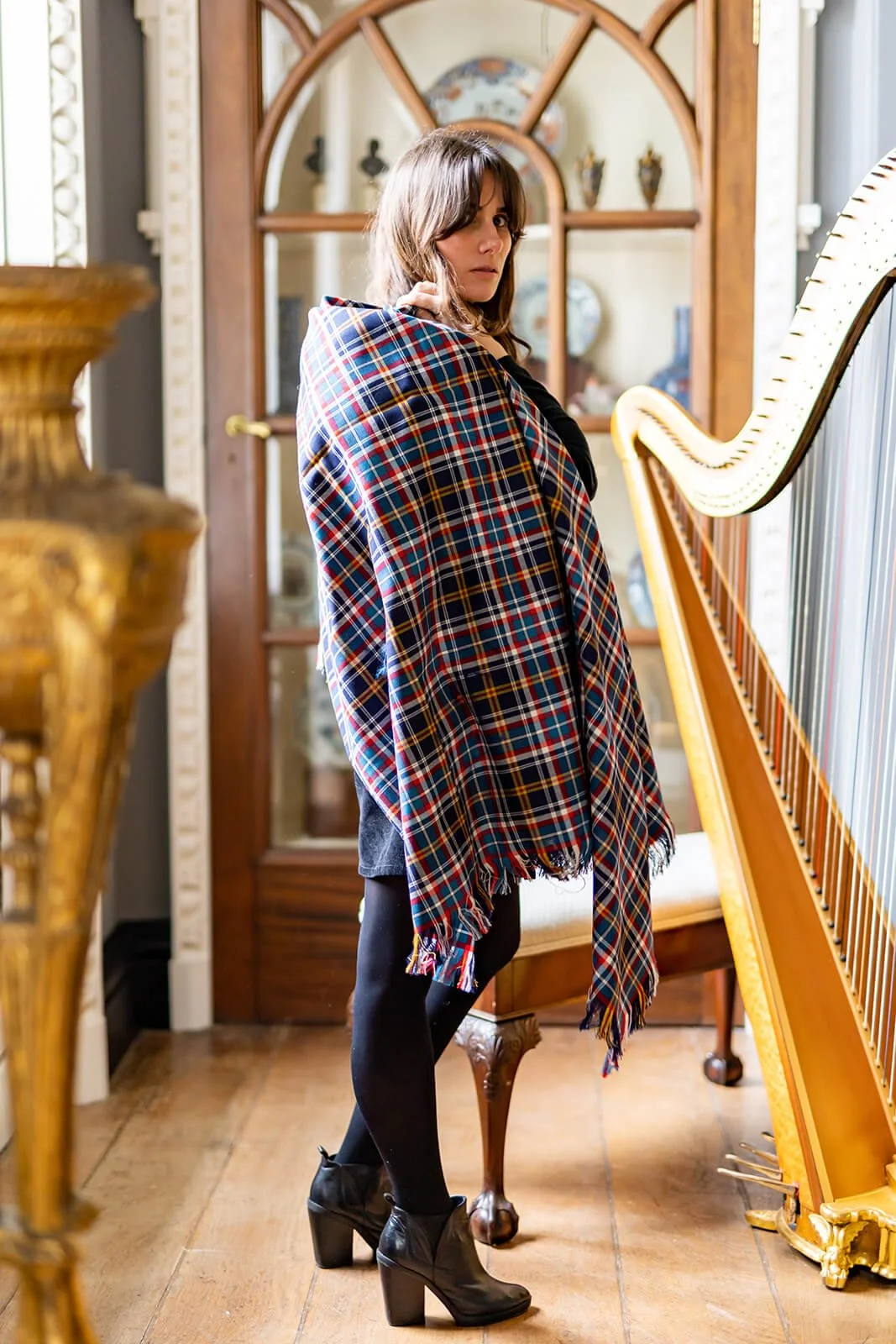
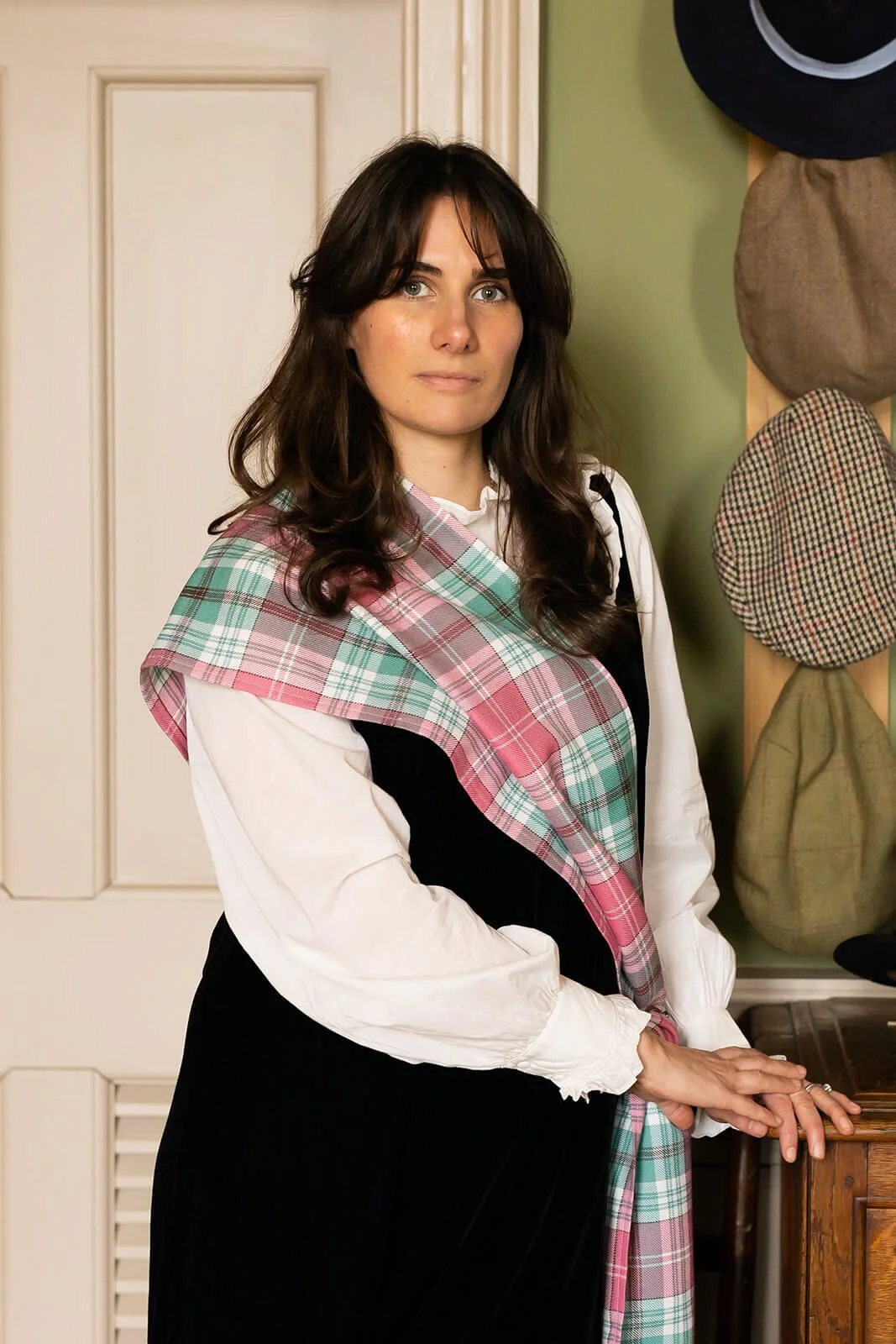
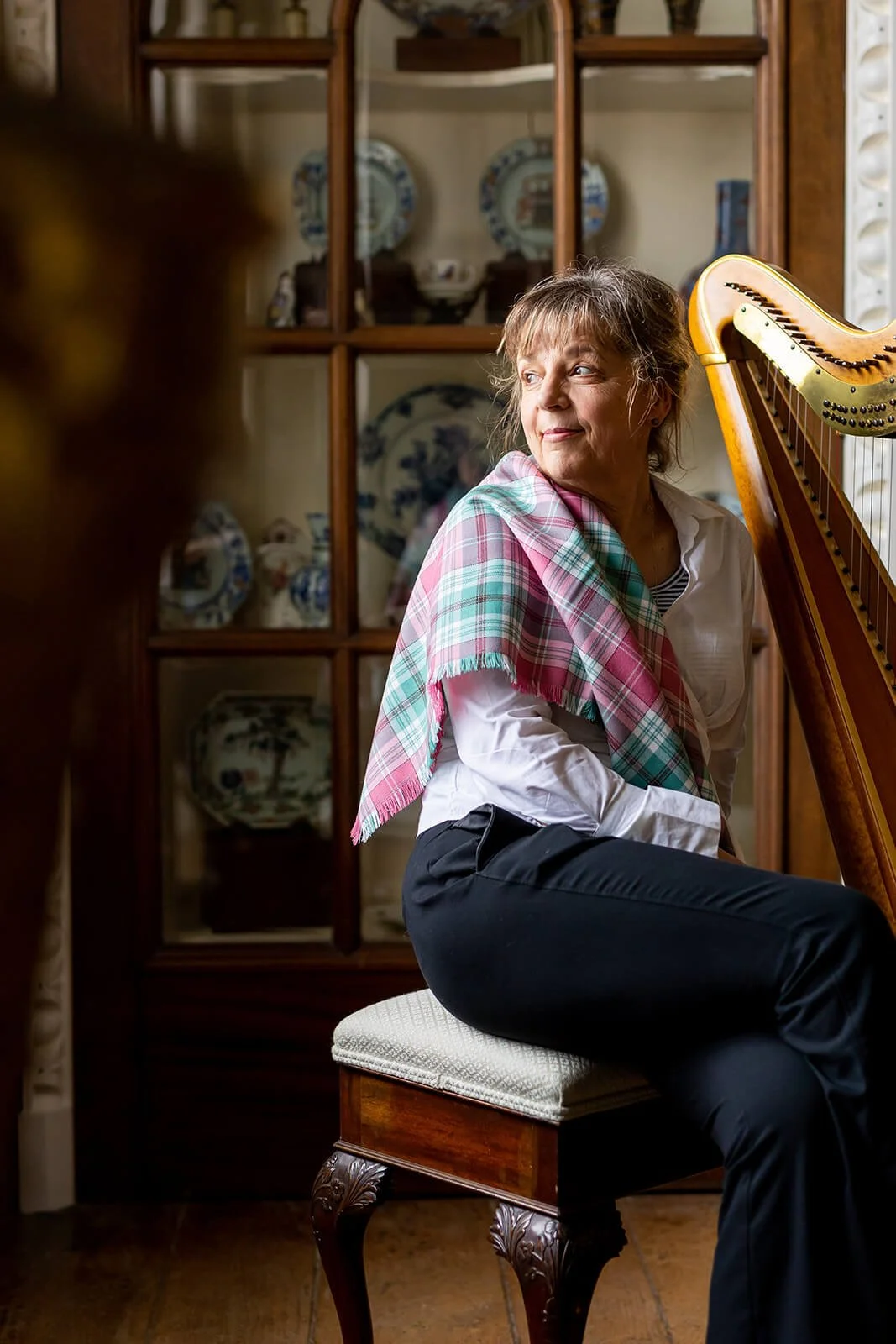
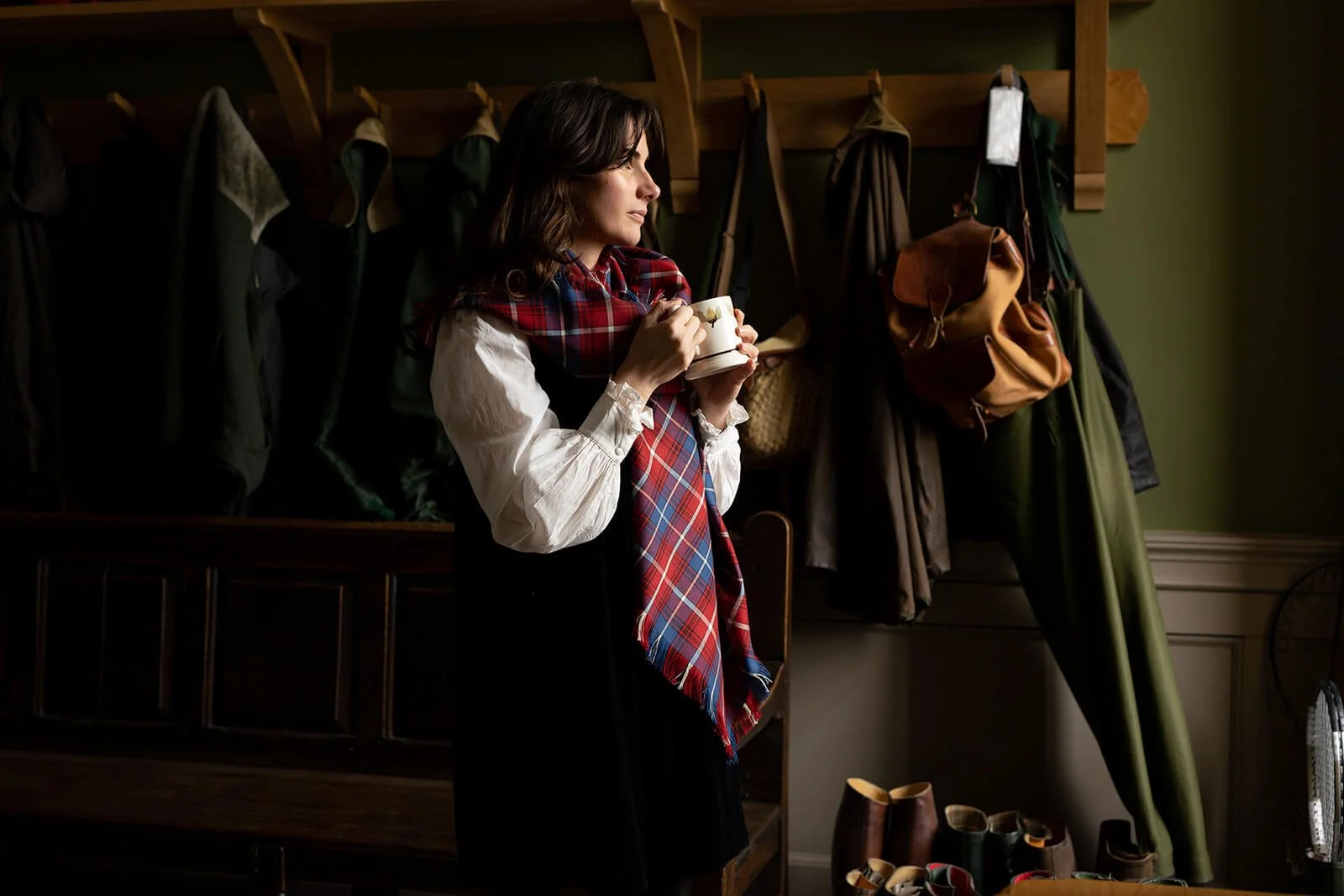
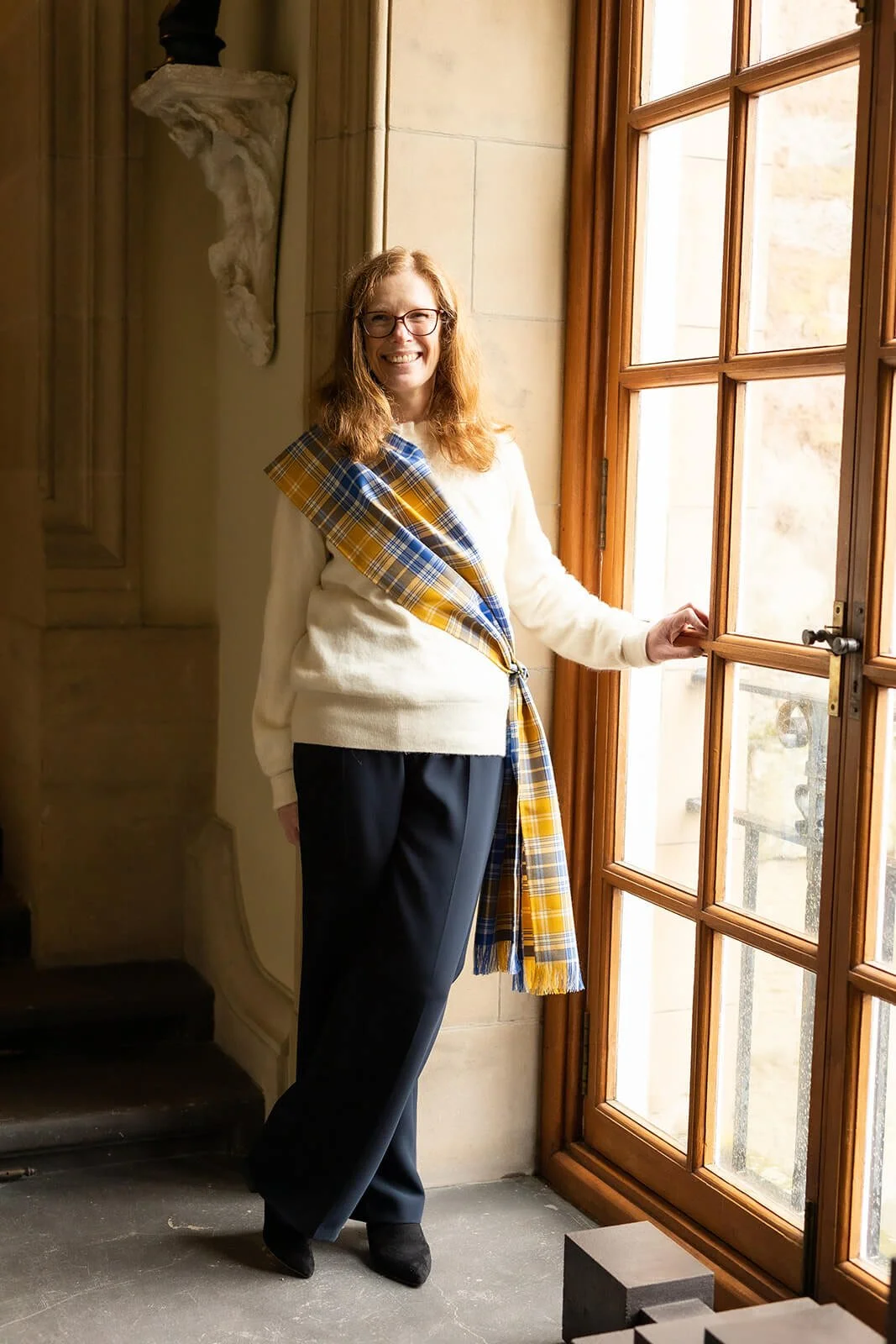
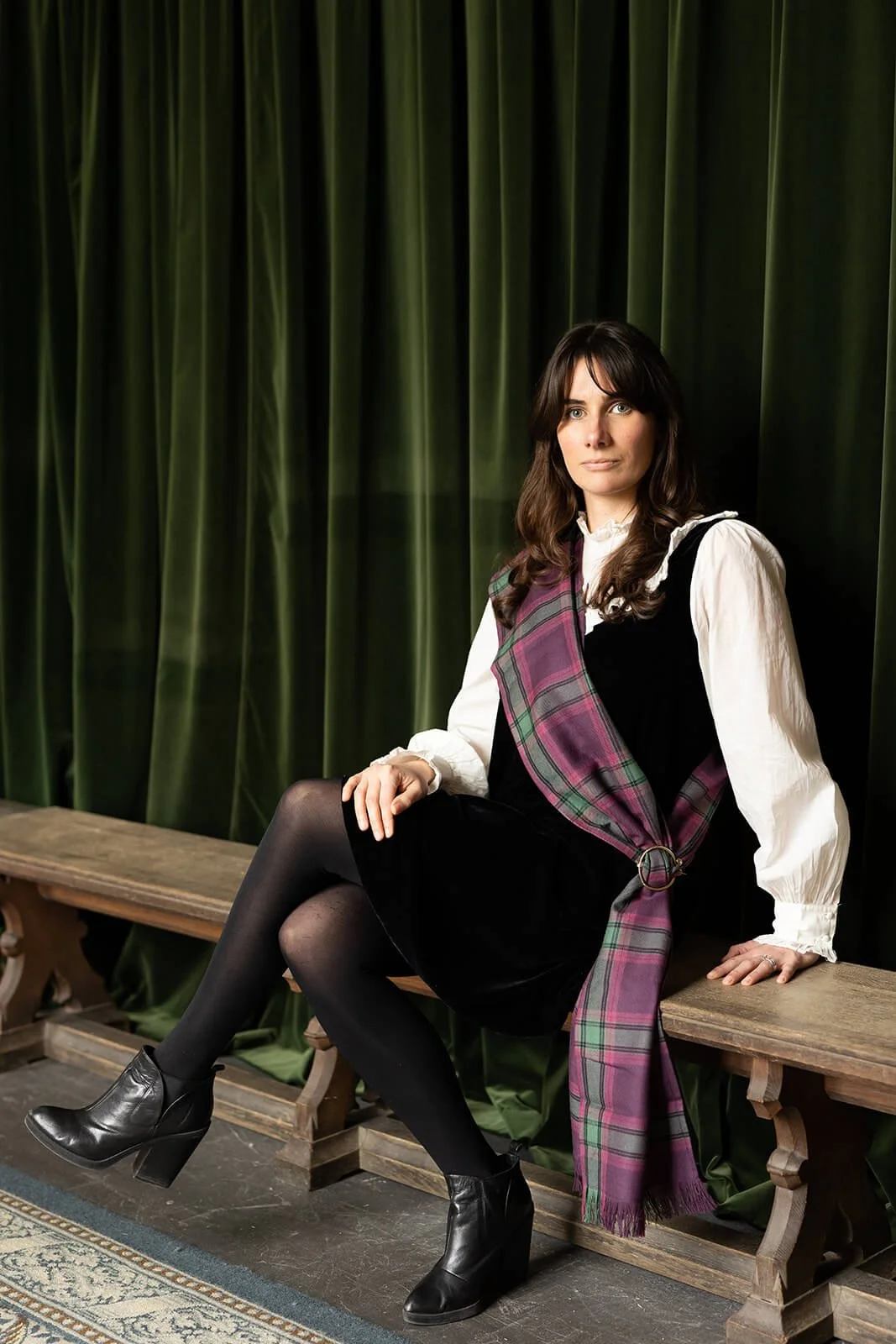
For iTartans, the brief covered several settings: clean studio product shots, portraits in real working environments, and wider location photography. Each had its place. Together, they told a much fuller story — not just what the business makes, but who is behind it and how it works day to day.
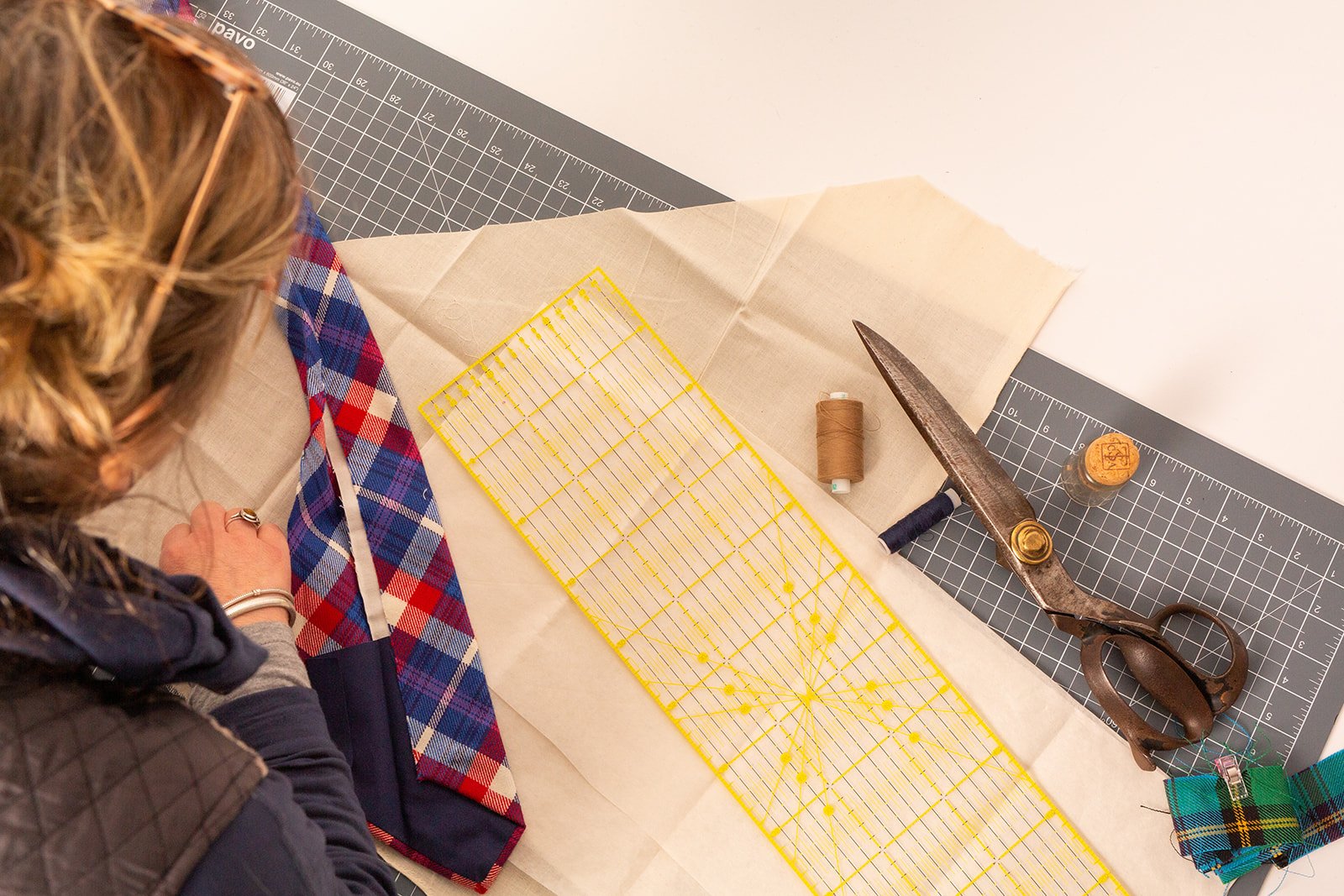
International Tartans in our Studio for Product Photography
Starting in the Studio: Clarity, Control and Consistency
Studio photography is often the most practical place to begin, particularly when products or fine details need to be shown clearly.
For iTartans, studio sessions were used to photograph products with accuracy and consistency. Working in a controlled environment meant lighting could be kept even, colours true, and backgrounds clean. This allowed the focus to stay firmly on the craftsmanship itself, without visual distraction.
Studio photography is especially valuable when images need to be reused across different platforms or formats. These images tend to age well, slot neatly into websites and print, and provide a reliable visual foundation that can be returned to as new products are introduced.
That consistency is powerful — but on its own, it doesn’t always show how an organisation feels.

Shoot with International Tartans at our Studio in Berwick-Upon-Tweed.
Brand Photography on Location: Showing the Work in Context
Brand photography shifts the focus from control to context.
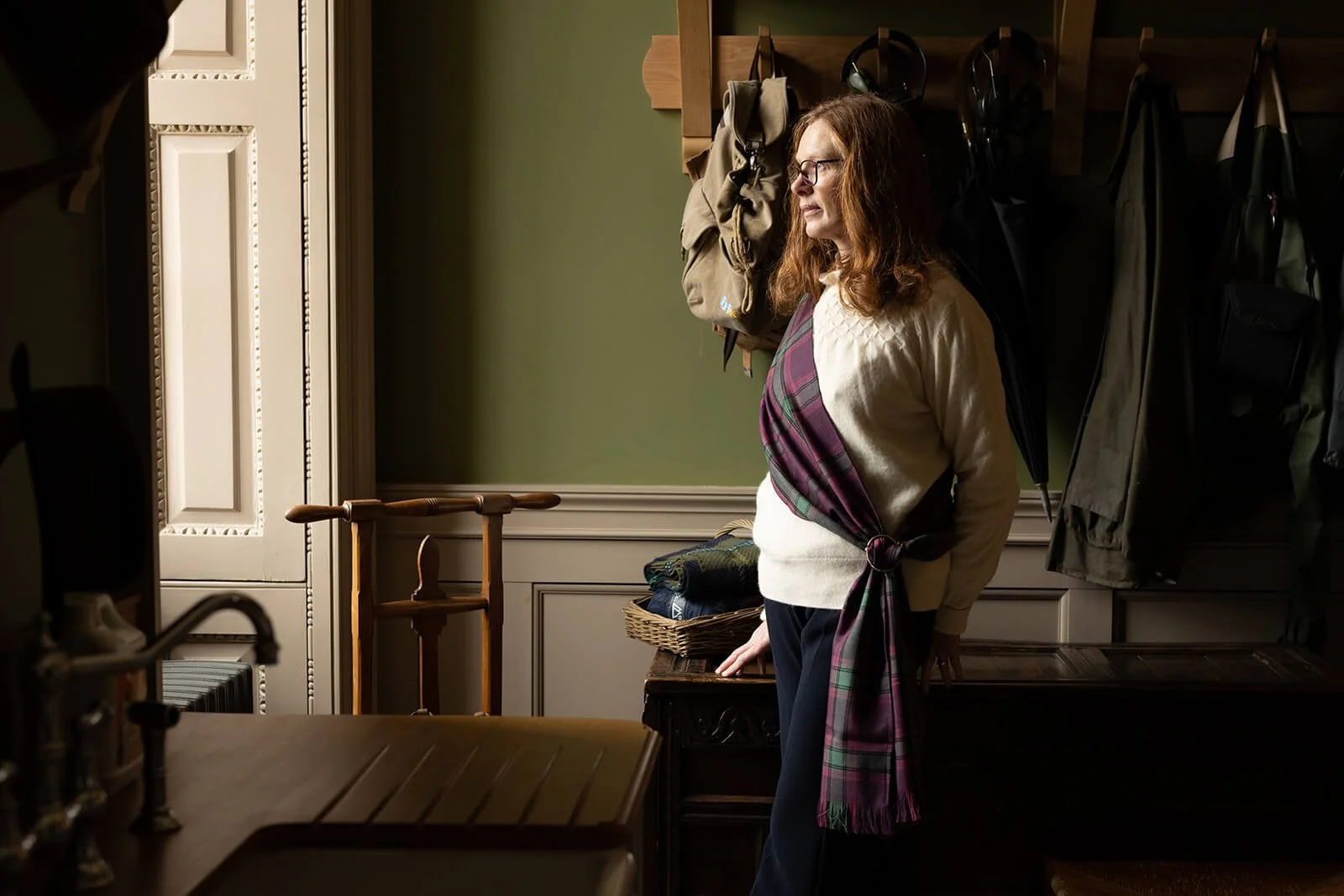
For International Tartans, this meant photographing their workshop in Eyemouth, capturing the environment where the work actually happens. These sessions weren’t about perfect backdrops or polished poses. They were about people, process, and the everyday rhythm of making in a workshop setting.
Photographing in real working spaces adds depth. It shows how tools are used, how materials move through hands, and how the organisation operates day to day. This kind of imagery helps audiences connect more easily, because it answers questions they may not even realise they’re asking — what it’s like to work with you, how your work comes together, and what sits behind the finished product.
For community-led and craft-based organisations, that sense of authenticity matters deeply.
A Case Study Film That Goes Beyond the Images
Alongside the photography at Eyemouth, I also created a short case study film for International Tartans — one that follows Kayleigh’s journey into the organisation.
Without giving too much away, the film focuses on what happens when the right opportunity meets the right support. Kayleigh’s story begins at ReTweed, a social enterprise in Eyemouth that supports women to build skills and confidence through sewing and making. From there, with funding in place, she moved into employment at International Tartans.
The film doesn’t spell everything out. Instead, it lets Kayleigh speak for herself — about learning new skills, finding stability, and how work that fits around family life can quietly change everything. It’s a reminder that behind every product, every workshop, every tartan, there are real people and real lives being shaped.
This kind of film is incredibly powerful for organisations like International Tartans. It’s been shared with funders and decision-makers, including at the Scottish Parliament, to show the human impact of the work — something that words and statistics alone can’t always do.
For me, it’s a good example of how photography and film can work together: still images to show the craft and environment, and film to carry the deeper story.
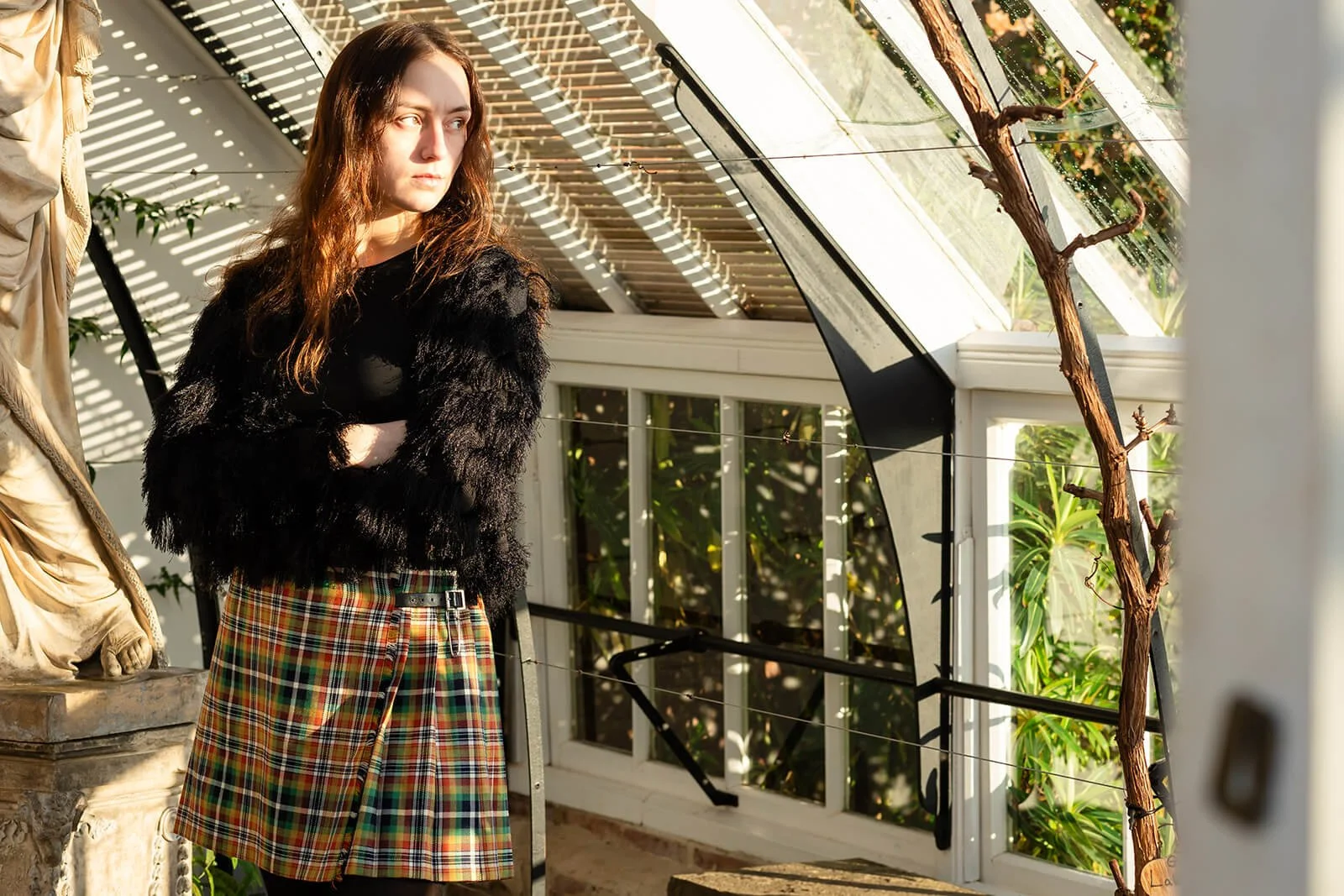
Location Photoshoot at Marchmont House for International Tartans.
When Location Becomes Part of the Story
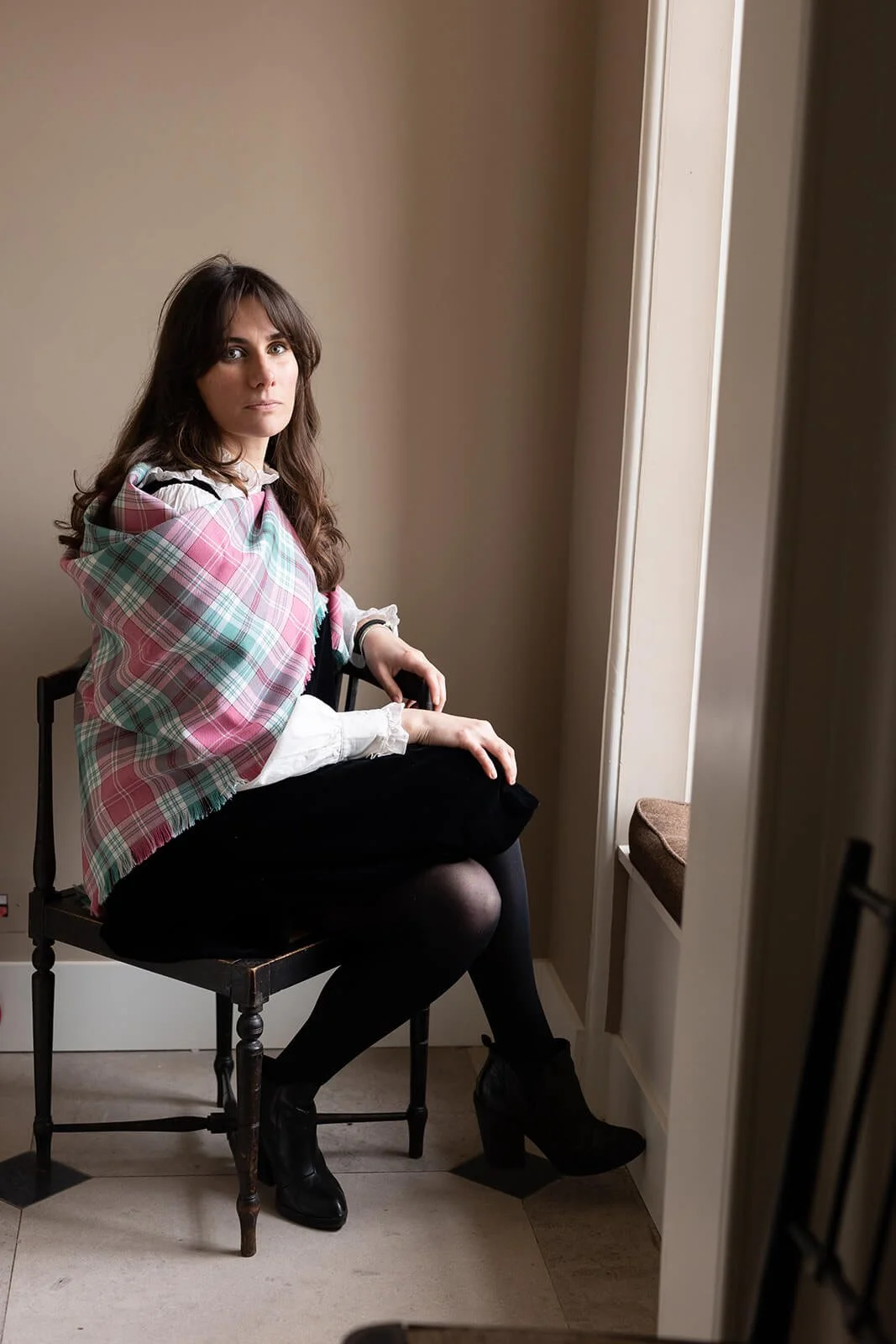
Beyond the studio and workshop, iTartans’ photography also included two on-location sessions at Marchmont House — one in the main house and one in the Glasshouses.
Here, the emphasis shifted again. These sessions weren’t focused purely on products or process, but on atmosphere and narrative. The setting added scale, heritage, and a sense of place that supported the wider story iTartans wanted to tell.
What mattered just as much was who appeared in the images. Rather than using external models, the makers and students themselves stepped into the frame. For many, this was their first experience being photographed in this way — and it became something more than a shoot. It was a confidence boost, a genuinely enjoyable day out, and a chance to see themselves as part of something bigger.
Using real people in meaningful locations adds depth that can’t be staged. Historic buildings, landscapes, and community spaces quietly reinforce values and purpose — while involving the people behind the work builds connection, pride, and a stronger sense of team..

International Tartans Branding shoot at Marchmont House
Brand Photography vs Studio Photography: What’s the Real Difference?
At first glance, brand photography and studio photography can look quite similar — especially when they’re showing the same products. Both can be used on websites and social media, and both can look professional. But they do very different jobs.
Studio photography is about clarity and consistency. It’s created in a controlled environment, where lighting, background and framing stay the same from image to image. That makes it ideal for products and portraits where accuracy really matters. Studio images tend to feel clean, calm and dependable, which is why they work so well for e-commerce, printed materials and anything that needs to sit neatly within an existing brand.
Brand photography, on the other hand, is about context and connection. It’s photographed in real spaces and shows people, process and place alongside the subject itself. Instead of isolating something from its surroundings, brand photography includes them on purpose. The result feels more human and more informative — it shows not just what you do, but how you do it, the scale of what you make, and what it might feel like to work with you.
Where studio photography creates a solid foundation, brand photography builds on it with story and atmosphere. One provides structure; the other adds depth.
For many organisations, including International Tartans, the most effective approach isn’t choosing one over the other. It’s understanding what each is for — and using them together so your images work harder across different platforms, audiences and moments in time.

International Tartans Queen of Scots Tartan in our Studio in Berwick-Upon-Tweed
Brand Photography vs Studio Portrait Photography: A Simple Comparison
Studio Photography
Controlled lighting
Neutral plain or on brand backgrounds
Ideal for products and portraits
Clean, consistent, and repeatable
Works well for websites, catalogues, and print
Brand Photography
Shot in real locations
Includes people, process, and environment
Adds personality and context
Supports storytelling and connection
Ideal for social media, marketing, and editorial use
For International Tartans, the most effective approach wasn’t choosing one over the other — it was using both together.

Photography of International Tartans Products at Marchmont House
Why Working with a Local Photographer Mattered
International Tartans also made a conscious decision to work with someone local.
There’s a real advantage to working with a photographer who has a studio nearby. It keeps travel costs down, makes it easier to plan shoots at shorter notice, and allows for a more flexible approach overall. A local photographer also understands the area — not just geographically, but culturally too. The way the light behaves along the coast, how quickly the weather can shift, and when it’s best to adapt rather than push on.
Because I’m based in Berwick-upon-Tweed, planning sessions across the studio, Eyemouth and Marchmont House didn’t require rigid schedules or extensive location scouting. We could work with the light, adjust timings, and let the day unfold naturally.
That local knowledge also helped when choosing locations. Rather than relying on generic backdrops, we selected places that genuinely suited iTartans — calm, characterful spaces with a strong sense of place.
For organisations working across Northumberland and the Scottish Borders, this kind of familiarity often makes the whole process feel easier, more relaxed, and far more collaborative.
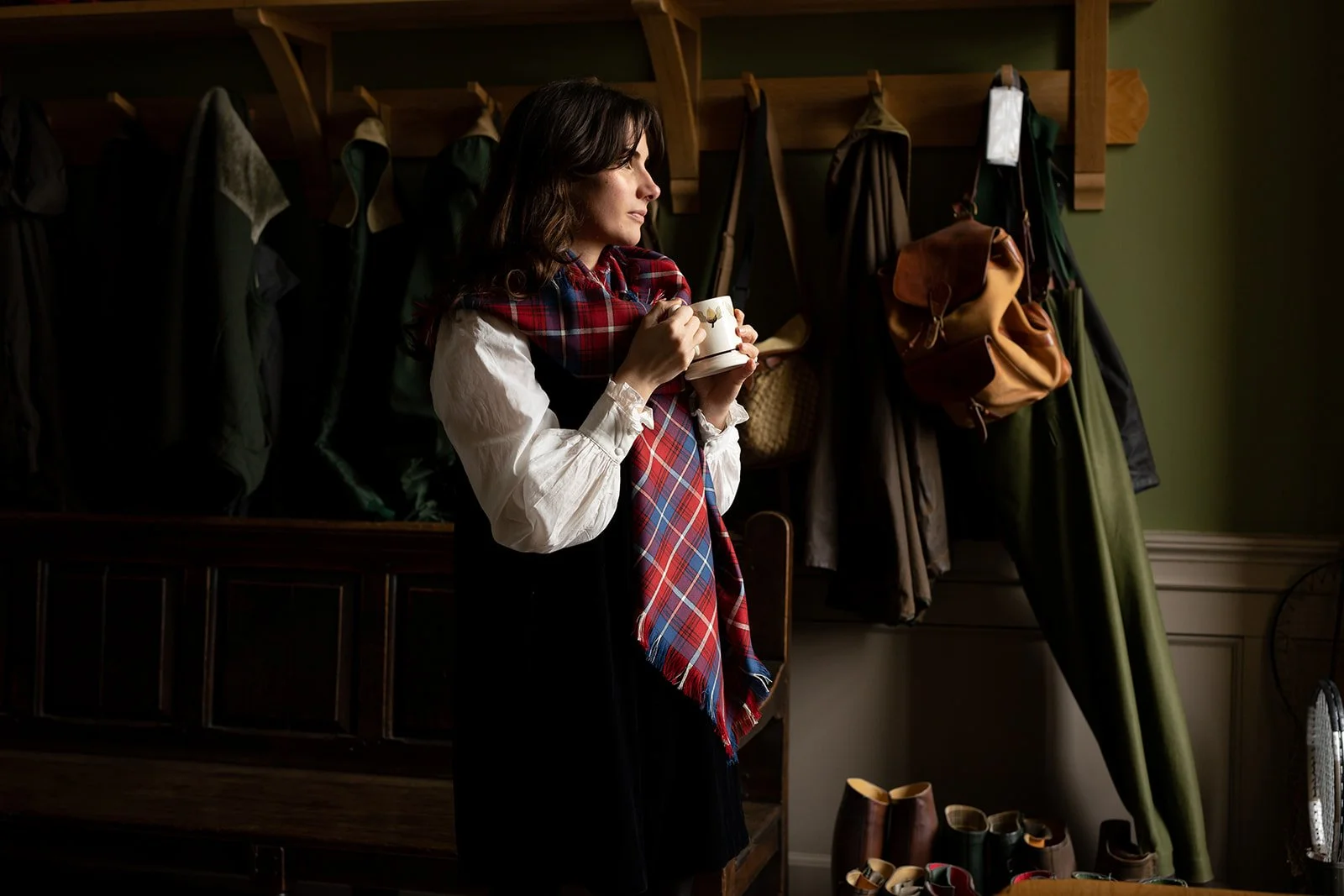
International Tartans Branding shoot inside Marchmont House in The Scottish Borders
How I Work – Quietly, Naturally, and With You in Mind
One thing clients often tell me is how calm the whole process feels — and how little it feels like a photoshoot.
I’ve been behind the camera for nearly two decades, and I’ve learned that the best images tend to happen when people forget they’re being photographed. When there’s no pressure to perform, no stiff posing, and no sense of being “done to”.
My role is to help you feel at ease, keep an eye on the light, and gently guide things as we go — without turning it into a photoshoot with a capital P.
I won’t ask you to force a smile or hold an awkward pose. We’ll chat, move around, take our time, and let things unfold naturally. The aim is always the same: photographs that feel like you, not a version you’ve had to put on.
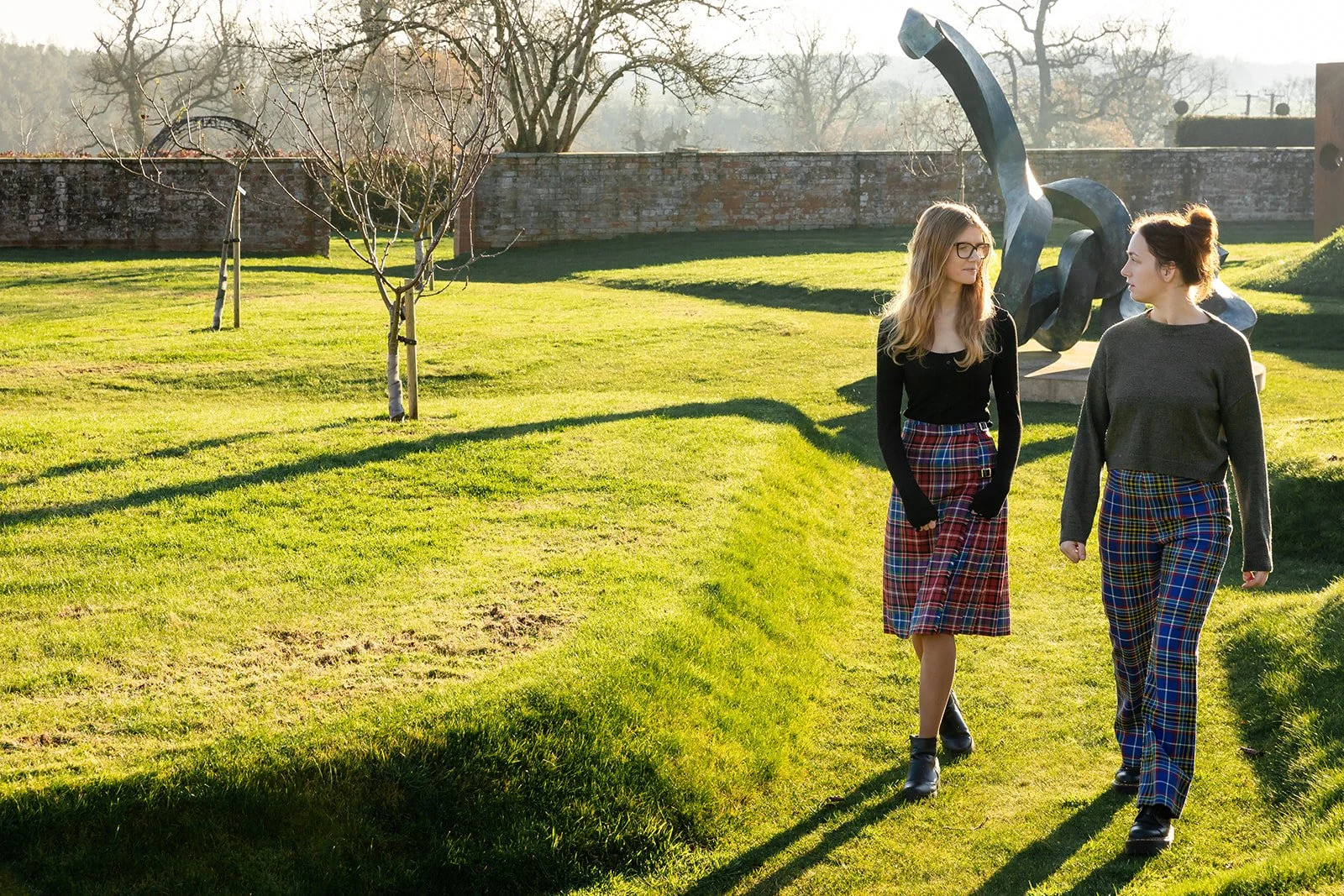
International Tartan Branding shoot at Marchmont House in Greenlaw, Duns
Choosing the Right Approach for Your Organisation
Most organisations don’t fit neatly into one box.
Some need the reliability of studio photography to create a clear, consistent starting point. Others lean more on brand photography to show values, process and personality. Often, the right approach sits somewhere in the middle — and it can shift over time as the organisation grows and changes.
The important thing is being clear about how your images will be used and what they need to do. When photography is planned with purpose, rather than chosen by default, it becomes far more useful and far more effective.
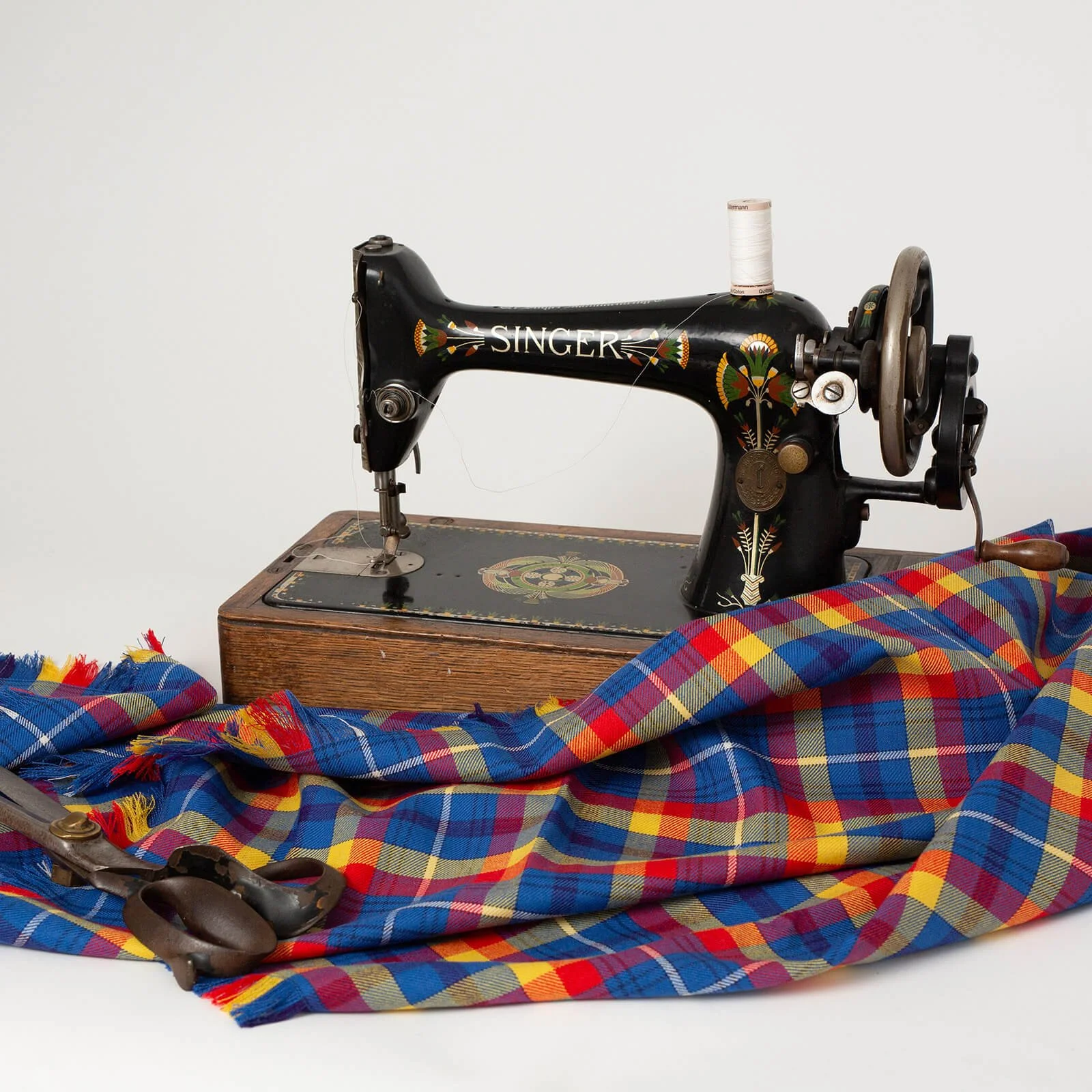
International Tartans Branding Photoshoot in Our Studio in Berwick-Upon-Tweed
Thinking About Booking a Photography Session?
If you’re unsure whether studio photography, brand photography, or a combination of the two would suit your organisation best, a short conversation can really help.
Every project is different. The most useful approach depends on what you need your images to do — now and as your organisation grows.
If you’d like to talk things through, you’re very welcome to book a call here
You may also find this helpful:
How to Prepare for a Branding Shoot
Which of These 7 Types of Product Photography is Best for Your Business?
Headshots or Branding Photography? A Real Example
from Greenwoods Accountants, Berwick upon Tweed

Mark McLeman, Gillian O'Dea, Gareth Greenwood from Greenwoods Accountants at Marshall Meadows.
A Fresh Take on Professional Headshots
When most people think of accountants, they picture suits, offices, and boardrooms.
But for Greenwoods Accountants, based in North Northumberland, that wouldn’t tell the full story.
Their team works closely with farmers, tradespeople, and rural businesses — alongside larger city-based firms — so they needed professional imagery that felt friendly, grounded, and approachable, without losing credibility or leaning too heavily into a rural stereotype.
Instead of defaulting to a studio backdrop, we chose to photograph their team headshots outdoors, using natural light and a consistent setting to bring warmth and authenticity into their visual identity — while keeping everything polished and professional.
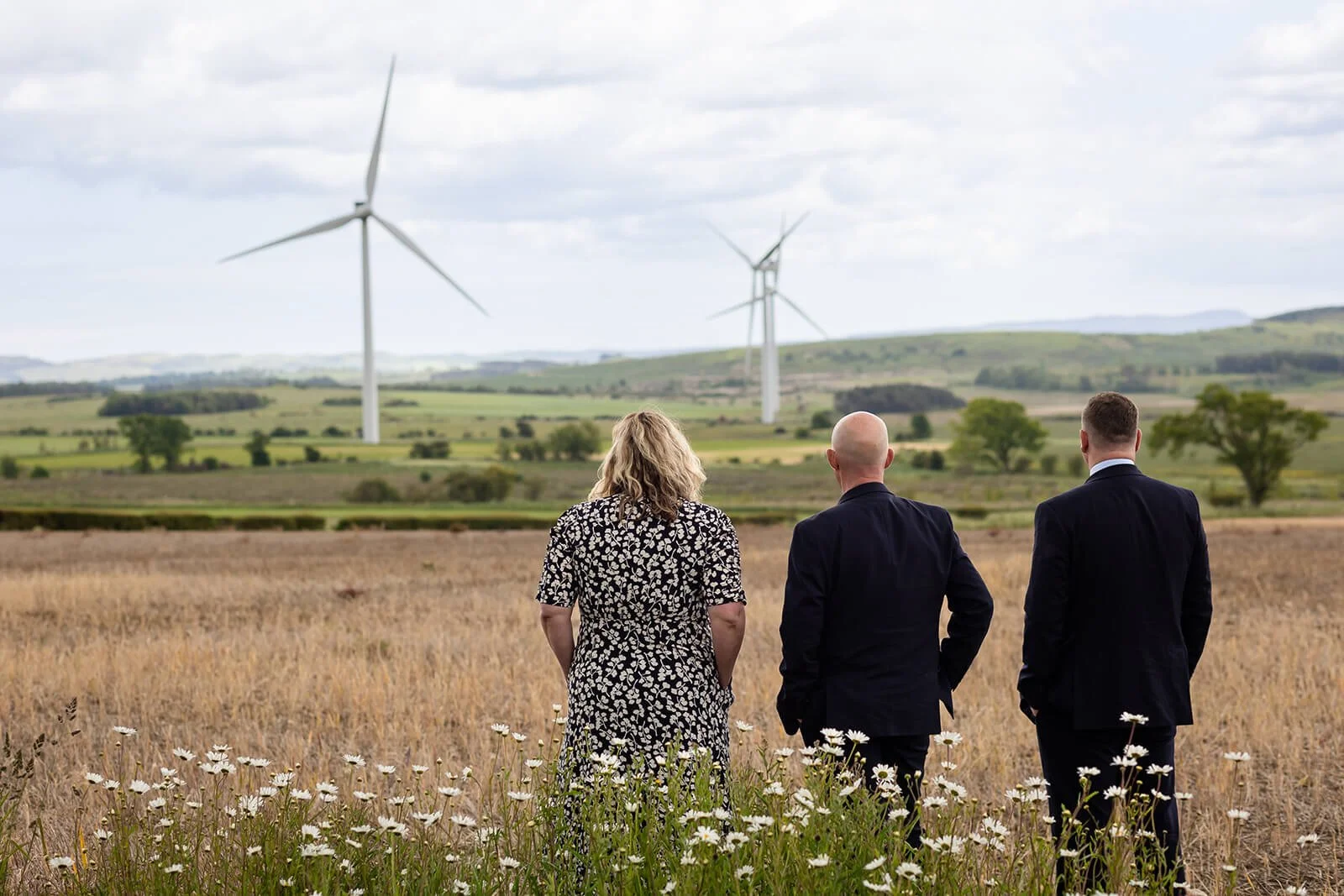
Greenwoods Accountants Directors in the Scottish Borders.
Building Consistency Outdoors
Each partner and staff member was photographed individually, using the same background, lighting, and framing so the images sit seamlessly together across their website and online platforms.
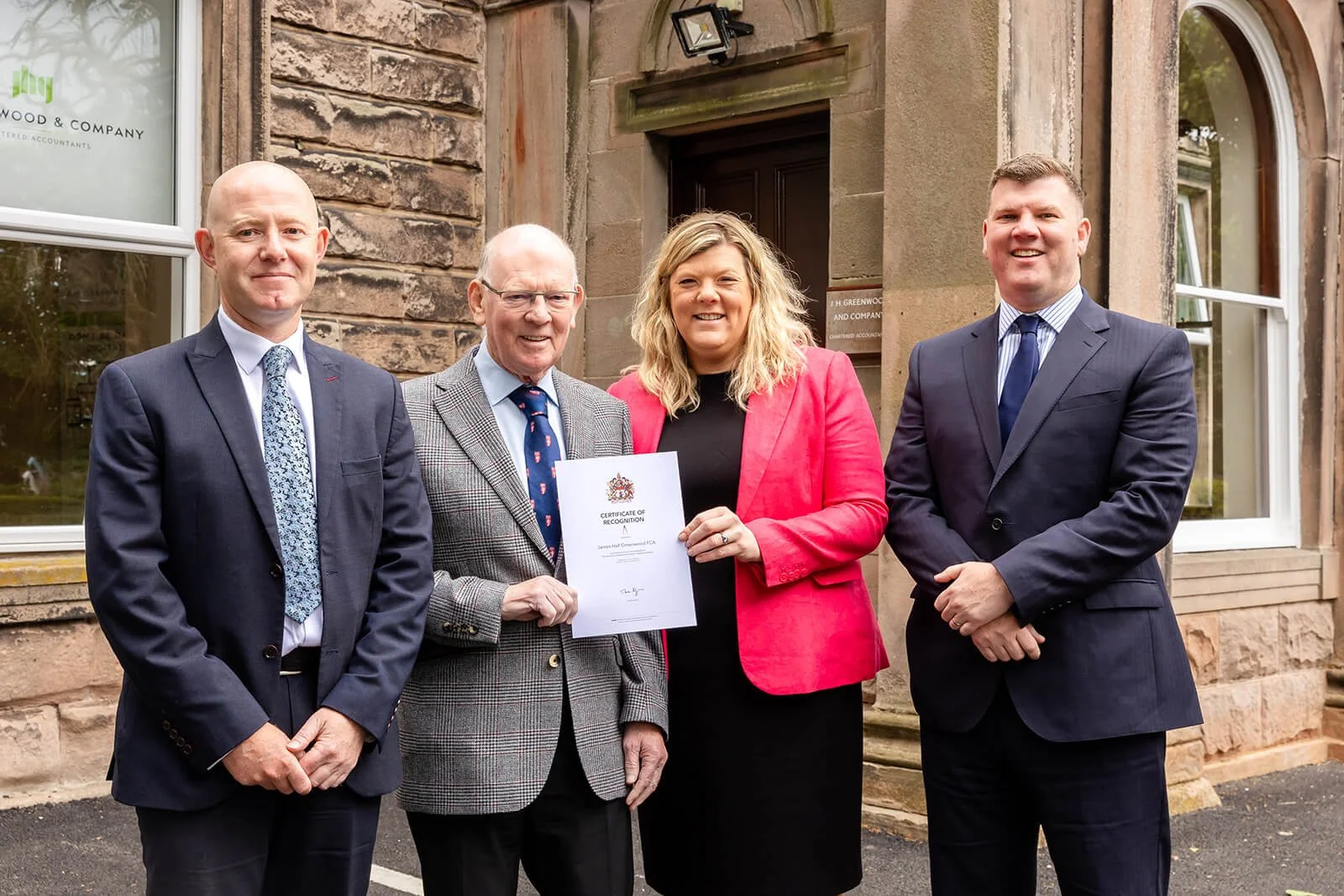
Directors from Greenwoods Accountants outside their office in Berwick-Upon-Tweed.
Consistency like this is essential for professional firms, particularly those that:
Regularly welcome new team members
Share staff achievements or qualifications
Need imagery for press releases and announcements
When photographs align visually, a brand feels established, dependable, and confident.
For Greenwoods, this approach also makes future updates straightforward. When a new qualification is achieved or a team member joins, we can refresh images quickly and seamlessly, keeping everything current across platforms such as LinkedIn and press coverage.
Why Outdoor Headshots Work for Professional Services
There’s a long-held assumption that professional headshots must mean studio lighting and a blank wall. In reality, outdoor business photography can feel just as credible — and often more relatable.
For regionally rooted businesses, being photographed just outside your office subtly reinforces:
Stability
Local presence
Community connection
Accessibility
It quietly says, “We’re here. We’re established. You can find us.”
That sense of place often communicates far more than a generic backdrop ever could, particularly for businesses serving local and rural communities.
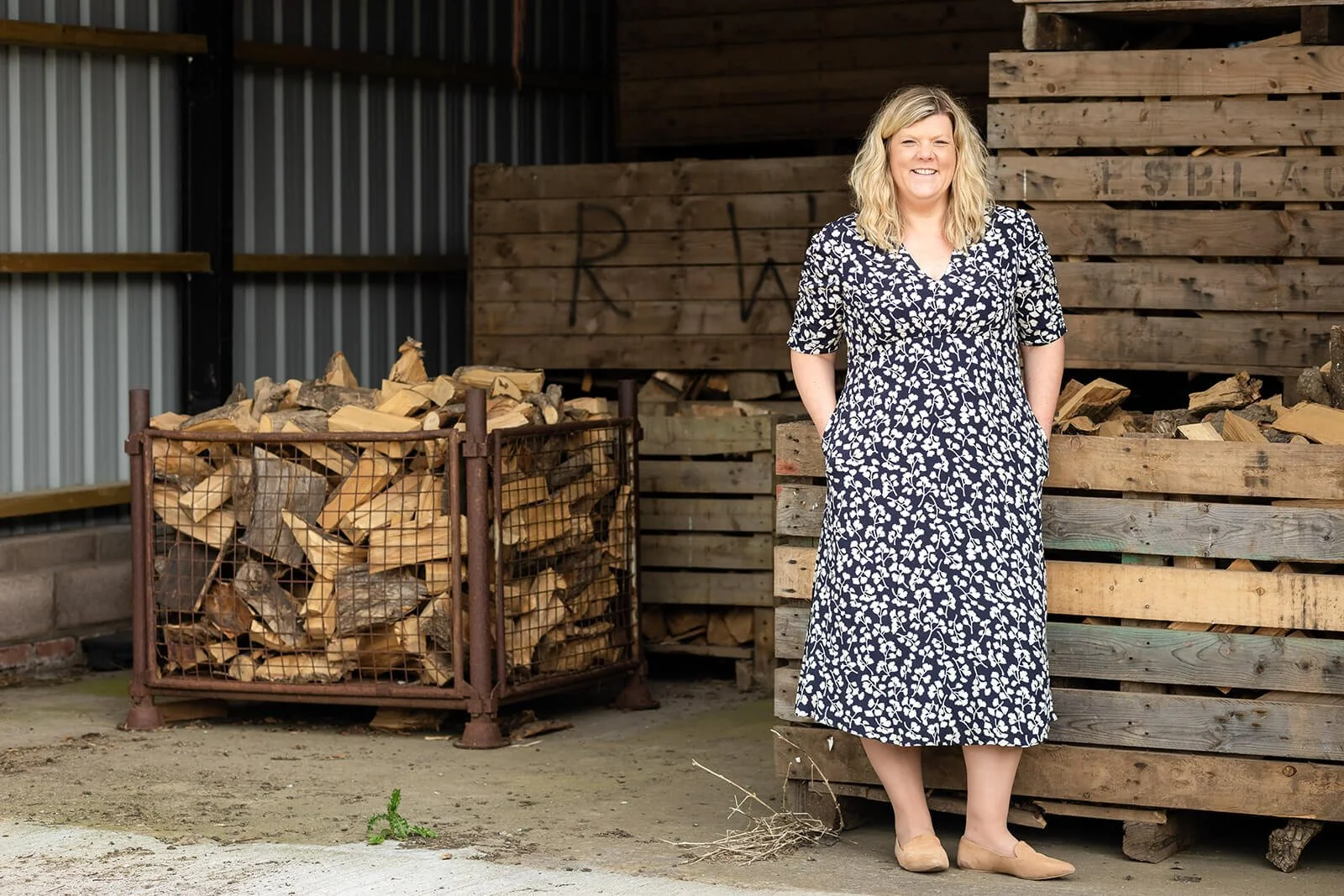
Gillian O'Dea from Greenwoods Accountants.
A Collaborative Brand Approach
Greenwoods’ headshots sit comfortably within their wider brand thanks to a close collaboration with Twist, the Newcastle-based agency managing their website and social media.
When photography, web design, and content strategy work together, the result is a consistent and approachable online presence — one that reflects who a business is and who it serves, rather than simply ticking a professional box.
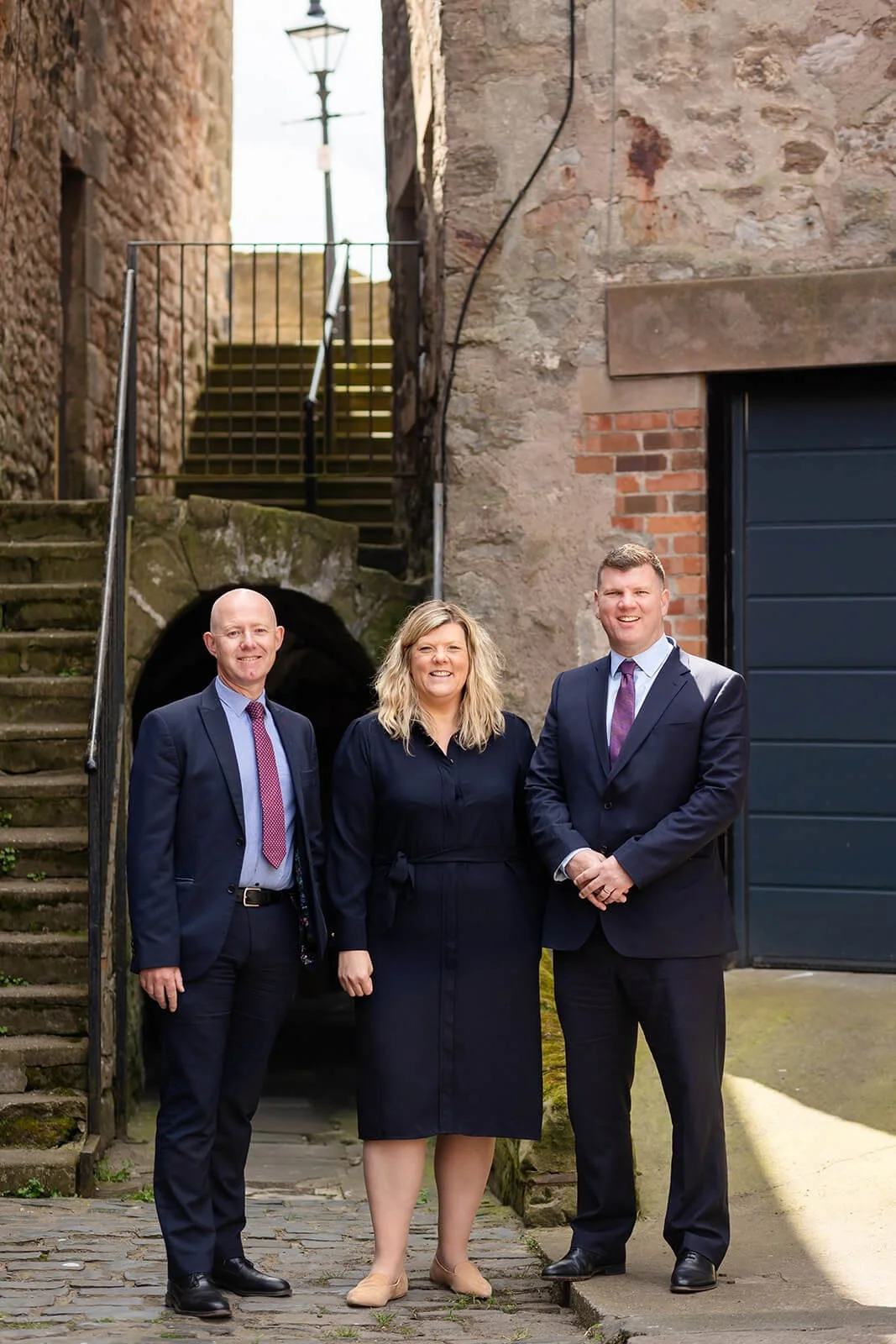
Greenwoods’ Accountants Branding Shoot in Berwick-Upon-Tweed.
Headshots vs Branding Photography: What’s the Difference?
If you’re planning professional photos for your business, it can feel surprisingly confusing.
You know you need something more considered than a cropped holiday photo. You want to look professional — but not stiff. Approachable — but still credible.
And somewhere along the way, you’ll likely come across two terms:
headshot photography and branding photography.
They’re often used interchangeably.
But they are not the same thing.
If you’re searching for a brand photographer in Berwick and wondering which type of session is right for you — or whether you need both — the distinction matters
Let’s break it down properly.
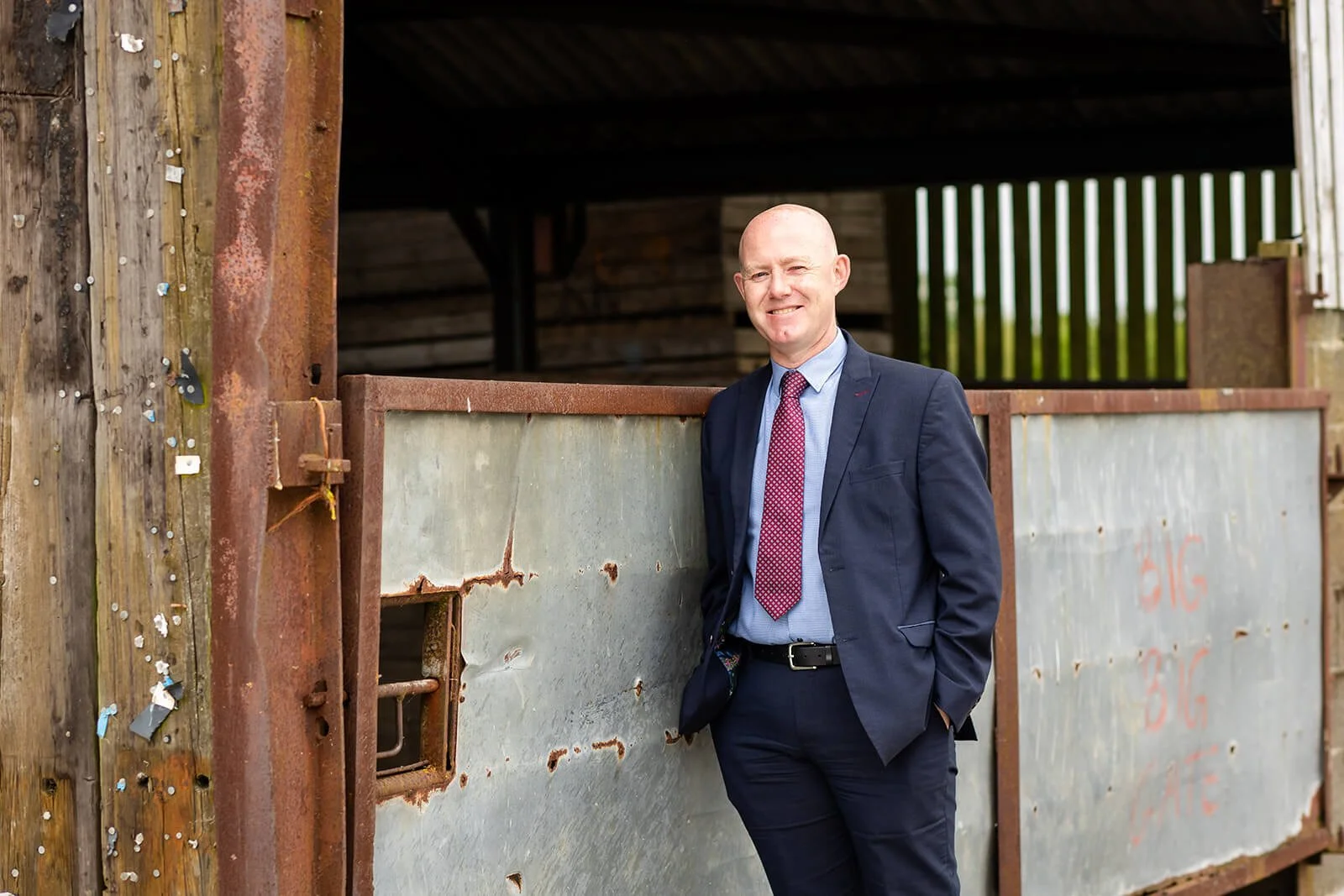
Mark McLeman from Greenwoods Accountants In Berwick-Upon-Tweed.
Professional Headshots with a Brand Photographer
Headshot photography is focused, simple, and intentional.
It’s usually:
One person at a time
Framed from chest or shoulders upwards
Clean, consistent background
Even, controlled lighting
Designed for:
LinkedIn
Websites
Press releases
Professional directories
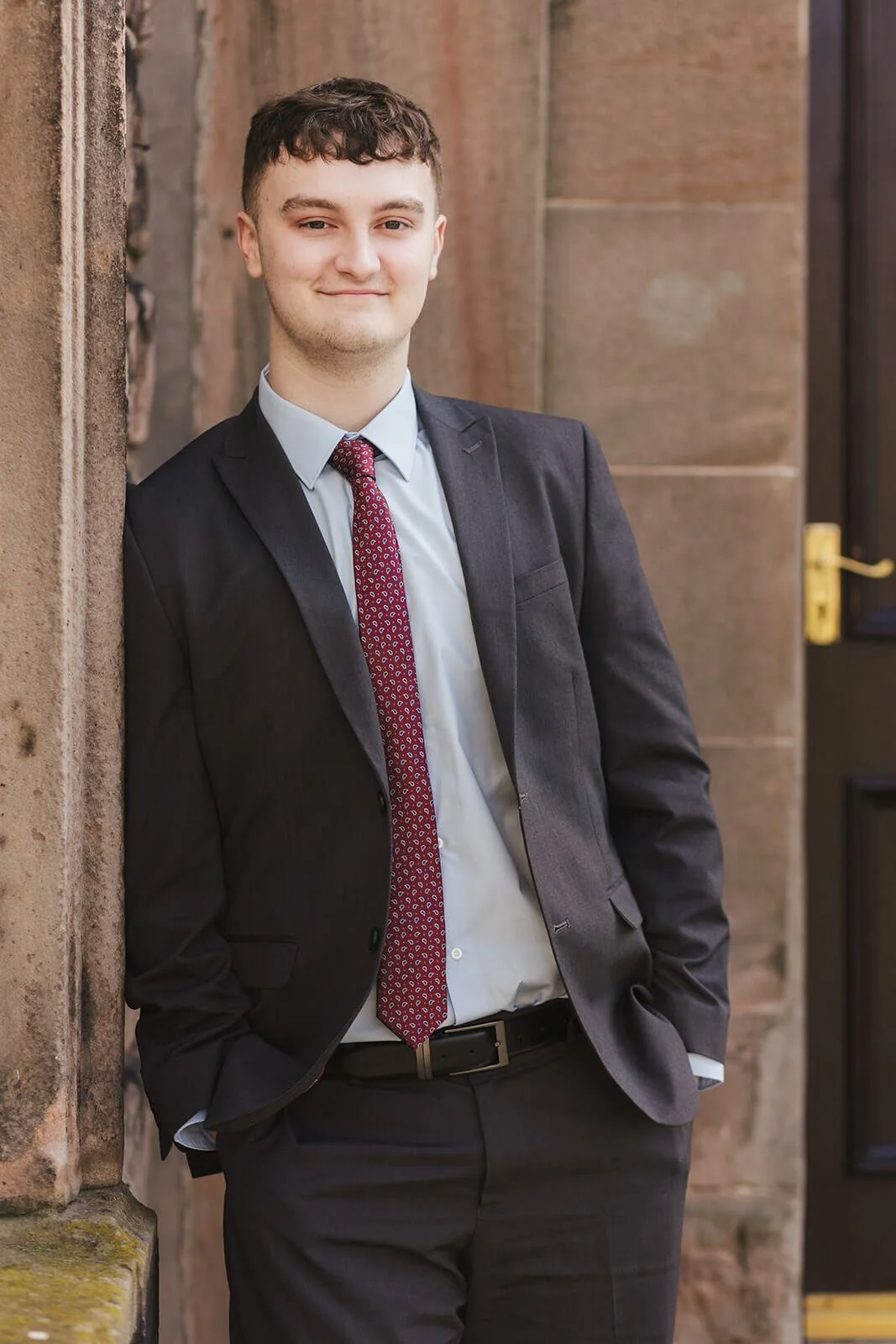
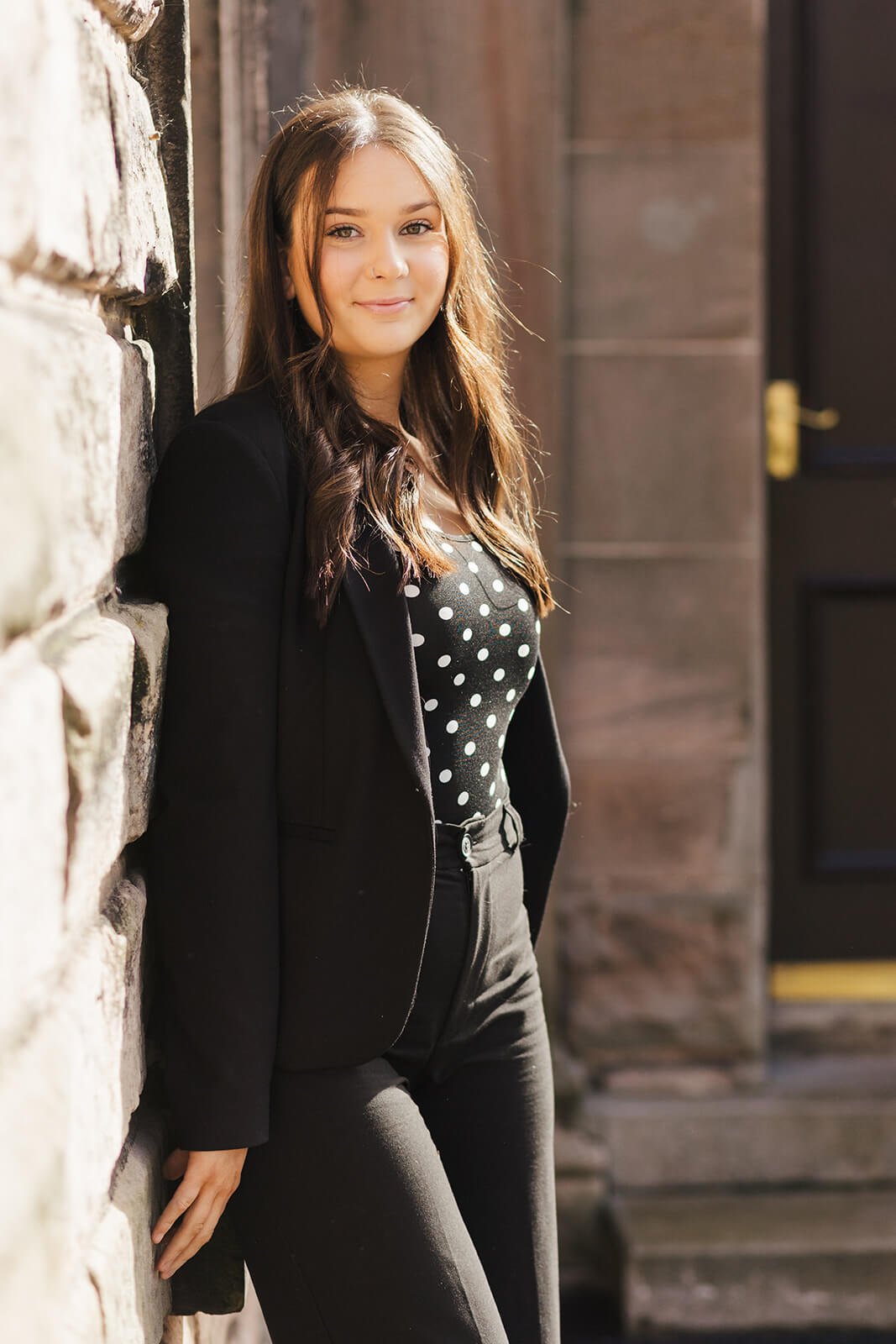
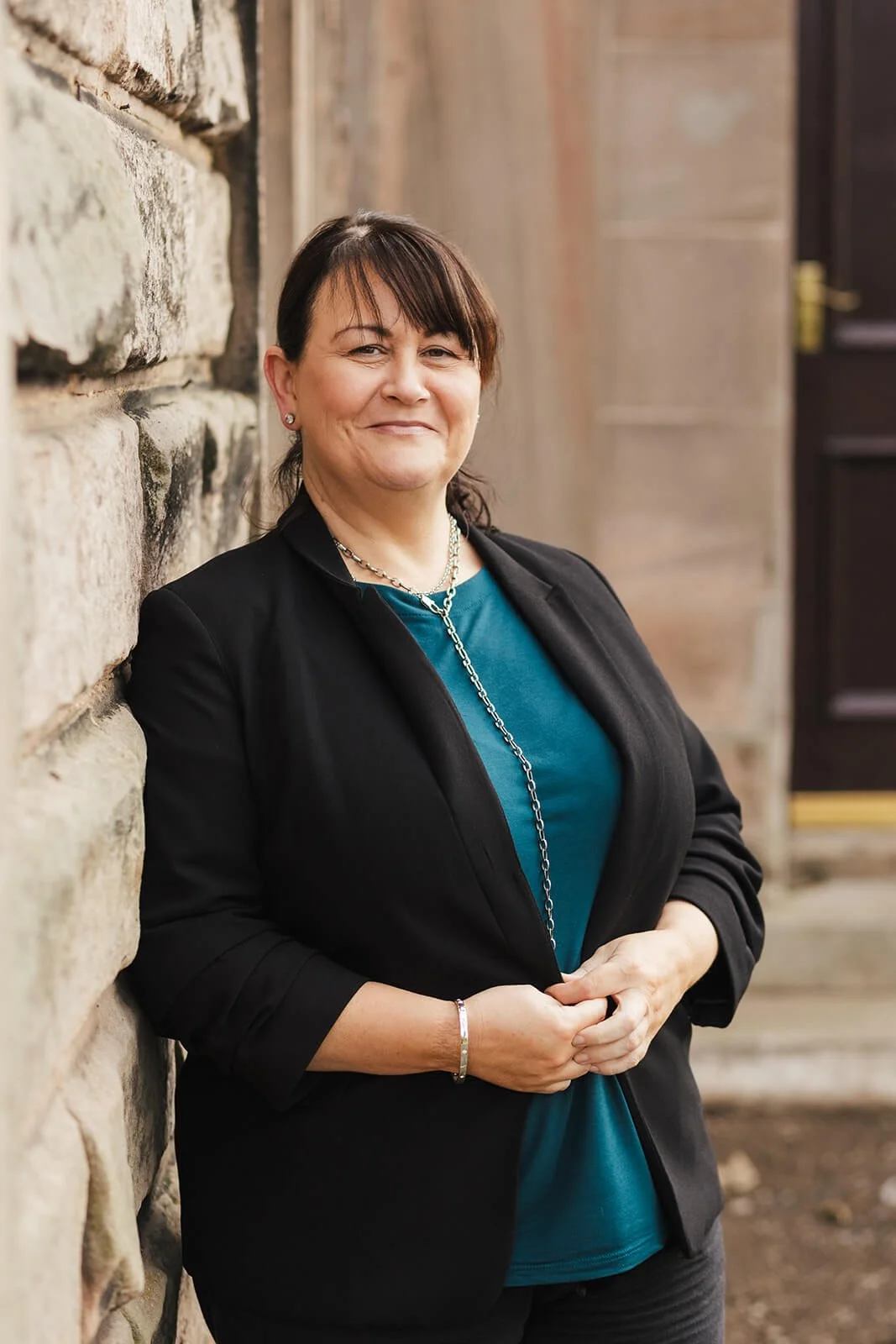
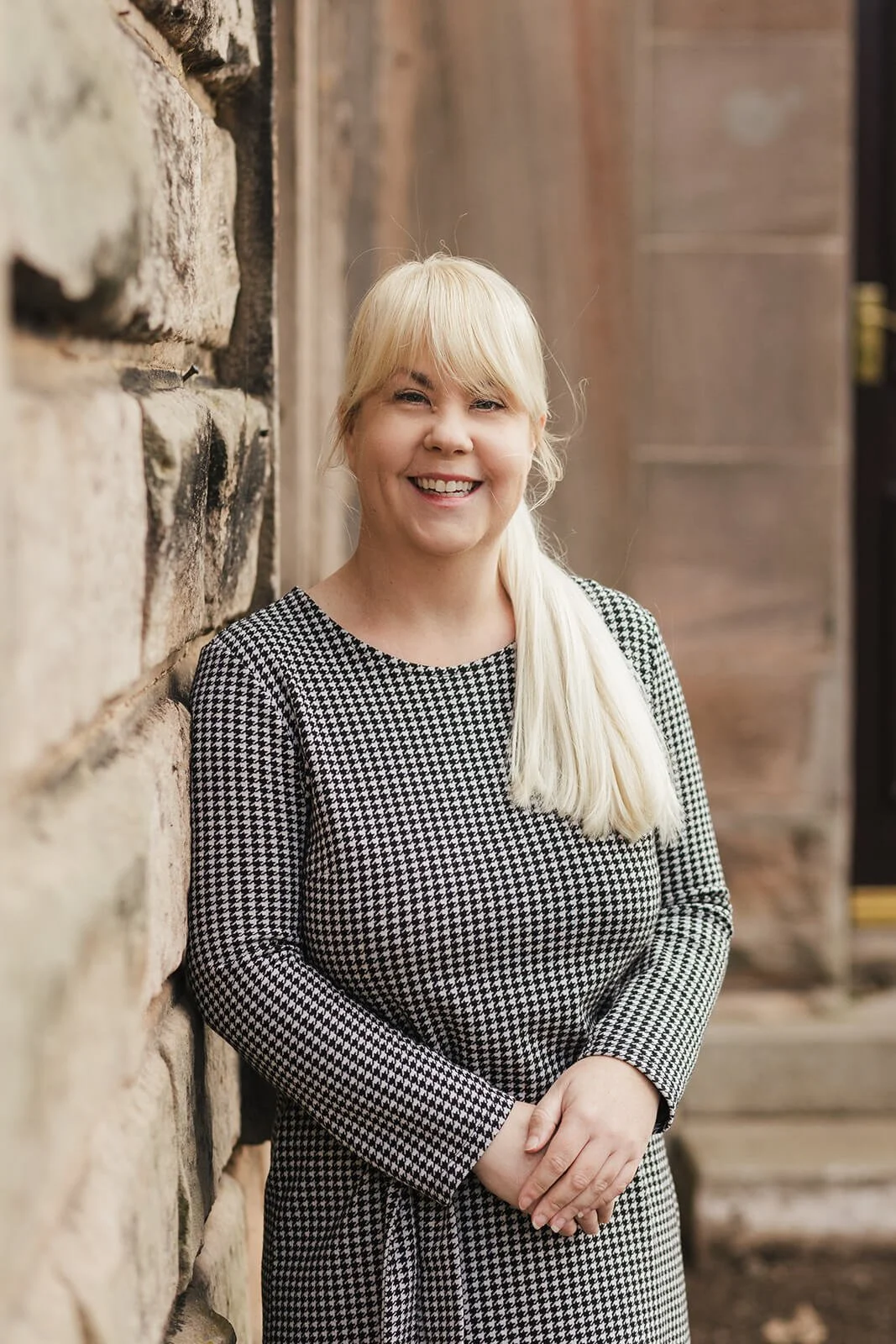
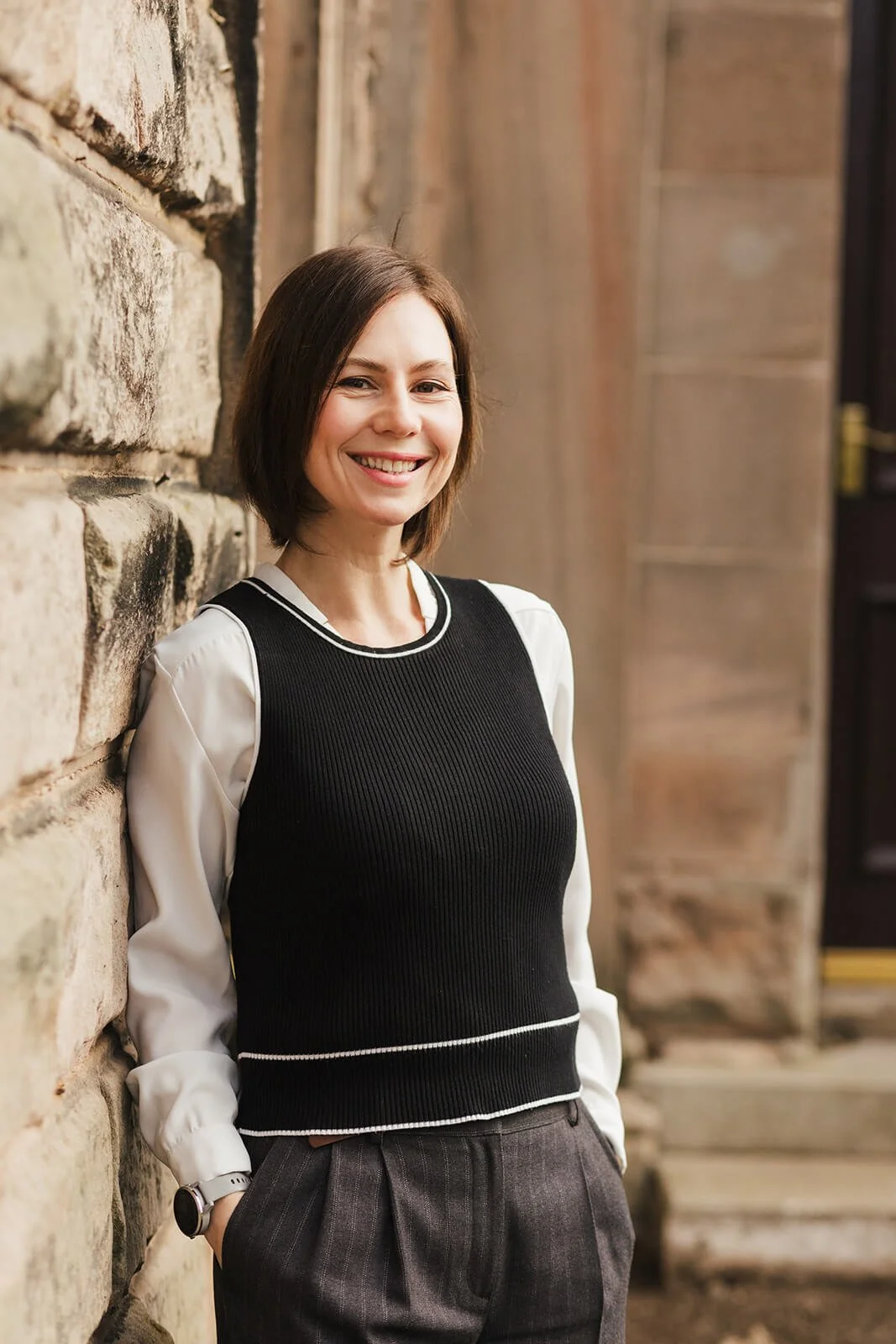
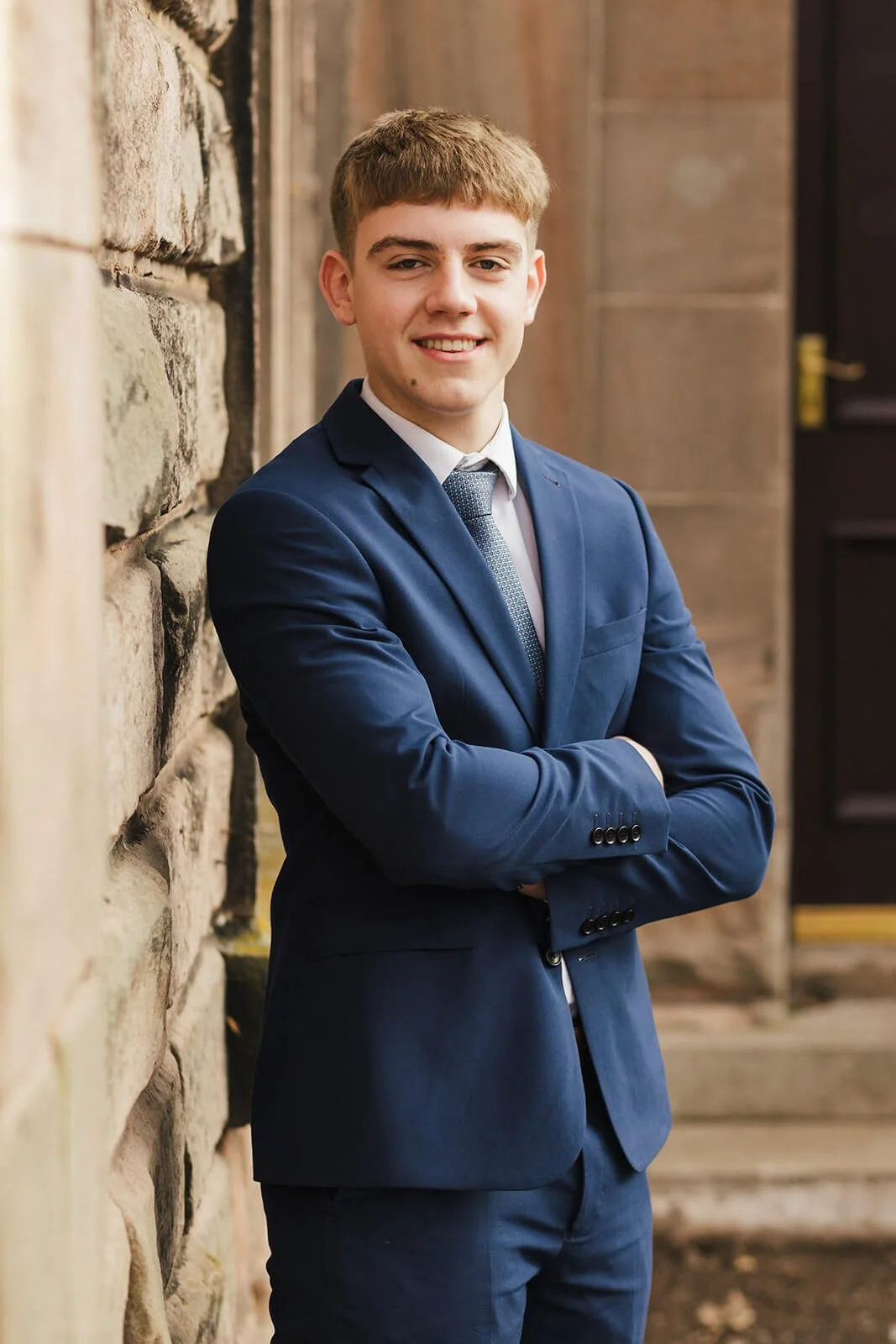
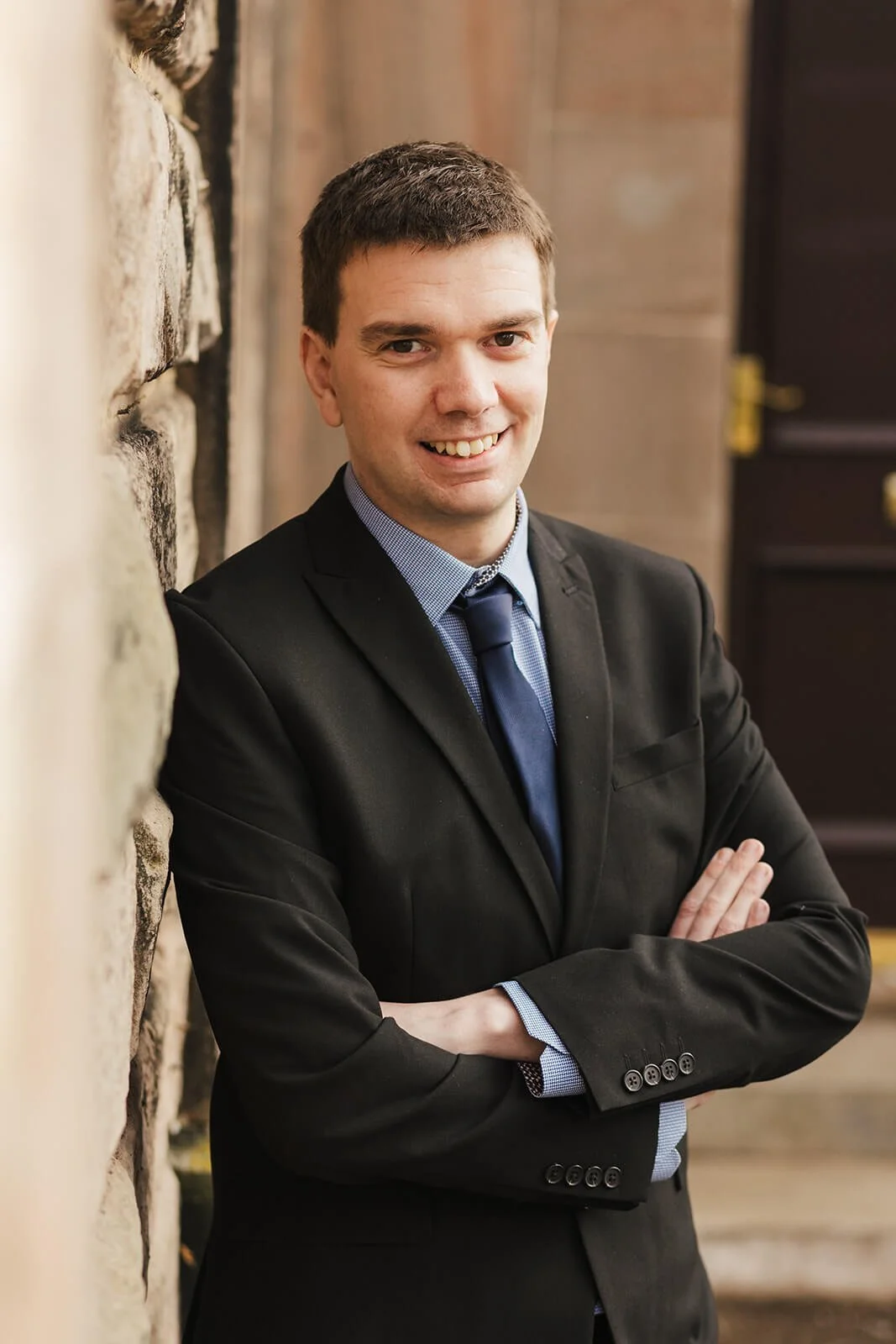
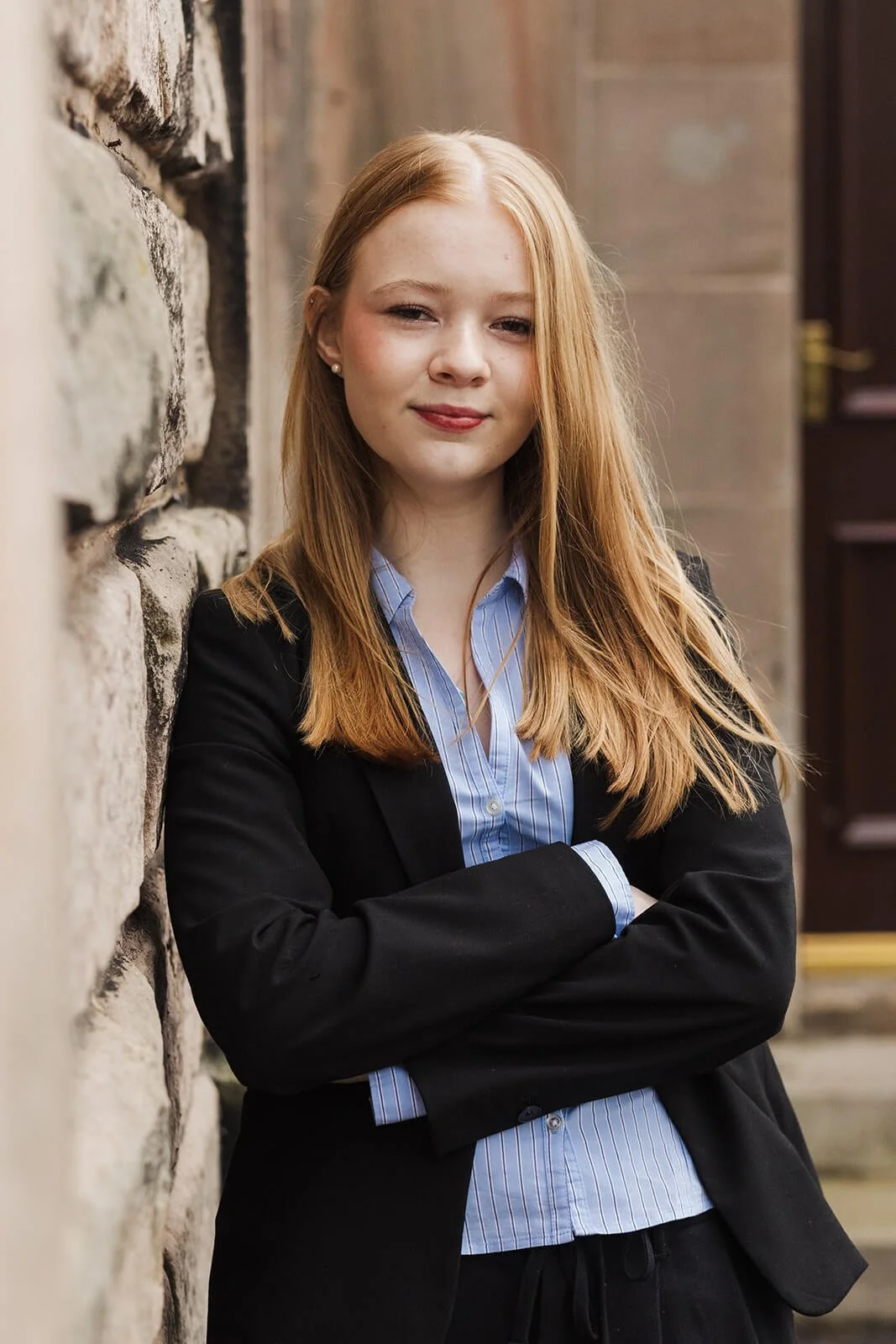
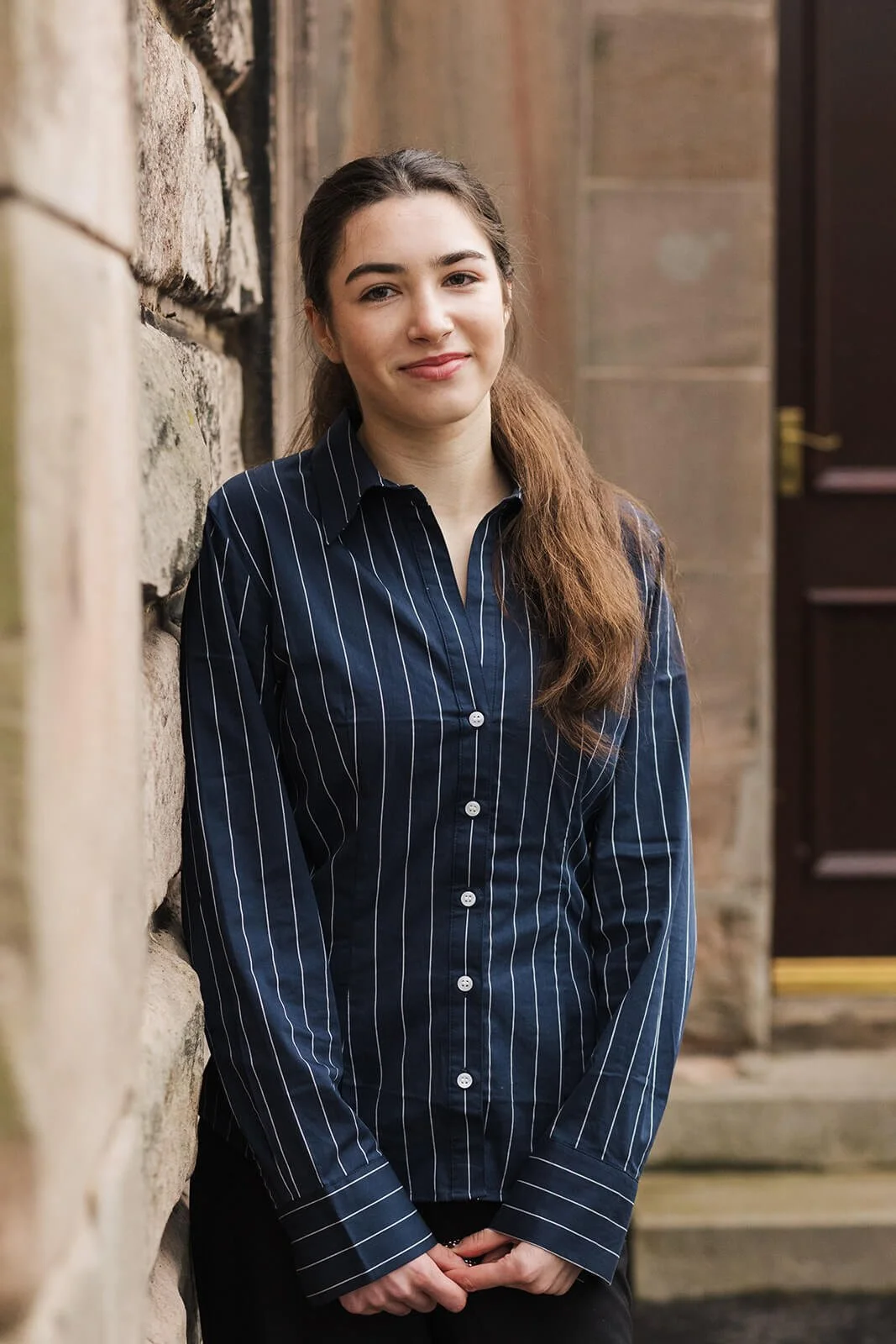
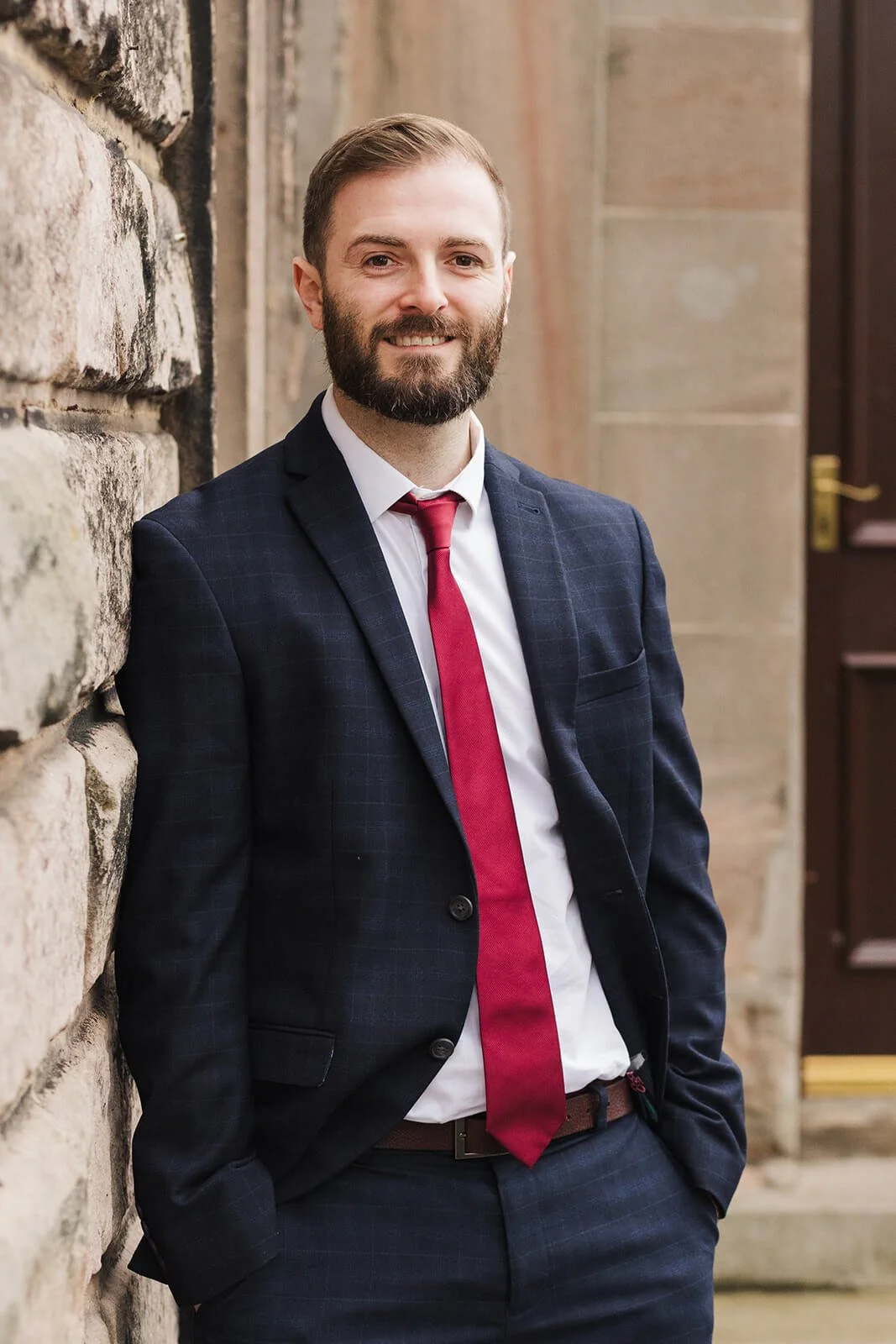
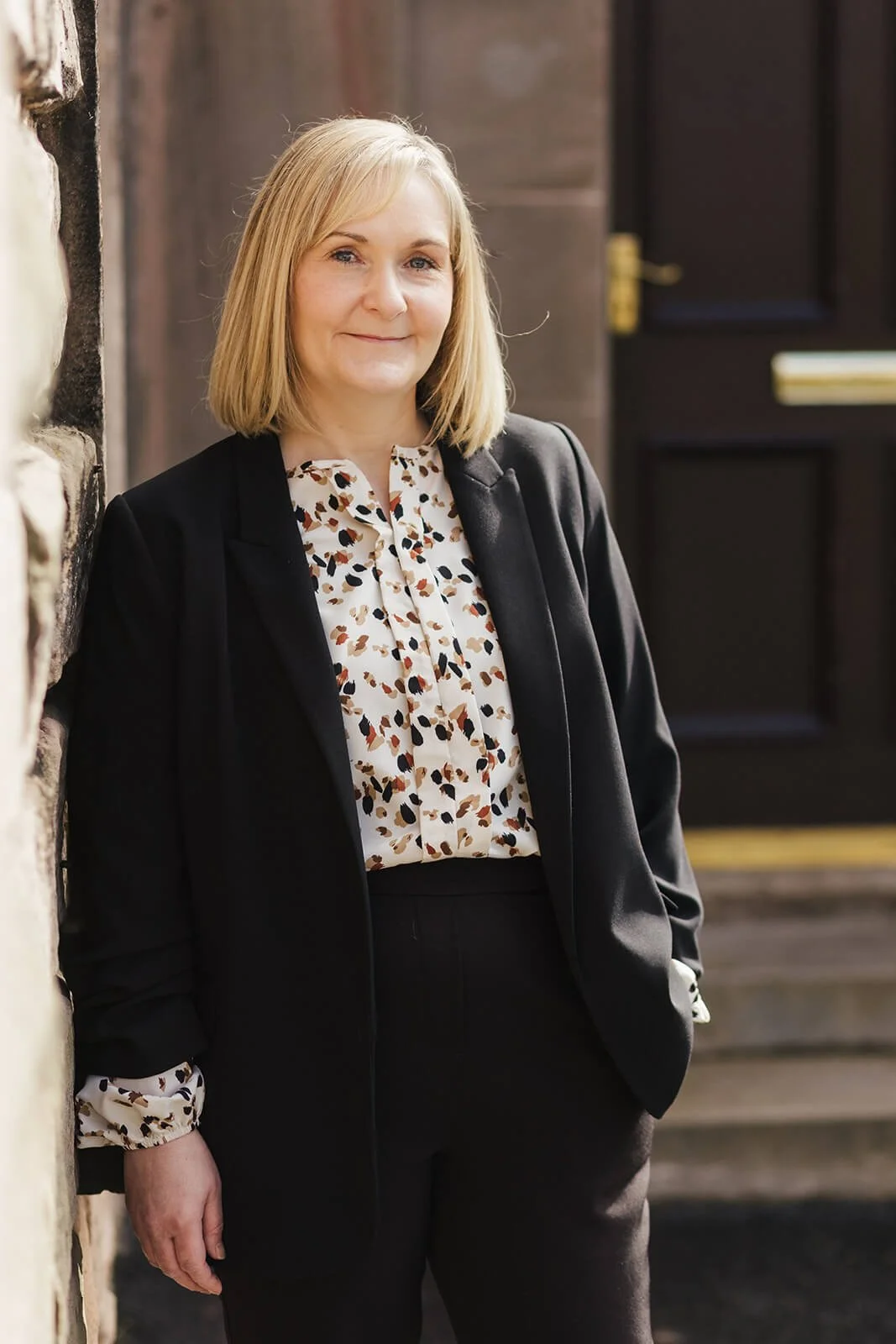
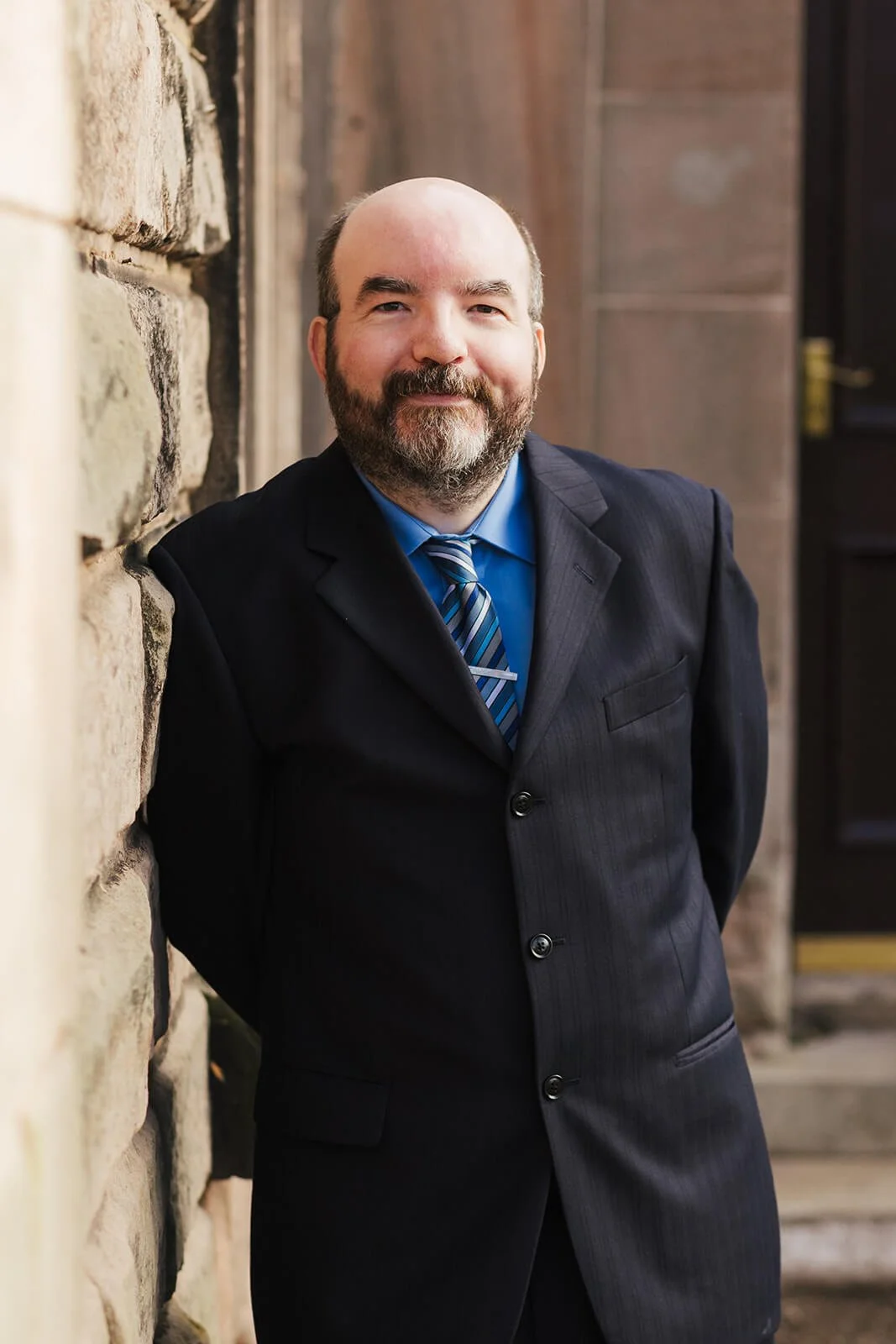
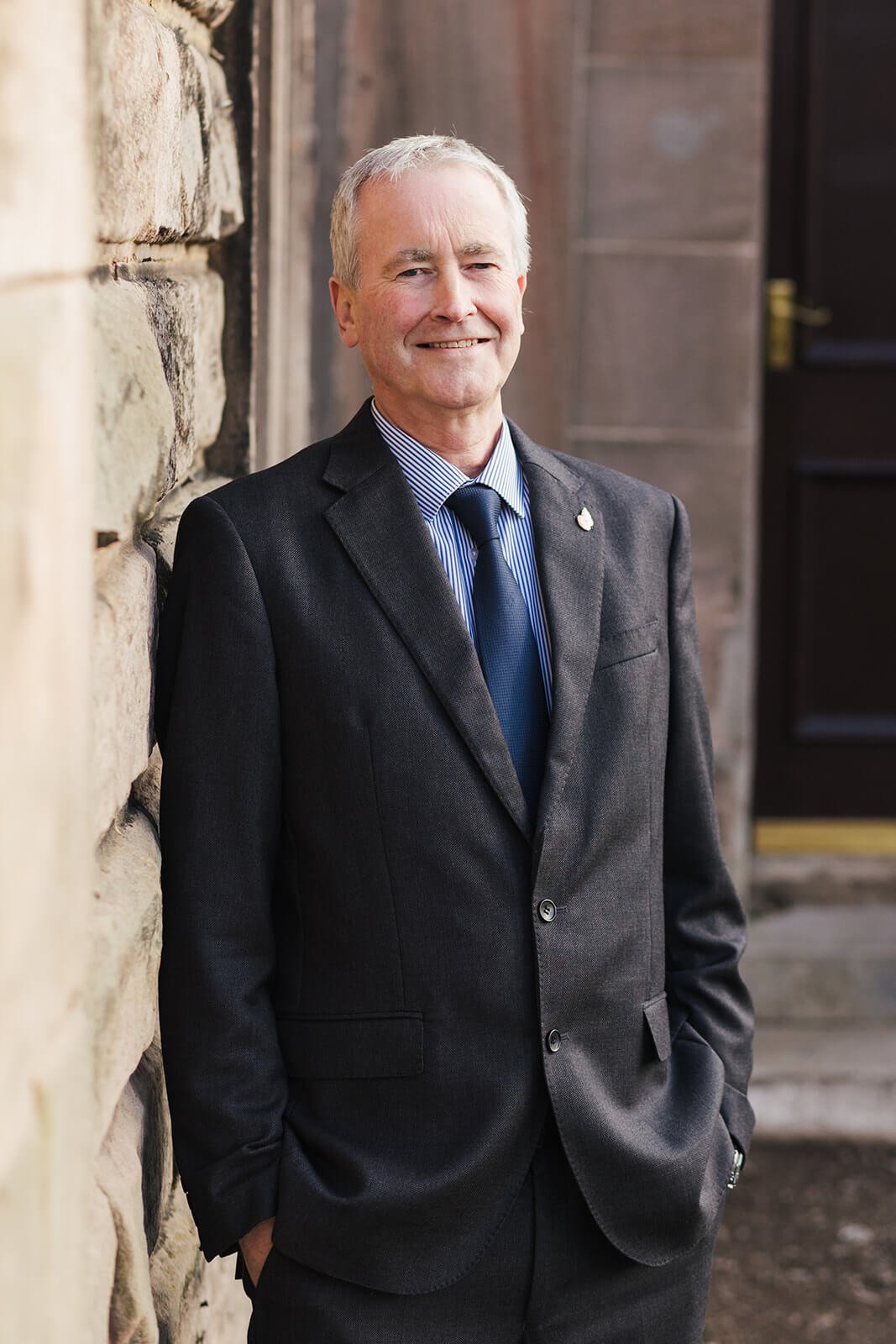
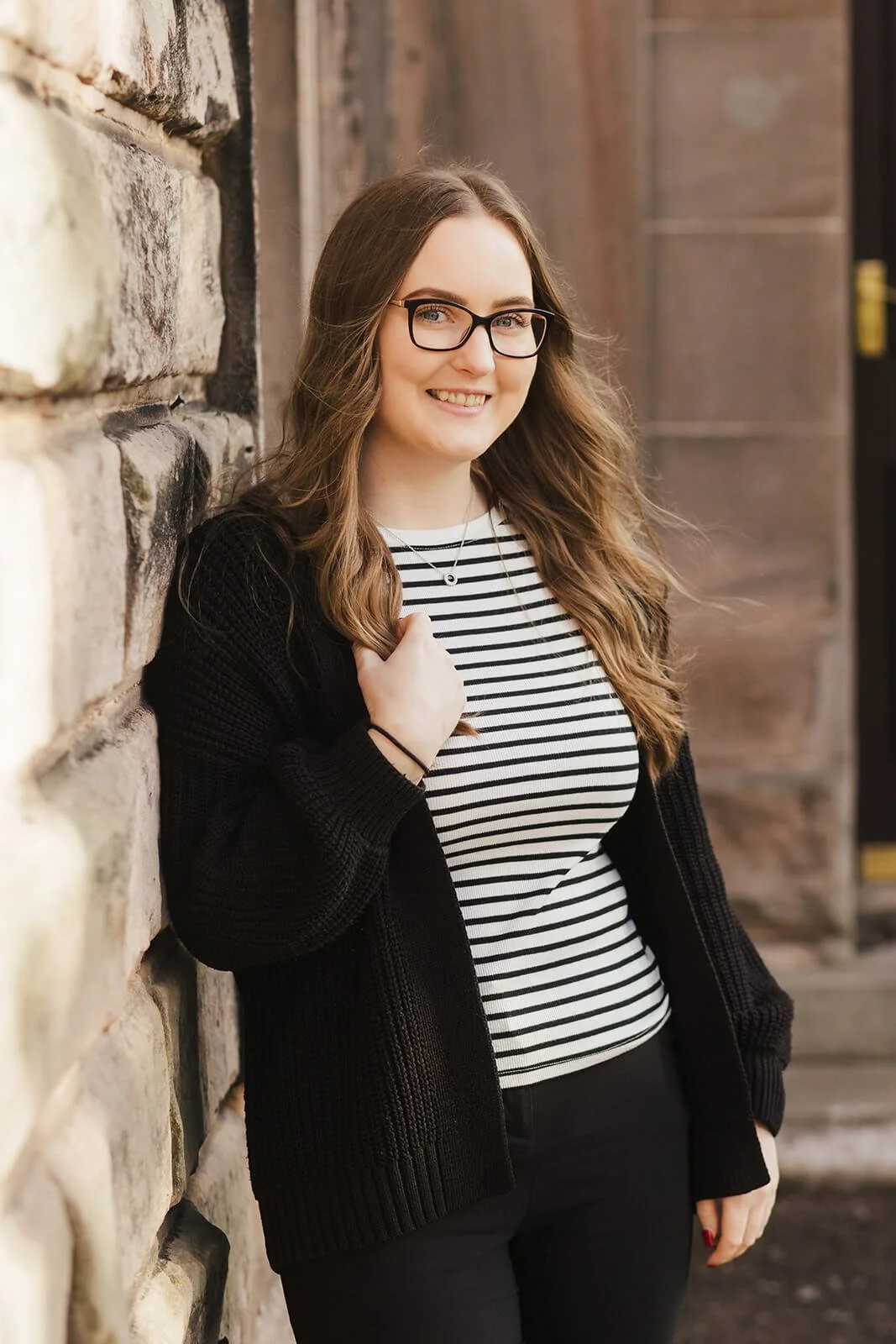
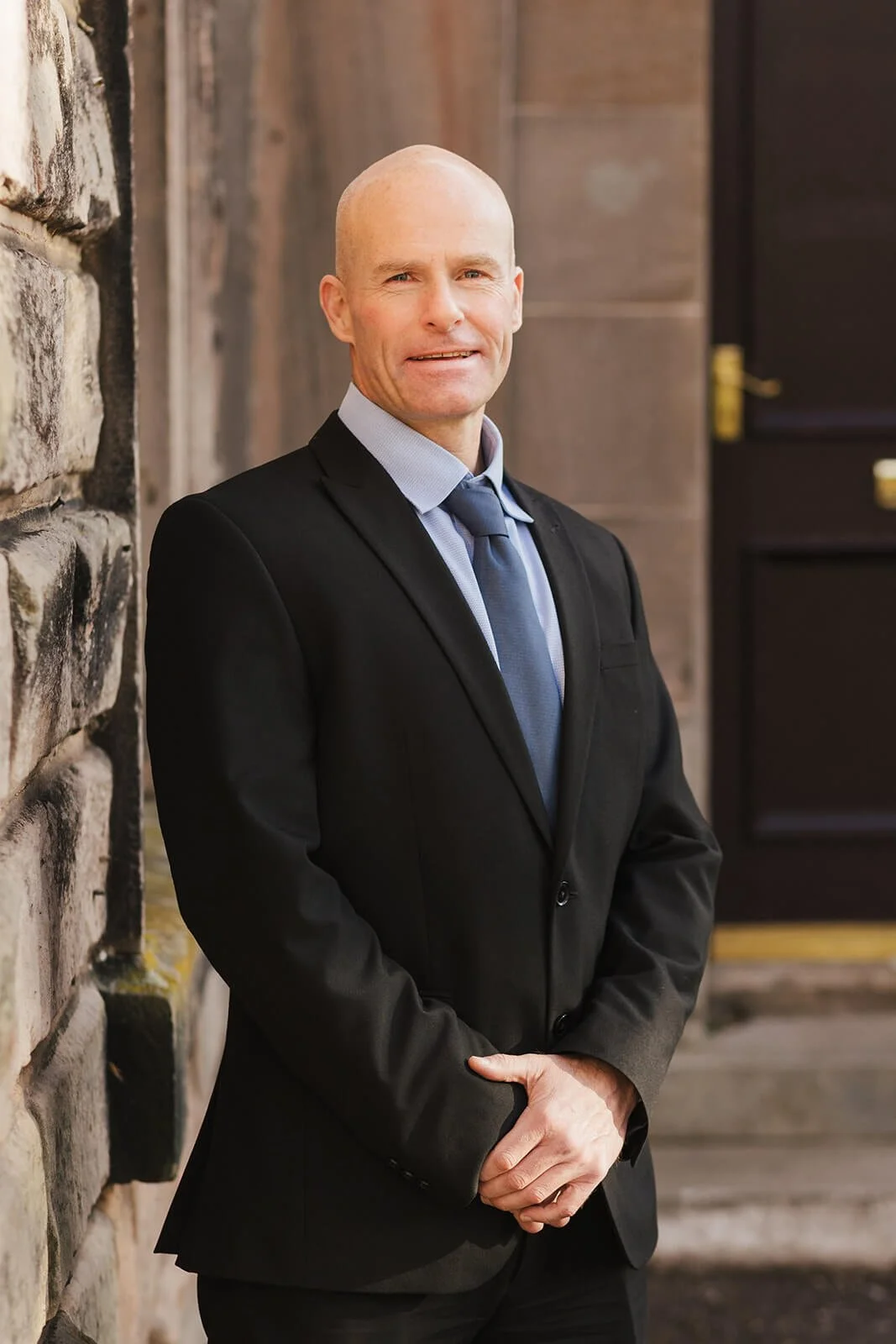
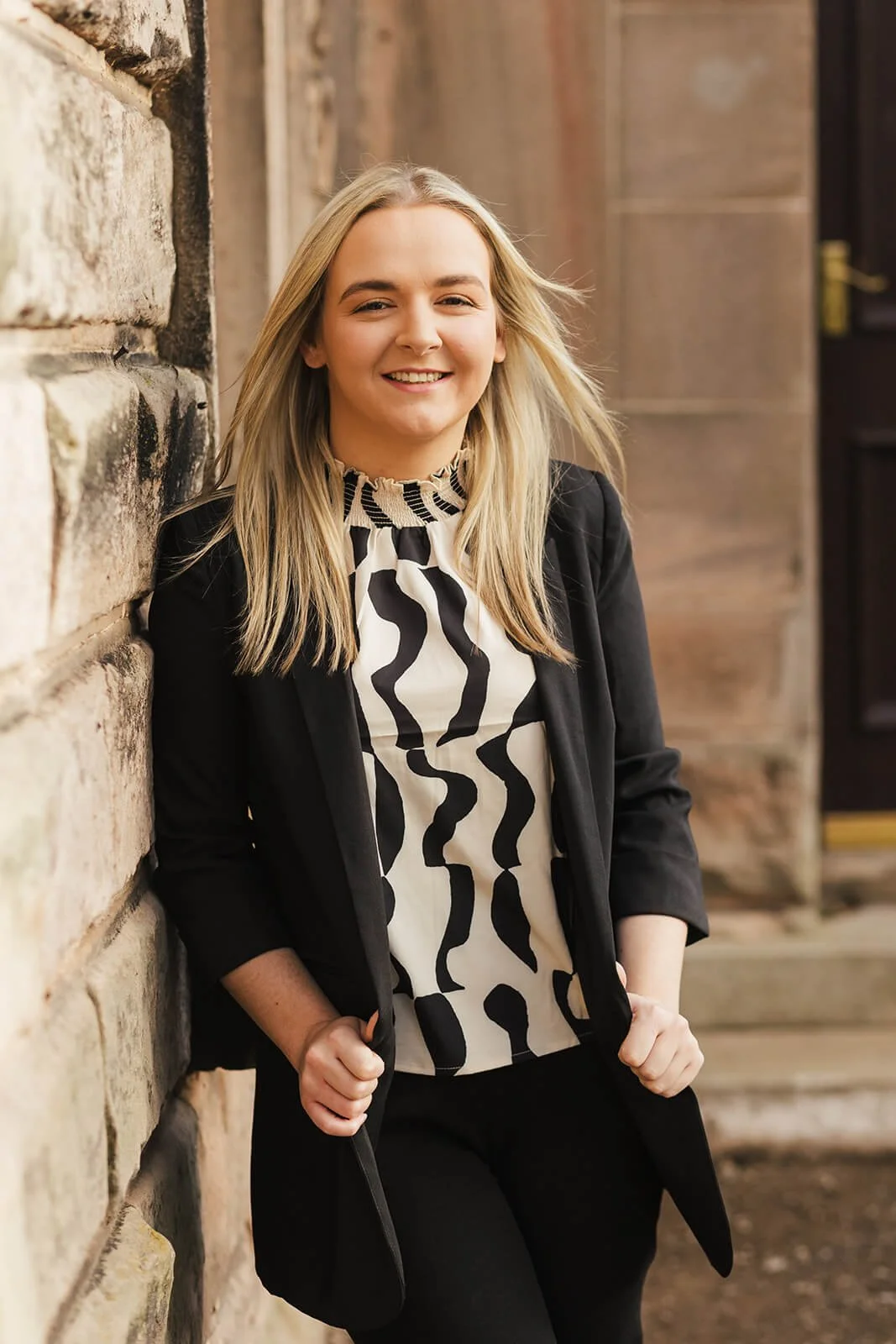
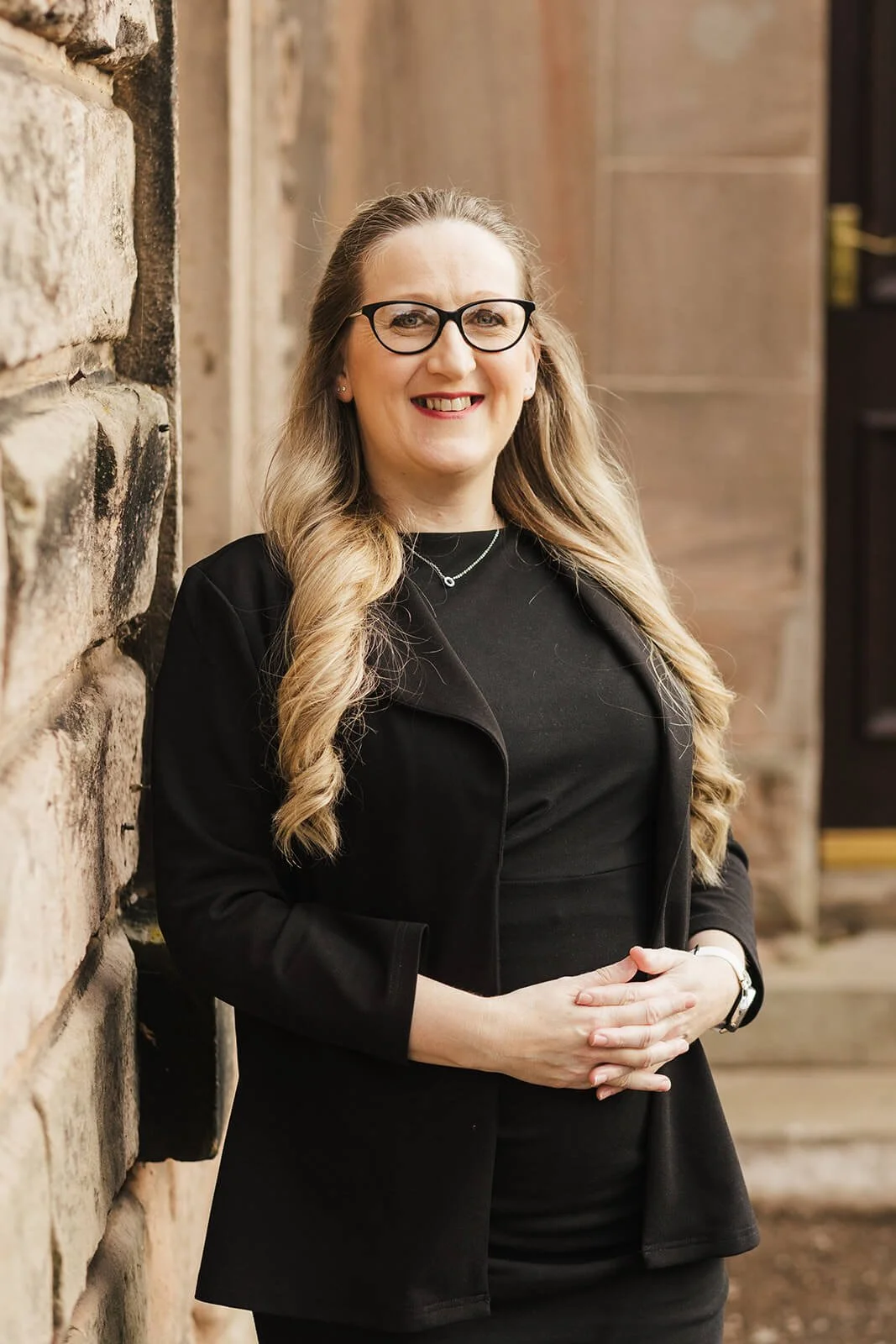
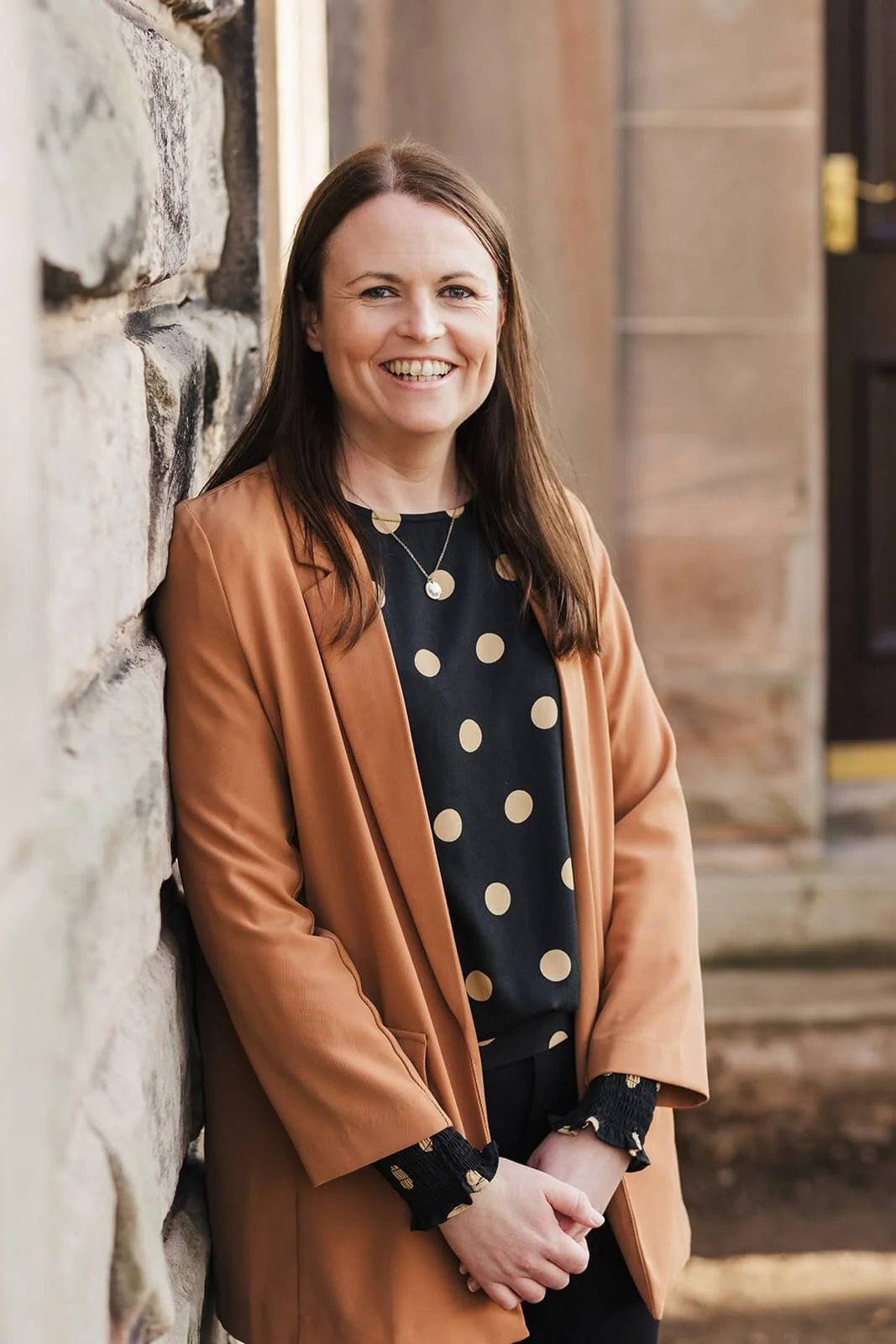
Think of a headshot as your professional introduction.
When Greenwoods needed updated imagery, their priority was clarity and consistency. As a well-established firm serving businesses across North Northumberland (and beyond), they regularly share team updates, qualifications, and press features.
They needed images that were:
Polished
Approachable
Consistent
Easy to update
So their corporate headshots were photographed outdoors, just outside their office in Berwick-upon-Tweed.
Same background. Same framing. Same natural light. Each person photographed individually.
The result was a cohesive team gallery that feels warm and professional — without looking corporate or intimidating.
What Branding Photography Adds
Branding photography takes a wider view.
It’s less about who you are in a single frame, and more about how your business feels.
A branding session might include:
Behind-the-scenes working images
Team interactions
Environmental portraits
Detail shots of tools, materials, or workspace
Story-led imagery for websites and social media
Where headshots introduce you, branding photography tells your story.
If Greenwoods had opted for a full branding session, you might have seen:
Team meetings in progress
Conversations with clients
Wider exterior shots of their office
Candid moments that show personality
Environmental business photography around Berwick
Branding imagery provides context. It answers questions your audience may not consciously ask, such as:
What does it feel like to work with you?
Do you seem established and organised?
Would I feel comfortable contacting you?
This becomes especially important if your website and social media are key drivers of enquiries.

Alison Aitchison and Laura Redfearn from Greenwoods Accountants - new qualifications, photography for PR.
Do You Need Both?
Often, yes — just not always at the same time.
Many businesses start with headshots because:
They’re launching or refreshing a website
New team members have joined
Existing images feel dated
They need press-ready photography
Branding photography often comes later, when businesses:
Refresh their marketing
Develop campaigns
Need ongoing social content
Want stronger visual storytelling
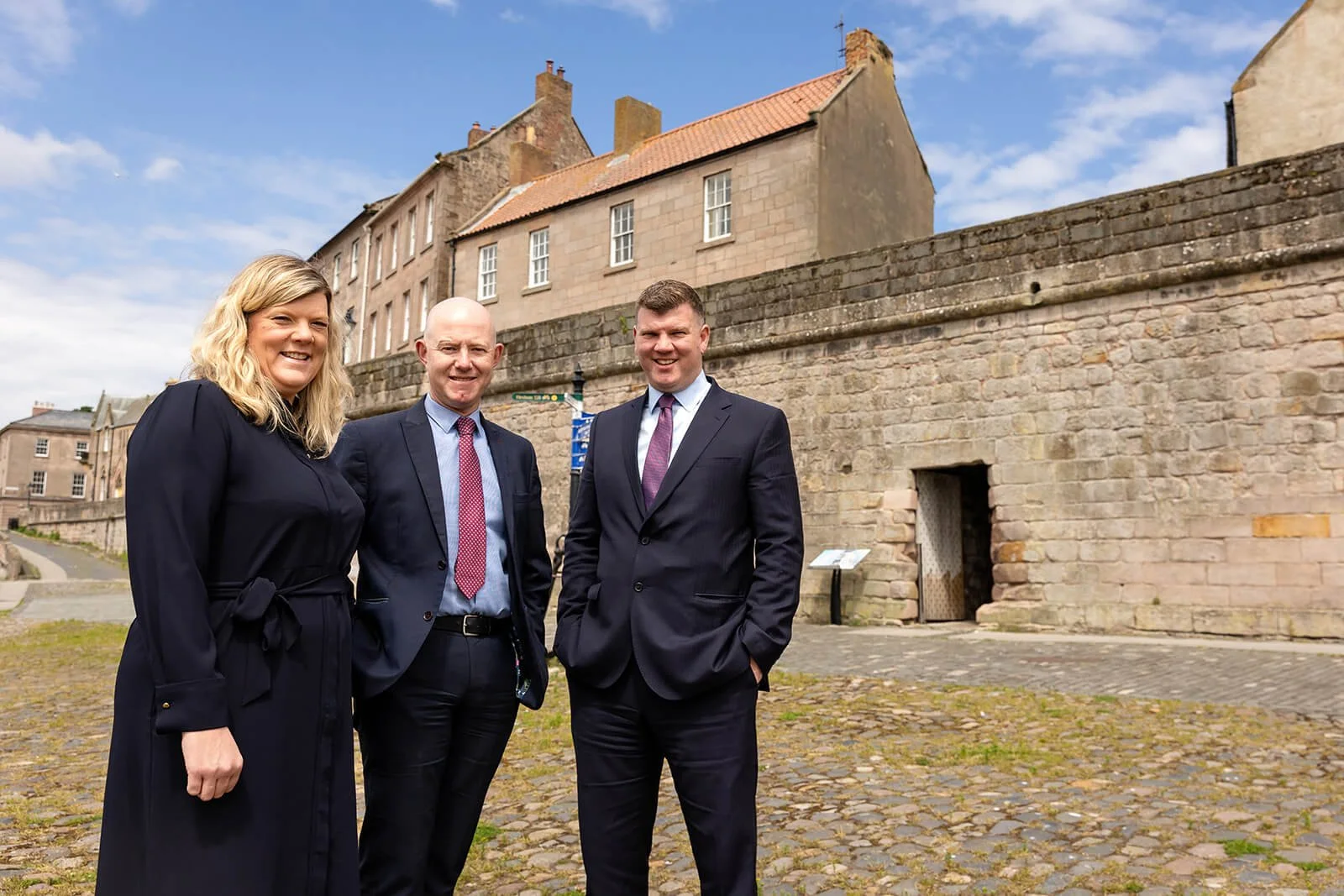
Location shoot with Greenwoods Accountants in Berwick-Upon-Tweed.
The most useful question to ask is simple:
Where will these images be used most?
If the answer is:
LinkedIn
Staff profile pages
Professional directories
Start with headshots.
If the answer is:
Homepage banners
About pages
Instagram
Marketing materials
Branding photography will likely serve you better.
A conversation with a brand photographer should help clarify that — without pressure.
When Headshots Are the Right First Step
For Greenwoods, the priority was:
Team profile pages
Press releases
LinkedIn updates
Qualification announcements
For a newer business building visibility from scratch, branding photography might come first — particularly if your website, social media, or email marketing plays a central role in attracting clients.
There’s no universal answer.
Only the right answer for where your business is now.

Gareth Greenwood from Greenwoods Accountants.
How Greenwoods have used their photos
Greenwoods use their professional brand photography across multiple channels, ensuring a consistent and recognisable visual identity throughout their business.
Their images are used on:
Their website, supporting team profile pages, service pages, and key brand touchpoints
TV screens within the office, creating a welcoming and professional environment for visiting clients
Social media platforms, particularly for team updates, announcements, and ongoing brand visibility
Press releases and professional communications, including staff qualifications and business updates
By using the same photography across both digital and in-person settings, Greenwoods reinforce trust, professionalism, and brand recognition. Clients experience the business in a consistent way whether they encounter it online, in the office, or through external media.
This is where brand photography becomes a long-term asset. When images are created with clear intent, they support marketing, communication, and brand consistency far beyond a single use — making them a practical investment rather than a one-off expense.
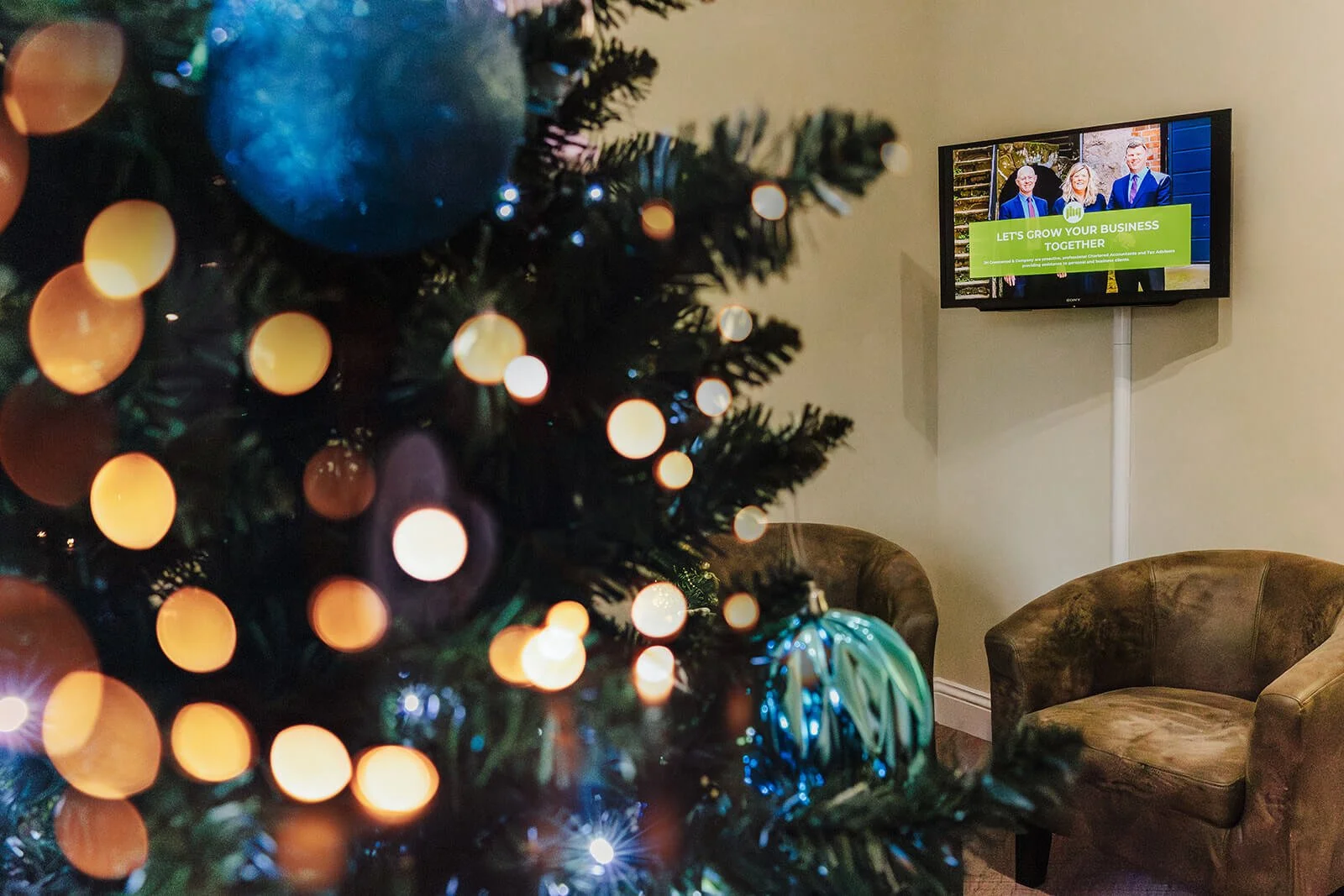
Greenwoods Reception area at their office in Berwick-Upon-Tweed.
Thinking About Booking a Session?
If you’re considering professional headshots or branding photography for your business, the best place to start is a simple conversation.
Every business is at a different stage. Some need clean, consistent headshots as a foundation. Others are ready for wider brand storytelling. A short call allows us to understand what you actually need now — and what will genuinely support your business — rather than pushing you into a one-size-fits-all session.
If you’d like to talk things through, you’re welcome to book a call here
There’s no pressure to decide on the spot. It’s simply an opportunity to ask questions, explore options, and make a confident, informed choice.
If you’re already leaning towards branding photography, you may also find this helpful:
What to Expect (and What to Avoid) Before Your Brand Photo Session
What to Expect (and What to Avoid) Before Your Brand Photo Session
Written By: Amber Eden - Digital Marketing & Photography Assistant, Northumberland
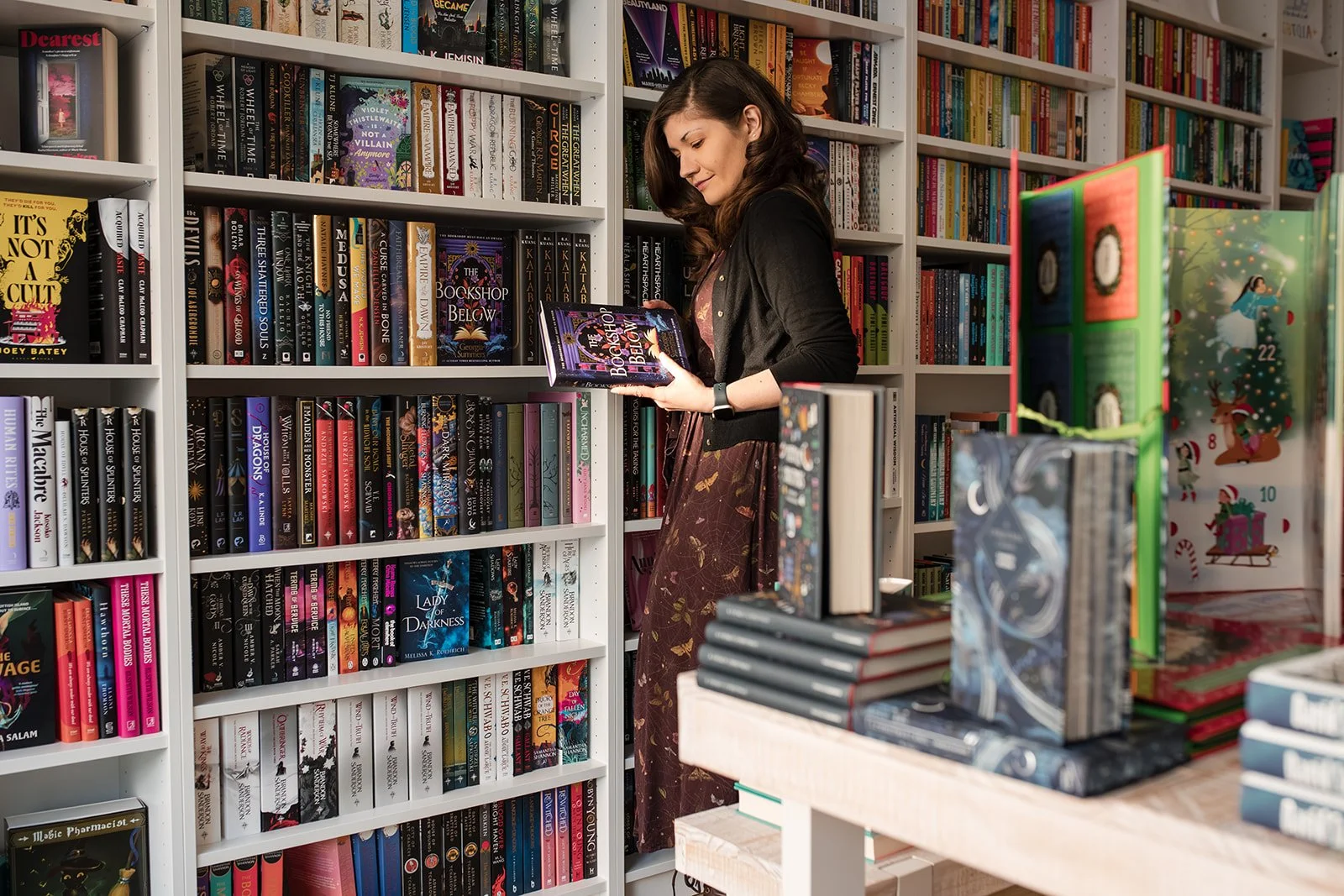
Lorena from The Book Loft during her brand photo session in Berwick-Upon-Tweed
A successful brand photo session doesn’t begin when the camera is switched on — it starts much earlier, with clarity, preparation and a shared understanding of what you want the images to achieve for your business.
Whether you’ve had brand photos before or this is your first time in front of a professional camera, knowing what to expect and why each step matters makes the experience, more enjoyable and far more effective.
Here’s what to expect after booking a brand shoot with us at Pictorial Photography.
1. Business Contract
It might not be the most exciting part of your journey — but it’s one of the most important.
Your contract sets the foundation for everything that follows. It outlines practical details like payment terms, usage rights, cancellation fees and other essentials so everyone knows where they stand before creative work begins.
A clear contract removes uncertainty and allows creativity to flow without distraction.
You’ll also be sent a Licence of Rights for your photography — there’s more on that below.
2. Model Releases
Please note: if your shoot involves people other than yourself (for example, team members or collaborators), we reccommend that you obtain model releases or consent forms.
If you need a model release template, we’re happy to provide one.
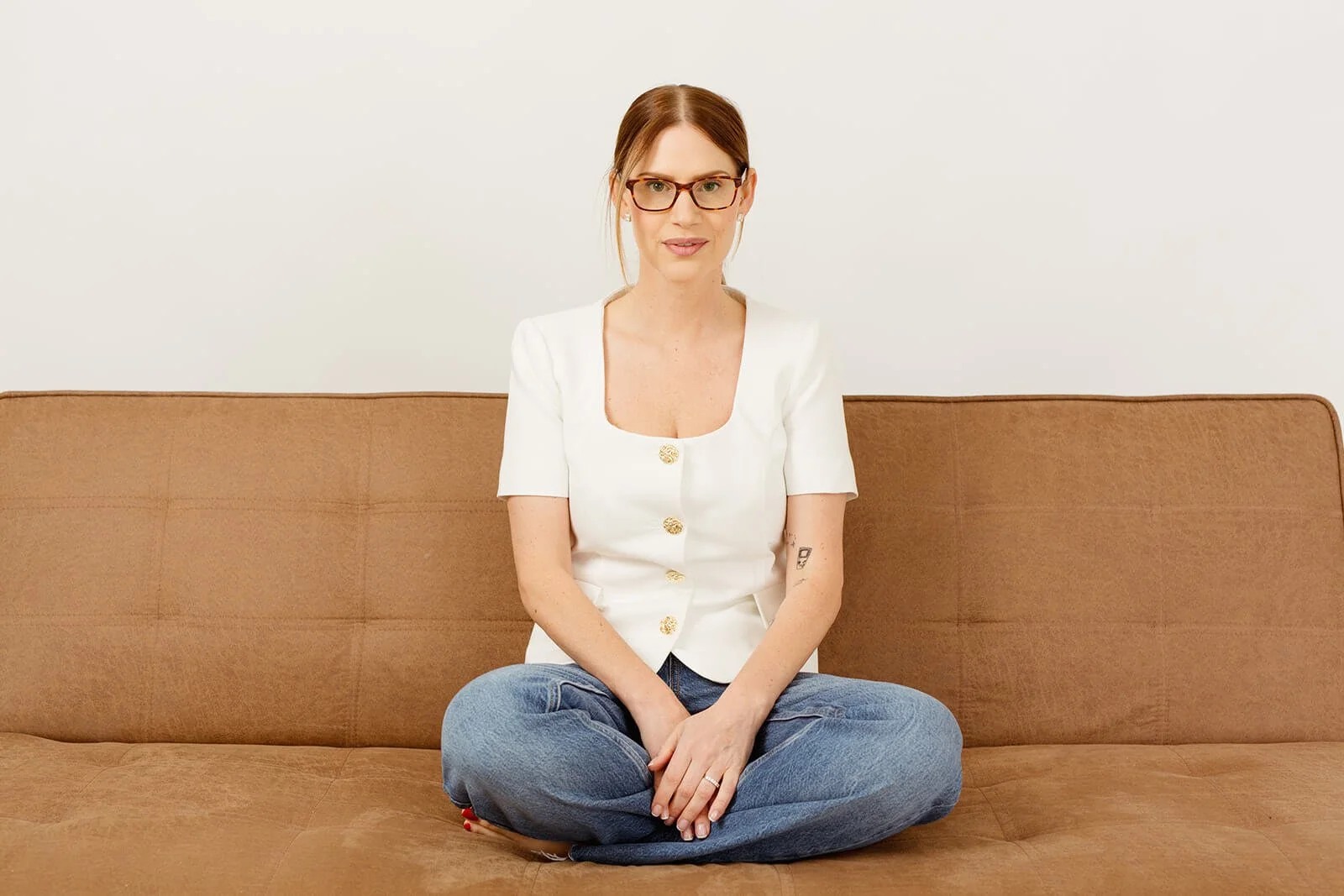
Andrea from Don’t Frown Aesthetics in the studio for her website branding session
3. Questionnaire — Your Vision Starts Here
Once your contract is signed, we’ll send you a questionnaire.
This isn’t a test — it’s a conversation on paper. We’ll ask things like:
Where will the photographs be used?
Which orientation (portrait or landscape) will you need more of?
Is there anything else we should know at this stage?
Do you have any questions for us?
The questionnaire helps us understand:
The type of photography you want
Your brand’s voice and personality
Where the images will be used (website, socials, ads, etc.)
Who your audience is
The location of your session
Most importantly, it gives you space to ask questions and clarify ideas before the shoot.
This stage ensures your session is planned with intention — so your brand photos genuinely support your business goals.
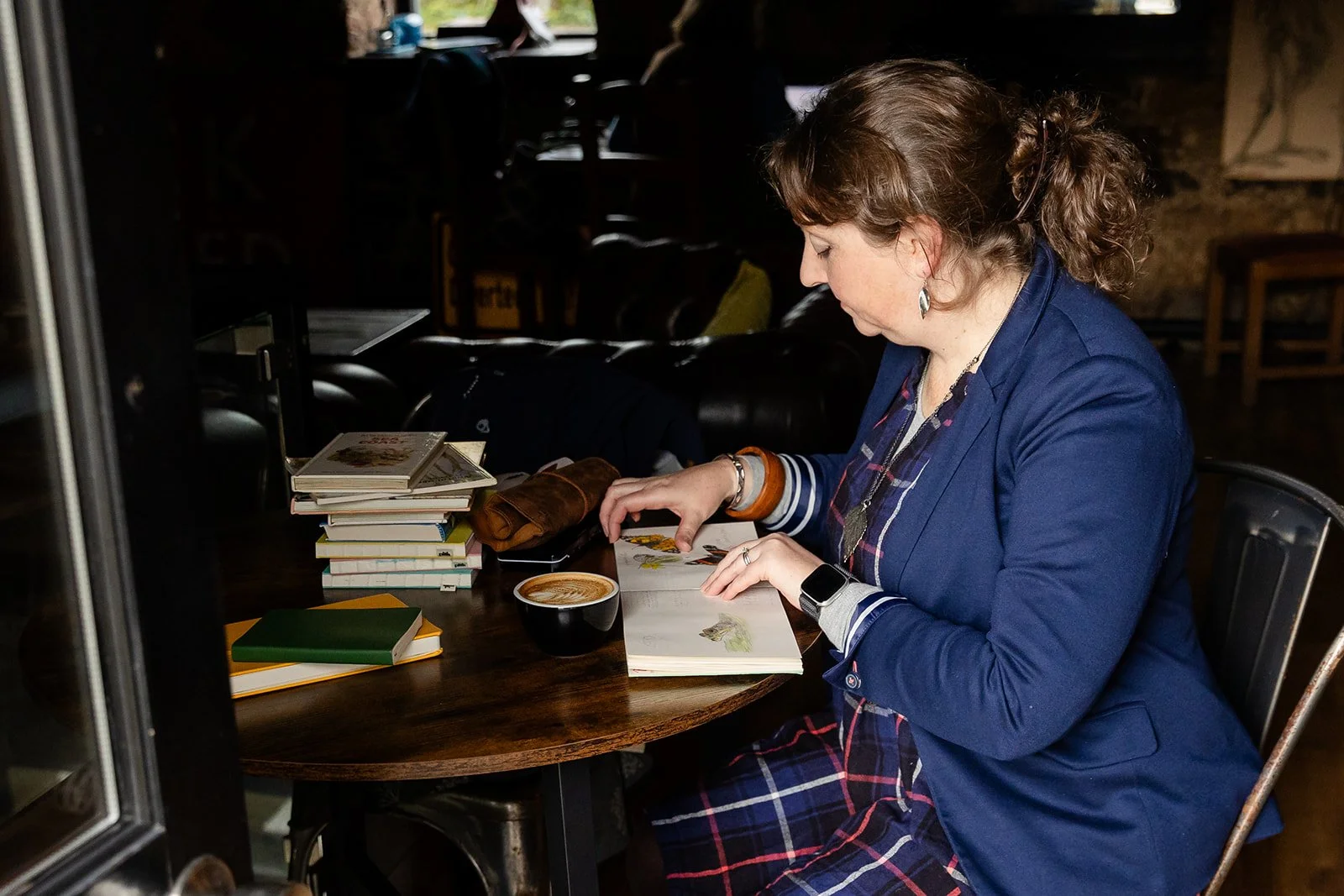
Alison from Coostie Illustrations based in Northumberland - on location branding session for her website and social media content.
4. Licence of Rights for Photography
After you complete the questionnaire, we send your licence agreement.
This document explains what permissions you have to use your photos and for how long — typically across your website, social media and marketing materials for 5 years, unless otherwise agreed.
Accepting this digitally avoids confusion later and gives you the confidence to use your images consistently and correctly.
5. Confirmation Email
Once planning is complete, you’ll receive a confirmation email that brings all the details together.
This usually includes:
A final summary of what we’ve planned
Session date, time and location
Reminders about what to expect next
Some of these messages are automated, so if something feels repetitive or out of place, you’re welcome to ignore it — or ask us directly if you’re unsure.
If you ever need clarification, you’re always welcome to speak to Sarah directly (click here to schedule a call).
Lorena from The Book Loft
6. Reminder Emails
We like to add an extra layer of reassurance.
To keep everything feeling calm and well‑organised, depending on your session type you may hear from us a few times in the lead‑up to your brand photos.
These friendly check‑ins are designed to:
Confirm key details
Share practical tips
Give helpful reminders
Ensure you feel fully prepared
Rebecca Wilkins from Cutting Edge Mortgages in the studio
7. Visual Inspiration — Why This Helps
It’s extremely useful if you have an idea of how you’d like your photographs to look — but this doesn’t mean being overwhelmed with choice.
Creating a simple Pinterest board or gathering a few images that speak to you — even magazine clippings — can be enough.
These reference images help us understand the style, mood and feel that resonate with your brand.
They also give us a shared visual language to work from on the day, which:
Helps the shoot flow more naturally
Saves time
Lets you get the most out of your session
Having this inspiration ensures nothing important is overlooked and helps us create images that align with what you had hoped for — while still leaving room for real, natural moments to unfold.
If you’re unsure what you like, don’t worry — we’ll guide you through what works best and help shape your ideas so your photos feel authentically you.
8. Where to Have Your Shoot, Studio or On Location?
Studio sessions and on‑location sessions both have different advantages — and the right choice depends on you.
Benefits of Studio Shoots
Full control over lighting for consistent, professional results
Warm, comfortable, and weather-proof all year round
Clean, distraction-free backgrounds
Private, professional space for outfit changes and relaxed sessions
Considerations
Less natural or “real life” feel than outdoor locations
Limited space and variety without props or set design
Can feel more posed if not styled carefully
Doesn’t showcase your workplace or surroundings
Benefits of Outdoor / On‑Location Shoots
The setting can elevate your brand
Natural surroundings add visual interest
More candid, natural moments
Can showcase your workplace
Many people feel more comfortable outside
Considerations
Weather can be unpredictable (rain, wind, etc.)
Temperature can affect comfort
You might need a space to change
Passers‑by can occasionally interrupt
There’s no right or wrong choice — only what feels best for your brand and confidence. We’ll help you choose a setting where you can relax and be yourself — because that’s when the best images are made.
Jo Thomas from Wild Revival - an outdoors brand based on the Northumberland Coast
9. Feeling Nervous? Props & Personal Touches
It’s totally normal to feel a bit nervous before your brand photos session — especially if you’re not used to being photographed.
Bringing along a few props or accessories can help your hands have something to do and make you feel more at ease. They don’t need to be elaborate — simple, meaningful items usually work best.
Examples people have brought:
Musical instruments (e.g. clarinet)
Work tools (sketchbooks, laptops, cameras, model skeleton)
Items that represent your process/business or personality
These props make the session feel more relaxed and authentic — and that always shows in the final images.
Hannah Jemima Yoga Instructor studio shoot, relaxing with props
10. Confidence Boosters — How to Feel Great for Your Session
Confidence in front of the camera often comes down to how prepared and supported you feel.
Here are some tips and ways to feel calm and confident:
Colour Analysis
Knowing which colours suit you can make choosing outfits much easier. Colours that complement your skin tone often photograph beautifully and help you feel put together.
If you’ve had a colour analysis done before, lean into it! If not, we can offer guidance on tones that tend to work well on camera.
Sarah has used StyleMeHappy for colour analysis.
Personal Shopper Support
If outfit shopping feels stressful, a personal shopper can take the pressure off.
Here are some lovely online options for those with less time: (John Lewis has a great in person personal styling service)
Style Me Happy — online styling with body colour focus
Lookiero — curated styling boxes sent to your home
Styled By Susie — friendly styling consultations

Andrea from Don’t Frown Aesthetics
Make‑Up, Nails & Hair
Feeling like the best version of you can make a huge difference.
For make‑up, you might choose to:
Apply your own natural look
Book a professional for a polished finish
Our team at Pictorial Photography collaborate with local makeup artists:
Holly Wyatt at Doll Kulture — @doll.kulture
Meghan McIntosh — @megh_.__
Jen Katryn — @jenkatryn
For nails, if your hands feature in your brand photos:
Meghan McIntosh at Megh Beauty — @megh_.__
And for hair styling support:
Tasmin Eden at The Hair Boutique — 📞 07740 983 096
Julie at Tribeca Hair — 📞 01289 308886
Whatever you choose, the goal is to feel comfortable and like yourself — not different. Try to avoid any major changes like a new hairstyle or brand-new glasses the day before your session, as it can take time to feel fully ‘you’ in something unfamiliar.
Rest, Hydration & Gentle Movement
Simple self‑care in the days before your session makes a real difference:
• A good night’s sleep
• Drinking plenty of water in the week before a shoot does wonders for the skin
• A walk in fresh air or gentle stretching before a session
All of these help you arrive feeling calm, grounded and ready.
Affirmations & Mindset
If nerves creep in, try a simple affirmation:
I am calm.
I am present.
I don’t need to perform — I just need to be.
Pair this with slow, steady breaths and let it bring you back into the moment.
Final Thought
Preparing for your brand photos session doesn’t have to feel overwhelming. When you take thoughtful steps beforehand, the whole experience becomes calmer and more empowering.
Your brand deserves images that feel like you and support your business with intention. We're here to help you every step of the way.
If you’re ready for brand photos that feel like you, we’d love to help. Click here to book a call with Sarah — we’ll guide you through every step.
Studio vs On-Location Photography for Bands: Choosing the Right Style (and Why It Matters More Than You Think)
Case Study: The Blame - Berwick-upon-Tweed
Written By: Lucas Weightman - Digital Marketing & Photography Assistant, Northumberland
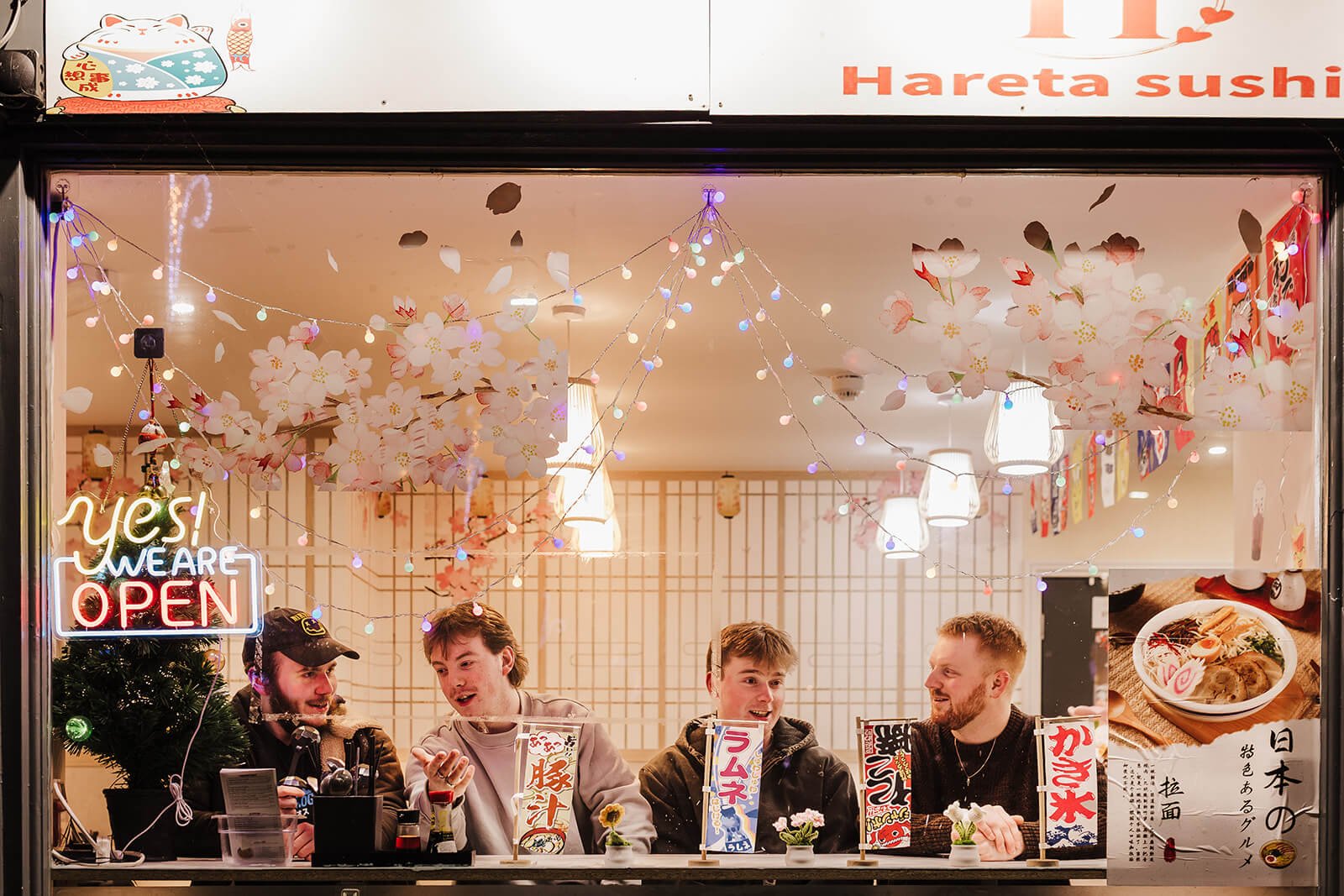
The Blame on location in Hareta Sushi, Berwick upon Tweed
Why Studio vs On-Location Photography Matters for Bands
Band photography is often the first visual introduction people have to your music. Before anyone hears a track, they may see your press image, album artwork, Spotify profile, Apple music, Amazon music or a social post promoting a gig. Those images communicate who you are, what you sound like, and what kind of experience you offer.
The Blame - Spotify
That’s why the decision between studio vs on-location photography matters more than many bands realise. It isn’t simply about where photos are taken, it’s about how your band wants to be perceived. Studio photography can feel bold, graphic and intentional. On-location photography can feel atmospheric, raw and rooted.
Neither approach is better than the other. The strongest band photography comes from choosing a style that aligns with your sound, your identity, and how you want to connect.
This blog explores studio vs on-location photography for bands, using a real case study from Berwick-upon-Tweed to show how different settings can create very different results, and how both can work beautifully.
One Band, Two Shoots, Two Very Different Vibes
When we photographed The Blame, a Berwick-upon-Tweed based band, we deliberately split the work across two sessions: one in the studio and one on location around town.
The contrast between the two approaches was immediate.
The studio photographs were vibrant, minimal and controlled. Every light, shadow and reflection was intentional, creating a clean, confident look that felt polished and deliberate. With no distractions in the background, the focus stayed firmly on the band and their presence.
The on-location images, by contrast, had a looseness and character that felt completely different. That unmistakable Berwick atmosphere added depth and context - things you simply can’t recreate indoors.
Interestingly, the band preferred the studio images. I was more drawn to the outdoor ones. And that highlights an important point, there is no right or wrong choice. The best approach depends entirely on your band’s identity and how you want to be seen.
Studio Photography: Clean, Controlled, Consistent
Studio band photography offers complete control over the environment. Nothing is left to chance, from lighting and colour to background and framing.
This level of control makes studio photography a strong choice for bands who want clarity, consistency and a bold visual statement.
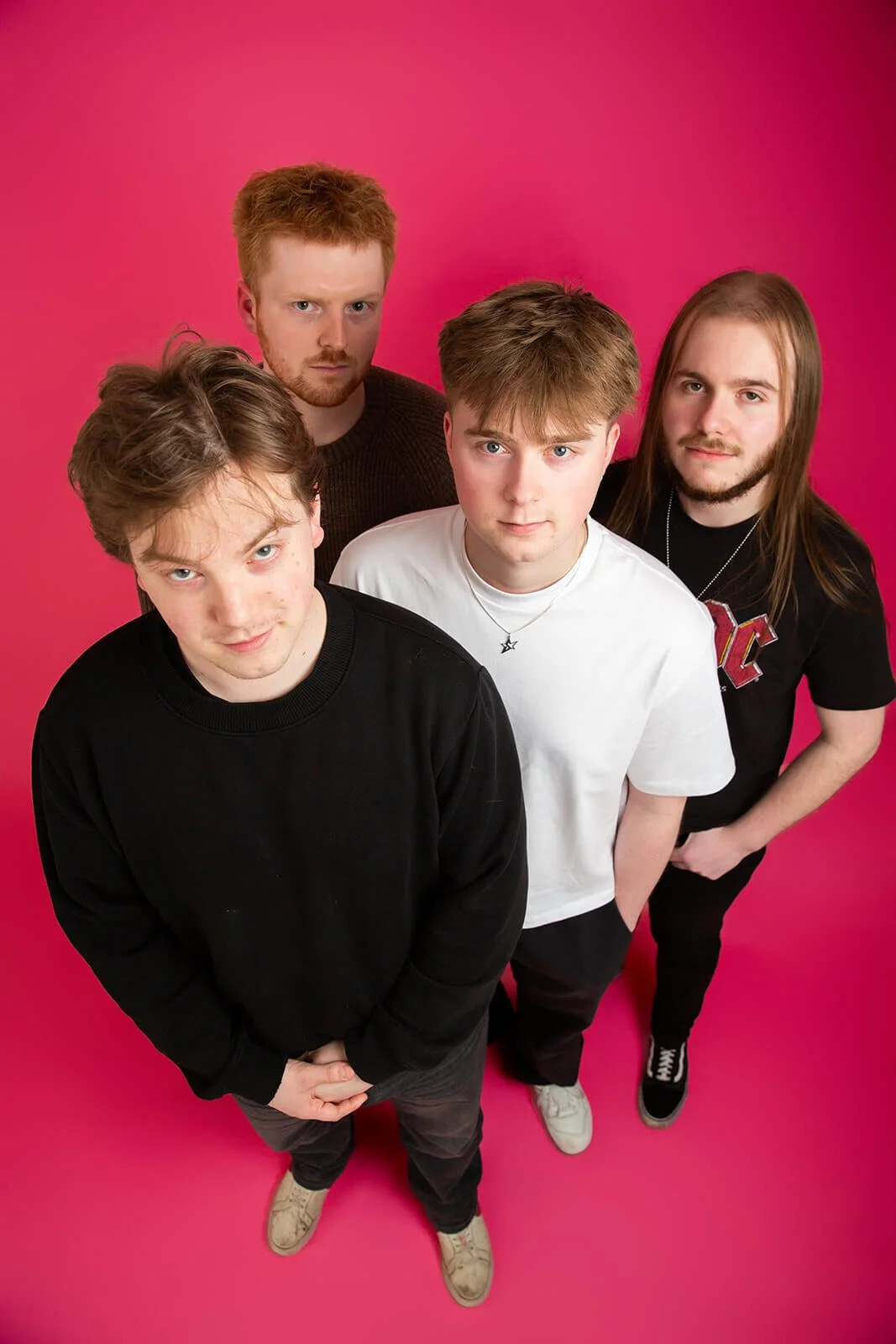
The Blame in our photography studio - hot pink!
Studio photography work particularly well for:
Bands creating album artwork or press imagery
Musicians wanting a strong, graphic visual identity
Projects that need consistency across campaigns and releases
Pros
Clean, distraction-free backgrounds
Precise, repeatable lighting
Easy to match images across platforms and future shoots
Cons
Less environmental storytelling
Can feel formal if styling and direction aren’t carefully considered
It’s worth noting that studio photography doesn’t have to mean neutral or safe. For The Blame, a studio shoot using a bold hot-pink background created a striking, contemporary look that suited their energy. The studio simply becomes a blank canvas and shows expression and character, depending on how it’s used.
On-Location Photography: Real, Atmospheric, Story-Driven
On-location band photography brings context into the frame. Rather than removing the environment, it allows the setting to become part of the story.

Blame Band outside a commercial unit in Berwick
For The Blame, shooting outdoors introduced texture, scale and a sense of place. The images felt more spontaneous and grounded less about perfection, more about presence. Weather, light and surroundings all played a role in shaping the final photographs.
On-location photography is ideal for:
Bands wanting a strong sense of identity or place
Artists with a raw, narrative or expressive sound
Projects where atmosphere matters as much as polish
Pros
Ambient light, texture and depth
Unique, character-filled backdrops
Strong emotional connection for the viewer
Cons
Weather and light are unpredictable (it was super cold that evening!)
More planning required for timing and logistics
While on-location photography can feel less controlled, that unpredictability is often what gives the images their edge.

Another band: Muzzle on location in Berwick
How Bands Use Studio and On-Location Photography Differently
Understanding how images will be used can help guide the choice between studio vs on-location photography.
Studio images are often well-suited to:
Press kits and media submissions
Album or single artwork
Website headers and profile images
Promotional materials needing a clean, professional look
On-location images often shine when used for:
Social media content (check out the Blame’s insta page here)
Editorial features and interviews
Gig promotion and posters
Story-led branding and visual storytelling
Many bands find that combining both approaches gives them the most flexibility. A mix of studio and on-location photography creates a varied image library that can be used across multiple platforms without feeling repetitive.
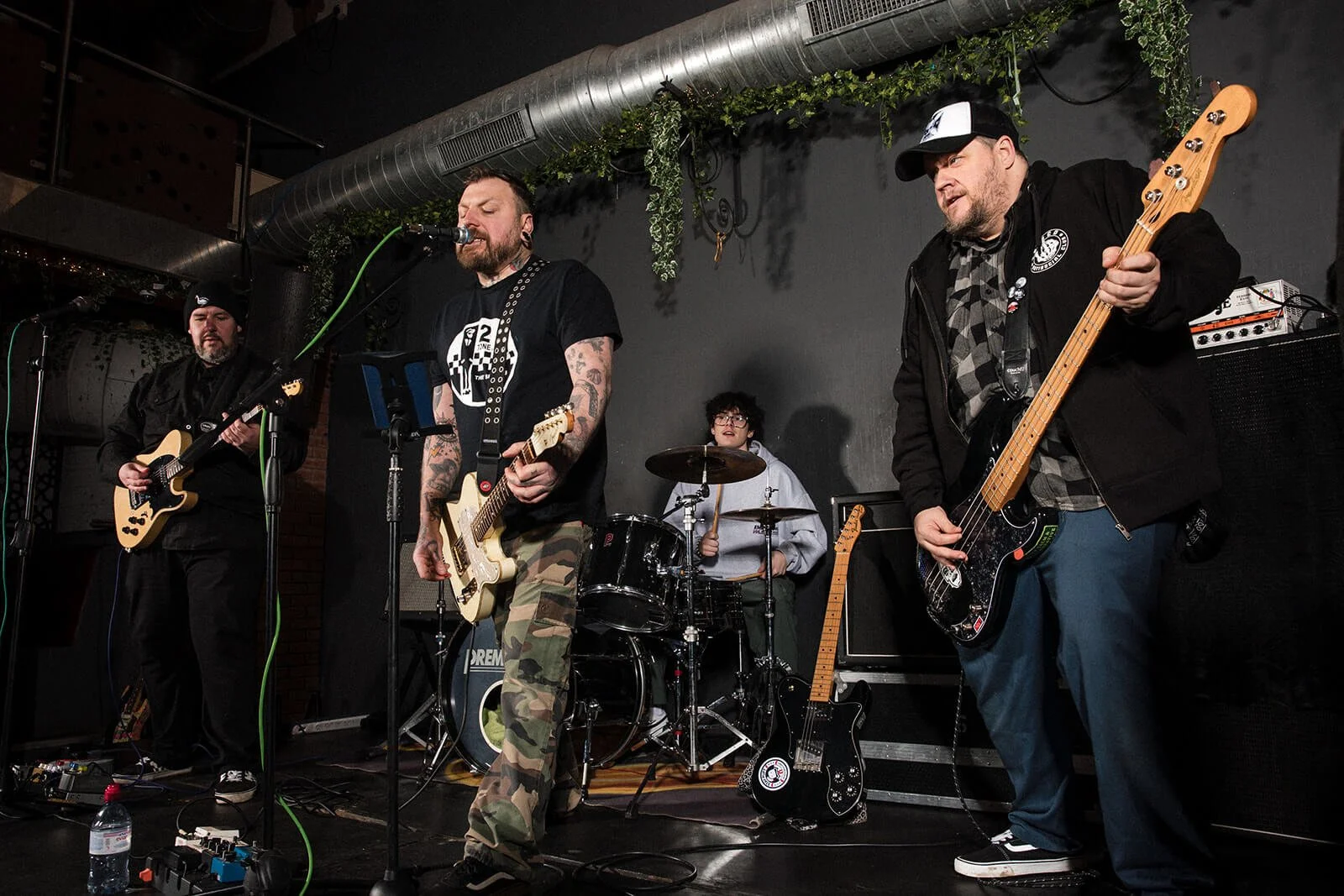
I.O.D. gig photography (on location)
So… Which Should You Choose?
If you value consistency, control and a polished finish, studio photography may be the right fit.
If you’re drawn to emotion, movement and storytelling, on-location photography can bring your visuals to life.
Or, like The Blame, you may decide to do both. Combining studio and on-location images gives you the best of both worlds: a versatile set of photos that work across social media, press features, artwork and promotion.
After the Shoot: Using Your Band Photography Properly
Once the shoot is complete, how you use your images is just as important as how they were created.
After band photoshoots, images are delivered via a private online gallery, allowing bands to easily view, download and organise their photographs for different uses.

High-Resolution vs Web-Resolution Images - What’s the Difference?
High-resolution images are designed for print use, where image quality and detail matter most. These are the files you would supply to:
Magazines and newspapers
CD and vinyl artwork
Posters and physical promotional materials
Web-resolution images are optimised for digital platforms. They load quickly and display correctly online, making them ideal for:
Music blogs and online features
Band websites
Streaming platforms such as Spotify
Social media platforms like Instagram and Facebook
Which Images Should Your Band Use - and When?
If your band is featured in a magazine or printed publication, always supply high resolution images.
For online features, websites and social media, web-resolution images are usually preferred. Using the correct version ensures your images look professional wherever they appear and prevents issues with image quality or loading speed.
Thinking About a Brand or Band Photoshoot?
The most successful band photoshoots aren’t about choosing the “right” location, they’re about choosing what aligns with your sound, personality and visual identity (brand).
Whether working in the studio or out in Northumberland’s changing light, thoughtful planning ensures your images feel considered, confident and true to you.
Explore Brand Photography Options → click here
Book a Chat with Sarah → here
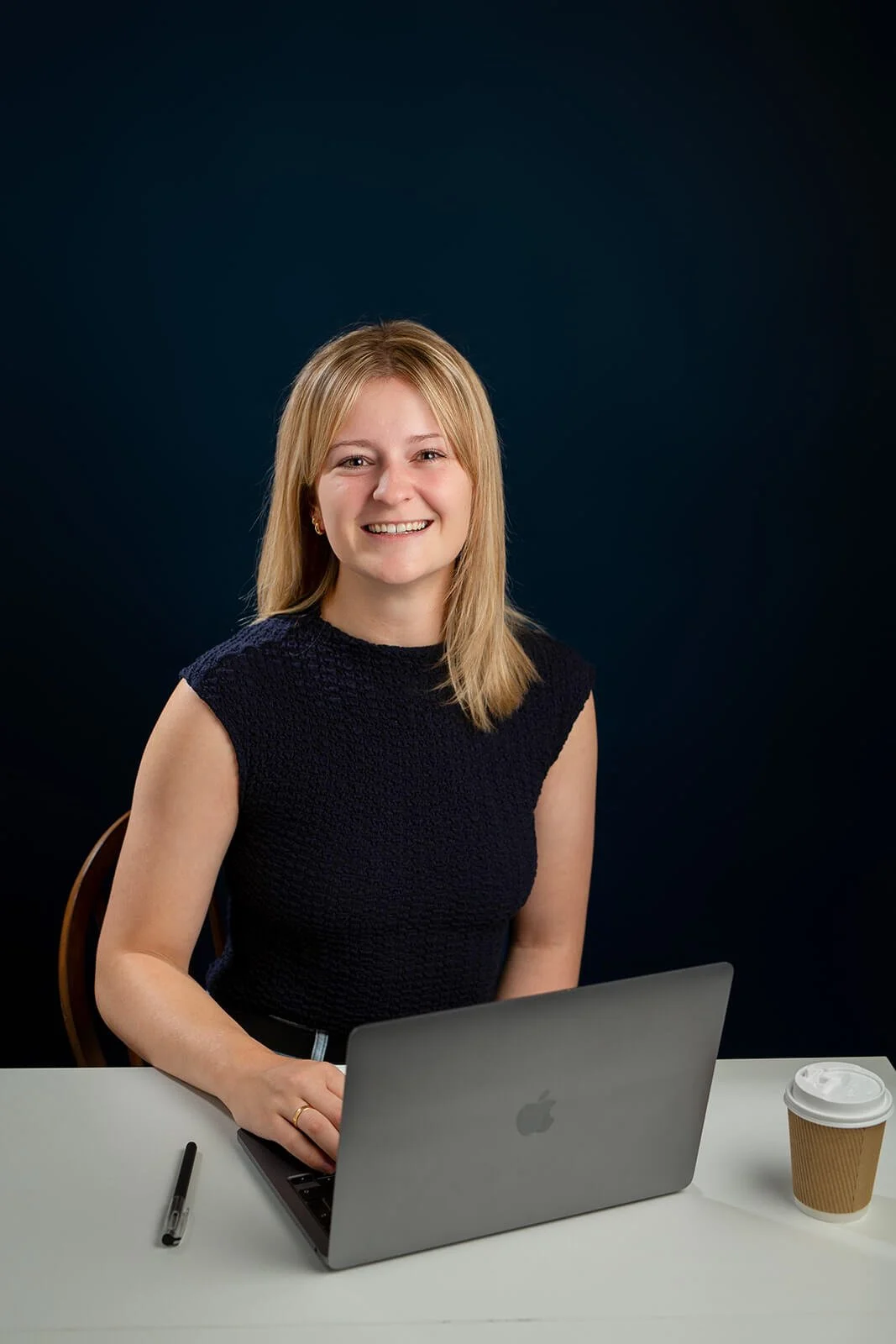
How Often Should You Update Your Headshot?
A conversation with Rebecca from Socially Organised
Your headshot works harder than you probably realise. It appears on your website, LinkedIn profile, social media, email signature, press features and booking platforms - often long before anyone meets you in person. For many small business owners and professionals, it’s the first point of recognition.
I’m often asked how frequently people should be updating their headshot, so during a recent headshot session with Rebecca from Socially Organised, it felt like the perfect opportunity to explore the question properly.
Meet Rebecca from Socially Organised
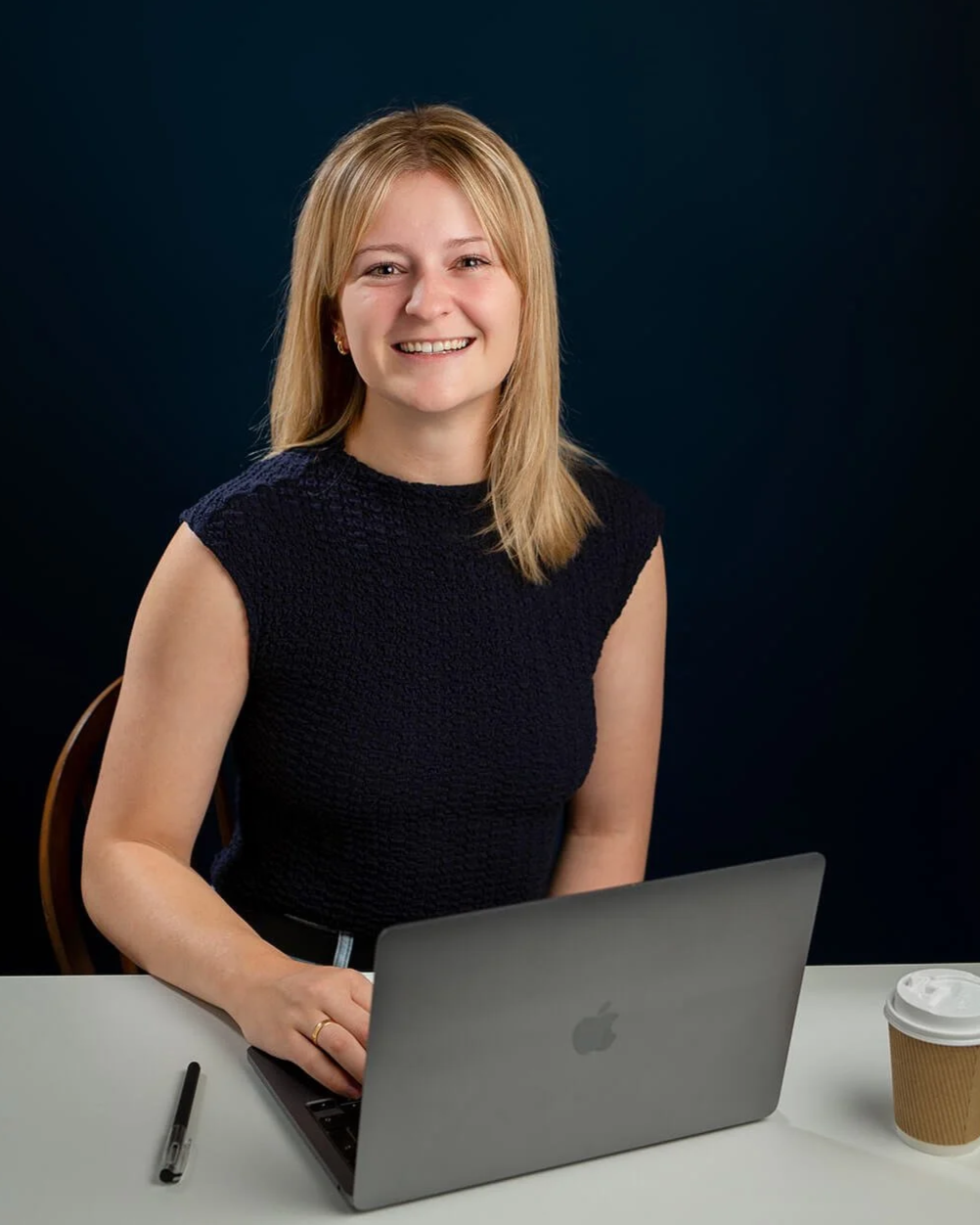
Rebecca set up Socially Organised after encouragement from friends and family during COVID. Although she had already worked in social media and marketing roles locally, it was the nudge from those closest to her that pushed her to start her own business.
Her first day was equal parts exciting and daunting - contracts signed, branding ordered, social media accounts launched and messages sent to friends and family asking them to follow along. Five years on, Socially Organised now supports businesses across Northumberland and Scotland, with Rebecca placing particular value on one-to-one relationships and in-person connection.
That personal approach carries through everything she does, from social media management to her much-loved training sessions, which she’s delivered to businesses across the North and into Scotland. Being invited by Visit Berwick upon Tweed to deliver social media training to local businesses remains a proud milestone.
Why headshots matter more than ever
Rebecca works daily in a world where visibility and credibility matter. She sees first-hand how quickly people form impressions online - often in seconds - and that’s exactly why she chose to update her own headshots.
She’s already refreshed her LinkedIn profile and plans to use her images across her wider online presence. As she explained, keeping headshots current helps people form a realistic impression of who you are, builds trust, and supports consistency across platforms.
From my perspective as a photographer, I regularly see a big shift in confidence. Clients often arrive feeling unsure, especially if they’ve been using the same image for years. After an updated headshot, they tend to show up more confidently online, update profiles they’ve been avoiding, and feel more aligned with how their business has evolved.
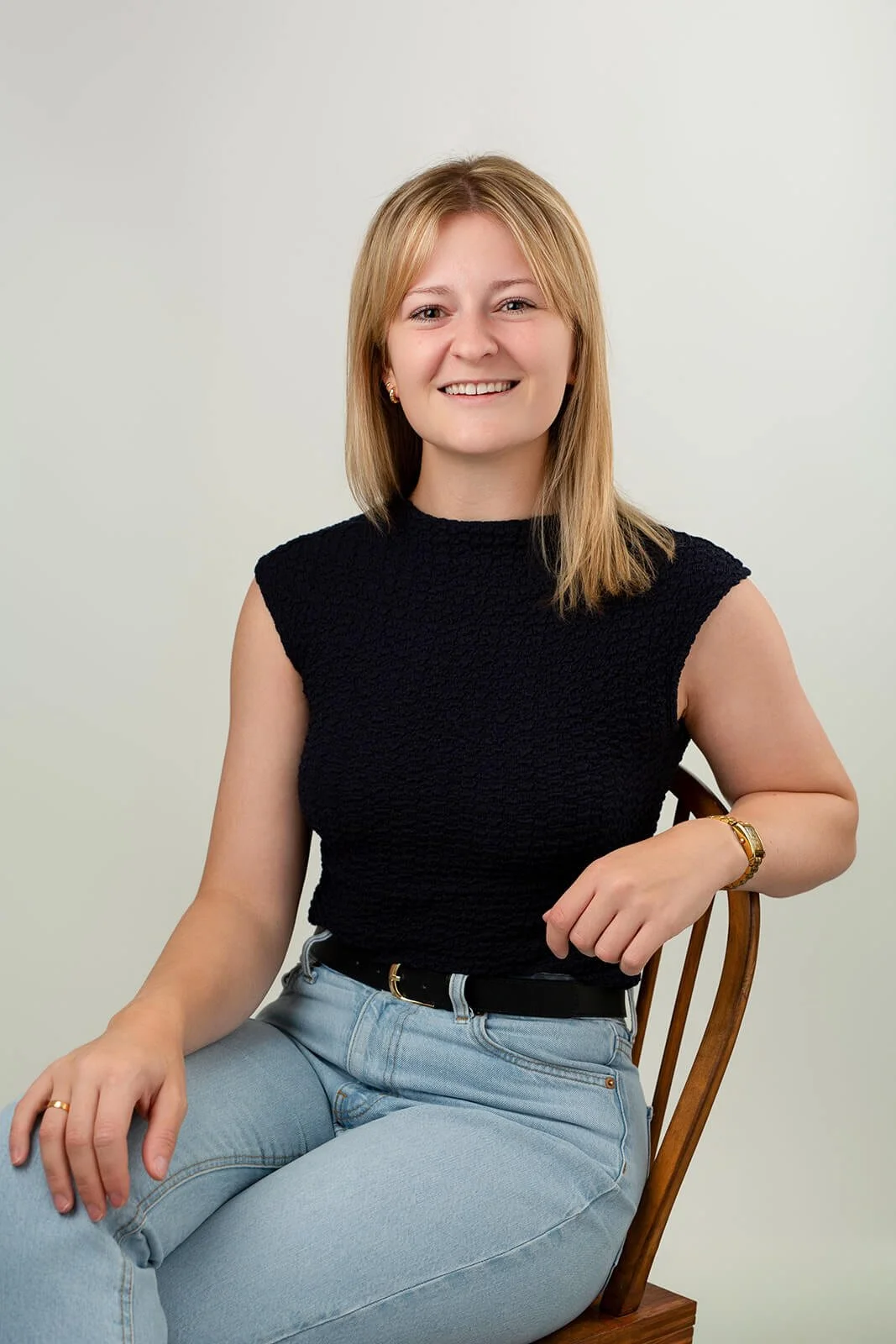
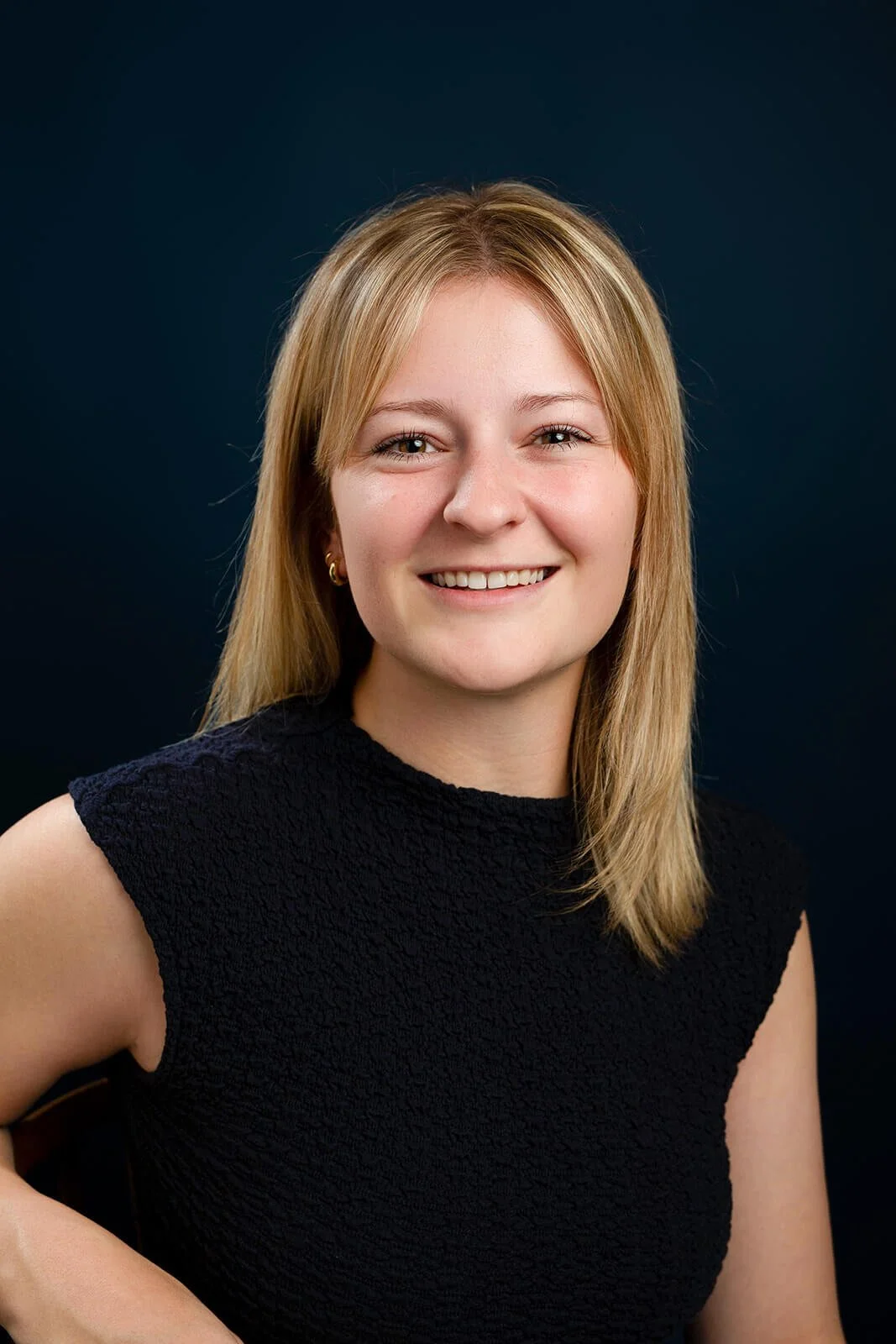
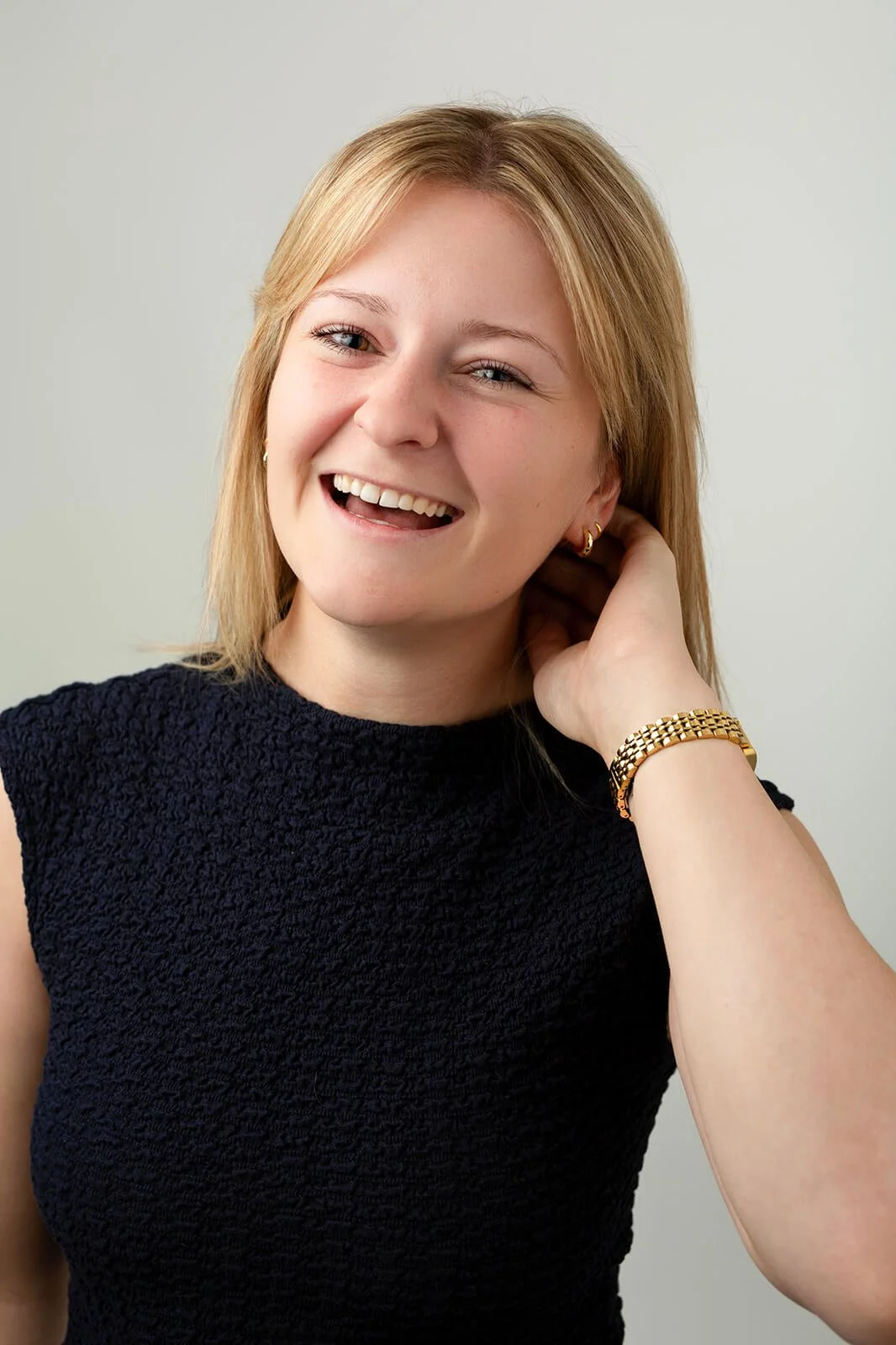
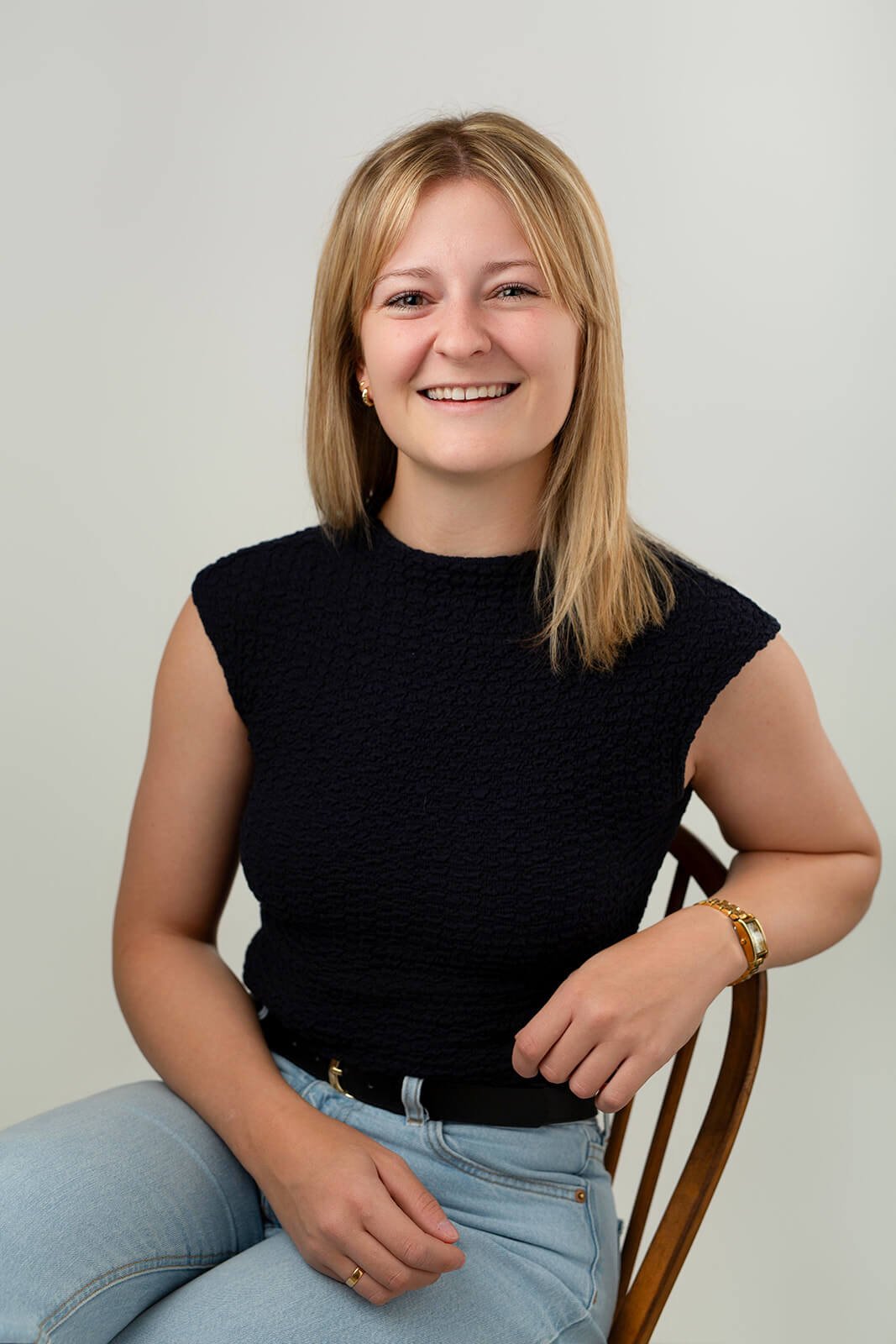
So… how often should you update your headshot?
In most cases, I recommend updating your headshot every one to two years, or sooner if there’s been a noticeable change. In reality, most people only book a new headshot when something prompts them - a rebrand, a new look, a new role, a website refresh, or the realisation that their photo no longer feels like them.
The most common reasons clients come to me are outdated images and rebranding. Changes in hair, personal style, image quality and visual trends all play a part. Even subtle shifts can make an older photo feel disconnected from who you are now.
An outdated headshot doesn’t just date your business visually. It can also lead to mismatched branding, awkward moments where you’re not immediately recognised in person, or a sense that your online presence doesn’t quite reflect your professionalism.
The value of a timeless approach
One reason my headshots tend to last well is that I keep things clean and straightforward. I avoid heavily stylised or trend-led filters and focus instead on good light, considered composition and subtle editing.
This approach creates images that feel current without being tied to a particular moment in time. A well-lit, well-posed headshot with honest expression will always outlast something that leans too heavily into fashion or editing trends.
For business owners and professionals, this means an updated headshot continues to work for you across platforms and over time, rather than feeling quickly outdated.
Headshots as part of business maintenance
While many individuals see headshots as a one-off task, I often see a different mindset with teams and organisations. When I photograph teams, I’m regularly asked back to update images as new people join, keeping everything consistent and professional.
For sole traders and small business owners, the principle is the same - just on a longer cycle. As your business grows and evolves, your visuals should quietly keep pace.
Rebecca’s experience reflects this well. Her business has matured, her confidence has grown, and her updated headshot now mirrors where she is professionally.
A quick check for your own headshot
If you’re unsure whether your current image is still doing its job, it’s worth asking yourself whether it genuinely reflects you as you are now. Would someone recognise you immediately? Does it sit comfortably alongside your current branding? Does it support the way you want to show up online?
If the answer isn’t a confident yes, an updated headshot may be worth considering.
You can find more information about my professional headshot sessions here
You may also find it helpful to explore how headshots fit into wider brand photography
Or, if you’d like to talk it through, you can get in touch here
And if you’re genuinely unsure, I’m always happy to give honest advice - even if that means telling you your current photo is still serving you well.
Rebecca is the founder of Socially Organised, where she works closely with businesses on social media management and training. If you’d like to see more of her work or get in touch, you can find her on Instagram and LinkedIn, or visit her website.

Paid Creative Work Placement for a Local Young Person (16+)
Creative Digital Content Assistant
Pictorial Photography, Berwick-upon-Tweed
Are you someone who loves creating content and wants real, hands-on experience in photography, filmmaking, website design and marketing? Pictorial Photography is offering a paid placement for a young creative (aged 16–21, living in a TD15 Northumberland postcode) to join our studio as a Creative Digital Content Assistant.
This role gives you the chance to learn how professional content is planned, created, edited and used across websites, social media and branding projects. You’ll be working alongside an experienced photographer and filmmaker in a supportive studio environment, helping to create real work for real clients.
Your work can grow in the direction you are most interested in - whether that’s photography, video editing, social media, branding or website content. This placement is designed to help you explore your strengths and build skills for your future.
What you’ll do
Assist on photography and filming sessions (studio + occasional local shoots)
Capture behind-the-scenes content
Learn to take photographs using professional equipment
Edit images and short video clips using industry-standard tools (Apple Mac / Adobe)
Help to plan and create social media content (Instagram, Facebook, and possibly TikTok/Snapchat if it fits your style)
Support creative website projects (adding images, layout updates, organising content)
No experience required - just enthusiasm
We’re looking for someone who:
is interested in visual creativity (photos, videos, websites, social media, design)
wants to learn new skills for future work or study
is reliable and willing to try new things
is interested in a career in photography, filmmaking, digital marketing or web design
lives in Northumberland (TD15 postcode)
Details
The duration of the work placement depends on your age:
• Around 8 months (if under 18)
• Around 6 months (if aged 18–20)
• Around 5 months (if 21)
All placements are 12 hours per week over 2 flexible days, so you can fit this alongside study or other commitments.
This is a funded role paid at the correct National Minimum Wage for your age.
All equipment and software will be provided, and you’ll be supported and supervised throughout the placement.
We welcome applications from all backgrounds - enthusiasm and interest matters more than experience.
How to apply
Send us:
A CV, and
Either a short cover letter or a short video introduction (you choose!)
Simply tell us:
why you’re interested in this role
your favourite type of creative content (photo, video, design, social media, websites, etc.)
📧 Email to: sarah@pictorialphotography.co.uk
📌 Deadline for applications: 1/12/2025

Jo Wore her Beautiful New Dress, Went Barefoot in the Mud - and Taught Me Something About Showing Up
Jo at Berwick Plantation
When I photographed a lovely friend Jo for her business Wild Revival a couple of weeks back, I knew it wasn’t going to be your usual brand shoot. She happily went barefoot, carrying her foraging basket and wearing a gorgeous new orange dress she’d decided wasn’t too nice for sitting in the mud.
We walked through the plantation, along the river, and down to the Pier beach. The weather did its usual Northumberland thing - damp hair, wet hems, perfect light - then, by the time we got to the beach, actual sunburn. Jo didn’t care. She laughed, got stuck in, and somewhere between the berries and the seaweed I realised she was giving me a quiet reminder about the confidence that comes with just being yourself.




“Before my branding shoot, I was constantly scrambling to find decent photos of myself. Now, whatever I’m creating, I know I have images that are cohesive, in my brand colours and genuinely represent what I do.
I’d worried that investing in branding photography might feel a little frivolous, but I now see just how important it is to tell our stories visually. The whole process gave me more confidence in my business, and the photographs directly helped me create my first website and online shop.
Sarah has a wonderful way of putting me at ease and somehow makes something completely outside my comfort zone feel relaxed and enjoyable. Sarah is just magic!”
Good brand photos aren’t really about poses or polish. They’re about showing up as yourself and having fun - the version of you that laughs when the dress gets muddy and doesn’t need everything to be spotless to feel genuine.
Jo’s brand, Wild Revival, is all about connection: to nature, to ourselves, and to the world around us. She spends her days foraging, teaching, and helping people reconnect with nature and the simple joy of being outside. Photographing her wasn’t about creating something glossy; it was about capturing what was already there - a sense of belonging, curiosity, and calm.
She moves through nature like it’s home, picking up leaves and berries as we went, pointing out things I’d have walked straight past.
Jo foraging on Berwick’s New Road
There were a few moments from the shoot that were quite memorable: the way Jo happily sat down in the damp forest bed and didn’t flinch but actually laughed when she stepped in gross boggy river mud, barefoot(!); the way she thanked the trees for supporting her and for letting her touch their bark for a photo.
I realised that’s what showing up really means. It’s not about having everything perfectly planned; it’s about being present. Being visible, and being yourself even when things aren’t tidy. Choosing to be seen - in business, in photographs, in life - just as you are.






Every time I photograph someone like Jo, I’m reminded that confidence looks different on everyone. Sometimes it’s heels and lipstick; sometimes it’s muddy feet and laughter on a damp Monday morning. The setting changes, but the message doesn’t: people connect with honesty.
If your business or creative work is rooted in something real - craft, care, nature, community - your photos should feel that way too.
So, wear that beautiful dress. Step in the mud. Let your audience see you. That’s where the real magic happens.
Behind The Scenes on Jo’s Shoot
Thanks to Abigail (Jo’s sister) for taking these photos


Curious what a full brand session includes?
Visit my Branding Photography page to see examples, pricing, and what’s involved.
I created some short film clips for Jo during her brand shoot, these can be used on social media or as moving images on her new website.
Wild Revival Brand Photography
Photography by Sarah Jamieson, Pictorial Photography
Location: Berwick-upon-Tweed and the Northumberland Coast
Client Jo Thomas - Wild Revival - Check out Jo’s Substack (her new website is in progress, I can’t wait to see it!
Want authentic photos that feel like you?
Book a chat with me to start planning your brand shoot.
94% of First Impressions Online Are Visual - Here’s How We Made That Work for Brian.
94% of first impressions online are visual - which means the photos on your website matter more than you might think.
When Brian from Design & Prototype got in touch, he wanted better photos for his business. What began as a simple workshop shoot quickly grew into a full rebrand: new photography, a refreshed logo, and a modern, cohesive website that’s helping him attract the kind of projects he really wants.
Most small business owners don’t see themselves as “brands” - they see the workshop, the tools, the workbench, not the bigger picture. But that’s exactly what brand photography helps reveal.

Here’s Brian in the Design & Prototype workshop. We photographed him at work - surrounded by sawdust, metal shavings and machinery - the kind of authentic detail that stock photos never capture. Later, a few of his finished pieces came into my studio to be photographed under good light and on a plain grey and white background - even large handcrafted items can work beautifully in a controlled product photography setup.




Once the brand and product photography library was in place, we refreshed his logo and website - keeping the clean, modernist feel he liked, but stripping back the bold primary colours that had made the old design tricky to use. The new site uses yellow and grey tones, echoing his machinery and giving a nod to industrial design - modern, timeless, and easy to navigate.
After the website launch, Brian decided to add a Velocette motor repair section. Everything was already in place visually, and the consistency of his new branding helped attract steady work in this niche area.


Strong brand imagery doesn’t just look good - it builds trust. For small businesses, it shows the person behind the craft, the hands that make, the pride that keeps a workshop running. Whether you’re a joiner, florist, or designer, photography helps your audience connect the dots between what you do and who you are.
If you’re curious about what brand photography could do for your own business, check out my Brand Photography page. You don’t need a studio-ready brand - just a good story, and I’ll help you show it.
Why Faces (and Hands!) Might Be the Missing Piece in Your Product Photography
When it comes to building a strong brand, product photography is key – but it’s not just about the products. It’s also about the people behind them and the story you tell. Visual content is one of the most powerful tools to convey who you are as a business - 93% of consumers rank visual appearance as a key factor in purchase decisions, and content with relevant images gets 94% more views than content without. In other words, great product photography can make or break your brand’s first impression. More importantly, your ideal customers want to connect with the faces and values behind the brand, not just the products. That’s why showcasing the people and personality behind your products is such a game-changer for brand identity.

Why Visual Content Is Vital for Your Brand
We’re bombarded with images on social media and online shops, so to stand out you need high-quality, story-driven visuals. People remember up to 65% of visual content after three days (versus only about 10% of written content), so strong imagery not only grabs attention but also sticks with your audience. For a small business, scroll-stopping photos can give you an edge over larger competitors.
On social media, posts with images - especially those featuring people get much higher engagement. Instagram photos with human faces receive 38% more likes than those without (according to a Georgia Tech study). This shows customers crave authenticity and human connection, not just pretty product shots. Visuals that include real people help build trust and familiarity; in fact, 86% of consumers say authenticity is important when deciding which brands to support (Stackla survey). By featuring real people (whether your team, customers, or yourself) or even just parts of people (like hands if you’re shy!) in your product photos, you create that authenticity and turn standard catalog shots into a narrative about your brand.
Putting People Behind the Products
One way to bring authenticity into product photography is by literally putting the person into the picture. For example, I recently did a shoot with Liberty, the founder of Lib&Jax, a local brand that handcrafts colorful bags and cases from reclaimed (deadstock) fabrics. Lib&Jax isn’t just selling bags – they’re selling a story, and showcasing the people behind the products helps bring that story to life.
During the shoot, we made sure to capture not only the products, but Liberty herself. We got vibrant shots of her interacting with the bags - holding them, using them, even sitting happily in a pile of them against a bright pink backdrop. Featuring the founder put a face to the brand name. Liberty’s style and energy shine through these images, helping customers connect with her business on a deeper level. In short, it turns Lib&Jax from just a brand into a relatable human story.

Some of the best shots were the spontaneous, playful ones - like Liberty tossing bags in the air. Those photos are eye-catching and full of life, perfectly reflecting the brand’s bold vibe. In one image, a flying bag even covered her face, adding a fun mystery that draws attention straight to the product. These kinds of shots do double duty: they highlight the product while keeping viewers engaged and curious about the person behind it.
We also captured some behind-the-scenes content. Liberty captures a few quick video clips (just on her phone) to highlight Pictorial Photography on the visit Berwick website (part of a different project) and I gave Liberty some fun peeks of the shoot from my camera to share on Instagram and TikTok. Audiences love seeing how the magic happens, a candid video of makers at work makes people feel like insiders. And with video content now over 80% of all web traffic, those clips are gold for social media. This kind of content isn’t just filler; it brings your brand’s personality to life in ways that polished product photos alone can’t.
Liberty from Lib&Jax brought ALL the colour and chaos to the studio for this shoot. Handmade, one-of-a-kind, and made from deadstock fabric – each bag has it’s own story. 💖 #BTS #ProductPhotography #LibAndJax
Planning a Purposeful (and Fun) Photoshoot
All those creative, people-centric shots might look spontaneous, but they actually take a lot of planning. Before the Lib&Jax session, Liberty put together a Pinterest mood board to nail down the creative vision. Having that visual guide (and some notes from our chats) put us on the same page from the start, with no "what next?" moments during the shoot. The mood board ensured we captured all the must-have shots (like clear product photos on a bright background) and had fun ideas ready that fit the brand’s vibe (like those flying bags!).
Planning ahead also meant thinking about how we’d use the photos. For Lib&Jax, we needed a mix of images for different purposes:
Product shots for the online store (clean, crisp photos of the bags on a railing - also to use on a continuous scroll for an instagram carousel)
Lifestyle shots of Liberty using the bags (to show their scale in real-life use)
Behind-the-scenes content to share on social media (for authenticity and engagement)


Defining these goals early meant we captured a bit of everything during the shoot. It also helped us prep the studio - we set up multiple vibrant backdrops (pink, orange, navy, green and white) to make the colorful bags pop, and arranged professional lighting for a polished look. With solid planning and a spark of creativity, the shoot was both productive and a lot of fun.
Just as important as planning is creating a positive, collaborative atmosphere. We kicked off the shoot by bouncing around ideas and jotting down the best ones to try first. It's great to experiment with wacky concepts (after the ‘key shots’ are in the bag of course) — it leads to unique photos and keeps the session fun. When everyone’s enjoying themselves, that energy shines through in the pictures. Those genuine laughs, unposed moments, and off-the-cuff ideas are exactly how you capture the authenticity we talked about earlier.
Showcasing Your Brand’s Values (Sustainability and Beyond)
Another facet of brand identity we highlighted was Lib&Jax’s commitment to sustainability. Consumers care about what a brand stands for — 66% say they’re willing to pay more to support brands with sustainable practices (Nielsen survey), and that percentage is even higher for millennials. If your brand has a mission or core value like this, think about how we can show it visually - or get in touch for a chat - I love sharing ideas.
For Lib&Jax, that meant drawing attention to the story behind the bags. We made sure to feature the unique upcycled fabrics in the photos, subtly communicating the brand’s eco-friendly ethos. At the same time, we kept the images vibrant and stylish to prove that sustainable can be chic. And of course, we spotlighted Liberty as the passionate founder behind it all. Product, Person, and Purpose - when those three align, that’s branding magic!
From Photoshoot to Brand Narrative
With the right planning and personal touch, product photos become more than a catalog of items - they turn into part of your brand narrative. Each image from the Lib&Jax shoot tells a piece of their story, whether it’s Liberty joyfully tossing bags in the air or carefully arranging a display. This portfolio of usable visuals give the audience a glimpse into her world and invite them to connect on a deeper level.
People connect with people, not just things. Showing the human side of your business builds trust and like-ability. The next time someone sees a Lib&Jax bag at a market or online, they’ll remember the fun, creative spirit from those photos and feel like they know the brand. That kind of familiarity is marketing gold - it can turn casual viewers into loyal followers and then customers.



Ready to Elevate Your Brand Identity?
I’d love to hear your thoughts. Which of Liberty’s colorful bags caught your eye? Do you think these images deliver on style? Share in the comments!
If you’re a business owner looking to bring your own brand’s story to life with vibrant, people-focused product photography, let’s talk. As a specialist in product photography in Berwick, I’m passionate about helping creative brands like yours shine. Get in touch with me at Pictorial Photography to start planning a shoot that showcases your products, along with the people and values behind them. Let’s elevate your brand identity, one photo at a time. If you aren’t quite ready to chat yet - take a look at our product photography page for loads more info.
Oh, and if you loved Liberty’s bags, you can snag one from Lib&Jax. She’ll also have a stall at the Berwick Food Festival this summer - so if you’re in town, be sure to pop by and support some awesome local makers!