
Studio vs On-Location Photography for Bands: Choosing the Right Style (and Why It Matters More Than You Think)
Case Study: The Blame - Berwick-upon-Tweed
Written By: Lucas Weightman - Digital Marketing & Photography Assistant, Northumberland
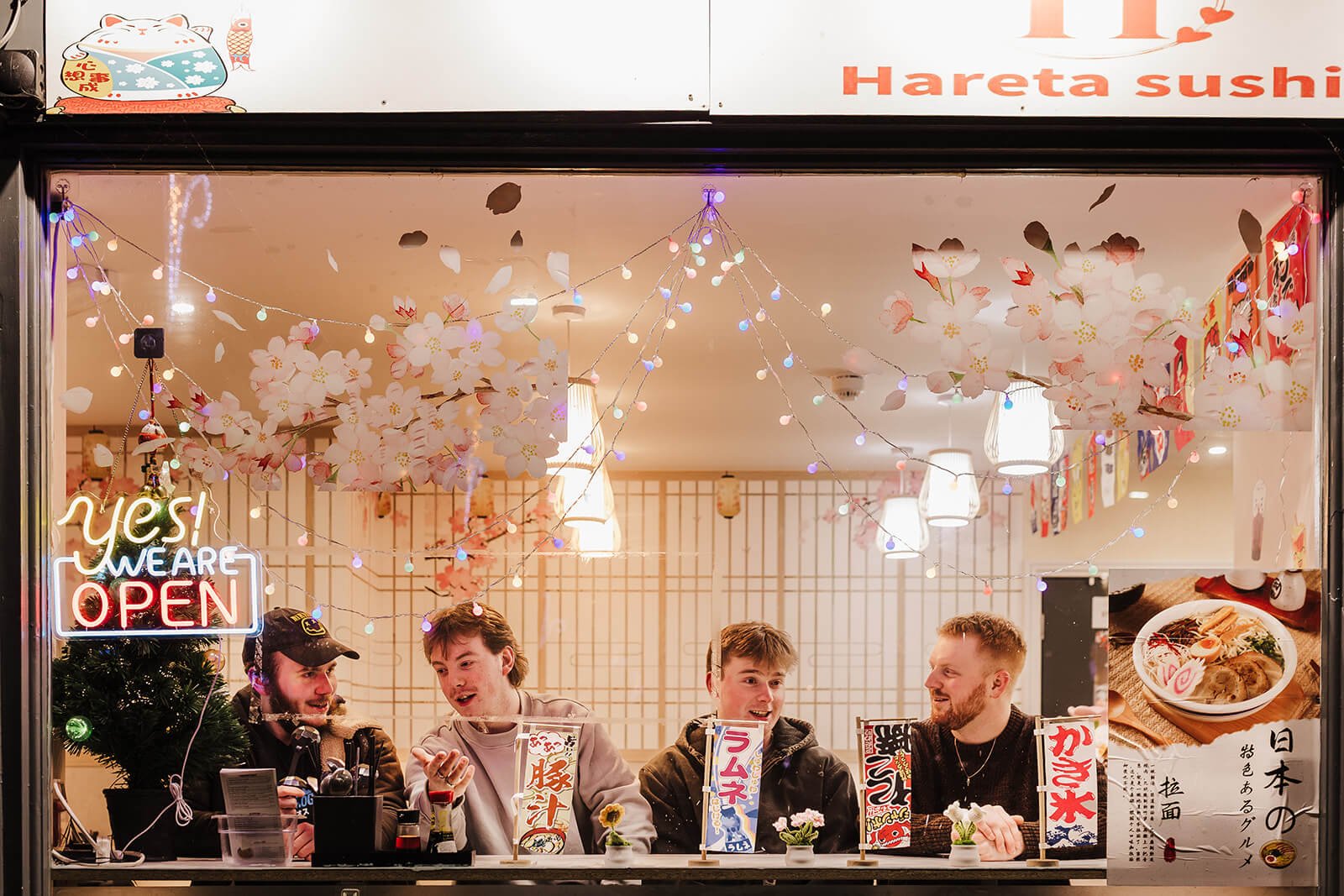
The Blame on location in Hareta Sushi, Berwick upon Tweed
Why Studio vs On-Location Photography Matters for Bands
Band photography is often the first visual introduction people have to your music. Before anyone hears a track, they may see your press image, album artwork, Spotify profile, Apple music, Amazon music or a social post promoting a gig. Those images communicate who you are, what you sound like, and what kind of experience you offer.
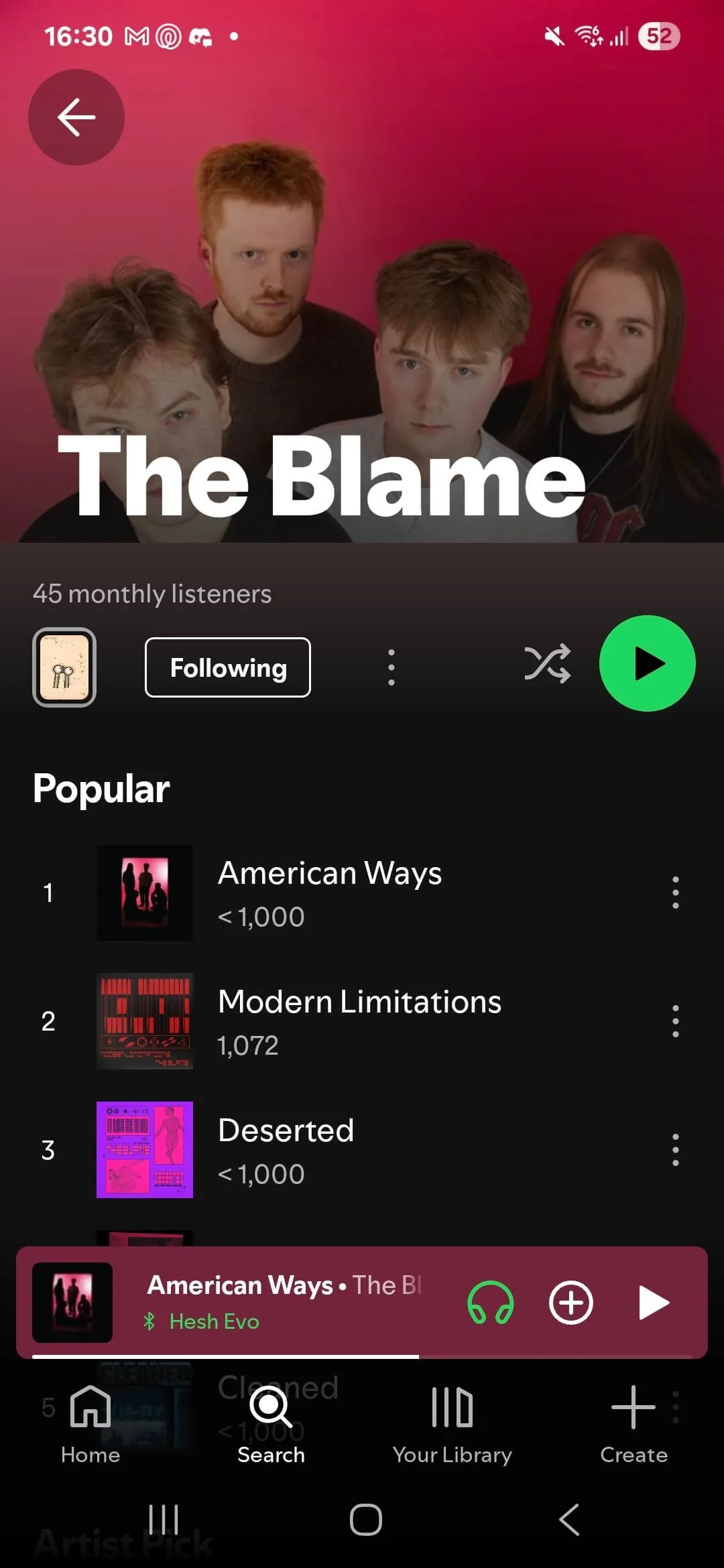
The Blame - Spotify
That’s why the decision between studio vs on-location photography matters more than many bands realise. It isn’t simply about where photos are taken, it’s about how your band wants to be perceived. Studio photography can feel bold, graphic and intentional. On-location photography can feel atmospheric, raw and rooted.
Neither approach is better than the other. The strongest band photography comes from choosing a style that aligns with your sound, your identity, and how you want to connect.
This blog explores studio vs on-location photography for bands, using a real case study from Berwick-upon-Tweed to show how different settings can create very different results, and how both can work beautifully.
One Band, Two Shoots, Two Very Different Vibes
When we photographed The Blame, a Berwick-upon-Tweed based band, we deliberately split the work across two sessions: one in the studio and one on location around town.
The contrast between the two approaches was immediate.
The studio photographs were vibrant, minimal and controlled. Every light, shadow and reflection was intentional, creating a clean, confident look that felt polished and deliberate. With no distractions in the background, the focus stayed firmly on the band and their presence.
The on-location images, by contrast, had a looseness and character that felt completely different. That unmistakable Berwick atmosphere added depth and context - things you simply can’t recreate indoors.
Interestingly, the band preferred the studio images. I was more drawn to the outdoor ones. And that highlights an important point, there is no right or wrong choice. The best approach depends entirely on your band’s identity and how you want to be seen.
Studio Photography: Clean, Controlled, Consistent
Studio band photography offers complete control over the environment. Nothing is left to chance, from lighting and colour to background and framing.
This level of control makes studio photography a strong choice for bands who want clarity, consistency and a bold visual statement.
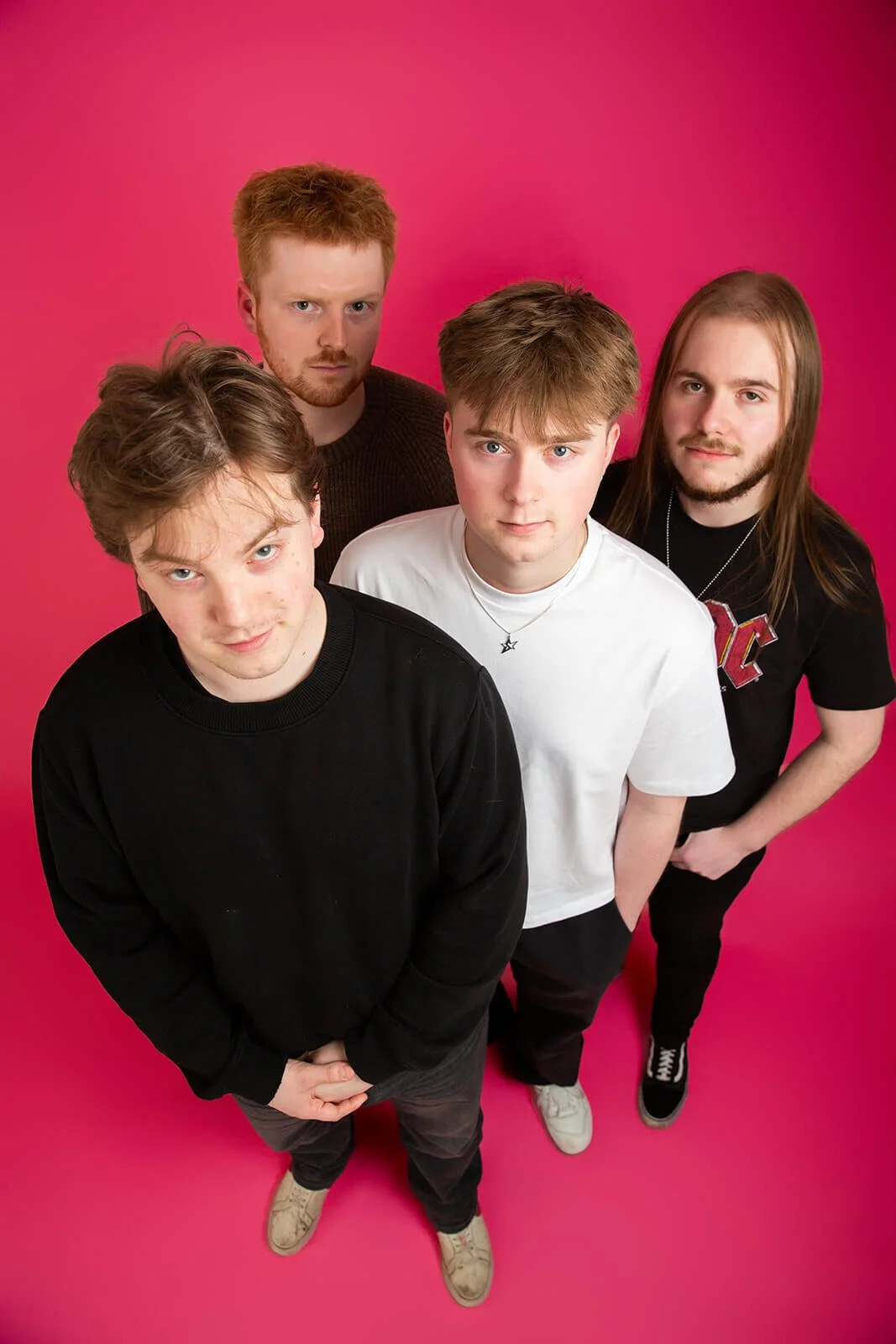
The Blame in our photography studio - hot pink!
Studio photography work particularly well for:
Bands creating album artwork or press imagery
Musicians wanting a strong, graphic visual identity
Projects that need consistency across campaigns and releases
Pros
Clean, distraction-free backgrounds
Precise, repeatable lighting
Easy to match images across platforms and future shoots
Cons
Less environmental storytelling
Can feel formal if styling and direction aren’t carefully considered
It’s worth noting that studio photography doesn’t have to mean neutral or safe. For The Blame, a studio shoot using a bold hot-pink background created a striking, contemporary look that suited their energy. The studio simply becomes a blank canvas and shows expression and character, depending on how it’s used.
On-Location Photography: Real, Atmospheric, Story-Driven
On-location band photography brings context into the frame. Rather than removing the environment, it allows the setting to become part of the story.

Blame Band outside a commercial unit in Berwick
For The Blame, shooting outdoors introduced texture, scale and a sense of place. The images felt more spontaneous and grounded less about perfection, more about presence. Weather, light and surroundings all played a role in shaping the final photographs.
On-location photography is ideal for:
Bands wanting a strong sense of identity or place
Artists with a raw, narrative or expressive sound
Projects where atmosphere matters as much as polish
Pros
Ambient light, texture and depth
Unique, character-filled backdrops
Strong emotional connection for the viewer
Cons
Weather and light are unpredictable (it was super cold that evening!)
More planning required for timing and logistics
While on-location photography can feel less controlled, that unpredictability is often what gives the images their edge.

Another band: Muzzle on location in Berwick
How Bands Use Studio and On-Location Photography Differently
Understanding how images will be used can help guide the choice between studio vs on-location photography.
Studio images are often well-suited to:
Press kits and media submissions
Album or single artwork
Website headers and profile images
Promotional materials needing a clean, professional look
On-location images often shine when used for:
Social media content (check out the Blame’s insta page here)
Editorial features and interviews
Gig promotion and posters
Story-led branding and visual storytelling
Many bands find that combining both approaches gives them the most flexibility. A mix of studio and on-location photography creates a varied image library that can be used across multiple platforms without feeling repetitive.
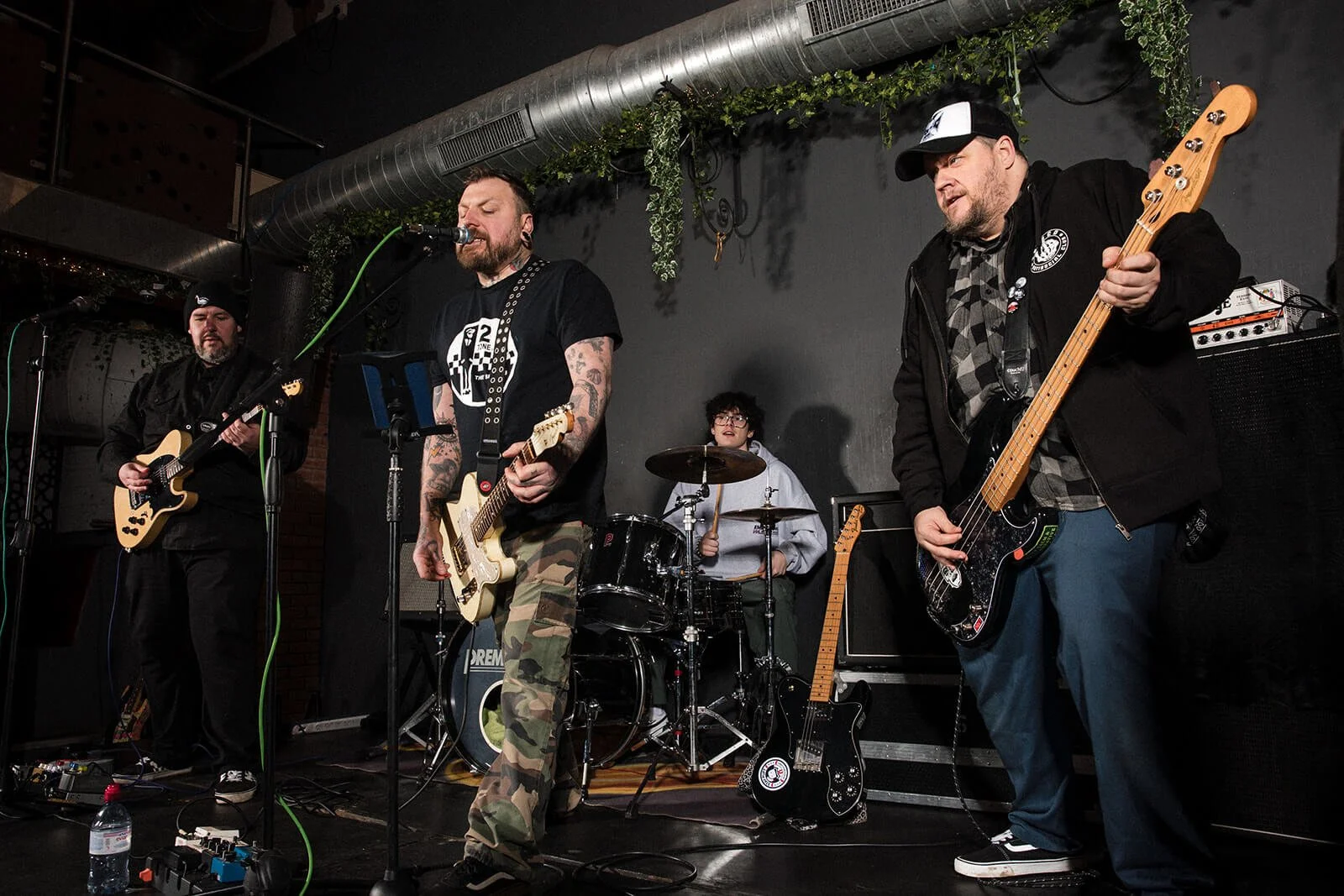
I.O.D. gig photography (on location)
So… Which Should You Choose?
If you value consistency, control and a polished finish, studio photography may be the right fit.
If you’re drawn to emotion, movement and storytelling, on-location photography can bring your visuals to life.
Or, like The Blame, you may decide to do both. Combining studio and on-location images gives you the best of both worlds: a versatile set of photos that work across social media, press features, artwork and promotion.
After the Shoot: Using Your Band Photography Properly
Once the shoot is complete, how you use your images is just as important as how they were created.
After band photoshoots, images are delivered via a private online gallery, allowing bands to easily view, download and organise their photographs for different uses.

High-Resolution vs Web-Resolution Images - What’s the Difference?
High-resolution images are designed for print use, where image quality and detail matter most. These are the files you would supply to:
Magazines and newspapers
CD and vinyl artwork
Posters and physical promotional materials
Web-resolution images are optimised for digital platforms. They load quickly and display correctly online, making them ideal for:
Music blogs and online features
Band websites
Streaming platforms such as Spotify
Social media platforms like Instagram and Facebook
Which Images Should Your Band Use - and When?
If your band is featured in a magazine or printed publication, always supply high resolution images.
For online features, websites and social media, web-resolution images are usually preferred. Using the correct version ensures your images look professional wherever they appear and prevents issues with image quality or loading speed.
Thinking About a Brand or Band Photoshoot?
The most successful band photoshoots aren’t about choosing the “right” location, they’re about choosing what aligns with your sound, personality and visual identity (brand).
Whether working in the studio or out in Northumberland’s changing light, thoughtful planning ensures your images feel considered, confident and true to you.
Explore Brand Photography Options → click here
Book a Chat with Sarah → here